How to Explore Abandoned Factories Safely: The Complete Urbex Guide for Industrial Sites
Abandoned factories are among the most visually dramatic and historically rich sites in urban exploration. Rusting machinery, crumbling conveyor belts, and vast silent halls create an atmosphere that no purpose-built tourist attraction can replicate. But industrial urbex also carries risks that go well beyond a crumbling mansion or a forgotten church. This guide walks you through everything you need to know before you step inside an abandoned factory — from safety gear to legal research and the best sites worth visiting.
Why Abandoned Factories Are the Crown Jewel of Urban Exploration
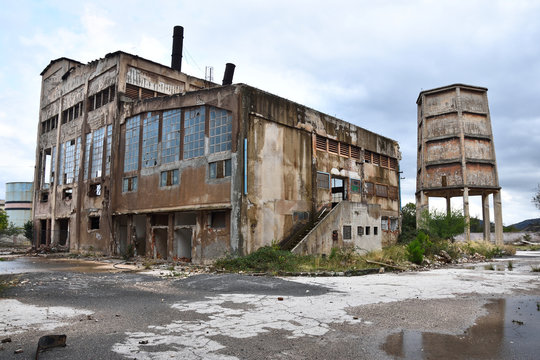
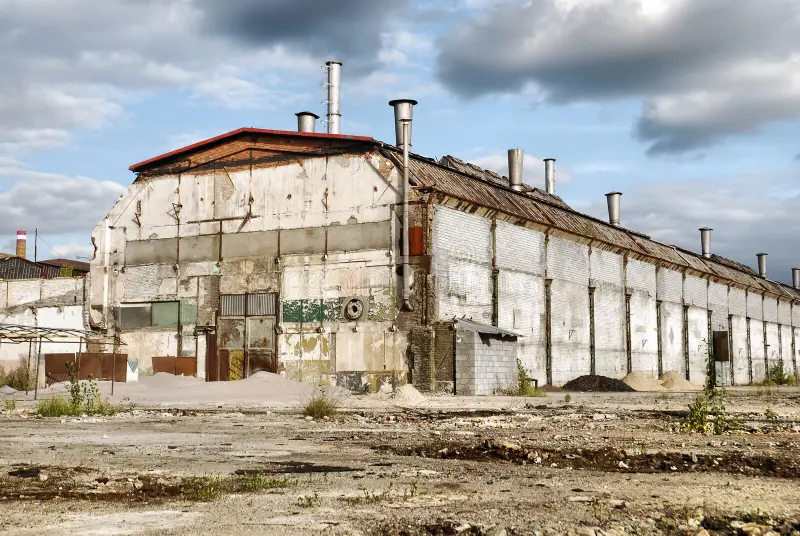
Industrial ruins offer a level of visual storytelling that few other abandoned structures can match. The scale alone is staggering — assembly lines that once employed hundreds, furnaces that burned around the clock, and storage warehouses the size of city blocks. Unlike abandoned homes, which speak only of private lives, factories document entire economic eras. The collapse of steel manufacturing in the American Rust Belt, the post-Soviet industrial decay across Eastern Europe, or the shuttered automotive plants of northern Italy — each site is a physical archive of labor history, technological ambition, and economic failure.
For photographers, the interplay of industrial architecture, natural decay, and dramatic light creates unparalleled compositions. For historians, the machinery left behind often tells stories that official records obscure. For adventurers, the sheer size and complexity of these buildings make every visit a genuine exploration.
The Essential Safety Checklist Before Entering Any Abandoned Factory
Industrial sites present unique hazards that require preparation beyond the basics of urban exploration. Before visiting any abandoned factory, work through this checklist:
- Structural assessment: Factories often have flat or shallow-pitched roofs that collect water and deteriorate fast. Never walk on factory roofs. Look for bowing walls, sagging ceilings, and floor corrosion before proceeding.
- Asbestos awareness: Buildings constructed before the 1980s almost certainly contain asbestos insulation around pipes, boilers, and cladding. Wear an FFP3-rated respirator — not a simple dust mask — whenever visiting older industrial sites.
- Chemical hazards: Storage tanks, drums, and floor residues in abandoned factories may contain solvents, heavy metals, acids, or other industrial chemicals. Never open containers or touch fluid residues without proper gloves and awareness of what was produced at the site.
- Electrical hazards: Even in derelict buildings, some live cables may remain if the utility connection was never formally terminated. Assume all wiring is potentially live.
- Confined spaces: Tanks, silos, pits, and sub-floor voids can suffer from oxygen depletion or toxic gas accumulation. Never enter confined spaces without appropriate gas monitoring equipment.
- Mobile signal: Many factory sites are large enough that you can become seriously disoriented. Download offline maps and ensure at least one team member maintains communication capability.
Legal Considerations: Trespassing, Access, and Urban Exploration Ethics
The legal landscape for urban exploration varies significantly by country. In England and Wales, civil trespass onto private property is not automatically a criminal offence unless damage occurs or aggravated circumstances apply. In many EU countries, the situation is stricter. In the United States, it varies by state. Regardless of jurisdiction, responsible explorers follow the foundational principle: take nothing but photographs, leave nothing but footprints, and cause no damage.
Before visiting any site, research its ownership status. Some abandoned factories have been acquired by developers with active security. Others are subject to heritage listing, which may offer legitimate access routes through official heritage organizations. Always check local planning records, and consider reaching out to site owners for permission — you may be surprised how often it is granted for serious researchers and photographers.
For a deeper discussion of urban exploration ethics and legal frameworks, the Wikipedia entry on urban exploration provides a useful starting point, and dedicated urbex communities such as 28DaysLater (UK) and Infiltration.org maintain country-specific legal guides.
Essential Gear for Industrial Urbex: What to Bring and Why
Industrial sites demand more protective gear than most other urbex environments. Here is what experienced explorers recommend:
- Respirator: FFP3/N100 rated, half-face minimum. Essential for asbestos-laden sites.
- Hard hat: Low-clearance areas, falling debris, and overhead machinery make head protection critical in factories.
- Steel-toed boots: Protects against sharp metal debris and unstable flooring.
- Chemical-resistant gloves: For handling surfaces with unknown residues.
- High-lumen torch plus backup: Factories are vast and often have zero natural light in interior sections. Carry at least two light sources.
- First-aid kit: Include wound closure strips for lacerations from metal edges.
- Camera gear: Wide-angle lenses (16–24mm) are ideal for capturing industrial scale. A sturdy tripod enables long exposures in low light.
The World’s Most Compelling Abandoned Factories to Visit
With the right preparation, industrial urbex can be among the most rewarding experiences in travel photography and historical research. These are among the most significant sites attracting explorers globally:
Abandoned Bugatti Factory, Campogalliano, Italy
Built in the late 1980s to produce the legendary EB110 supercar, this factory is a striking piece of modern industrial architecture whose ambitions outlasted its finances. The bold blue facade and precision-engineered interior speak to an era when Italian automotive design aimed to redefine performance. The building remains remarkably intact, which makes it one of the most visually coherent industrial urbex sites in Europe.
Bethlehem Steel Plant, Pennsylvania, USA
Once the second-largest steel producer in the United States, the Bethlehem Steel complex is now partially preserved as an arts and events venue, with significant portions remaining in a state of guided decay. The blast furnaces — over 200 feet tall — are among the most photogenic industrial structures in the world. Portions of the site are now legally accessible through the SteelStacks cultural campus.
Völklingen Ironworks, Saarland, Germany
A UNESCO World Heritage Site since 1994, Völklingen is perhaps the most officially celebrated abandoned factory in the world. The full ironworks complex — including blast furnaces, compressor halls, and ore bunkers — has been preserved and is open to the public. It represents the pinnacle of European industrial heritage tourism.
Abandoned Soviet Factories, Ukraine and Russia
The post-Soviet landscape is scattered with enormous industrial complexes that were mothballed when centrally planned industries collapsed after 1991. Sites in Kharkiv, Dnipro, and various Russian industrial cities offer an extraordinary window into the scale and aesthetic of Soviet-era manufacturing. Many of these sites remain completely unguarded but require careful research due to their size and structural complexity.
How to Find Abandoned Factories: Research Methods That Work
Finding industrial urbex sites requires a combination of historical research and modern mapping tools. Old industrial surveys and OS maps (in the UK, available via the National Library of Scotland’s map overlay tool) reveal factory sites that may have been demolished, converted, or simply left. Google Maps satellite view combined with Street View allows you to identify large vacant buildings with characteristic factory roof profiles and empty car parks. Local news archives are invaluable — factory closures are almost always covered by regional newspapers, which also document the address and ownership.
Online urbex communities such as Opacity.us, Urban Ghosts Media, and regional forums maintain databases of documented sites, though exact location sharing is rightly controversial given the risk of overcrowding and vandalism.
Documenting Your Exploration: Photography and Ethical Storytelling
The most impactful urbex content does more than showcase decay — it tells the human story behind it. Before your visit, research the factory’s history: what was made there, who worked there, when it closed, and why. This context transforms a gallery of decay photographs into a meaningful piece of historical documentation.
When processing your images, resist the temptation of over-saturated HDR edits that were popular in early urbex photography. Modern audiences respond more strongly to natural tones that convey atmosphere authentically. Let the space speak for itself.
Final Thoughts: Respect, Responsibility, and the Value of Industrial Memory
Abandoned factories are finite. Each year, more are demolished for redevelopment, and the physical record of industrial history is gradually erased. Urban explorers who document these sites with care and skill are performing a genuine act of preservation — creating a visual archive of spaces that would otherwise disappear without record. That responsibility comes with an obligation to approach every site with respect for its history, its structural hazards, and the communities whose working lives it once sustained.
If this guide has sparked your interest in industrial urbex, explore our dedicated articles on the best abandoned places in Europe, the essential urban exploration gear list, and our comprehensive urbex safety guide for beginners.