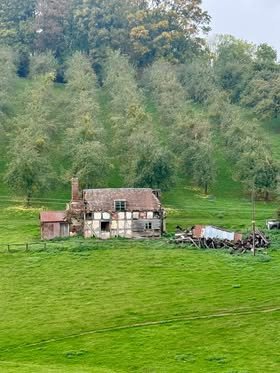
Yes, this abandoned farmhouse Wales story is about a small house left with its everyday life still inside it. A public post dated 26 October 2026, from Abandoned explore wales and explored with Urban Welsh Explorer, shows a little farmhouse set apart, with furniture and household objects still in place. It imagines the family who once lived there, but names no one and gives no town, address, date built, or date last lived in.
That gap is the point: the house is interesting because of what remains, not because of a story we can fill in for it.
Key takeaways
- A little abandoned farmhouse in Wales appears in a public post dated 26 October 2026, with its household objects still inside.
- Rusted ranges, a Belfast sink, an iron bed, and a dressing table show a working home, not an empty shell.
- Those objects suggest daily life, but they do not prove who lived there, when the house was built, or why it emptied.
- Commenters’ questions about listing status, age, and past sales remain questions, not verified facts.
- Do not enter private property without permission. Follow lawful routes only.
What does the abandoned farmhouse Wales post show — and not show?
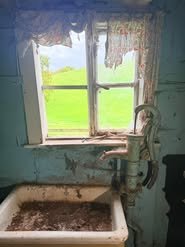
The post’s photos show a house that still reads as a home. A cast-iron range and a second stove anchor the kitchen, and a Belfast sink sits ready for work that no longer happens. A metal trunk, an enamel colander, and a Royal Doulton London wash basin add the small details of cooking, washing, and storing.
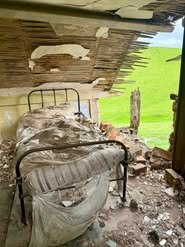
In the sleeping rooms, the picture stays domestic. An iron bed, a wooden commode chair, and a wooden dressing table with a mirror show a house where people slept and dressed. Nothing points to wealth or display, only to an ordinary farmhouse, used hard and then left.
It shows no deed, sale record, plaque, or dated photograph, and nothing that identifies the place. This article will not try to identify it either.
Why do farmhouses empty out in rural Wales?
Farmhouses empty for many ordinary reasons, and no single reason fits every house. A family may move for work, health, or a smaller home. A farm may change hands or stop supporting a large house, and repairs may grow faster than income.
Distance adds pressure. A house far from jobs, schools, and services asks a lot of its next owner, including travel and the cost of keeping a large, old building warm and dry. When those costs rise, a house can sit empty even if its walls are still sound.
That general pattern helps explain why stories of empty houses often look alike at first glance. It does not explain this farmhouse in particular, because no reason for its emptying is given in the post.
What do the rooms left behind actually tell you?
Start with the kitchen, because a farmhouse kitchen was a workplace. A cast-iron range did more than cook food: it heated water and warmed the room. A Belfast sink, deep and plain, fits a house where washing happened by hand, in bulk.
The trunk tells a different part of the story. People kept trunks for clothes, papers, and things worth protecting. A trunk left behind may mean the move was rushed, the next home was smaller, or the trunk was too heavy to take.
The bedroom objects complete the picture. An iron bed is sturdy and hard to move. A commode chair speaks to care at home, often for an older person. A dressing table with a mirror speaks to daily routine, not to luxury.
How to read an old farmhouse interior without guessing
Read objects as clues, not as proof. Ask what each object was used for, and what is missing. A house with a bed but no modern kitchen may have stopped changing long before it stopped being lived in. That method lets you notice the Royal Doulton wash basin as a maker’s mark, without turning it into a date.
What do those objects prove — and what do they not prove?
This comparison is the core of the article: each object suggests something, and each suggestion has a limit.
| Object in the photos | What it suggests | What it does NOT prove |
|---|---|---|
| Rusted cast-iron ranges and stoves | The house cooked and heated with solid fuel, over many years | The exact age of the house, or when cooking last happened |
| Metal trunk | Someone stored clothes or papers worth keeping | Who owned it, or why it was left |
| Belfast sink | Heavy, hand-done kitchen and washing work | That the house was a working farm at the end |
| Iron bed | A long-used sleeping room, built to last | Who slept there, or when they last slept there |
| Wooden commode chair | Care at home, possibly for an older person | Any medical history, or any person’s identity |
| Royal Doulton London wash basin | A named maker, and a period of manufacture in general | A date for this house, or a date for this basin’s use |
| Enamel colander | Everyday cooking, in a working kitchen | A family recipe, a family name, or a move date |
| Wooden dressing table with mirror | Daily dressing and grooming routines | Wealth, status, or the identity of its owner |
A maker’s name on a basin can help date a type of object in general. It cannot date the house, because objects move and stay in use for decades. Rust alone cannot give a year.
Why do commenters’ questions stay questions here?
Readers asked the natural questions. Commenters asked or wondered whether the house is listed, whether it has Tudor wattle-and-daub construction, and whether it was previously on the market or sold. Those questions are worth recording, but they are not answers. This article does not state that the house is Grade II listed, Tudor wattle-and-daub, or previously on the market or sold, because none of those claims is verified in the post itself.
If you want to check a listing claim for any Welsh house, listed-building rules vary, and records sit with bodies such as Cadw and the local authority. Check those records for a named property, through official channels, before you repeat a listing claim. A house can also look older than it is, because later work copies earlier styles. Only a proper record or official listing entry can settle age or construction, and none is given here.
How can you follow a story like this without trespassing?
Use this checklist whenever a post makes you want to see a house for yourself.
- Do not enter private property without permission, and do not use a post to work out where to go.
- Do not share or seek location clues, entry routes, or directions to a private house.
- Visit public museums and historic houses that are open to visitors, where old farmhouse rooms are shown lawfully.
- Check official listings and local authority records for a named property, rather than trusting comments.
- Follow the story through the poster’s public updates, not through a visit to the house itself.
- If a house later appears in an official listing, go through the listing agent or owner.
That checklist protects the house as well as the reader. An empty farmhouse can have weak floors and damp timber, and it can still have an owner or caretaker. An empty look is not permission.
This house is not presented as for sale or open. It sits in a different category from lived-in houses currently for sale. Those are lived-in houses offered for sale, not abandoned properties, and they come with an agent and a route to a tour.
Readers who enjoy this kind of story will find a wider set on the site’s homepage, including grand abandoned mansions as well as smaller houses.
Photos
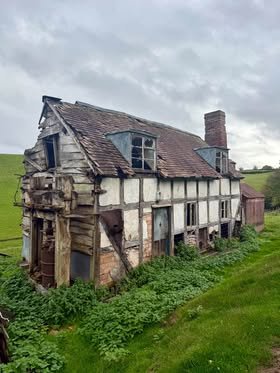
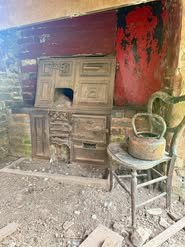
Photos for this post will be added by the site owner, with a lawful image only. Suggested image: a wide view of an old farmhouse interior, showing a cast-iron range and simple wooden furniture. Do not use a private interior photograph without permission, and do not claim the post’s photo is the site owner’s.
Frequently asked questions
Where is this abandoned farmhouse in Wales?
Its town, village, and address are not given in the post, and they are not published here. Do not seek or share location clues for a private property.
Who lived in this farmhouse?
No family name, owner, or resident is given in the post, and none is published here. The post imagines a family, but that is imagination, not a record.
When was the house built, and when was it last lived in?
Neither date is given in the post, and neither is published here. Both remain unverified, and would need official records for a named property to confirm, not photographs.
Is this house Grade II listed or Tudor wattle-and-daub?
Commenters asked or wondered about those points, but neither is verified here. Check Cadw and the local authority for a named property before repeating such a claim.
Can I visit or enter this farmhouse?
No. Do not enter private property without permission, and do not use the post to find it. Visit public museums and historic houses open to visitors instead.
Final thoughts
A little farmhouse left with its range, sink, bed, and dressing table inside does not need an invented history to matter. Its value lies in what it shows about ordinary life: cooking by a range, washing by hand, and dressing at a wooden table. Those details are enough, without a name, a date, or a location. Some questions stay open until an official record answers them, and some houses stay private even when their photographs travel widely.
Disclaimer: This post is general information only, not legal, tax, or financial advice. Rules differ by nation and local area. Check local records, Cadw or the local authority where relevant, and a local professional before acting.