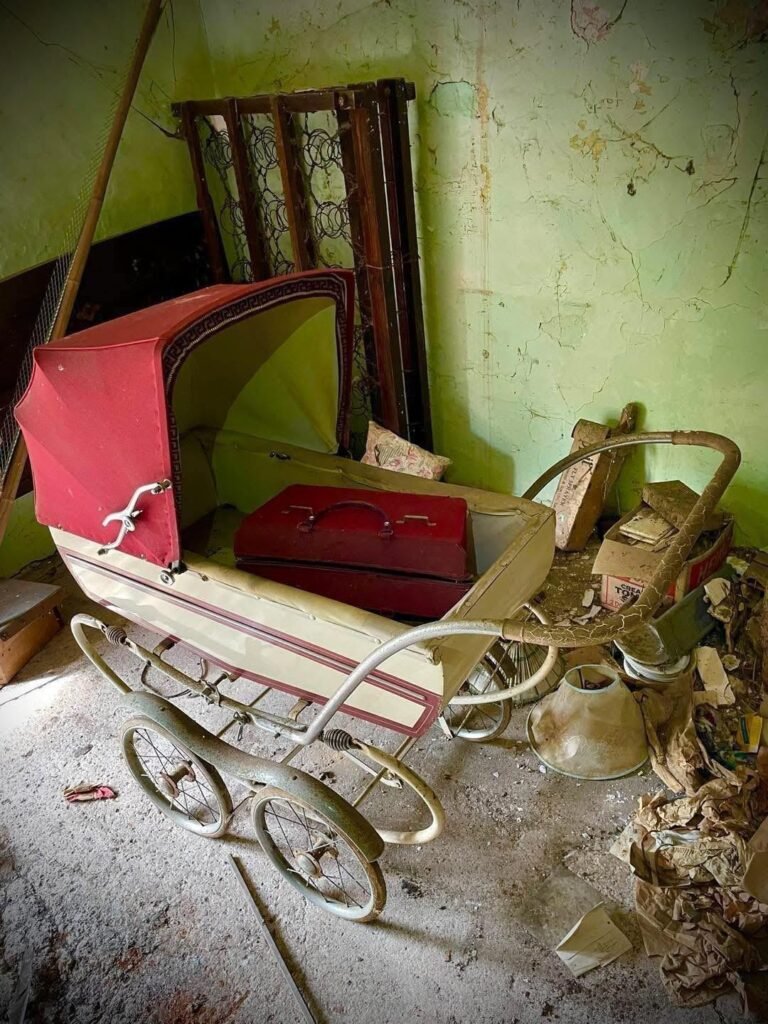
Some abandoned houses get their names from what is left inside them, not from who lived there. This farmhouse is known, in the Luke2Explore post that photographed it, as “Mr Hadfield’s Pram House”. The pram in the second photograph — vintage, red, with a suitcase resting on top — is the reason. It is an object that belongs to a different era of family life, sitting in a derelict room, and it gives the whole house its nickname.
The post says the house has been left abandoned and derelict for more than a decade. It also says, frankly, that the poster does not have much information about it. That frankness is a gift to a writer, because it sets the limit: what follows is what the photographs show, plus the post’s own account, and no more. No exact location is given in the post, and none is given here. No family details beyond the house name are given, and none are added.
A decade of decay, read from the outside in
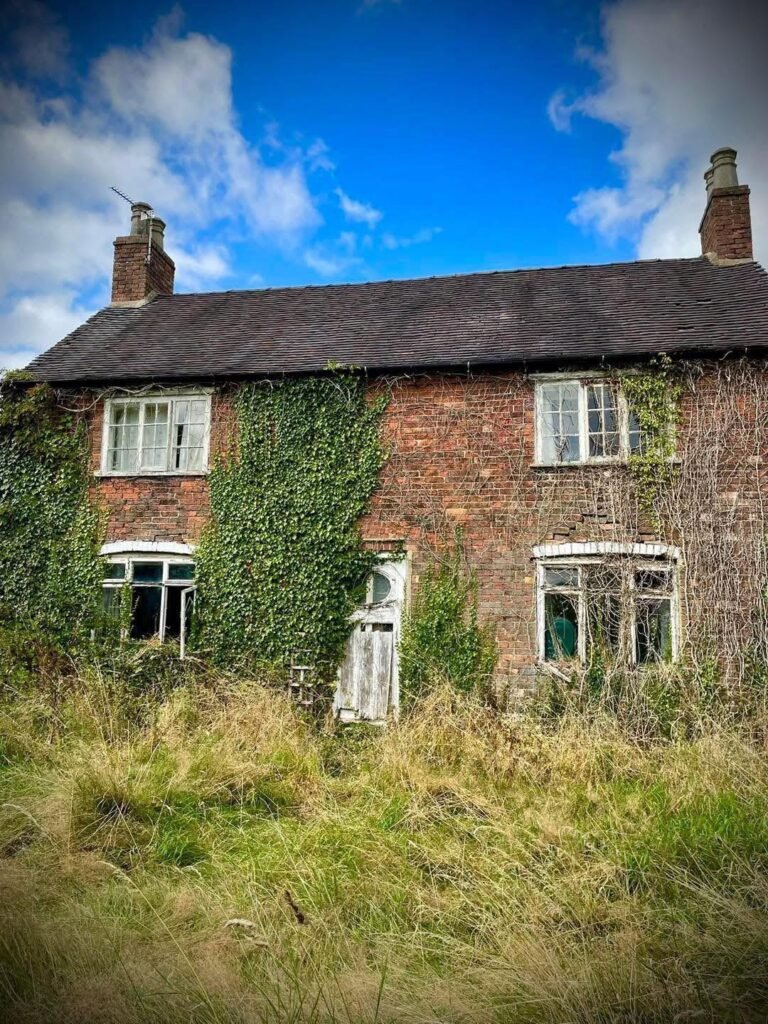
The featured photograph shows a brick farmhouse with ivy on its walls and an overgrown garden, under a blue sky. Ivy and overgrowth are slow clocks. They do not prove a precise number of years, but together with the post’s “more than a decade” they give a consistent picture: this is not a house emptied last month. Its garden has had time to close in, and its walls have had time to be claimed by climbers.
Inside, the tone changes from slow decay to sudden preservation. The post describes a small time capsule left inside, and calls the experience sad as well as spectacular — a former home left to decay, with a hope, expressed in the post, that the building might be saved or reunited with family if family members are still around. That hope is the poster’s, and it is reported here as such, not as a plan or a campaign. No rescue, sale, or restoration is stated in the post.
The bedroom that walks into the 1960s
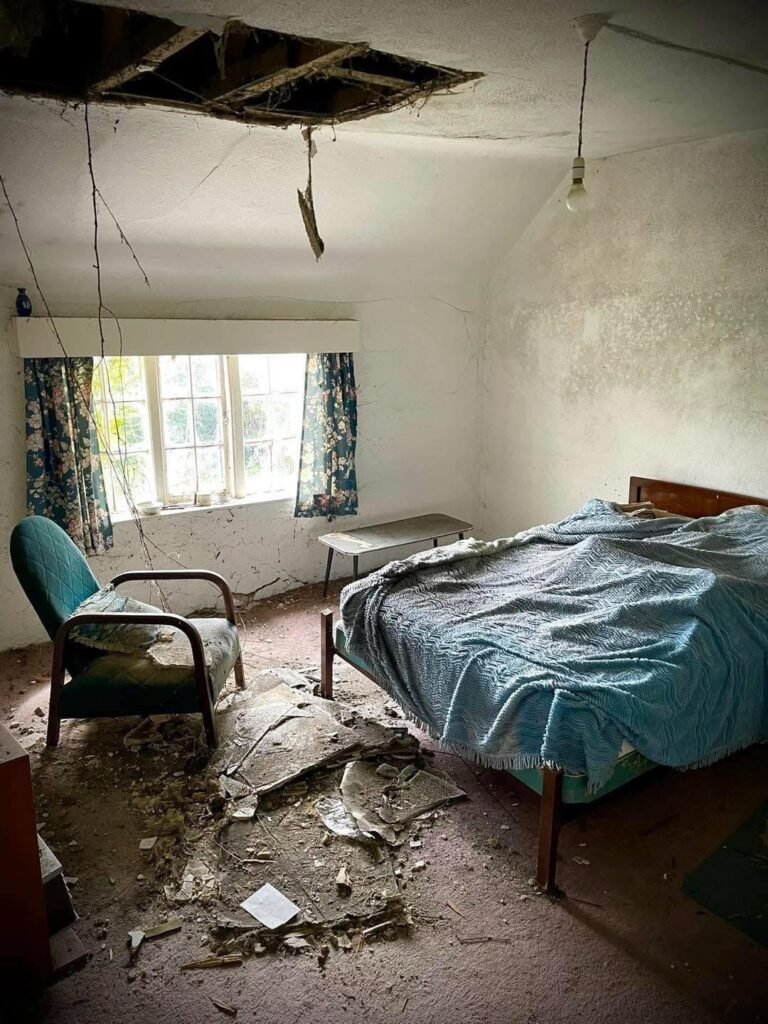
The most specific room in the post is the one bedroom upstairs. The poster describes walking into it as walking into the 1960s, or possibly earlier, from what lay about in the room, with retro items not seen in a while. The photograph bears out the description in its own terms: a single bed with blue bedding, an armchair, a window with curtains, and a damaged ceiling above. It is not a museum room. It is a bedroom that stopped being updated, then stopped being lived in, then started to fall apart around the things that were left.
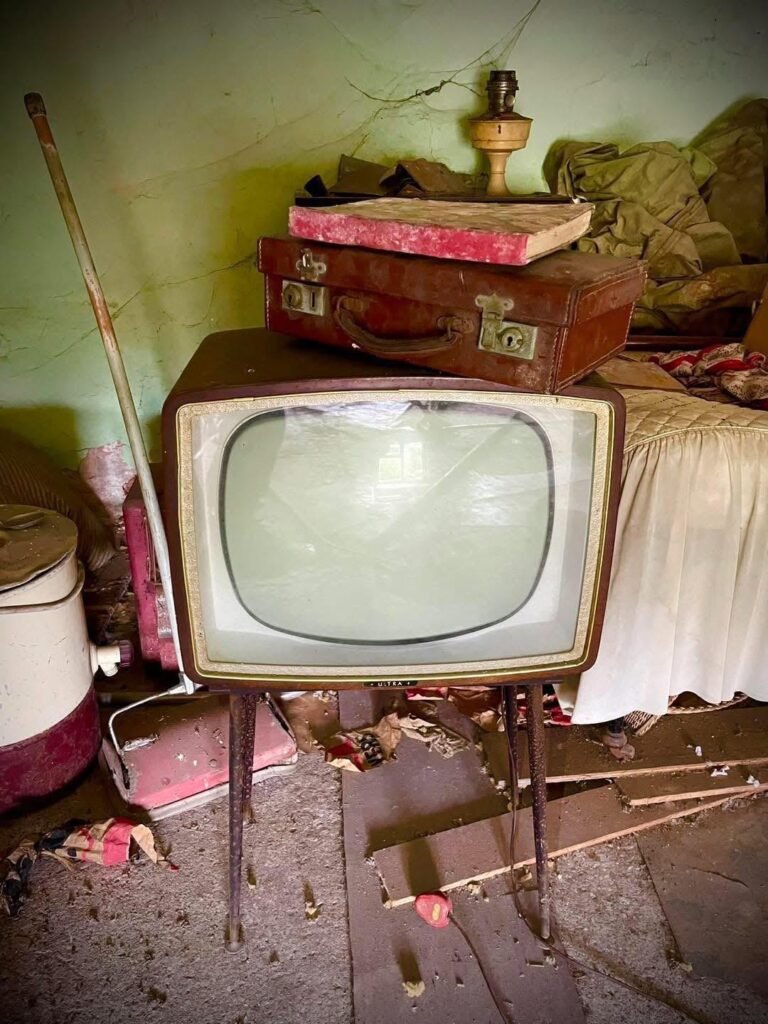
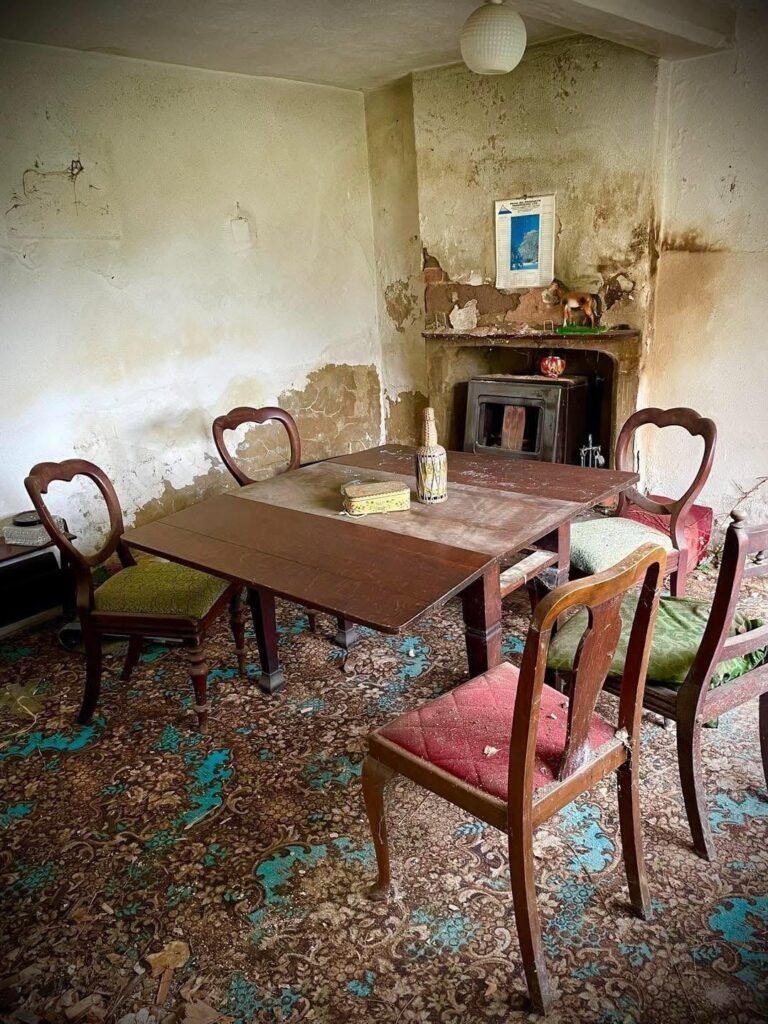
A comparison helps here, and it is this article’s original frame: a time capsule can be large or small. A large time capsule preserves a whole household. A small one preserves a room, or even a single object — a pram, a television with stacked suitcases on top, a bedroom’s bedding and chair. This farmhouse is a small time capsule inside a large derelict building. The dining room photograph makes the same point from the other side: a wooden table and chairs with a fireplace and stove, ordinary furniture, left in an ordinary room, now extraordinary only because it was left at all.
That distinction matters for anyone tempted to romanticise the house. A pram with a suitcase on top is poignant, but it is also just an object in an empty house. The post does not say who the pram belonged to, when it was last used, or why it was left. This article does not guess. The sadness the poster felt on the explore is understandable, and it is reported as feeling, not as fact about the family.
What saving would actually mean
The post’s hope — that the lovely old building could be saved — is worth taking seriously without turning it into a promise. Saving a farmhouse derelict for more than a decade is not a matter of tidying a garden. Ivy, a damaged ceiling, and years of weather mean structural questions come first, and those questions cannot be answered from photographs. No condition survey, ownership information, or sale status is given in the post, and none is claimed here. Anyone interested in a building like this would need county records and a local professional, and would need permission from whoever owns it — a point the post itself implies by hoping for a reunion with family, if family are still around.
For readers who want the contrast, a house that is lived in and offered for sale sits in a different world from this one: see this 1902 home in Alexandria, Minnesota, where the questions are about price and upkeep, not about whether a building can be saved at all.
FAQ
Why is it called the Pram House?
The post calls it “Mr Hadfield’s Pram House”. The name comes from the vintage pram left inside, photographed with a suitcase on top.
How long has the farmhouse been abandoned?
More than a decade, according to the post. No exact year of abandonment is given.
What is in the 1960s bedroom?
The post describes one upstairs bedroom as like walking into the 1960s, or possibly earlier, with retro items left about. The photograph shows a single bed with blue bedding, an armchair, and a window with curtains, under a damaged ceiling.
Who was Mr Hadfield?
The post gives the house name only. No biographical details about Mr Hadfield are given in the post or here.
Is the house for sale or being restored?
Not stated in the post. The poster expresses a hope it could be saved, but no sale, restoration, or rescue plan is stated.
Can I visit it?
No visiting information is given here, and entering private property without permission is not encouraged.
Disclaimer
This article is general information only, not legal, tax, or financial advice. Rules on abandoned and private property differ by state and county; check county/local records and a local professional before acting.
Photos
Photos by Luke2Explore, via the original Facebook post: https://www.facebook.com/Luke2Explore/posts/abandoned-mr-hadfields-farmhousethis-abandoned-farm-house-is-known-as-mr-hadfiel/1523089386523411/ — 5 of the 37 photos are shown here.