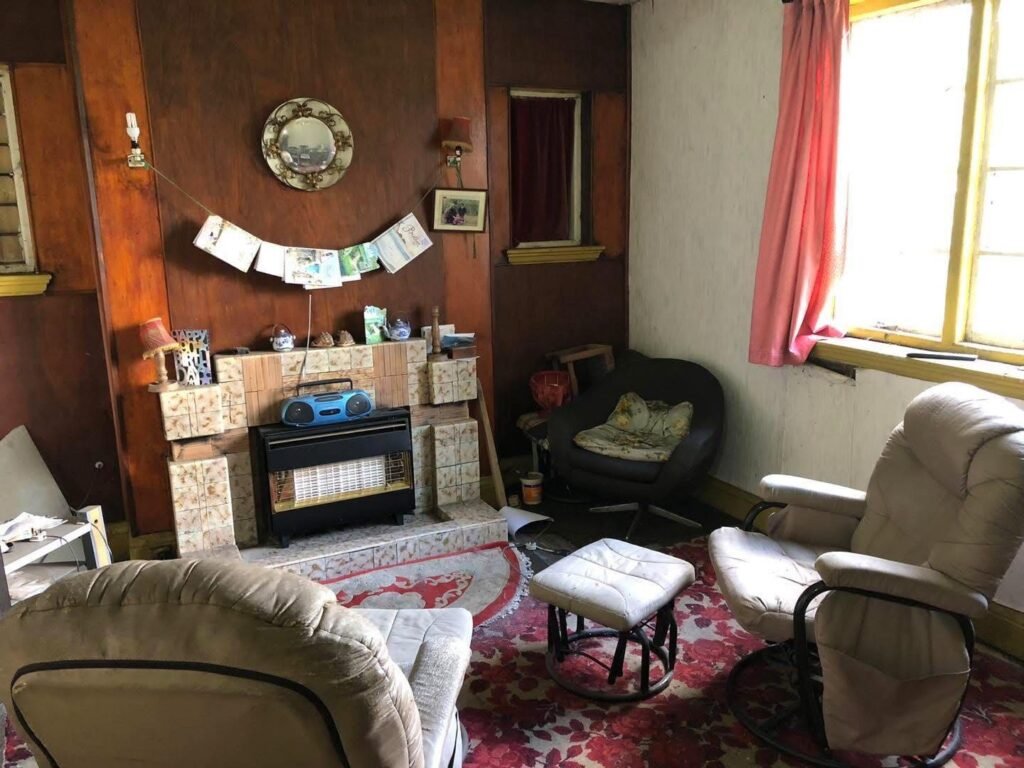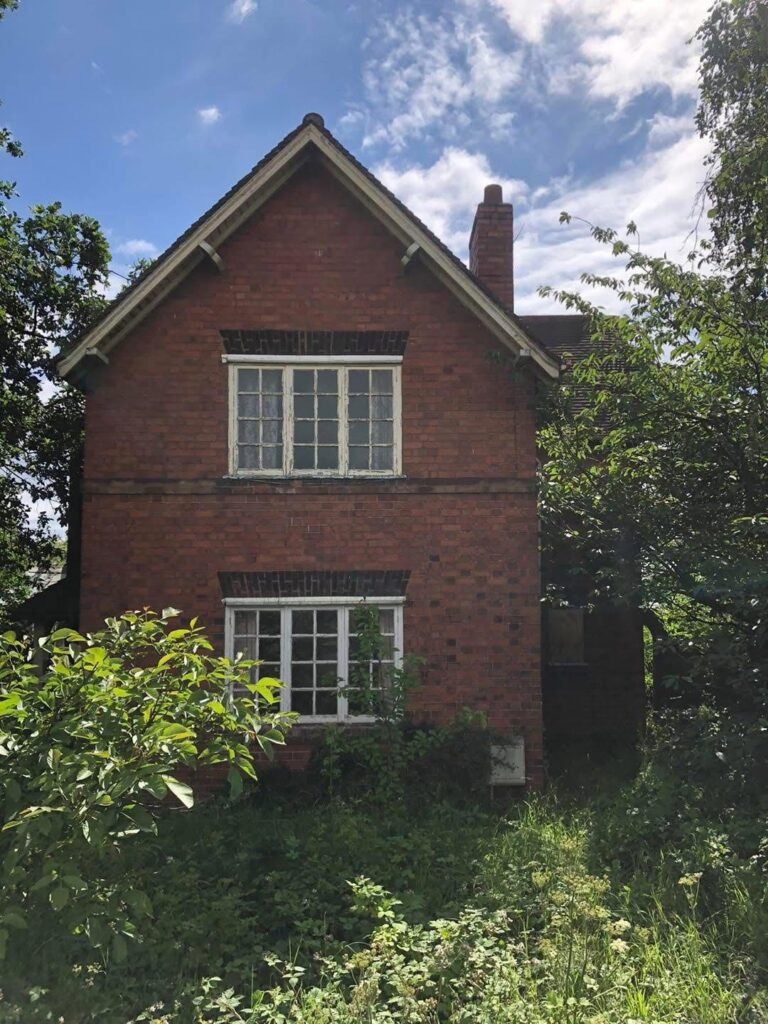
The outside is straightforward: a red-brick gabled house with white multi-pane windows, its front garden overgrown, standing under a bright sky. Nothing about it looks unusual until the second photograph, which is the reason this house is remembered at all. Across the fireplace, postcards are strung on a line like bunting. Under them sit a blue boombox, armchairs and a tiled fireplace, in a room that still looks arranged rather than ransacked.
The Luke2Explore post that photographed the house is unusually honest about what it does not know. It says the name “Maurice’s House” seems to come from postcards found in the house. It says the poster does not know how long the house has been abandoned, only that it looks derelict for quite some time. It wonders whether Maurice and his family liked to travel, because of the postcards and other items left behind. Each of those points is presented in this article exactly as the post presents it: a name that seems to come from postcards, a duration that is unknown, and travel as a suggestion, not a fact.
Reading a house from what hangs in it
That honesty makes a useful checklist — not for visiting, which this article does not encourage, but for reading photographs of abandoned houses without inventing a biography. Applied to this house, it runs like this:
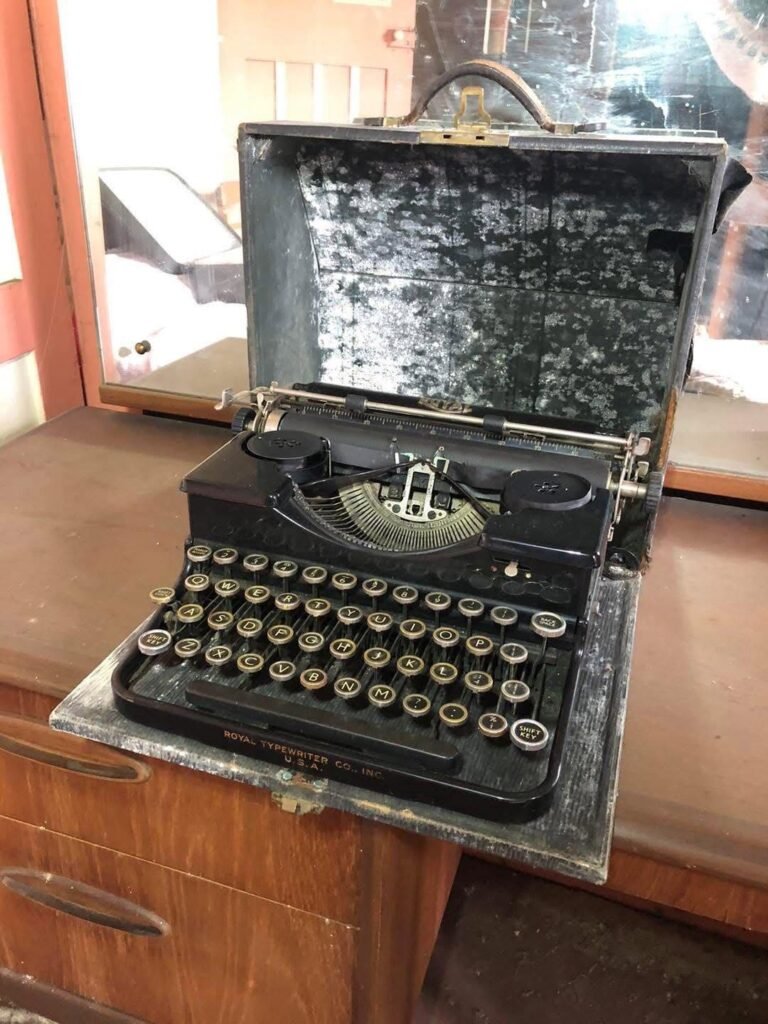
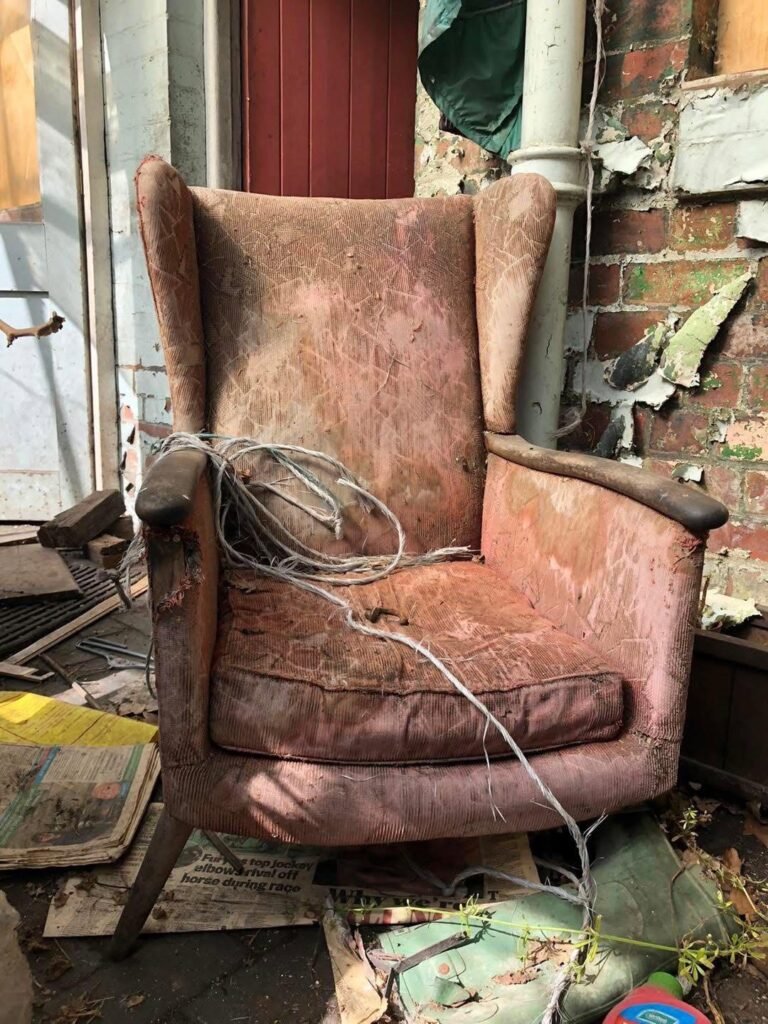
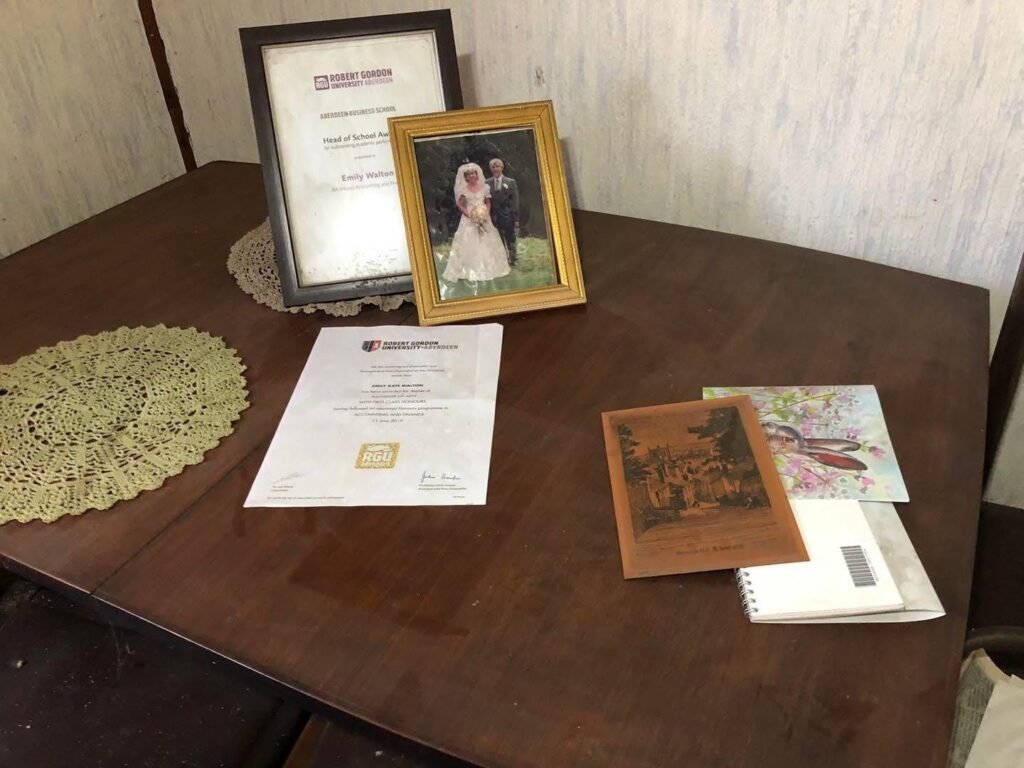
- What is actually visible? Postcards strung across a fireplace, a typewriter in its case on a cabinet, a pink wingback armchair, newspapers, a framed wedding photograph and papers on a table.
- What does the post itself claim? Only that the name seems to come from postcards, and that the house has been derelict for quite some time.
- What is the poster’s guess? That the family may have liked to travel.
- What is not known? How long the house has been empty, who Maurice was beyond the name on the postcards, and what happened to the family.
Keeping those four lines apart is the whole discipline of writing about a house like this. The moment the guess in line three is written as if it were the fact in line two, the article stops being honest. The postcards are real. The travel is a wonder, and it stays a wonder here.
The remaining photographs reward the same care. A typewriter in its case is a working object, kept closed and put away, not a prop. A pink armchair with rope and newspapers beside a peeling brick wall is a corner where someone sat, not a staged scene. A wedding photograph on a table among postcards and papers is the kind of item that makes a stranger pause — and the kind of item about which this article claims nothing beyond what the photograph shows. No names, dates or relationships are read off it, because the post gives none.
Why the fireplace matters
Fireplaces are the centre of most living rooms, and this one still behaves like one even with no fire in it. The postcards hang where a mantelpiece display would go. The boombox sits where a radio would have sat. The armchairs face it. That arrangement is why the room feels sad rather than merely derelict: the shape of daily life is still legible, even though the life itself is gone. Decay has taken the edges — peeling brick, scattered papers — but it has not yet taken the layout.
No sale, rescue or restoration is stated in the post, and none is claimed here. No address is given in the post, and none is given here. If a reader wants a house where the questions have answers — price, condition, rooms, listing — the contrast is this 1902 home in Alexandria, Minnesota, a lived-in house for sale, not an abandoned property.
FAQ
Why is it called Maurice’s House?
The post says the name seems to come from postcards found in the house. No further origin is given.
How long has it been abandoned?
Not known. The post says it looks derelict for quite some time, but gives no duration or date.
Did the family like to travel?
The poster wonders this because of the postcards left behind. It is presented in the post as a suggestion, not a verified fact, and is reported here the same way.
What is left inside?
Postcards, a typewriter in its case, armchairs, a boombox, a framed wedding photograph and papers, among other possessions, according to the post and the photographs shown here.
Is the house for sale?
Not stated in the post. No sale information is claimed here.
Can I visit it?
No visiting information is given here, and entering private property without permission is not encouraged.
Disclaimer
This article is general information only, not legal, tax, or financial advice. Rules on abandoned and private property differ by state and county; check county/local records and a local professional before acting.
Photos
Photos by Luke2Explore, via the original Facebook post:
https://www.facebook.com/Luke2Explore/posts/1299553078877044/ — 5 of the 39 photos are shown here.