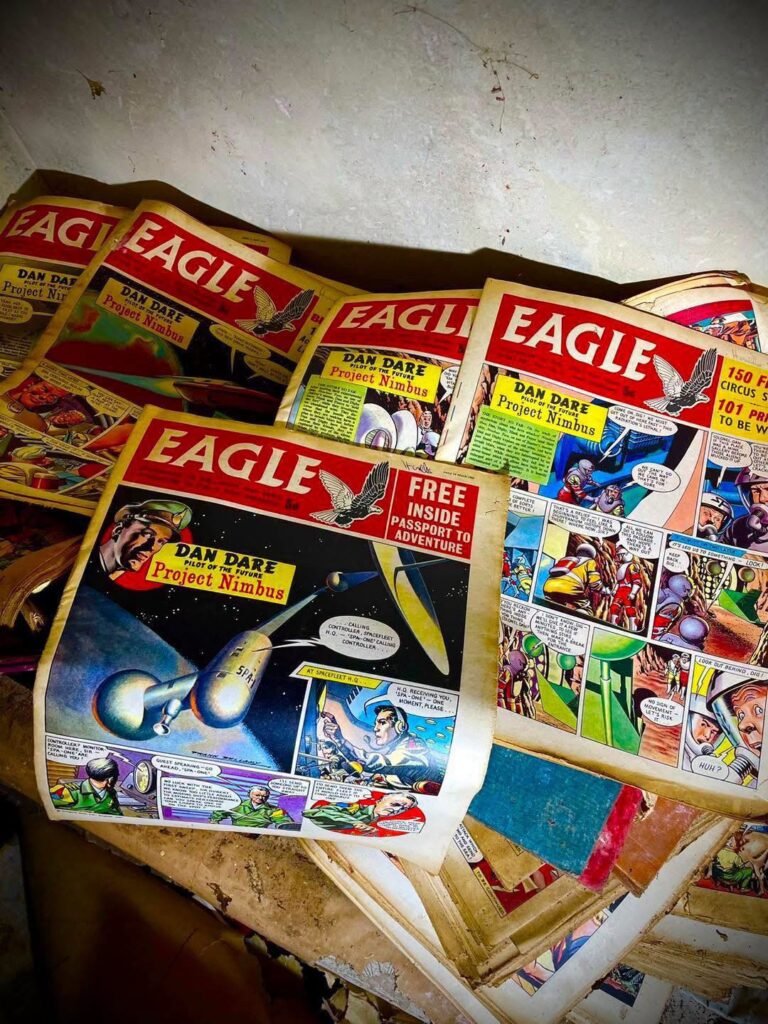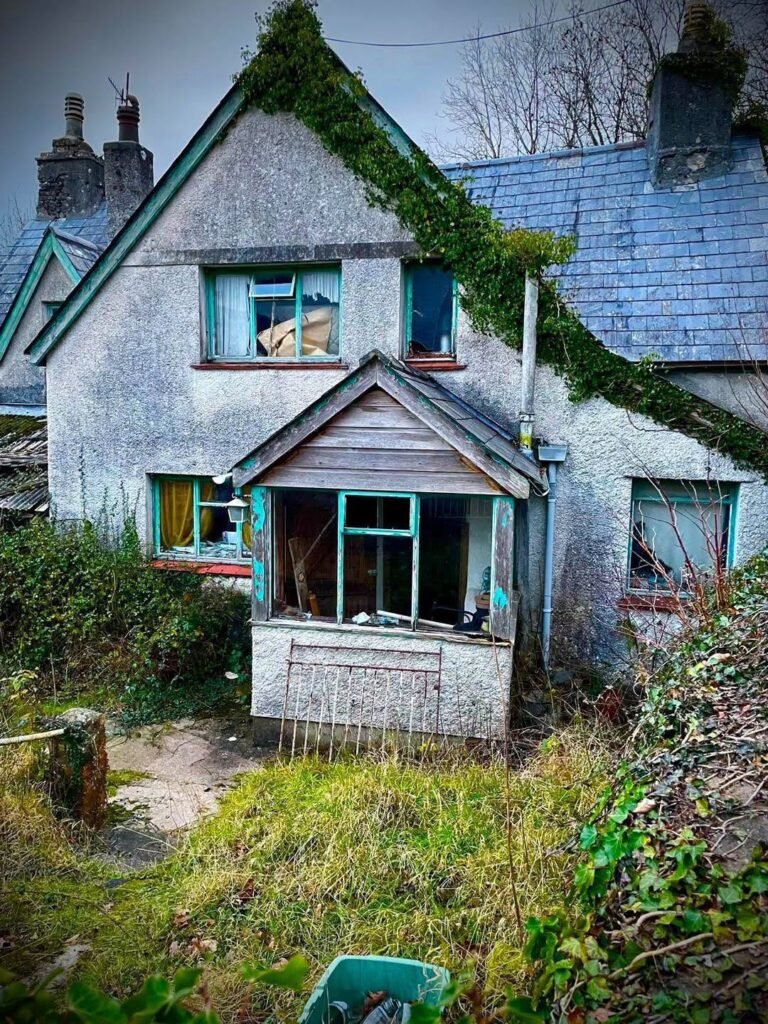
The comics gave this house its name. Eagle comics, the British weekly with Dan Dare on the cover, were left lying about the rooms, and the poster dates them to the 1960s. In a house that is otherwise trashed and derelict, a stack of brightly coloured comics is the thing that catches the eye first, and the name stuck: the Comic Book House.
The house stands in Wales, photographed by Luke2Explore in a post dated 23 August 2026. The poster describes a stunning old building, very derelict, still holding an interesting time capsule of things left behind. No address is given in the post, and none is given here. What follows is built only from what the post says and what the five photographs shown here contain.
Why it is called the Comic Book House
The Eagle comics are not a small detail. The photographs show several copies piled together, their red mastheads and Dan Dare “Project Nimbus” cover lines still bright against the dust. Eagle was the comic of the 1950s and 1960s, and the copies here are, in the poster’s dating, from the 60s. That dating is the poster’s, reported as such, not independently verified.
A comic is a strange thing to survive in a derelict house. Paper is usually the first thing damp and time take. These survived because they were kept in a pile, under cover, in a house that stayed dry enough for print to last. Their survival is also what makes the nickname honest. The house is not named for its architecture or its owners. It is named for the most vivid thing found inside it, and the name tells a reader exactly what to look for in the photographs.
A timeline in leftovers
The post sketches the house’s contents as a spread of dates, and it is worth laying that out plainly, because the spread itself is the story.
| Period, as the poster dates it | What was left |
|---|---|
| Late 1700s to early 1800s | Some of the oldest things in the house |
| 1960s | Eagle comics, including Dan Dare |
| Up to the mid-1990s | The most recent things left behind |
| After the explore | House completely emptied |
The dating of the oldest items is the poster’s account, and it is a wide claim: objects spanning roughly two centuries in one derelict house. This article does not verify the age of any single object, and no object is identified here as dating to a particular century beyond what the post claims. What the timeline does show, even taken loosely, is a house that accumulated things over a very long life, then stopped, and then was picked over until the rooms were messy and the older layers showed through.
The Howells family, in photographs
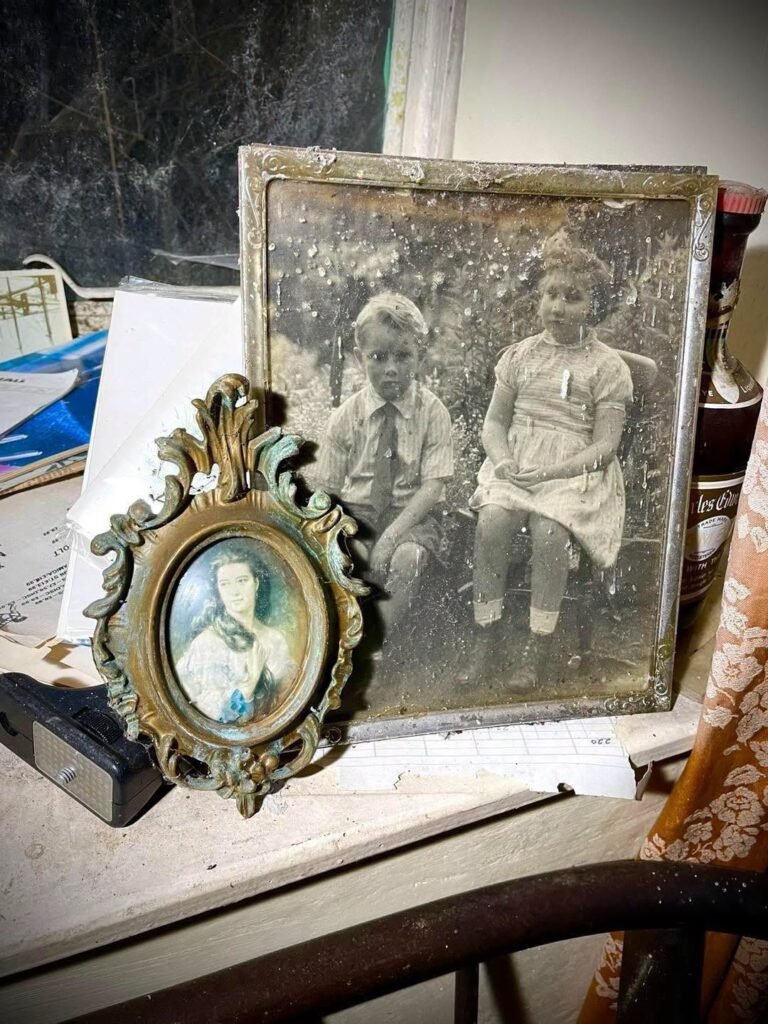
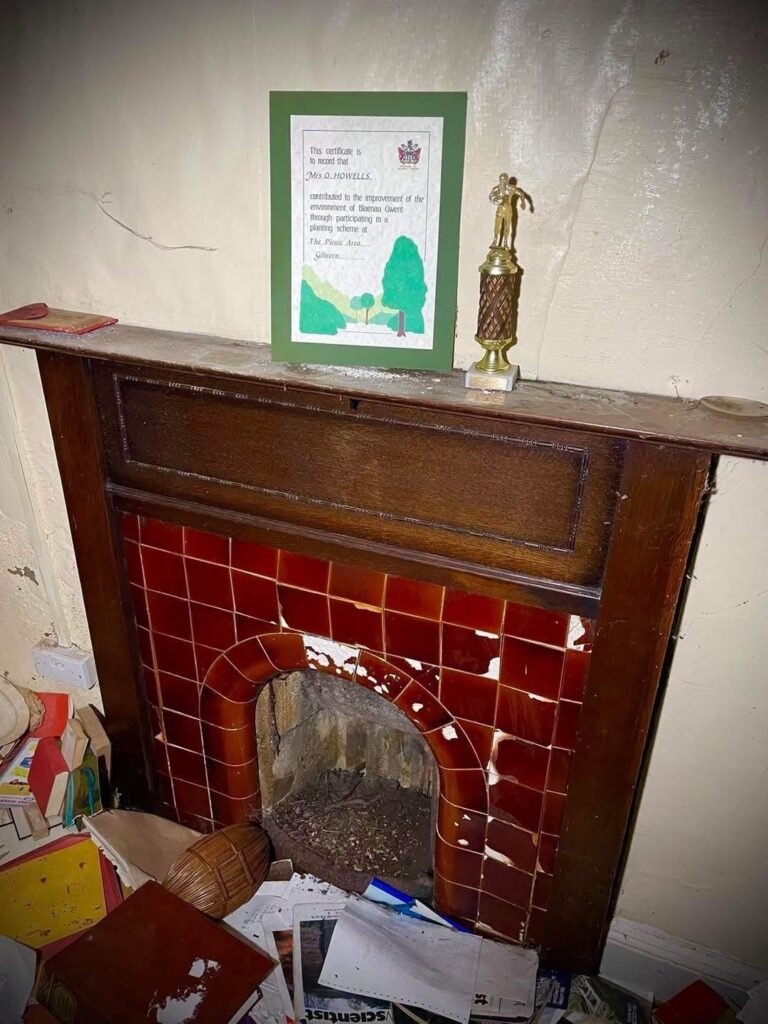
The post says the house was lived in by the Howells family, and that the photographs found inside may possibly be of the old owners and their relations. That “may possibly” is important. The framed family photographs in the gallery show people whose names the post does not give, and this article does not name them. The family name comes from the post itself, which also records a framed certificate at the hearth.
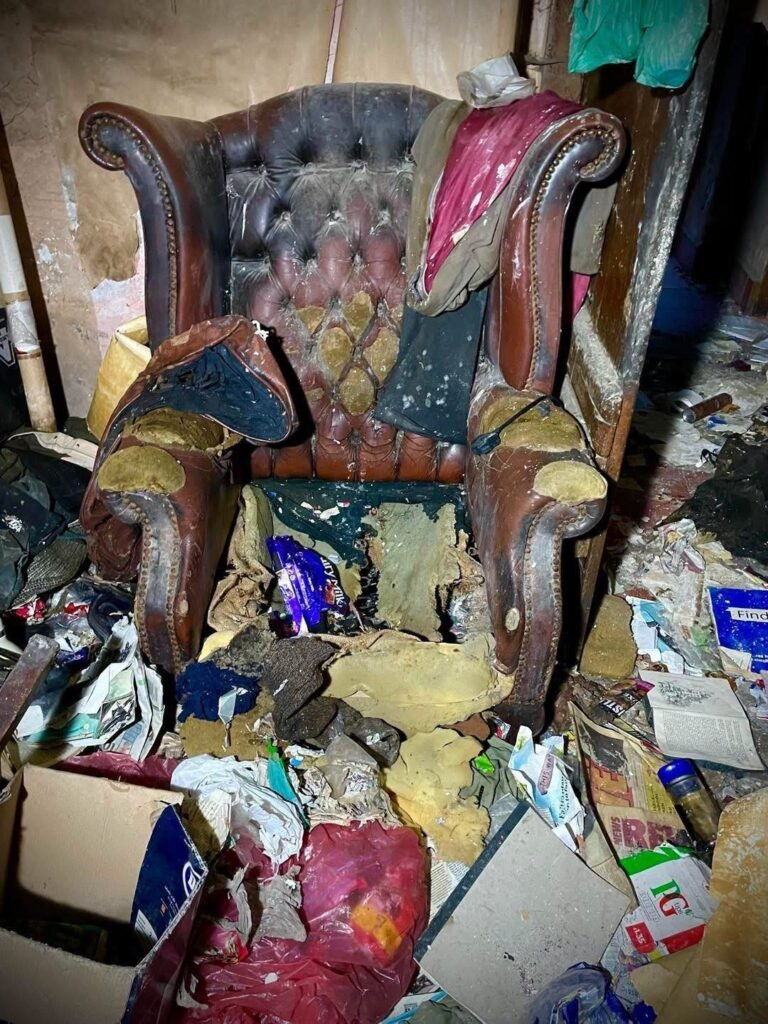
What the photographs do show, without any naming, is a household that kept its own image on the walls. Framed portraits, a leather armchair sitting amid clutter, a hearth with its certificate: these are the remains of a family home, not a show house. The clutter the poster describes — the mess that has grown as the house was left and, in his words, trashed — sits in the same frames as the portraits. That is the honest condition of the house as photographed: a family record and a mess, in the same rooms.
Emptied since the explore
The post ends with an update that changes the tense of everything before it. Since the explore, the house has been completely emptied, and may be having work done to renovate it — or it may be demolished. The poster hopes it is not demolished, saying it would make a lovely home once again.
That is the full extent of what is known about the house’s future. No planning record, no buyer and no demolition order is cited in the post, and none is claimed here. The photographs in this article show the house as it was during the explore: ivy climbing the stone walls, green window frames, a weathered wooden porch, comics and portraits and an armchair in the clutter. If the house has indeed been emptied, these photographs are now a record of a state that no longer exists, which is a second reason to keep them attached to the post that took them.
For the contrast with a house that is lived in and on the market, see this 1902 home in Alexandria, Minnesota. More houses left in this state are gathered in the Abandoned Houses category, and the site’s front page is abandoned.blog.
FAQ
Where is the Comic Book House?
In Wales, according to the post. No address is given in the post or here.
Why is it called the Comic Book House?
Because of the Eagle comics left about the house, dated by the poster to the 1960s.
Who lived there?
According to the post, the Howells family. No further details about the family are given in the post or here.
How old are the things inside?
The poster dates the contents from the late 1700s and early 1800s up to the mid-1990s. Those dates are the poster’s account and are not independently verified here.
Is the house still full of comics and furniture?
No. According to the post, the house has been completely emptied since the explore.
Will it be renovated or demolished?
Not known. The poster says it may be having renovation work, or it may be demolished, and hopes it will be saved as a home. No plan is confirmed.
Can I visit it?
No visiting information is given here, and entering private property without permission is not encouraged.
Disclaimer
This article is general information only, not legal, tax, or financial advice. Rules on abandoned and private property differ by state and county; check county/local records and a local professional before acting.
Photos
Photos by Luke2Explore, via the original Facebook post: https://www.facebook.com/Luke2Explore/posts/the-abandoned-comic-book-housethis-stunning-old-building-lays-very-derelictknown/1536418238523859/ — 5 of the 23 photos are shown here.