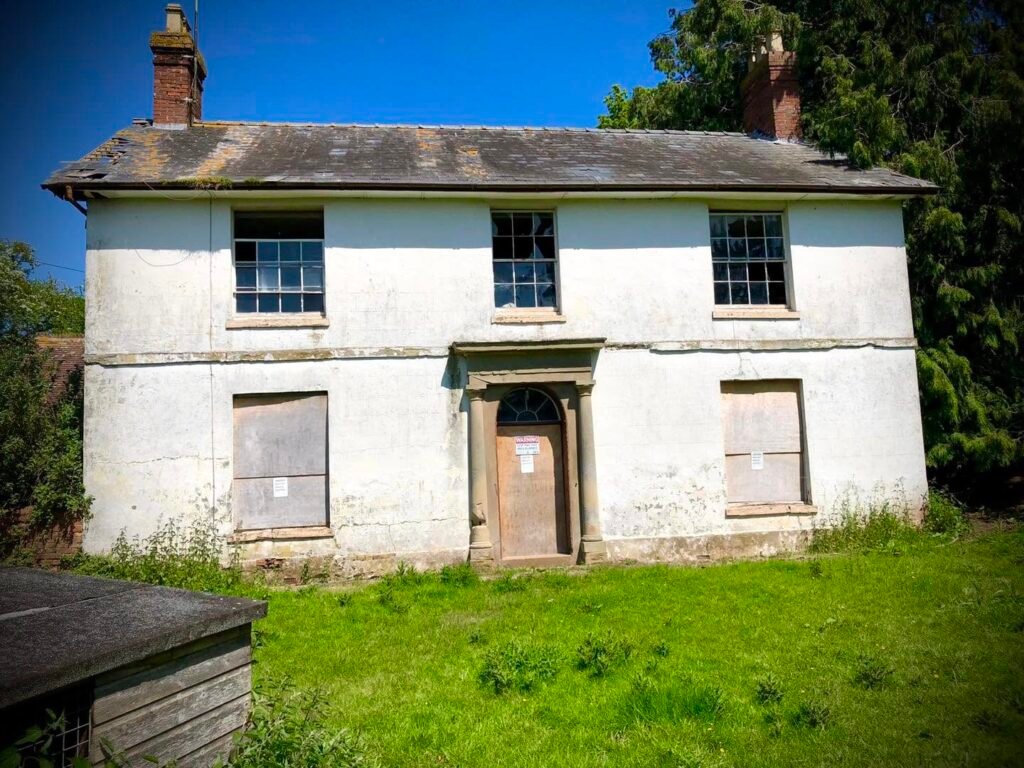
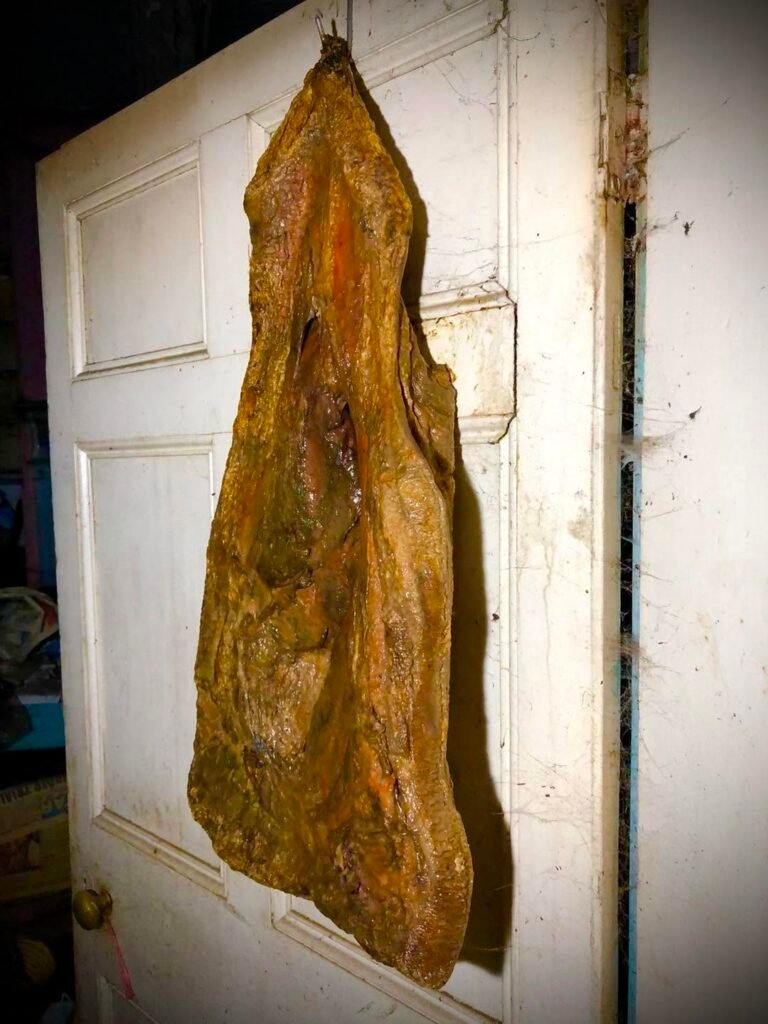
The house has a name that stops you, and the name comes from what was found downstairs. It is called Slaughters House, and the reason is in the back kitchen, where the family once butchered animals for selling meat. Meat was still hanging on the hooks when the explorer visited. There were animal bones left about. The post says it was a bit chilling to see, and the photograph of the meat agrees with him.
The post is by Luke2Explore, dated 13 January 2026, and it carries 56 photos in total; 5 of the 56 are shown here. Everything in this article comes from the post and from the five photographs shown here. No location is given, and no exact address is given here. The only name in the post is Billy’s first name, and only that first name is used here.
Billy and the caravan
The post tells the family’s story in a few short sentences, and they are worth reporting in full because they explain the house. The farmhouse once belonged to a farming family. Billy and his parents lived here. After his father’s death in 2002, followed by his mother’s, Billy did not want to live in the house on his own, so he ended up living in a caravan close by on the land.
That is the whole explanation for why a house full of valuable things was left standing empty. Billy was still there, in the caravan, on the land. He simply would not live in the house alone.
The post adds two more facts about him. As he got older his physical health became worse. And he was known to his locals for competing in farming shows and being a prize winner in them. The competition ribbons and the farming life are not in the five photographs shown here, but the post says the house was full of valuable items left collecting dust, and the photographs show enough of that to believe it.
A house frozen in time
The post’s phrase for the inside of the house is “frozen in time”. Walking into the rooms, the explorer writes, you see possessions left behind as they were last used. There were so many valuable items left that it makes you get a sad feeling seeing them just left collecting dust and never to be used again.
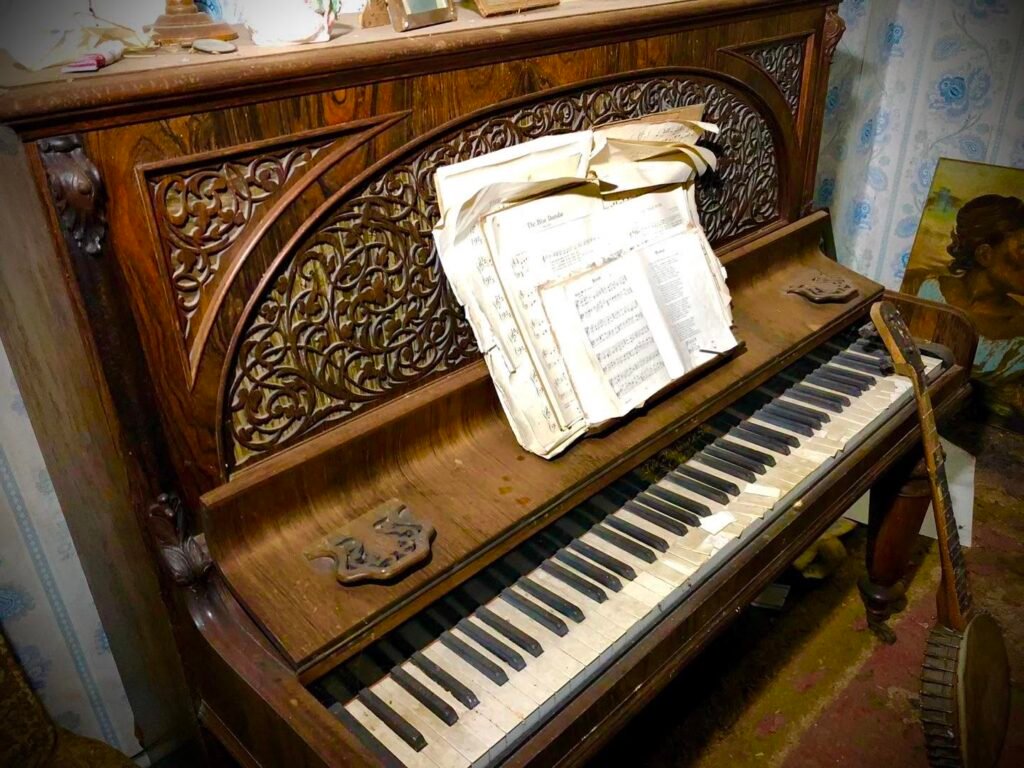
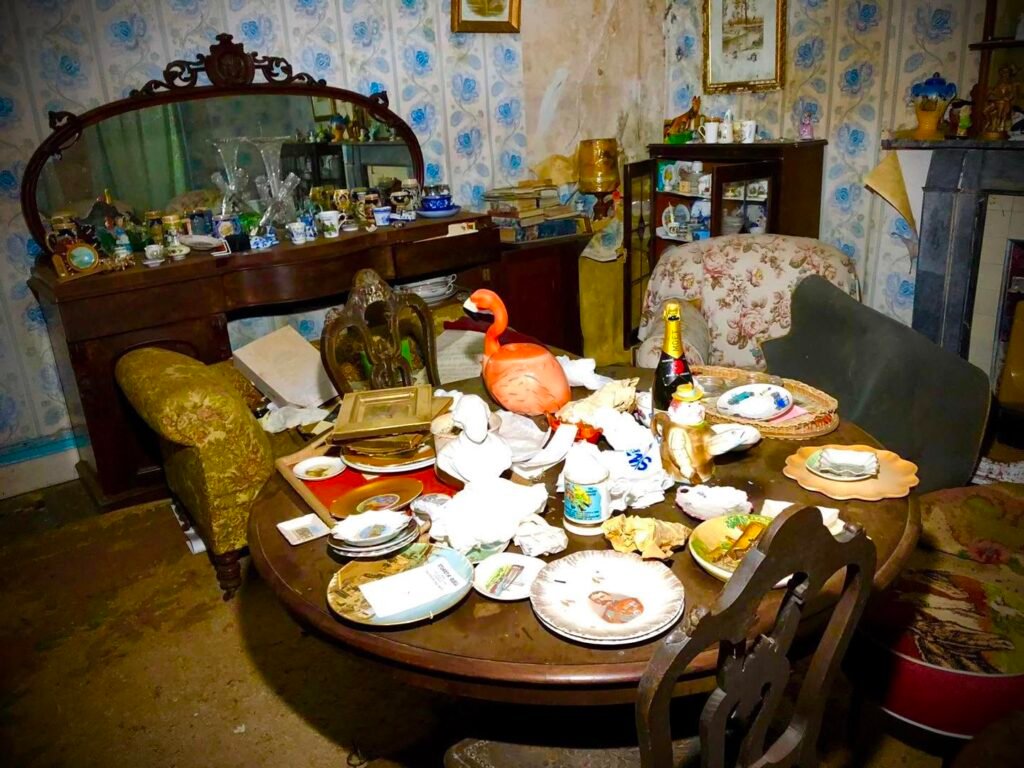
The five photographs show what that looks like. The piano is an ornately carved wooden upright, with yellowed sheet music on it and a banjo leaning against it. Somebody played that piano, and somebody played that banjo, and then both were left where they stood. The dining table is heaped with plates, a pink flamingo ornament and a bottle, in front of a sideboard crowded with ornaments under a large mirror, with blue floral wallpaper behind it all. Nothing has been tidied. Nothing has been packed away. The room looks as if the family stepped out and never came back to clear it.
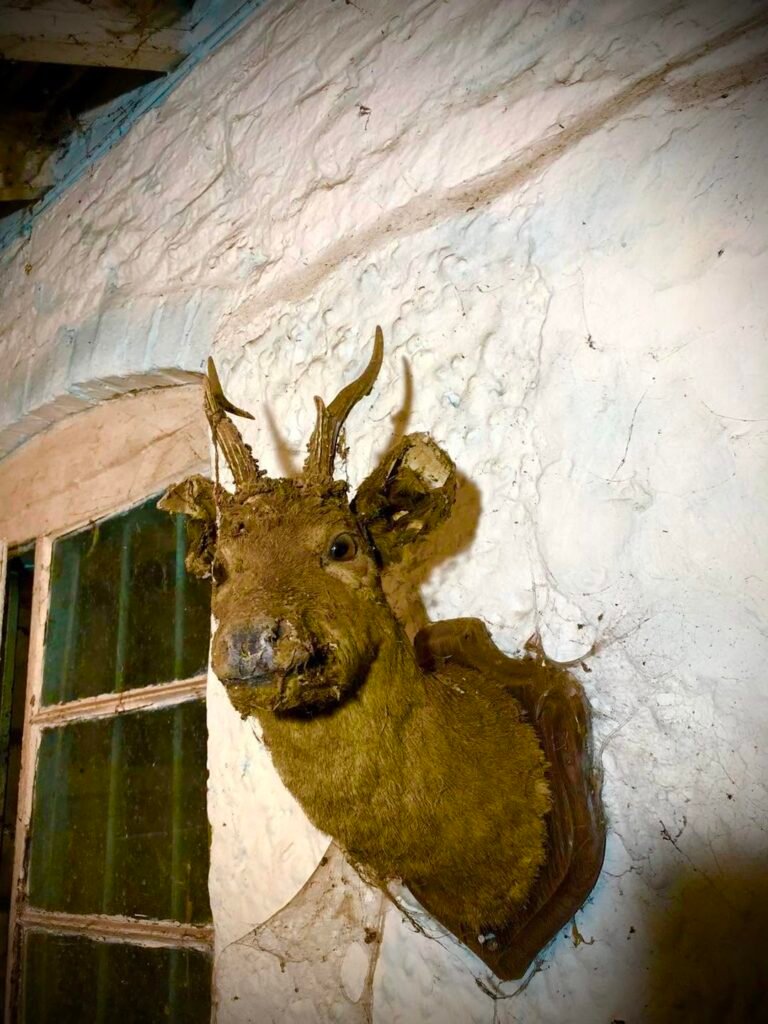
The taxidermy stag head on the white plaster wall, beside a green-painted window, is the kind of object that tells you about the people who lived here without a single word of biography. Farmers, show competitors, people who kept trophies on their walls. It is still there, on the wall, in a house nobody lives in.
The back kitchen
The room that gives the house its name is the back kitchen downstairs, where the post says it looked like the family butchered animals — cows and sheep — for selling meat. The post is careful about this: it says it “looked like” they butchered animals there, which is the explorer’s reading of the room rather than a documented fact, and it is repeated here the same way.
What is not a reading is the photograph. A large dried, cured cut of meat hangs from a hook against a white panelled door. The post says there was some meat still hanging around on the hooks, and there were even some animal bones left about. The meat in the photograph is the evidence for the name, and it is the most unsettling of the five photographs precisely because it is so ordinary in shape and so wrong in context. Meat hangs in a butcher’s shop. In an empty farmhouse, years after the family left, it hangs as a reminder of work that stopped mid-task.
The explorer’s own reaction is the honest one: it was a bit chilling to see, but as he went further into the house, past Billy and his family’s once-loved property, it was heartfelt to see such spectacular things left behind and never to be used again. Chilling and heartfelt, in the same house, in the same visit. That is the whole article, really.
What the five photographs actually show
| Photo | What is in it |
|---|---|
| The house from outside | White-painted two-storey farmhouse, boarded ground windows, broken first-floor windows, brick chimneys, overgrown lawn |
| The piano | Carved wooden upright piano, yellowed sheet music, a banjo leaning against it |
| The meat | Large dried, cured cut of meat hanging from a hook against a white panelled door |
| The stag | Taxidermy stag head on a white plaster wall beside a green-painted window |
| The dining table | Cluttered round table, plates, pink flamingo ornament, bottle, sideboard of ornaments under a large mirror, blue floral wallpaper |
The outside photograph sets the scene before any of that. The ground-floor windows are boarded. The first-floor windows are broken. A warning notice is fixed to the boarded front door. The lawn is long and green. The house is closed up, and it has been closed up for a long time.
For a contrast with a house that is lived in and on the market, see a lived-in 1902 home in Alexandria, Minnesota, where the questions are about upkeep and price rather than about what happens to a family home when the last person who loved it will not live in it alone. More houses in this condition are gathered in abandoned houses, and the site’s front page is abandoned.blog.
FAQ
Where is Slaughters House?
The post does not give a location. No exact address is given here.
Why is it called Slaughters House?
According to the post, the back kitchen downstairs looked like the place where the family butchered animals — cows and sheep — for selling meat, and meat was still hanging on the hooks when the explorer visited.
Who lived there?
A farming family: Billy and his parents, according to the post. Only Billy’s first name is given, and only that first name is used here.
When was it abandoned?
The post does not give a single abandonment date. It says Billy’s father died in 2002, followed by his mother, and that Billy then lived in a caravan on the land rather than in the house. The Facebook post is dated 13 January 2026.
What is left inside?
According to the post and the photographs, a great deal: an upright piano with sheet music and a banjo, a dining table heaped with plates and ornaments, a taxidermy stag head, and meat still hanging on hooks in the back kitchen.
Can I visit it?
No visiting information is given here, and entering private property without permission is not encouraged.
Disclaimer
This article is general information only, not legal, tax, or financial advice. Rules on abandoned and private property differ by state and county; check county/local records and a local professional before acting. The account of the house and its former occupants is as reported in the source post and has not been independently verified.
Photos
Photos by Luke2Explore, via the original Facebook post: https://www.facebook.com/Luke2Explore/posts/abandoned-slaughters-housethis-is-a-old-derelict-farm-house-which-once-belonged-/1337531908412494/ — 5 of the 56 photos are shown here.