This article starts with good news, which is unusual for this site. The mansion in the photographs was abandoned for years. It is not abandoned any more. The explorer who posted about it added an update to the post: the building is no longer abandoned, and the new owners are trying to renovate it for the National Trust. He writes that he is glad to hear it is being saved. So is this article.
The post is by Luke2Explore, dated 8 January 2026, and it carries 46 photos in total; 5 of the 46 are shown here. Everything in this article comes from the post and from the five photographs shown here. No location beyond Wales is given, and no exact address is given here. This mansion is not the same building as the Welsh Manor already published on this site. That one is a white rendered house, half collapsed, with a different history. This one is a grey stone mansion built between 1827 and 1832, set in a 60-acre country park.
A mansion in a country park
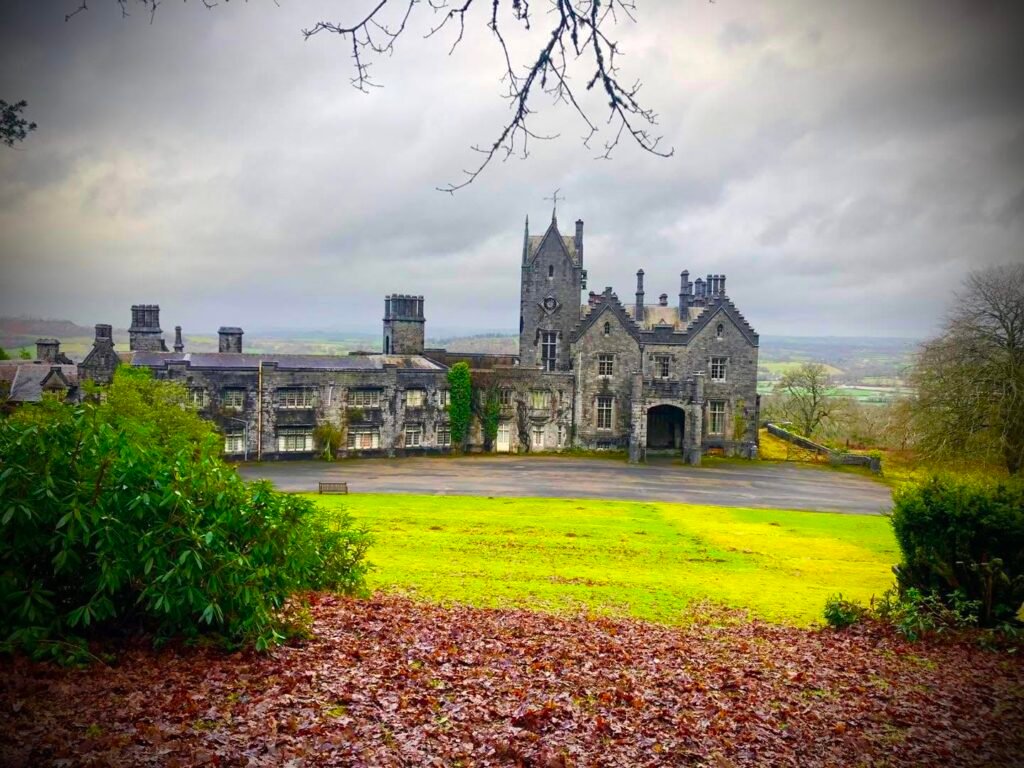
The post says the mansion was built between 1827 and 1832, and that it sits in a country park with 60 acres of wooded parkland around the building. The featured photograph shows what that means in practice: a long grey stone frontage with a central tower, an arched entrance, and a green lawn running up to it, with fields and low hills beyond. The sky in the photograph is grey, the leaves in the foreground are brown, and the building looks cold. It also looks solid. Stone mansions of this size do not fall down quickly, and this one was still standing when the explorer got onto the roof to look over the views all around.
The post says the place is huge, with some amazing rooms and so much still left behind. There are some bizarre things scattered about, in the explorer’s words, but a lot of antiques too. The five photographs are a good sample of that mix. They show rooms that are grand and rooms that are strange, sometimes in the same frame.
What the five photographs actually show
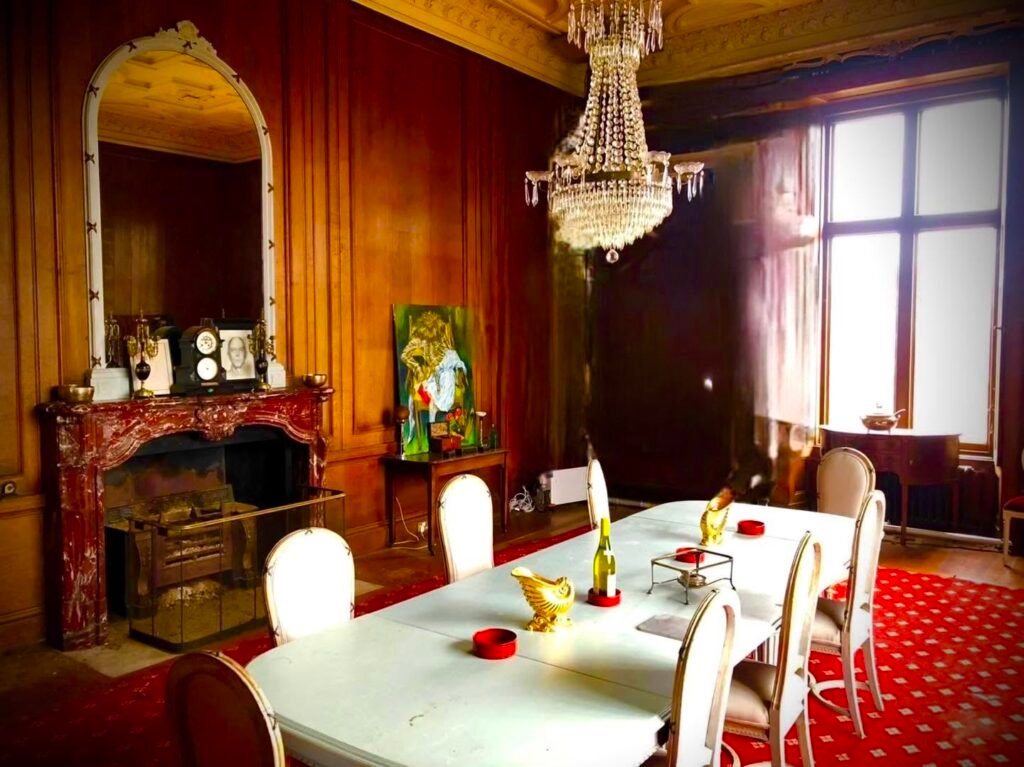
The dining room is the most formal of the five. It is wood-panelled, with a crystal chandelier, a marble fireplace and a long white table. Nothing in it looks broken. It looks like a room that was set for a meal and then left, with the table still in place and the chairs still around it.
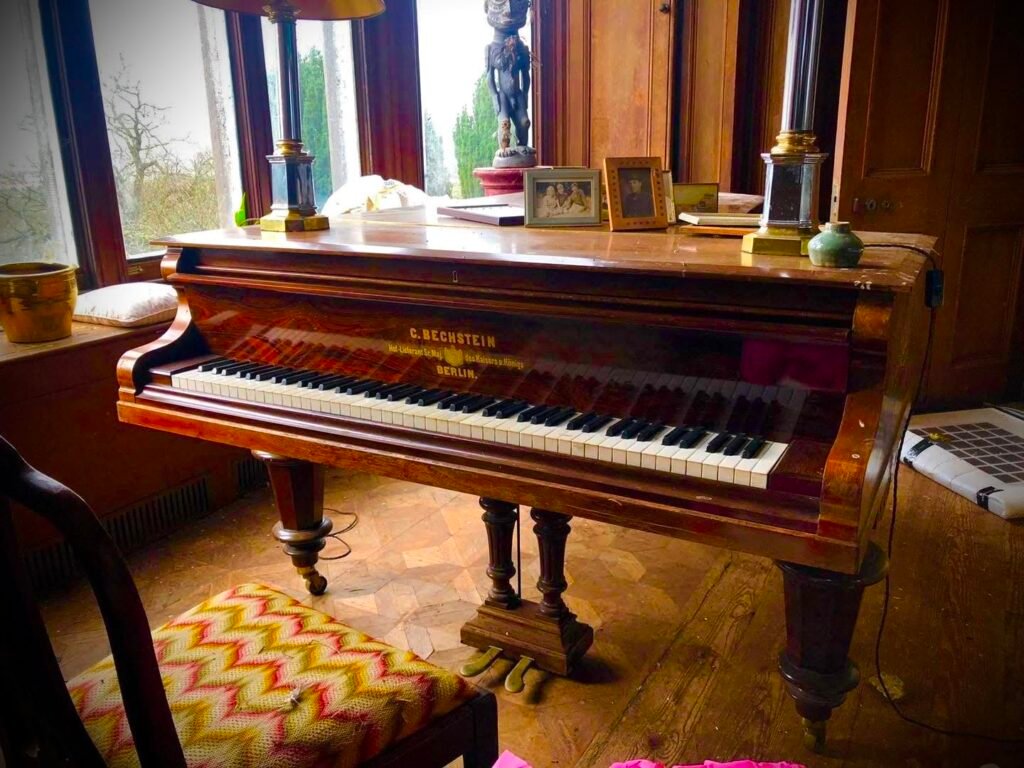
The piano is the most personal object in the set. It is a polished wooden C. Bechstein grand piano, standing by bay windows, with framed photographs and a tribal statue on top of it. The name on the fallboard is clear in the photograph: C. Bechstein, Berlin. A grand piano is not the kind of thing that gets left behind by accident. It is heavy, valuable, and hard to move. Its presence in an empty room says more about how the house was left than any caption could.
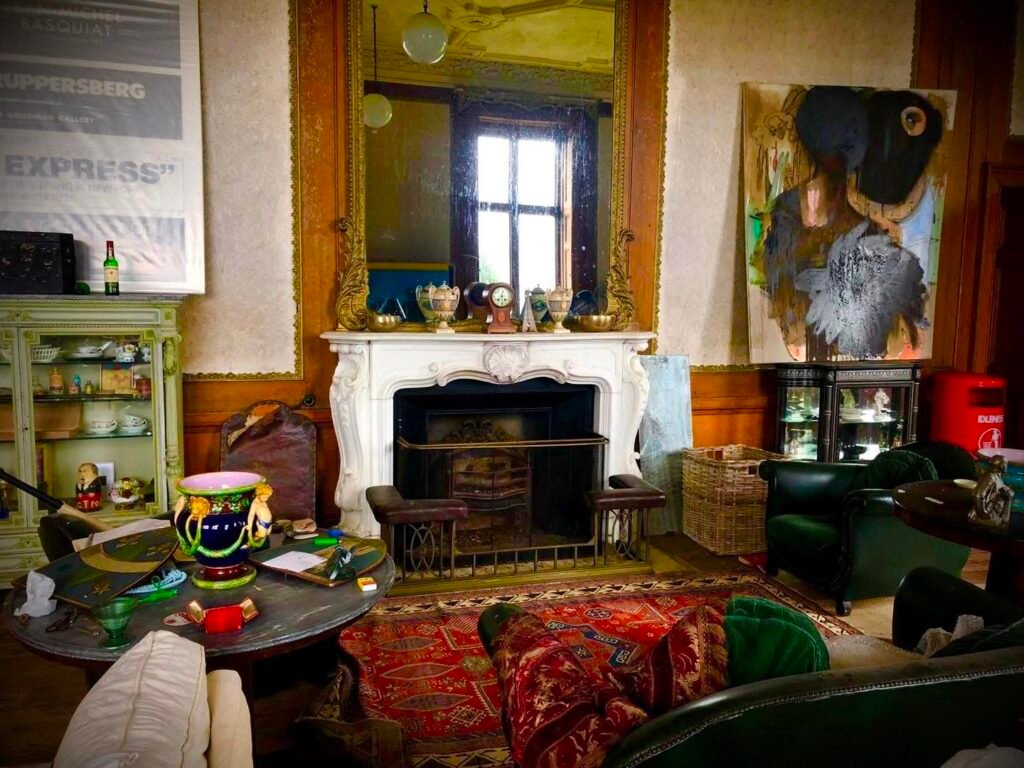
The third photograph shows a room with a white marble fireplace, a gold-framed mirror, display cabinets and a large abstract painting. The mirror reflects nothing but the room itself. The cabinets are still full. The painting is still on the wall. Like the dining room, it is a room that was left rather than cleared.
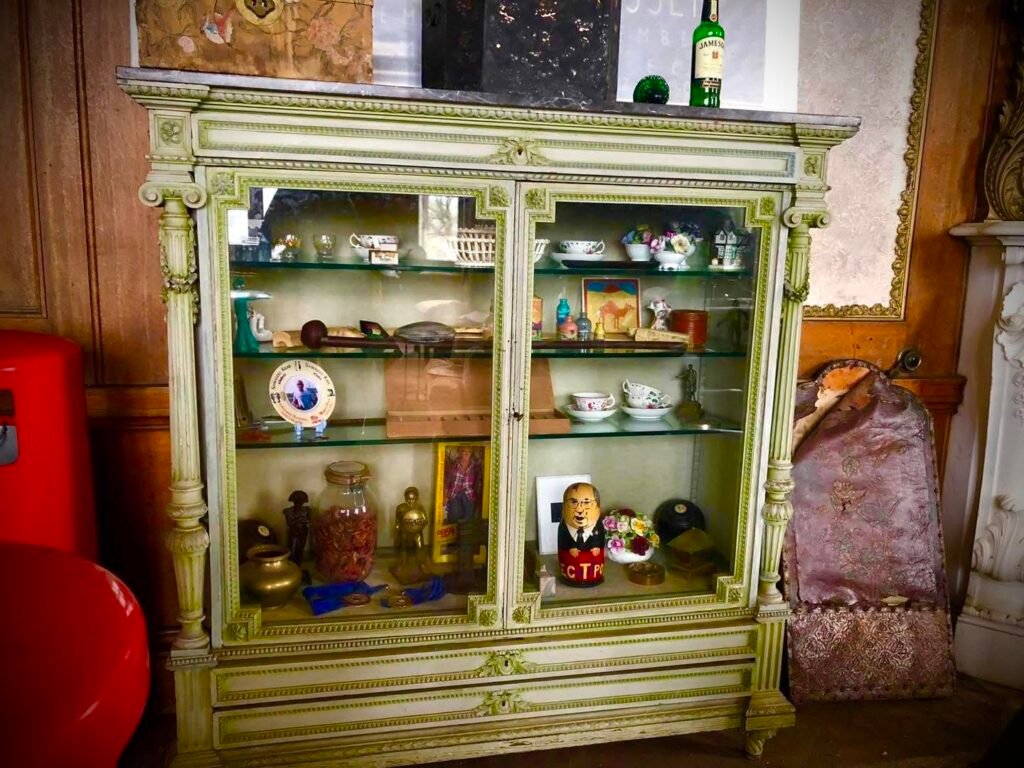
The last photograph is the strangest of the five, and it is the one that earns the post’s line about bizarre things. An ornate green-and-gold glass display cabinet is full of crockery and figurines, with a Russian doll and a Jameson bottle on top. It is a cabinet of things that were collected, not things that were used. It sits in a house that was, at the time of the explore, full of exactly that kind of collection.
The update that changes the story
The post was written after an explore that happened a while before the post date, and the explorer writes that he wonders what has become of the mansion now. The answer came as an edit to the post itself: the building is no longer abandoned, and the new owners are trying to renovate it for the National Trust.
That changes how this article should be read. The photographs show the house as it was when it stood empty. The house today, according to the post’s update, is being worked on. No details of the renovation are given — no dates, no plans, no statement from the owners — so none are claimed here. What can be said is that the mansion’s story, as the post tells it, ends with rescue rather than with ruin, and that is worth leading with.
The renovation also puts the photographs in a different light. The dining room, the piano, the cabinets and the mirror were photographed in a house that was about to be saved. Whether those things survived the renovation is not stated in the post, and it is not claimed here. The photographs are a record of what was there when the explorer visited, and that is all they are.
For a contrast with a house that is lived in and on the market, see a lived-in 1902 home in Alexandria, Minnesota, where the questions are about upkeep and price rather than about what years of emptiness do to a grand piano. More houses in this condition are gathered in abandoned mansions, and the site’s front page is abandoned.blog.
FAQ
Where is the Welsh Mansion?
The post does not give a location beyond Wales. No exact address is given here.
When was it built?
According to the post, between 1827 and 1832.
Is it still abandoned?
No. According to the post’s own update, the building is no longer abandoned, and the new owners are trying to renovate it for the National Trust.
What is left inside?
According to the post and the photographs, a great deal was left behind: a dining room with a chandelier and marble fireplace, a C. Bechstein grand piano, display cabinets, antiques, and a collection of crockery and figurines.
Can I visit it?
No visiting information is given here, and entering private property without permission is not encouraged. The house is now being renovated, so it is not an abandoned building to explore.
Is this the same as the Welsh Manor on this site?
No. The Welsh Manor is a different building, already published separately. This mansion is a grey stone building built 1827–1832 in a 60-acre country park.
Disclaimer
This article is general information only, not legal, tax, or financial advice. Rules on abandoned and private property differ by state and county; check county/local records and a local professional before acting. The account of the house and its renovation is as reported in the source post and has not been independently verified.
Photos
Photos by Luke2Explore, via the original Facebook post: https://www.facebook.com/Luke2Explore/posts/abandoned-welsh-mansionthis-stunning-old-mansion-was-built-in-between-1827-and-1/1333712855461066/ — 5 of the 46 photos are shown here.