
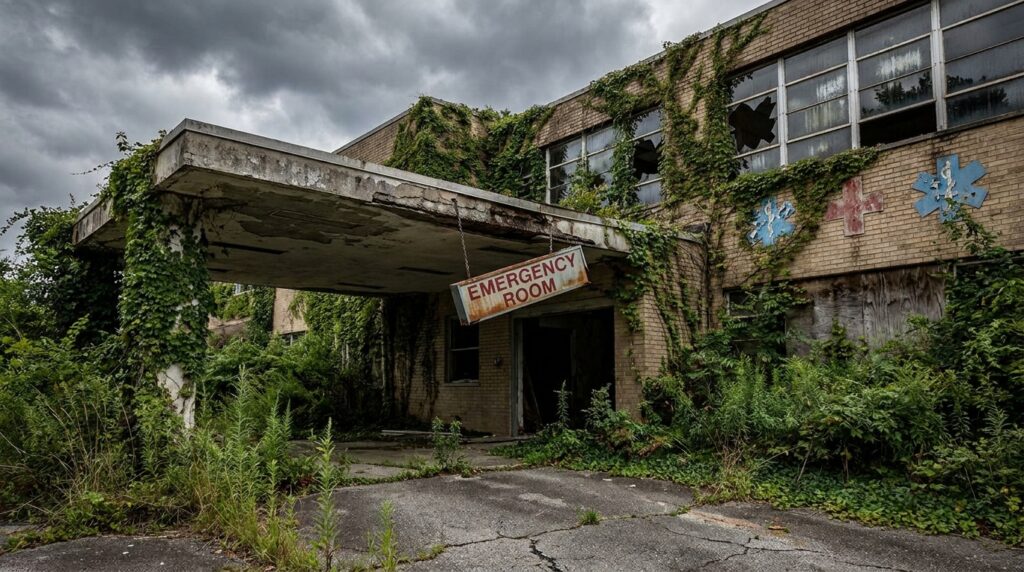
Exploring Abandoned Hospitals: History, Hazards & the Eeriest Sites in the World
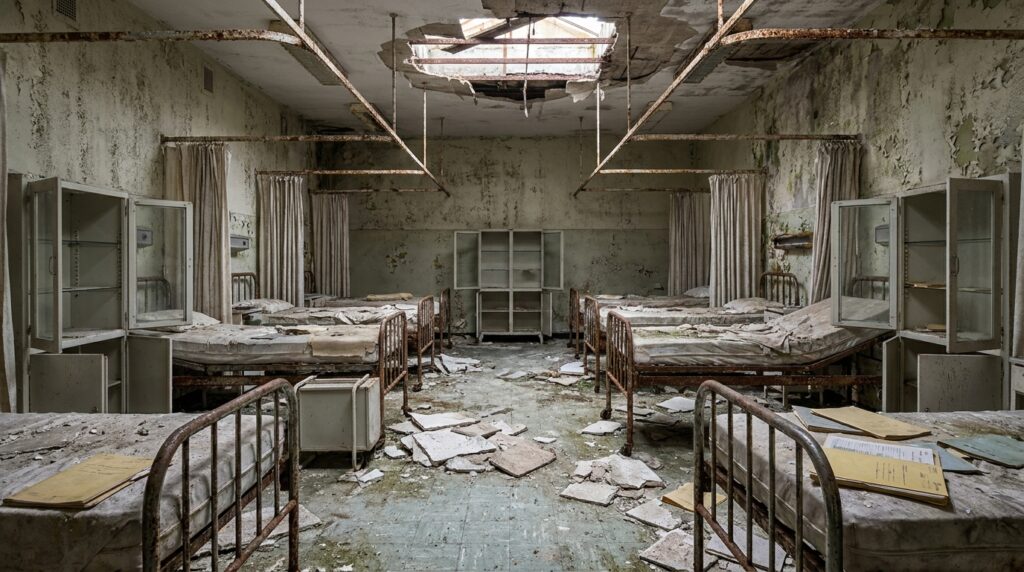
No category of abandoned place provokes a stronger emotional response than the derelict hospital. These buildings carried the full weight of human vulnerability — birth, illness, surgery, recovery, and death — and their abandonment leaves an atmosphere that even hardened urban explorers find unsettling. Peeling paint in institutional green, overturned wheelchairs, medical records scattered across tile floors, and the faint industrial smell of long-dried disinfectant combine to create an environment unlike any other in the urbex world.
This guide examines why abandoned hospitals captivate explorers and researchers, what specific hazards they present, how to approach them responsibly, and which sites have earned a place in the global conversation about medical heritage and urban decay.
Why Abandoned Hospitals Are So Psychologically Compelling
Hospitals occupy a unique space in collective human psychology. Unlike abandoned factories, which evoke economic history, or derelict mansions, which speak to aristocratic decline, hospitals are universally personal. Almost every person alive has spent time in a hospital — as a patient, a visitor, or a worker. That personal connection gives abandoned hospitals an immediacy that other urbex sites rarely achieve.
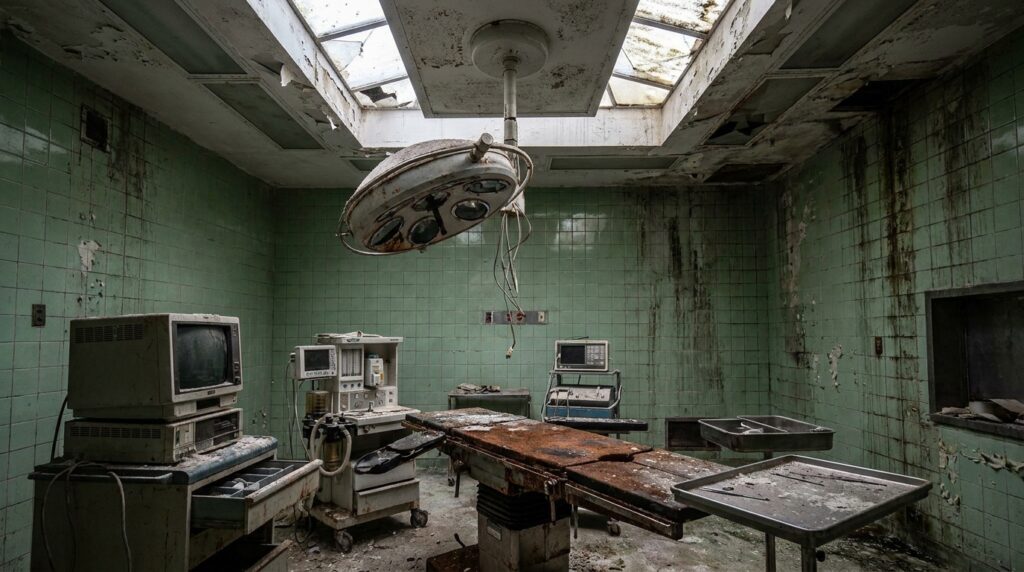
The specific aesthetics of institutional medical environments also age in a uniquely unsettling way. The combination of clinical design intended to project sterility and control with the organic chaos of advanced decay creates a visual tension that photographers find endlessly compelling. A russted surgical lamp hanging over a collapsed operating table says more about the passage of time than almost any other image in urban exploration.
The History of Hospital Abandonment: Why So Many Sit Empty
The wave of hospital closures that has produced so many urbex sites globally has several distinct causes. In the United Kingdom, the mass closure of large psychiatric institutions — accelerated dramatically by the 1990 NHS and Community Care Act — left hundreds of Victorian asylum buildings empty almost overnight. Many of these enormous, architecturally ornate buildings proved too expensive to maintain and too large to convert, and they have deteriorated steadily ever since.
In the United States, the deinstitutionalization movement of the 1960s and 1970s, combined with hospital consolidation in the 1990s and 2000s, produced a similar pattern. Rural hospitals and urban inner-city facilities that served declining populations were closed in favor of larger regional facilities, leaving their buildings vacant. The Kirkbride Plan — a 19th-century philosophy that led to the construction of enormous, architecturally ambitious psychiatric hospitals across the US — left a specific legacy of abandoned buildings that have become iconic urbex destinations.
In post-Soviet countries, the collapse of centrally funded health infrastructure in the 1990s left many hospitals — some of enormous scale — closed and unguarded. These sites now form a significant portion of the most-documented abandoned buildings in Eastern Europe.
Specific Hazards in Abandoned Hospital Urbex
Hospitals present a distinct hazard profile that requires specific preparation:
- Biological hazards: Pathology labs, morgues, and clinical waste storage areas may contain biological material, needles, and pharmaceutical waste. Never handle any medical equipment or containers without appropriate gloves, and wash hands thoroughly after every visit.
- Asbestos: Many hospitals built before the 1980s used asbestos extensively in lagging, ceiling tiles, and floor coverings. Respiratory protection (FFP3/N100) is essential.
- Pharmaceutical residues: Hospital pharmacies and medication dispensing areas sometimes retain expired drugs and chemical reagents. Do not handle these.
- Structural collapse: Many large hospital buildings have flat or aging roofs that deteriorate severely. Ward blocks with long unsupported spans are particularly vulnerable.
- Psychological preparation: The environments in some abandoned hospitals — particularly morgues and psychiatric wards — can be emotionally disturbing. Go with experienced companions and do not push beyond your comfort level.
The World’s Most Significant Abandoned Hospital Sites
Beelitz-Heilstätten, Brandenburg, Germany
Built between 1898 and 1930 as a tuberculosis sanatorium, Beelitz-Heilstätten is one of the most celebrated and most legally accessible abandoned hospital complexes in the world. The 60-building complex includes surgical pavilions, staff accommodation, a power plant, and specialized treatment facilities spread across 200 hectares of forest. A treetop walkway — Baumkronenpfad — now provides legal, guided access to part of the complex, making it ideal for those who want to experience abandoned hospital architecture without trespassing. Adolf Hitler was treated here after being wounded at the Somme in 1916, and Soviet forces used the complex as a military hospital until 1994.
Trans-Allegheny Lunatic Asylum, West Virginia, USA
Completed in 1881 and designed according to Kirkbride principles, this is one of the largest hand-cut stone buildings in the United States. It operated as a psychiatric hospital until 1994, at which point it housed significantly more patients than it was designed for. Today the building is privately owned and offers a range of official tours, from daytime historical tours to overnight paranormal investigations — making it one of the most commercially developed abandoned hospital sites in the world. For urban explorers, the official access it provides is unusually comprehensive.
Poveglia Island Hospital, Venice, Italy
Few abandoned locations in the world match Poveglia Island for historical weight. Located between Venice and the Lido, the island served as a plague quarantine station, a storage point for plague victims, and finally a psychiatric hospital that closed in 1968. Access is officially restricted, and the island has long been considered one of the most challenging legitimate destinations in European urbex. Its combination of historical layers — Roman settlement, medieval plague pit, Napoleonic fortification, and 20th-century psychiatric use — makes it uniquely significant.
Gonjiam Psychiatric Hospital, South Korea
Closed in the 1990s under disputed circumstances, Gonjiam became the subject of intense online mythology and was immortalized in the found-footage horror film of the same name. Located in Gyeonggi Province outside Seoul, the building attracted vast numbers of visitors before authorities partially demolished it to deter trespassing. Its combination of cinematic notoriety and genuine atmospheric intensity made it one of the most visited abandoned hospitals in Asia.
Photography in Abandoned Hospitals: Approach and Ethics
Medical environments require a specific ethical approach to documentation. Patient records, identification documents, and personal effects — which frequently survive in abandoned hospitals — should not be photographed in ways that identify individuals. The people whose records remain in these buildings were real patients deserving of dignity, even in abandonment. Many experienced urbex photographers apply this standard as an absolute: clinical spaces, yes; personal information, no.
Technically, abandoned hospitals present outstanding opportunities for available-light photography. Large windows, long corridors, and the reflective quality of aged linoleum floors create natural compositions. A 24-70mm zoom lens covers most scenarios effectively, while a wide-angle prime is ideal for operating theatres and large ward spaces.
Preserving Abandoned Medical Heritage
Many abandoned hospitals represent significant architectural and historical heritage that is poorly protected. The Victorian Asylum network in the UK, for example, produced buildings of exceptional quality — designed by leading architects of their era, built with premium materials, and imbued with genuine therapeutic intent in their relationship with light, landscape, and space. Organizations including the Victorian Society and Historic England have campaigned for the preservation of the most significant examples. The Kirkbride Buildings website documents the history and current status of US psychiatric hospitals designed under the Kirkbride philosophy.
For urban explorers, engagement with preservation organizations is not just ethically appropriate — it can also create legitimate access opportunities. Several former asylums now offer heritage open days, photography permits, and collaboration with documentary researchers.

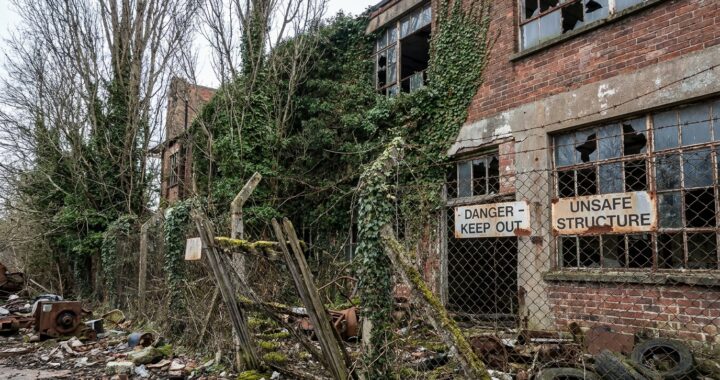

[…] Urban exploration has a widely observed ethical code: take nothing but photographs, leave nothing but footprints, and break nothing. This isn’t just philosophical — it’s practical. Vandalism and theft generate media coverage that hardens property owner attitudes toward exploration and creates pressure for more aggressive security and legal responses. The ethical code protects access for the entire community. […]