
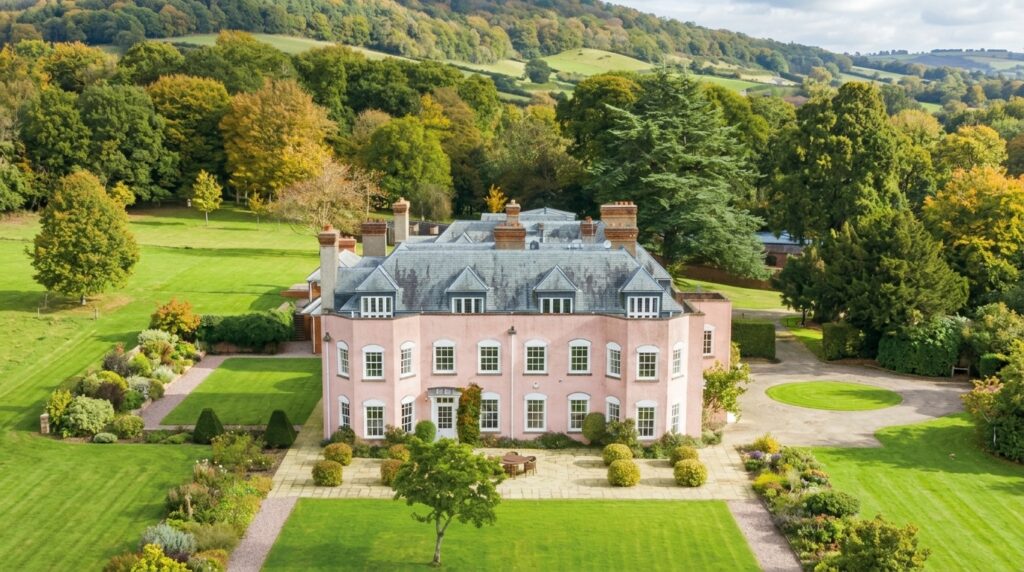
There’s something about a house that has been standing since 1902 that makes you pause. Not the kind of pause you have in a museum, where everything is lit and labelled and behind glass — but the slower, quieter kind. The sort where you stand at a gate and feel the weight of all the years pressing gently against the iron latch in your hand. The Quantock Hills have always kept their secrets well. Tucked into the Somerset countryside, where the land rises and folds in soft green waves, there are corners of England that seem to exist slightly outside of time. This estate is one of them.
A Grade II-listed property built in 1902, sitting on the edge of one of England’s oldest Areas of Outstanding Natural Beauty, has just come to market — and with it comes a story worth telling. Open fireplaces. Panelled rooms. Extensive gardens running away into hedgerow and shadow. Stabling that once housed working animals. And attached to the main house, an outbuilding with an office on the first floor that whispers of letters written by lamplight, of ledgers and estate business conducted in careful copperplate. This is not just a property listing. This is a place with a past.
What It Means to Be Grade II Listed
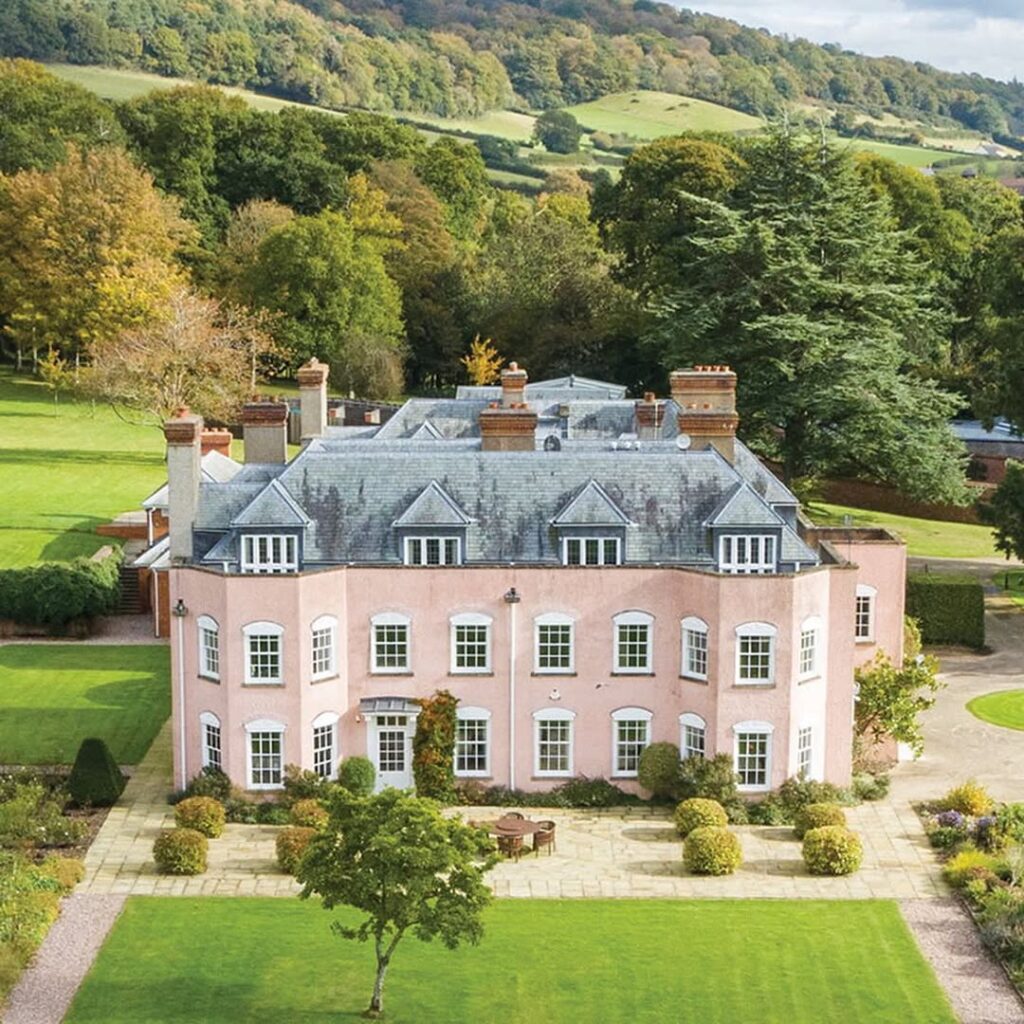
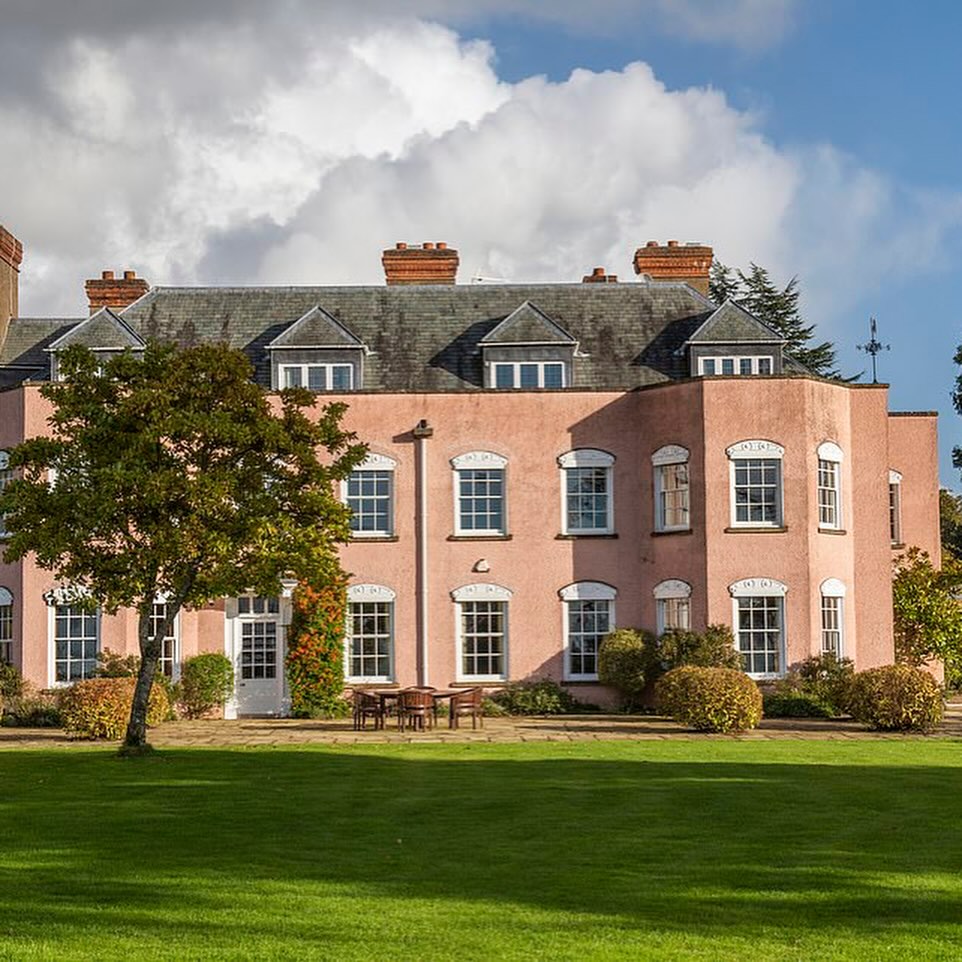
Before stepping through the front door in your imagination, it helps to understand what the listing actually means. In England, listed building status is awarded by Historic England to structures considered to be of special architectural or historic interest. Grade II — the most common designation — covers around 91% of all listed buildings in the country. It means the building is considered nationally important and of special interest, warranting every effort to preserve it. Alterations require consent. Materials must be considered. The building’s character must be respected.
For a house built at the turn of the twentieth century, on the edge of the Quantock Hills, this status feels entirely appropriate. Edwardian architecture has a particular confidence to it — a solidity and craftsmanship that speaks of an era when buildings were made to last generations, not decades. The panelled rooms of a house like this were not a stylistic affectation. They were a statement. Of permanence. Of belonging to a place.
The Quantock Hills: A Landscape Steeped in History
The Quantocks were designated England’s first Area of Outstanding Natural Beauty back in 1956, though their significance stretches back far longer than any official designation. The hills roll through Somerset like the spine of some sleeping animal, covered in heath and oak woodland, crisscrossed by ancient tracks worn smooth by centuries of footfall. Red deer still move through the combes. Buzzards turn lazily on the thermals above. It is one of those rare English landscapes that feels genuinely untouched — or close enough to it that the distinction barely matters.
A house built here in 1902 would have been constructed for someone who understood that land. A farmer, perhaps, or a gentleman of modest but comfortable means. Someone who wanted views across the hills in the morning and the smell of woodsmoke in the evenings. The open fireplaces speak to that directly. Multiple hearths in a house like this were not luxury — they were necessity, yes, but they were also ritual. The lighting of fires, the stacking of logs, the particular warmth that only a real flame produces. Central heating can never quite replicate it.
Panelled Rooms and the Craft of Edwardian Interiors
Wood, Warmth, and the Language of Craftsmanship
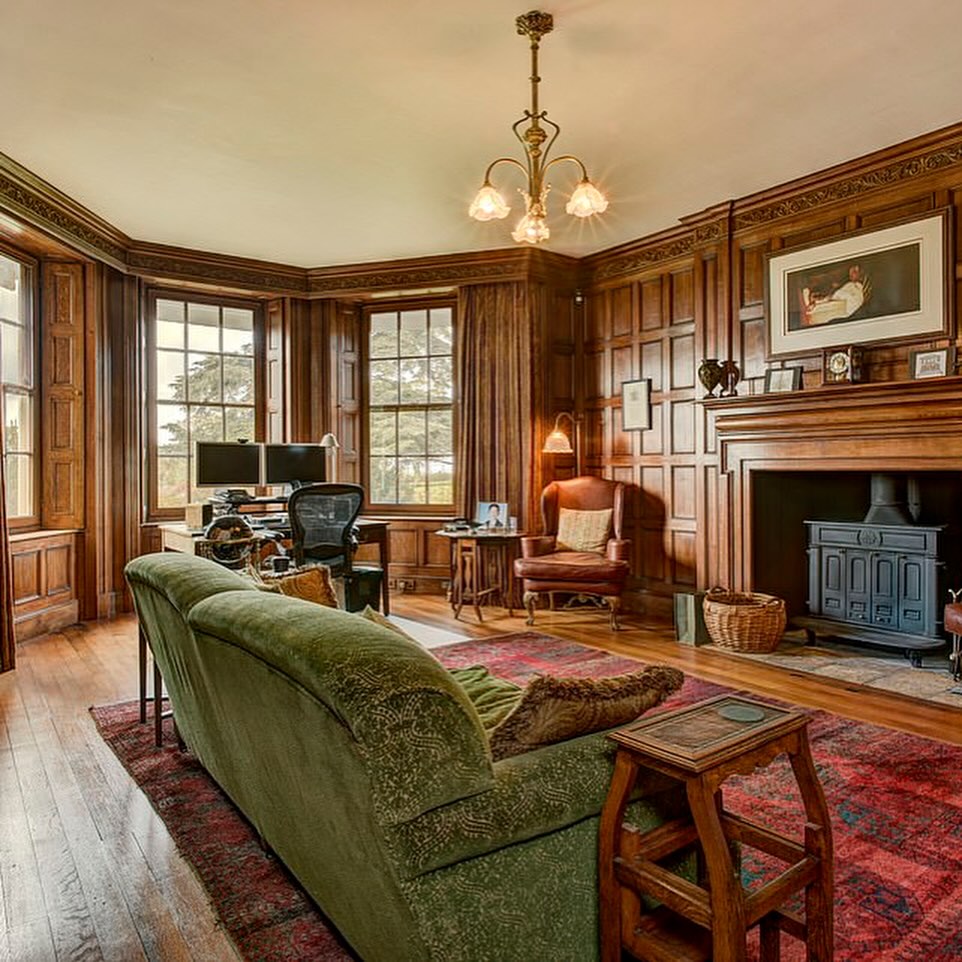
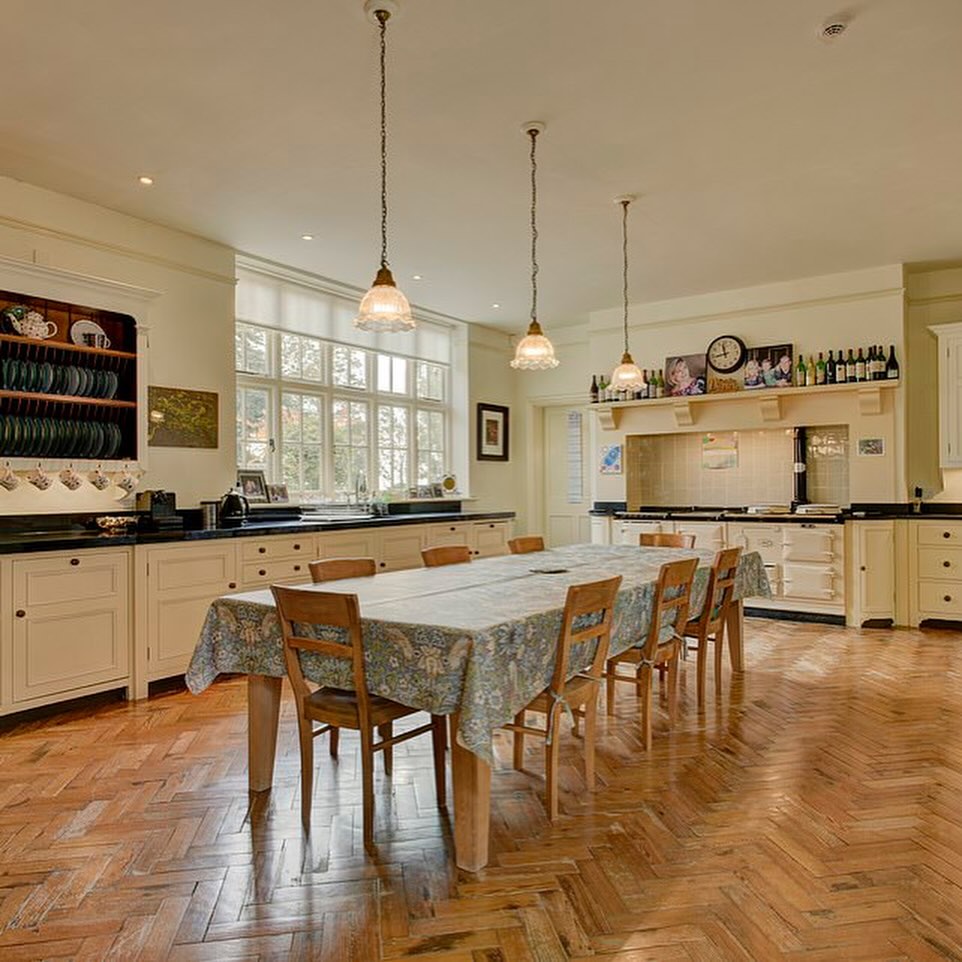
Step inside almost any well-preserved Edwardian house and the quality of the woodwork will stop you. The panelled rooms of this property are, in their own quiet way, extraordinary. Panelling was fashionable throughout the late Victorian and Edwardian periods, often executed in oak or pine, with careful attention to proportion. It insulated rooms from cold stone walls, absorbed the acoustic chaos of household life, and gave spaces a particular gravity. A panelled room is a serious room. It says something about how the people who designed it understood time — as something to be settled into, not rushed through.
For explorers of forgotten spaces and those drawn to the aesthetics ofabandoned heritage estates, this kind of intact interior is increasingly rare. Renovation trends of the 1960s and 70s stripped many Edwardian interiors bare, covering panelling with plasterboard, ripping out fireplaces in favour of electric bar heaters. The survival of original features in a house like this is a minor miracle. Or perhaps it is simply a testament to the conservatism of rural Somerset — the quiet stubbornness of places that didn’t see the point in changing what worked perfectly well.
The Fireplace as Heart of the Home
Each open fireplace in this house is a room within a room. Stand before one and you understand immediately why previous generations organised their entire domestic lives around the hearth. The mantelpiece as a display surface. The fender as a boundary between the domestic and the elemental. The particular orange light that cast long shadows across panelled walls on winter evenings. These are not merely architectural features. They are the emotional architecture of the house — the places where family life happened, where cold hands were warmed, where silence was kept or broken.
The Outbuilding: Where Business Met the Land
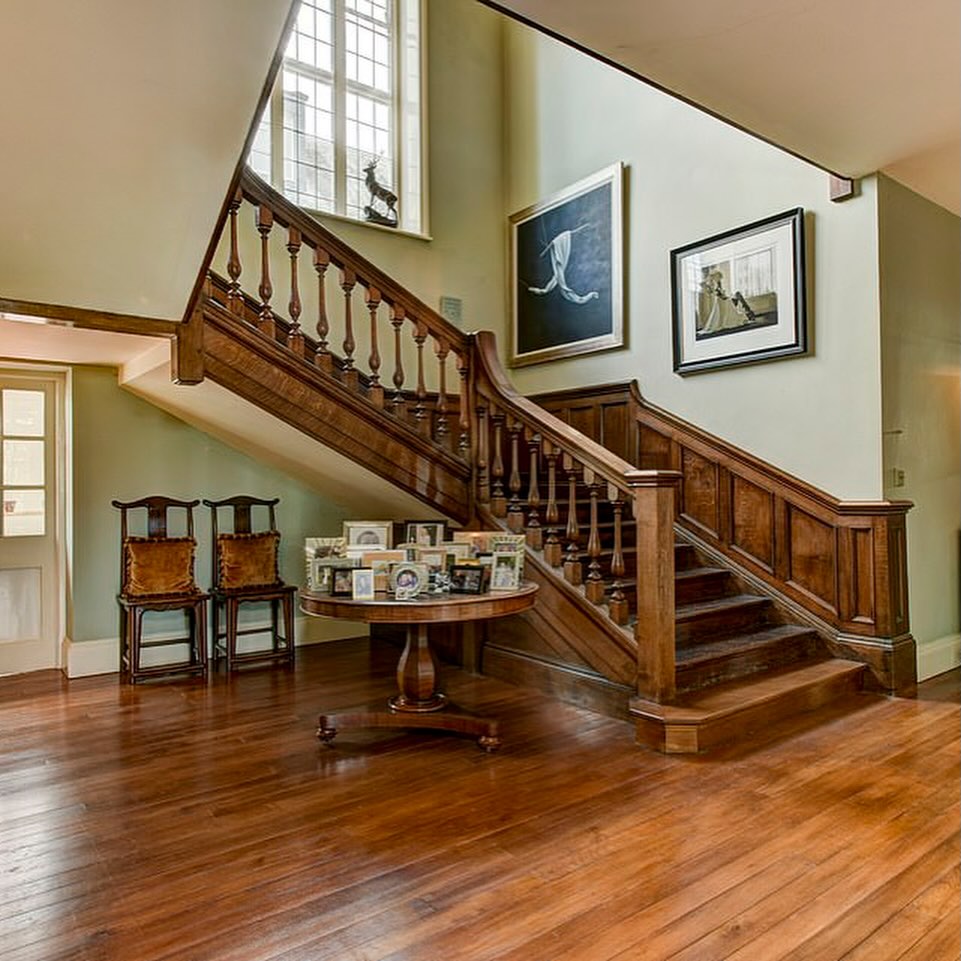
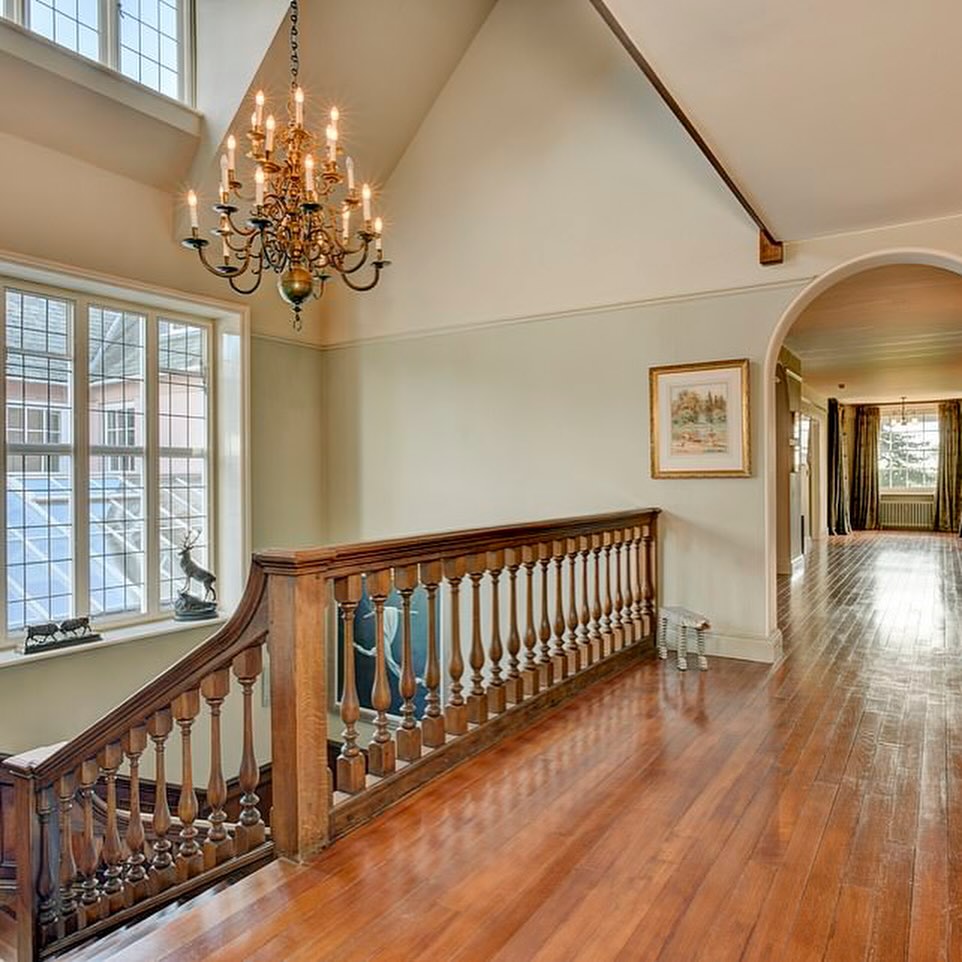
Attached to the main house is an outbuilding with an office on the first floor, and this detail is perhaps the most intriguing of all. An office above a working outbuilding suggests a property that was always more than just a home — it was an operation. A rural enterprise of some kind. The ground floor of the outbuilding, combined with the stabling elsewhere on the property, paints a picture of a working estate: horses, perhaps livestock, the daily rhythms of land management carried out with practicality and purpose.
The first-floor office would have been the administrative centre of that world. A room with a view over the yard and the hills beyond, where accounts were kept, correspondence was filed, decisions were made. Today it sits quiet. But the bones of that purpose remain. For those who seek out places where the texture of history is still visible —where forgotten spaces tell their stories through silence and structure — this kind of room holds a particular fascination. The desk may be gone. The ledgers long since dispersed or burned. But the room remembers, in the way that rooms sometimes do.
The Stabling: A Reminder of a Different Kind of Transport
The inclusion of stabling in a property like this is one of its most evocative features. By 1902, the motor car was a novelty — expensive, temperamental, largely the preserve of the very wealthy and the very adventurous. For a house of this kind, horses were still the primary means of transport and agricultural labour. The stabling would have housed working animals, well-tended, essential to the functioning of the property and the wider estate.
There is something poignant about stabling that no longer holds horses. The worn stone of the floor, the iron rings set into the walls, the high narrow windows that let in just enough light. These spaces have their own silence, different from the silence of a house. More patient, somehow. More used to waiting. For anyone drawn to the melancholic beauty of the forgotten estate or abandoned château aesthetic — that particular European flavour of grandeur left to time — stabling like this resonates in a way that is difficult to articulate but immediately felt.
The Gardens: Where the Wild Begins
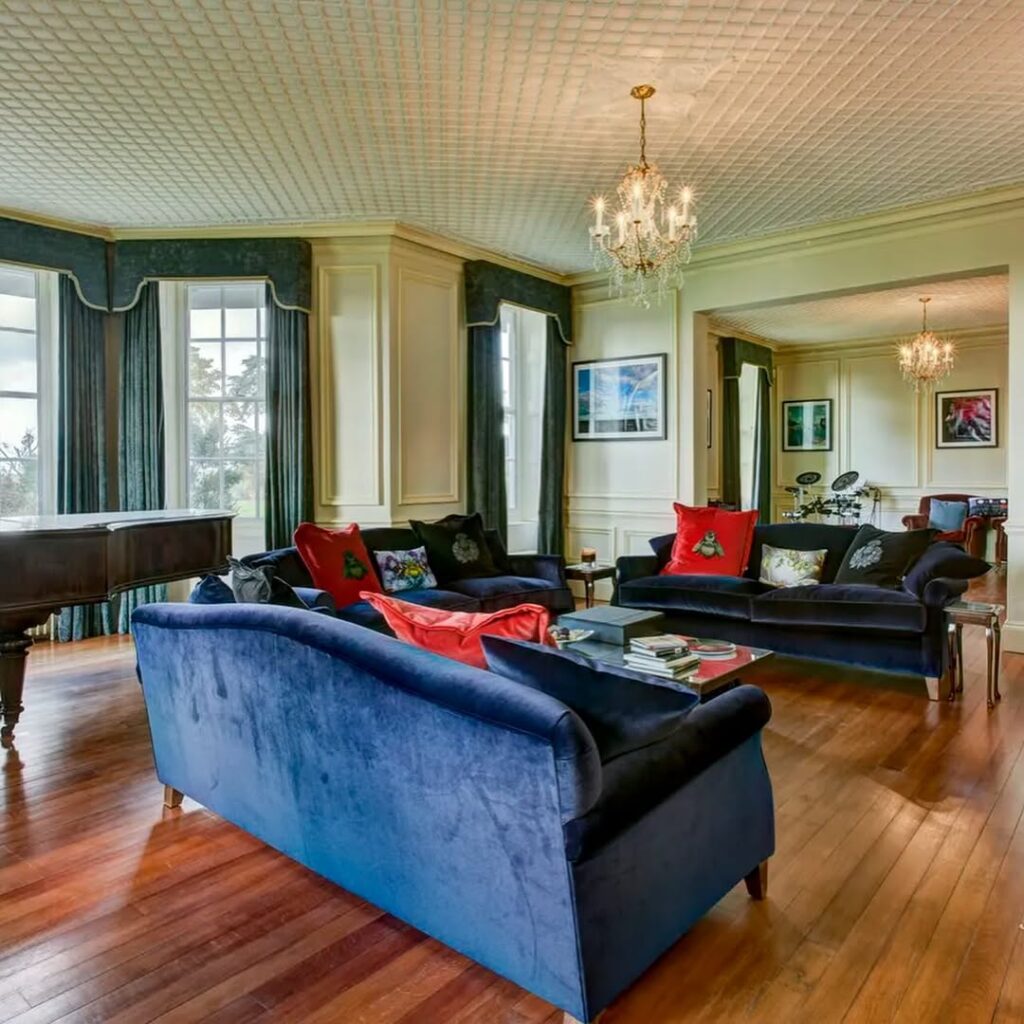
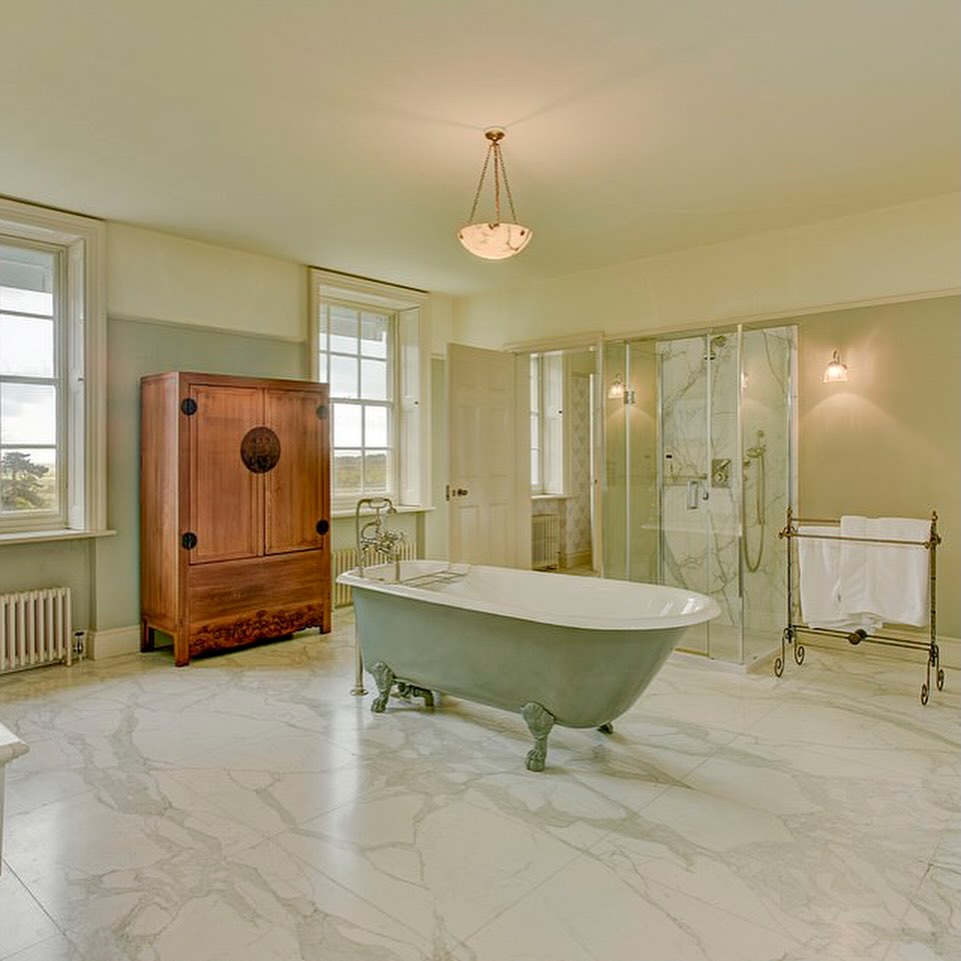
Extensive gardens on the edge of the Quantock Hills exist in a permanent negotiation with the landscape beyond. Maintained ground gives way, at some point, to managed hedgerow, and then to the rougher ground of the hills themselves. The boundary between garden and wild is never quite fixed in a place like this. In summer, the garden is full of its own noise — birdsong, bees, the movement of long grass in the wind that comes off the hills. In autumn, the light goes golden and the gardens begin to close in on themselves. In winter, under frost, the bare bones of old topiary and the skeleton outlines of established trees give the space a different kind of beauty. Austere. Honest.
A garden that has been tended for over a century develops its own character. Trees planted in 1902 are mature now, their canopies wide and their roots deep. Paths have been worn by decades of footfall. Walls have been repaired and repaired again. The garden is not wilderness — but it is not quite domesticated either. It occupies its own middle ground, the way that all genuinely old gardens do.
Edwardian Architecture in Context
The house was built in 1902 — the first year of the new century, properly speaking, and a moment of peculiar cultural transition in England. Queen Victoria had died in January 1901, and the country was adjusting to the reign of Edward VII, a king who represented a deliberate departure from Victorian austerity toward something more relaxed and pleasure-seeking. Edwardian architecture, compared to the earnest Gothic revivalism of many Victorian buildings, has a lighter touch. More attention to comfort, natural light, and the integration of interior and garden.
A house built on the edge of the Quantock Hills in 1902 would have reflected these sensibilities. Its proportions would be generous but not ostentatious. Its materials — stone, slate, timber — drawn from the local landscape. Its windows designed to bring the hills inside, to make the view part of the domestic experience. This is architecture as an act of belonging: the house as an expression of its place, rather than an imposition upon it.
Living with History: What Grade II Listing Means for a New Owner
Owning a listed building is not, despite what some might assume, purely a burden. It is also a privilege — a formal acknowledgement that you are a custodian of something larger than yourself. The restrictions that come with Grade II listing exist to ensure that what survives does not get casually erased. But within those restrictions, there is considerable scope for a thoughtful owner to bring a property like this back to its best.
The panelled rooms can be restored. The fireplaces, if not already in working order, can almost certainly be brought back into use. The outbuilding and its first-floor office offer genuine flexibility — a home workspace with views across the Quantock Hills is a considerable proposition in the modern world, and the attached nature of the building keeps it connected to the main house without sacrificing independence or character.
The stabling, too, has obvious potential: garden rooms, studios, annexes. The extensive gardens invite any number of uses, from kitchen gardens to wildflower meadows to simple, well-tended lawn.
Why Places Like This Matter
There is a broader conversation to be had about what happens to houses like this one. The forgotten estate, the neglected manor, thedecaying English country house — these are not abstract aesthetic categories. They represent real decisions made by real people about what to preserve, what to let go, and what deserves to be handed forward to the next generation.
The Quantock Hills house has been waiting. Whether it has been waiting in use, or in decline, or somewhere in between, is part of its story — a story that a new owner will now become part of. The open fireplaces will be lit again, or they won’t. The panelled rooms will be polished back to warmth, or they will continue to gather the particular dust of unoccupied spaces. The stabling will be transformed, or it will keep its silence.
But the house itself will stand. Built in 1902 to last, on the edge of hills that have been standing for rather longer — it has already proven its durability. That is, in the end, what Grade II listing recognises. Not just what a building looks like, or what it was built for, but what it represents: the accumulated decision, made generation after generation, to keep something rather than lose it.
Some things are worth keeping.
Interested in more forgotten places and hidden heritage? Explore the full archive atabandoned.blogfor stories of neglected estates, historic ruins, and the quiet beauty of places time has left behind.
References & Further Reading
- Historic England maintains the National Heritage List for England, which includes all listed buildings and their designations. See Historic England for the official register and guidance on listed building consent.
- For background on the Quantock Hills AONB designation and landscape history, the Quantock Hills AONB website offers detailed information on the natural and cultural heritage of the area.

[…] in reading more accounts of forgotten estates documented safely and ethically, the writers at Abandoned Blog cover forgotten places across the world with the same attention to history and context that these stories […]