It was the smell that gave it away first. Not the damp rot of old wood or the chalky musk of plaster dissolving into itself — those were everywhere in this house. This was something older, something that seemed to rise up from below the floorboards in the back parlor. A cold, still, underground kind of smell. The smell of a room that hadn’t breathed in a very long time.
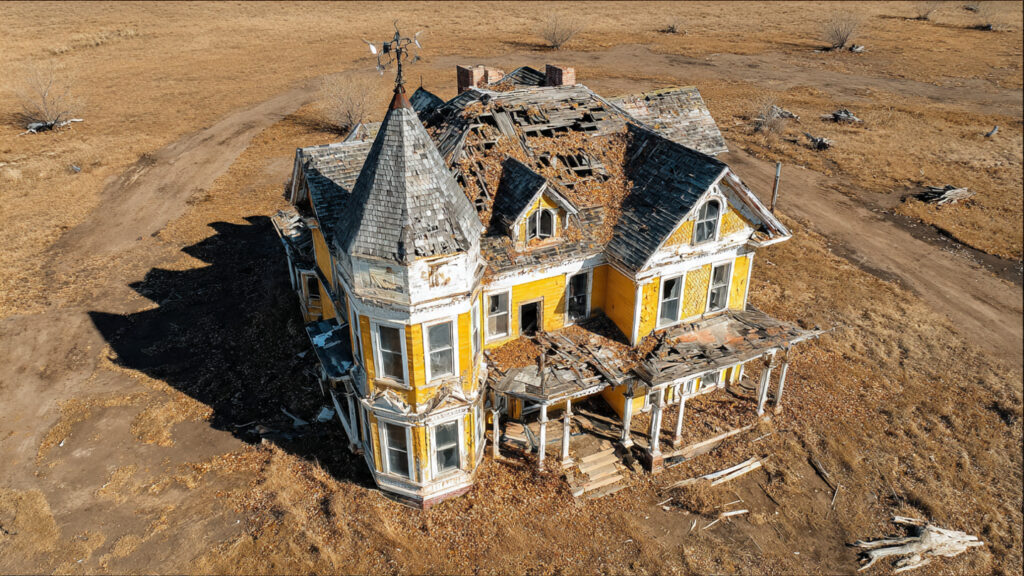
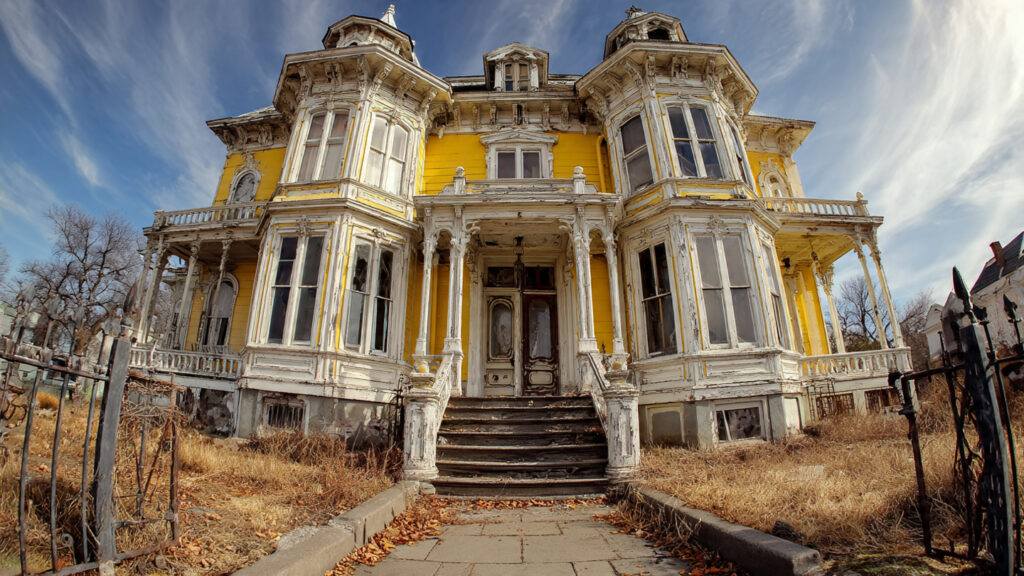
The Victorian house had been empty for forty years by the time local preservationists began cataloguing it for a heritage survey. Three stories of ornate woodwork, wraparound porch, turret room, stained-glass transoms — the works. A textbook example of Queen Anne Revival architecture, the kind that property developers covet and historians fight to protect. But nobody expected what they found beneath it.
A hidden basement. Sealed from the inside.
The House Above: A Victorian Time Capsule
Architecture of the Era
Constructed around 1887, the house represents the high-water mark of late Victorian domestic design in the American Northeast. The exterior features the characteristic asymmetrical facade, decorated gable ends, and patterned shingle cladding associated with the Queen Anne style — a movement that, despite its name, has almost nothing to do with the actual Queen Anne period and everything to do with the eclectic romanticism of the 1880s and 1890s.
The Victorian Society in America has extensively documented houses of this type, noting how their complexity of form and ornamental excess reflected both the confidence of a rapidly industrializing nation and a deep nostalgia for handcraft in an increasingly mechanized world.
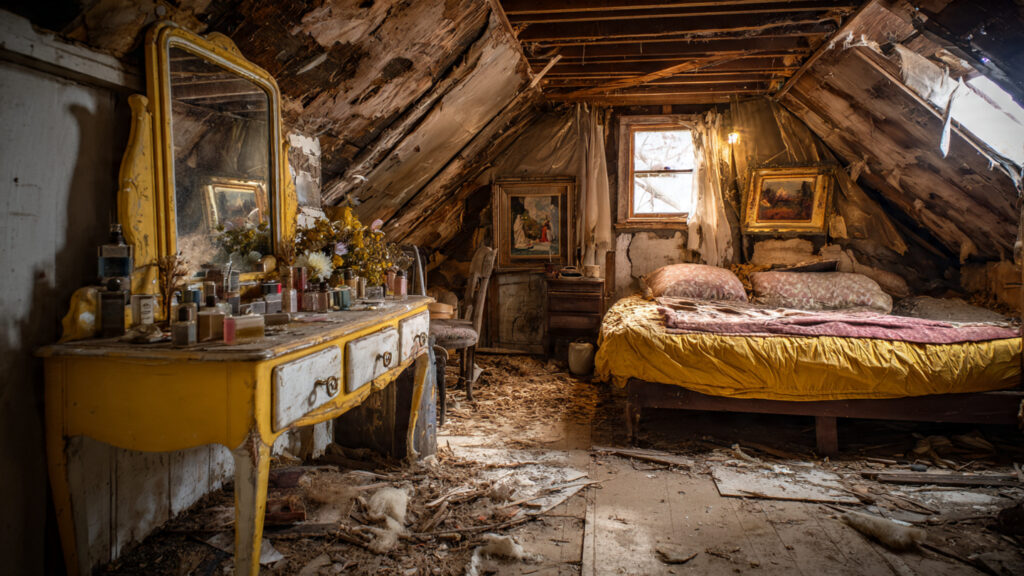
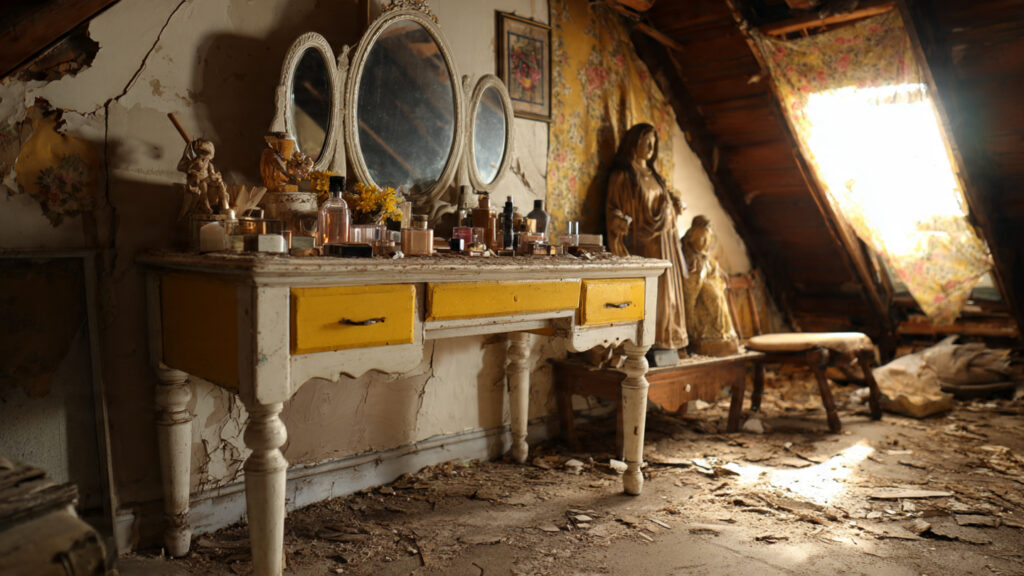
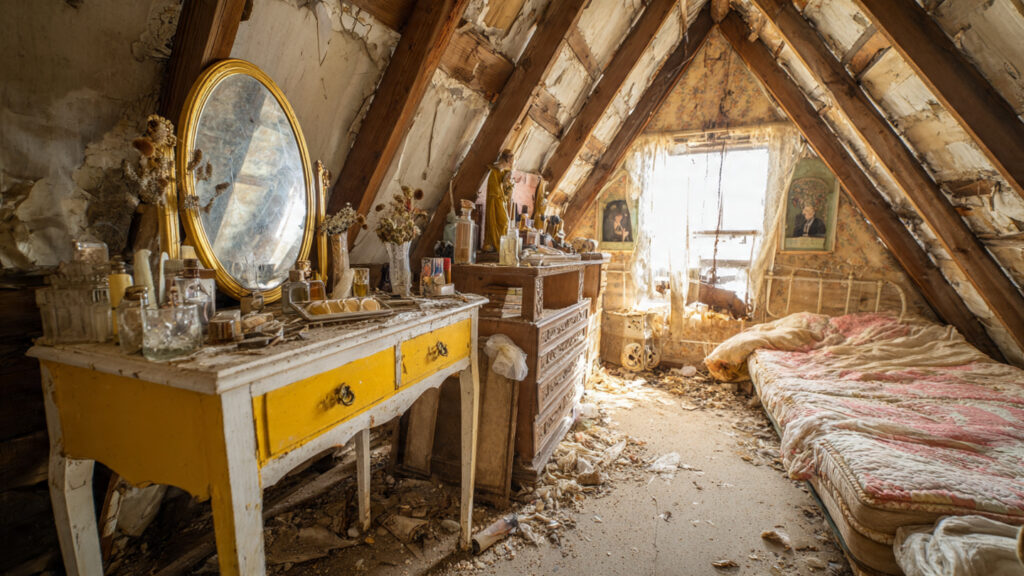
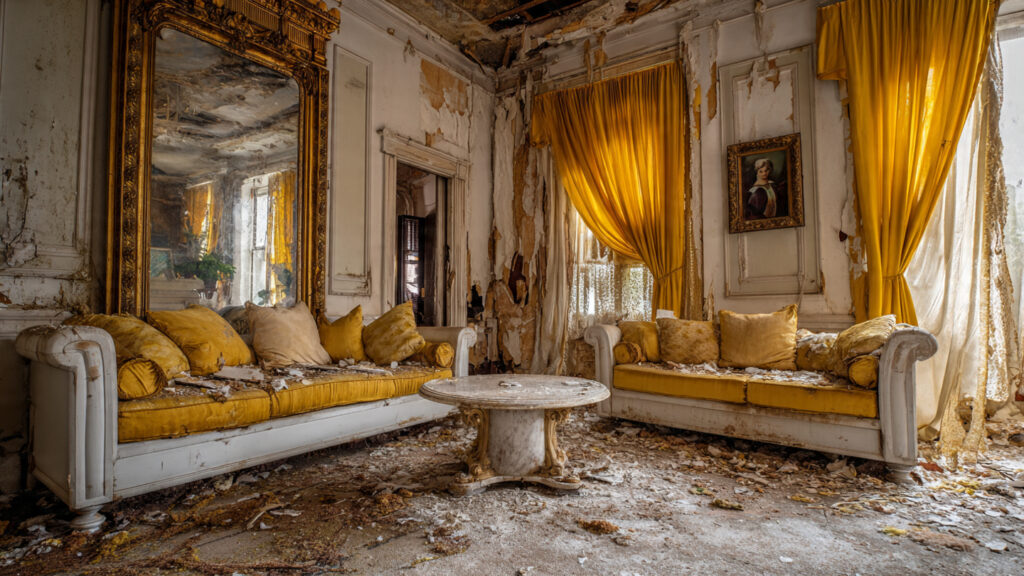
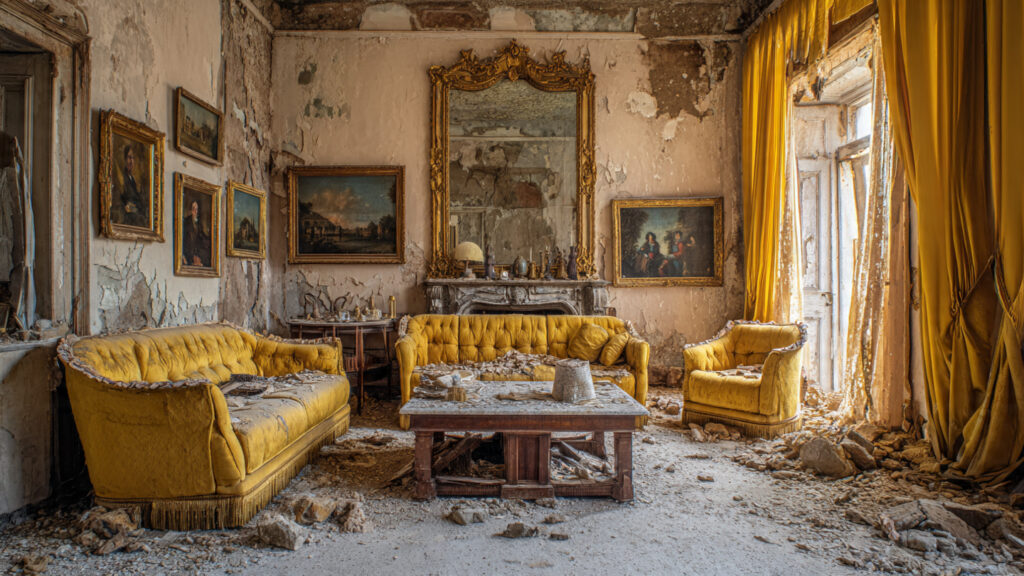
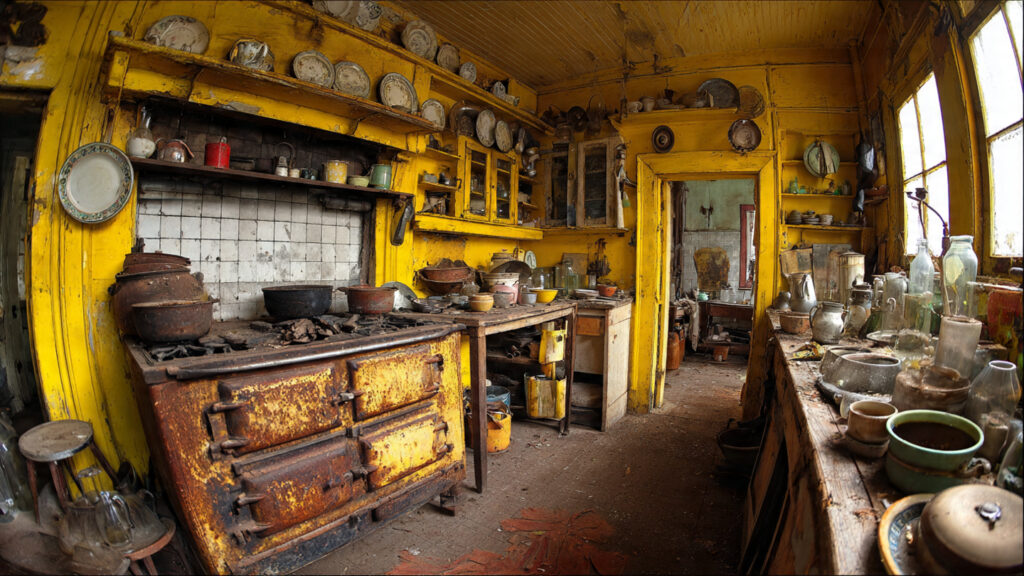
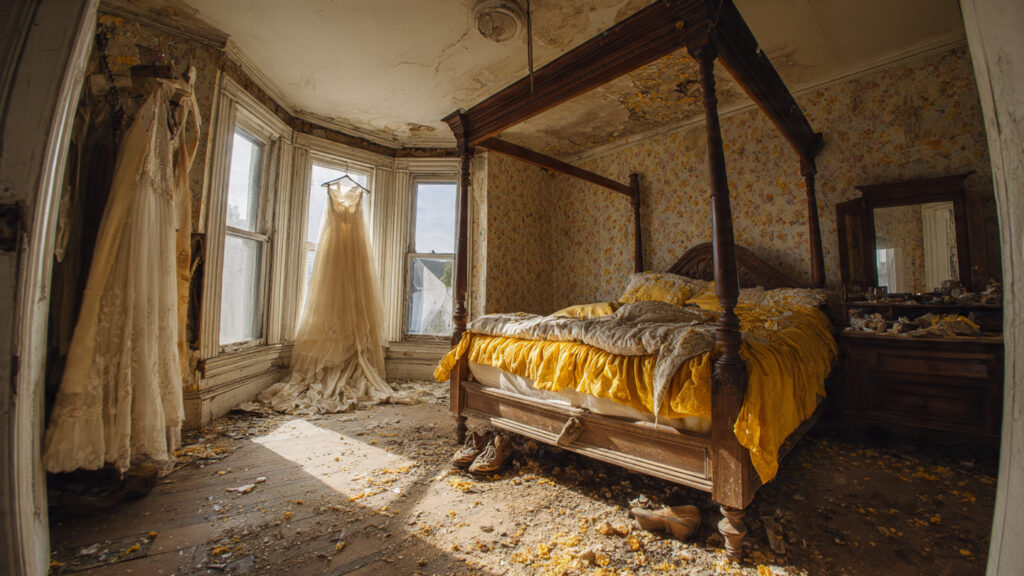
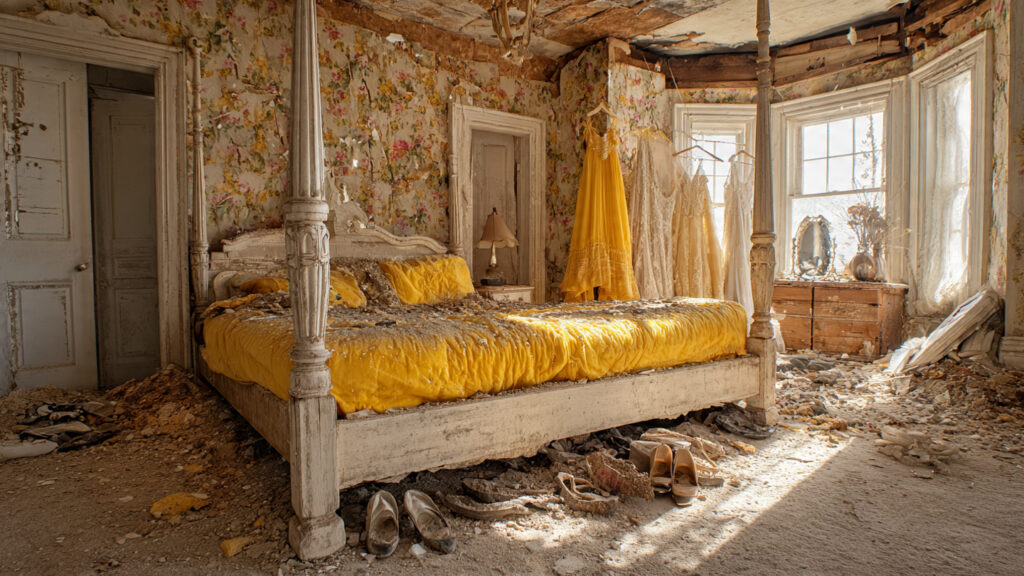
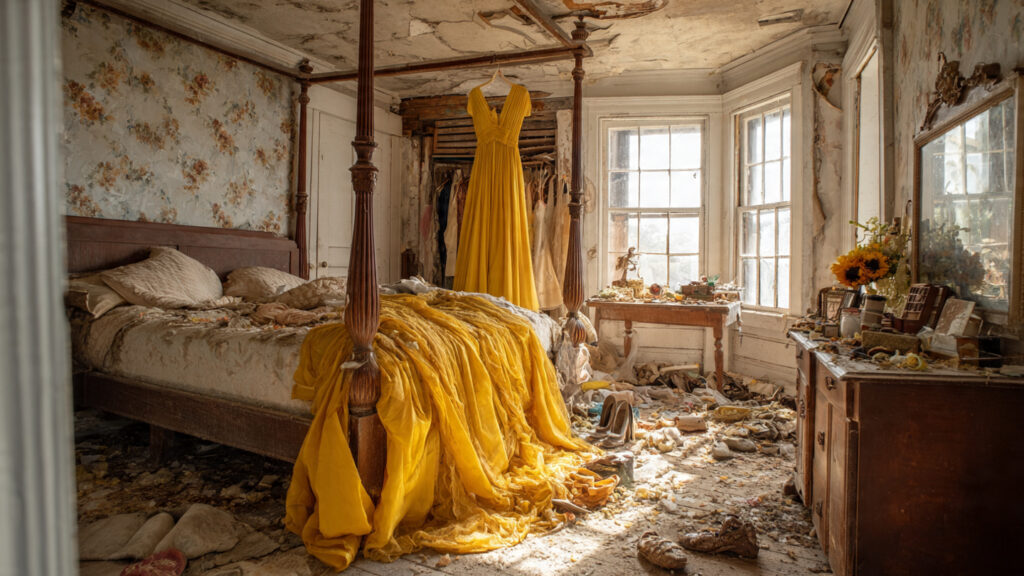
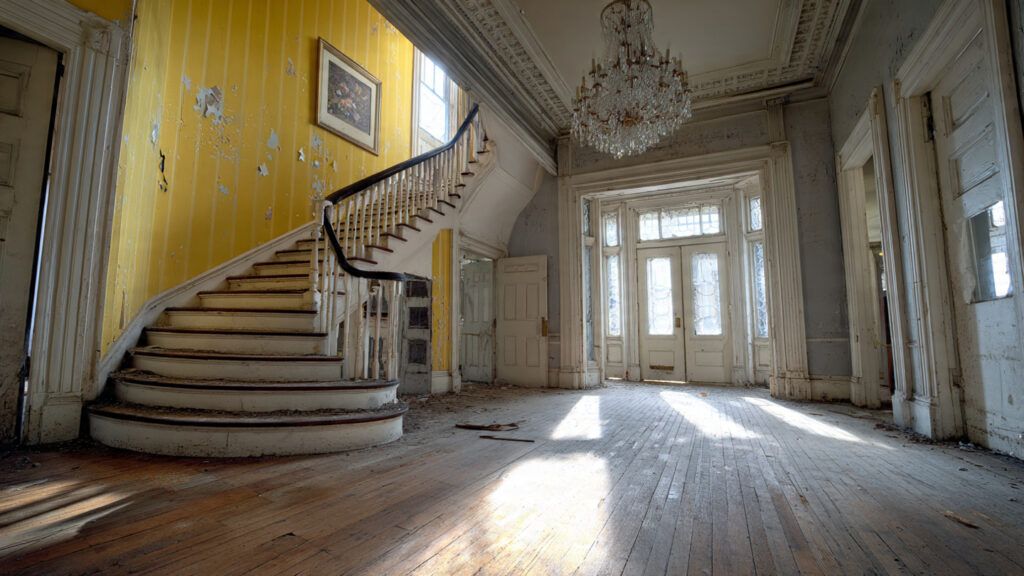
Inside, the original horsehair plaster walls are still largely intact on the upper two floors. A cast-iron fireplace in the front parlor retains its original grate and a marble surround that, beneath the grime, is a deep forest green. The staircase banister is hand-carved walnut, its newel post topped with the acorn finial typical of the period. Someone put enormous care into this house. That care is still visible, even under forty years of neglect.
The Family Who Built It
The original owners were a prosperous merchant family who had made their money in dry goods and later in early pharmaceutical distribution. They lived in the house for three generations before the last surviving member, a great-granddaughter, moved into a care facility in the early 1980s. She had no children. The house passed to a distant cousin who never visited, paid the property taxes for a while, and then — quietly, without announcement — stopped.
Neighbors remember the lights going out. They remember the garden going to seed. They remember the curtains remaining drawn, year after year, until the curtain fabric itself gave way to mold and fell.
The Discovery: A Floor That Shouldn’t Have Moved
The Survey Team’s Account
The heritage survey team — two architectural historians and a structural engineer — entered the house through a ground-floor window whose latch had long since failed. Their purpose was documentation, not excavation. Measure, photograph, note. Standard procedure for a building that had been flagged for potential heritage listing.
They had been inside for about two hours when one of the historians, walking across the back parlor, noticed that a section of the floorboards near the north wall had a distinctly different sound underfoot. Not a creak — all old floors creak — but a hollow resonance. A deeper reverberation. She stopped. Stepped back. Stepped forward again.
The structural engineer crouched down and examined the boards more closely. They were cut differently from the surrounding floor — shorter lengths, the grain running perpendicular to the rest of the room. And in one corner, barely visible under the grime of decades, a recessed iron ring.
What Lay Below
The trapdoor, once they’d cleared enough debris to open it, was about three feet square. The hinges had seized but not welded completely — a careful application of penetrating oil and steady pressure brought it up. Below was a wooden staircase descending into darkness. The cold air that rose out of that opening was remarkable — stable, dry, and perhaps ten degrees cooler than the room above.
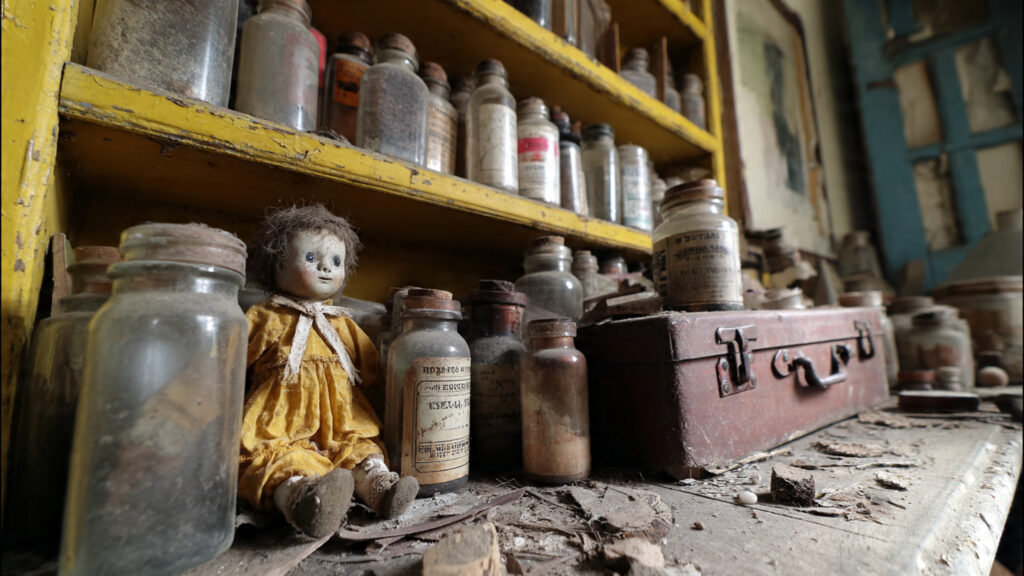
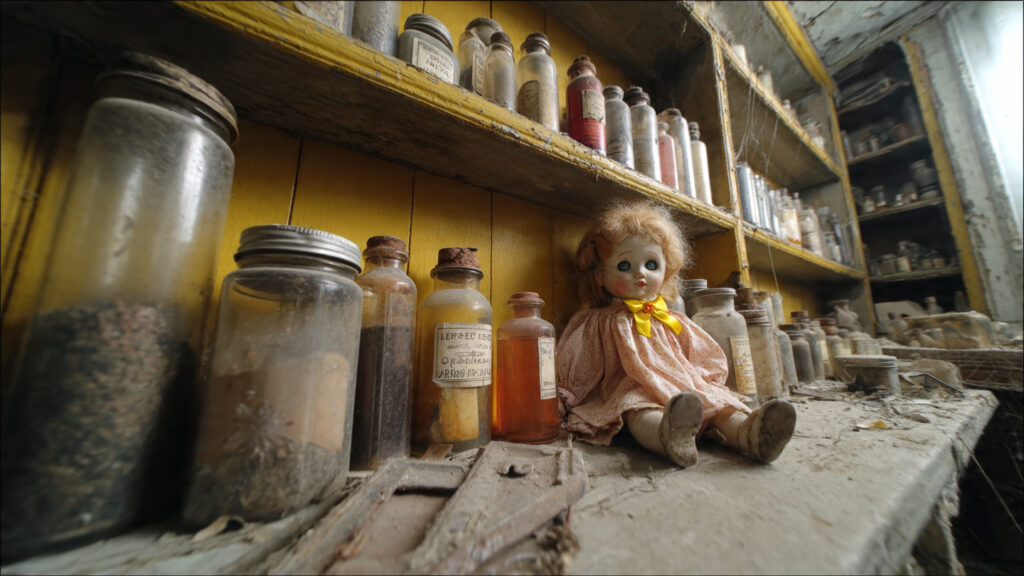
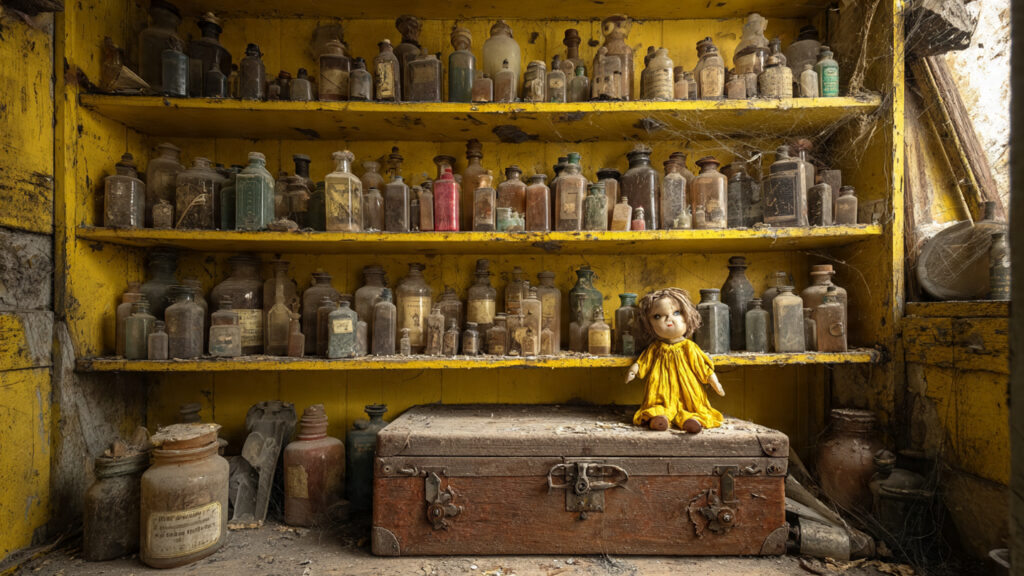
The basement itself was approximately twenty feet by thirty feet, with a stone foundation wall and a packed-earth floor. It was empty of furniture but not of objects. Shelving along one wall held glass jars — preserves, most likely, the contents now unidentifiable. A wooden workbench ran along another wall. And in the far corner, an iron safe, bolted to the wall, its door slightly ajar.
The safe was empty. Whatever it had once held was long gone. But the question of who had sealed this room, and why, and why they had done so from the inside, remained.
The Architecture of Concealment
Why Victorian Homes Had Hidden Spaces
Hidden rooms and concealed basements are not as rare in Victorian architecture as you might expect. The era was one of immense social stratification, and domestic spaces were designed to keep certain activities — and certain people — invisible. Service corridors allowed domestic staff to move through a house without being seen by the family. Dumbwaiters carried food between floors without requiring a servant to climb the stairs in view of guests. And basements, particularly in Northern states, sometimes served purposes that were deliberately unrecorded.
The period from roughly 1840 to 1870 saw widespread use of hidden domestic spaces in connection with the Underground Railroad — the network of secret routes and safe houses that helped enslaved people escape to freedom. Historians have documented hundreds of properties across the Northeast and Midwest with concealed rooms, false walls, and hidden basements that served this purpose.
This house was built in 1887, after the Civil War, so a direct connection to that history is unlikely. But the architectural knowledge — the construction techniques for concealed spaces — persisted in the trade. Builders who had constructed such rooms before continued to build them after, sometimes for other purposes: the storage of alcohol during Prohibition, the concealment of business records, private pharmacies in an era before drug regulation.
The Sealed Door Mystery
What makes this basement genuinely puzzling is the interior latch. The trapdoor, when examined more carefully, had a sliding bolt mechanism on its underside — a bolt that could only be operated from below. To seal the room, someone would have had to be inside it. How they then left is not clear. There is no other visible exit from the basement. The stone foundation walls are solid and show no sign of disturbance.
One possibility, raised by the structural engineer on site, is that the sealing happened at the time the house was shut up — that the last person to leave simply dropped the bolt with a string or wire mechanism from above, pulling it closed after they exited. This kind of improvised sealing was not unknown. But no string or wire was found.
If you have an interest in the history of concealed domestic architecture, the team at Abandoned Blog’s hidden spaces archives have documented dozens of similar discoveries in forgotten properties across North America and Europe.
The Objects That Told the Story
Among the items on the shelving in the basement, one proved more interesting than the others: a wooden box containing a bundle of letters, wrapped in oilcloth, tied with a cord that fell apart when touched. The letters — approximately thirty in total — were handwritten in a tight, careful script on paper of unusually good quality. They were addressed to no one by name and signed only with initials.
The content, as far as the survey team could decipher the faded ink, was personal rather than commercial. References to ‘our arrangement,’ to ‘the matter we discussed,’ to ‘ensuring the safety of the third floor room.’ Nothing explicitly incriminating. Nothing clearly explained. Fragments of a story told in code, or simply in the natural privacy of correspondence between people who knew each other well enough not to need full sentences.
The letters were turned over to the local historical society, where they remain. No definitive interpretation has been agreed upon. The house, for its part, is currently under review for heritage designation. Its fate — and the full story of its sealed room — is still being written.
What Victorian Houses Tell Us
There is something particular about Victorian domestic architecture that invites this kind of wondering. These were houses designed to have layers — public rooms and private ones, upstairs and downstairs, inside and outside, visible and concealed. The social codes of the era required it. A drawing room had to look a certain way. A kitchen was never to be glimpsed from the hall. Everything in its place. Everything with its purpose.
When those houses are abandoned, when the social codes that shaped them dissolve, what remains is a kind of architectural honesty. The service corridors are just corridors. The hidden rooms are just rooms. The letters in the oilcloth are just letters. The stories they contain are whatever we can make of the evidence left behind.
This basement, sealed and cold and silent for decades, is one such story. Not a complete one. Not one we fully understand. But a real one, preserved by stone and earth and a bolt slid from the inside, waiting for someone to ask the right questions.