A calendar still hangs in the kitchen, left on May 2023. That is the detail that fixes this house in time. Majory, the elderly lady who lived here, died in 2023, and the home has been left derelict ever since. Nothing in the five photographs shown here has been tidied, packed, or cleared. Her coats are still on their hooks. Her clothes are still on their hangers. Her cricket club membership cards are still on the windowsill.
Luke2Explore photographed the house on 23 November 2026. The post carries 69 photographs; five are shown here. What follows is built only from the post’s caption and those five photographs. Anything the post does not say is marked as not verified, not guessed.
The calendar that stopped in May 2023
A kitchen calendar is a small thing, and it is the most exact date in the whole house. May 2023 is the month the calendar shows, and the post says Majory died in 2023. The two facts sit together without anyone needing to spell out the connection: the house stopped being lived in around the time she died, and nobody has been back to turn the page.
Calendars like this appear in many of the abandoned houses on this site, because they are one of the few objects in a home that carries a date on its face. A newspaper can be old stock. A letter can sit unopened for years. A calendar on the wall, still showing the month its owner died, is harder to mistake. It is the closest thing this house has to a last entry.
The post does not say which day in 2023 Majory died, and it does not say whether the calendar was last turned in May or simply left there. Both are [TO VERIFY]. What is certain is that the house has been empty since 2023, and that the calendar is still where it was.
A life told through what was left behind
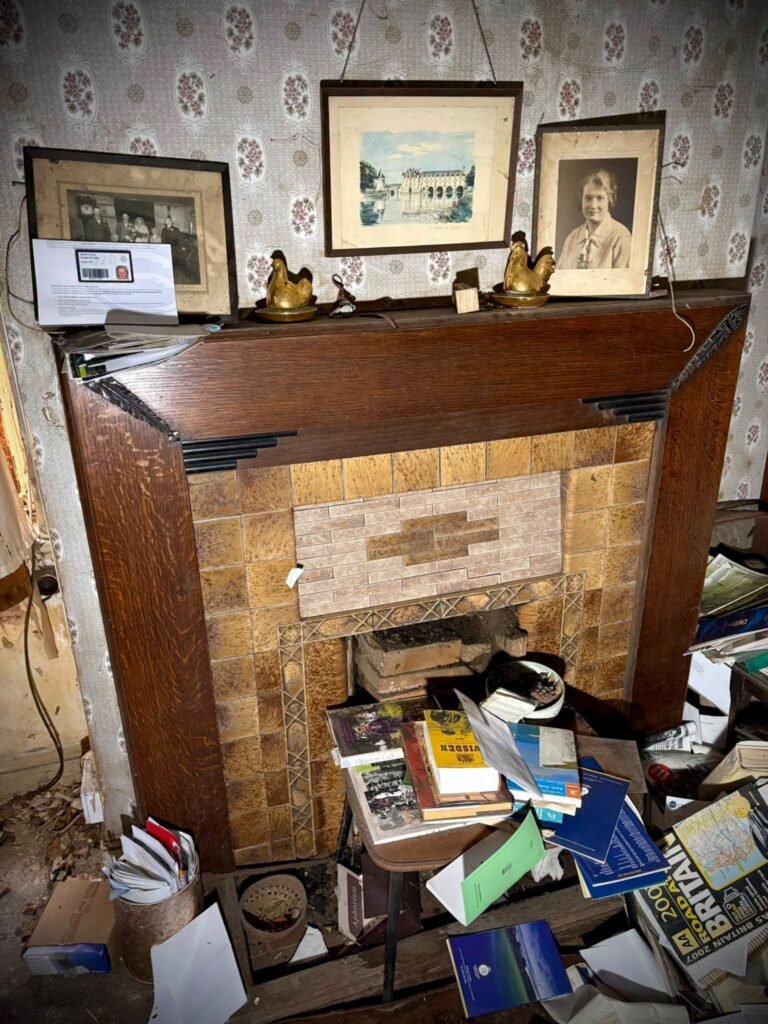
The post describes Majory’s cricket connection in unusual detail. Her county cricket club membership card was left on top of the fireplace, dating back to 2020. More memberships were left on the windowsill. The post says it looked like cricket was her hobby, and the cards are the evidence for that: not one card, kept as a keepsake, but several, left in the places where she evidently kept them.
That matters because it is how a stranger can still tell who lived here. The membership cards say she followed cricket closely enough to hold a county club membership, and kept renewing it. The family pictures dotted through the house say she kept her people close. The coats hung in the hallway by the stairs and the clothes on hangers in the bedroom say she expected to come back to them, or simply never got around to putting anything away before she died. None of that is a biography. It is a set of objects that add up to a person.
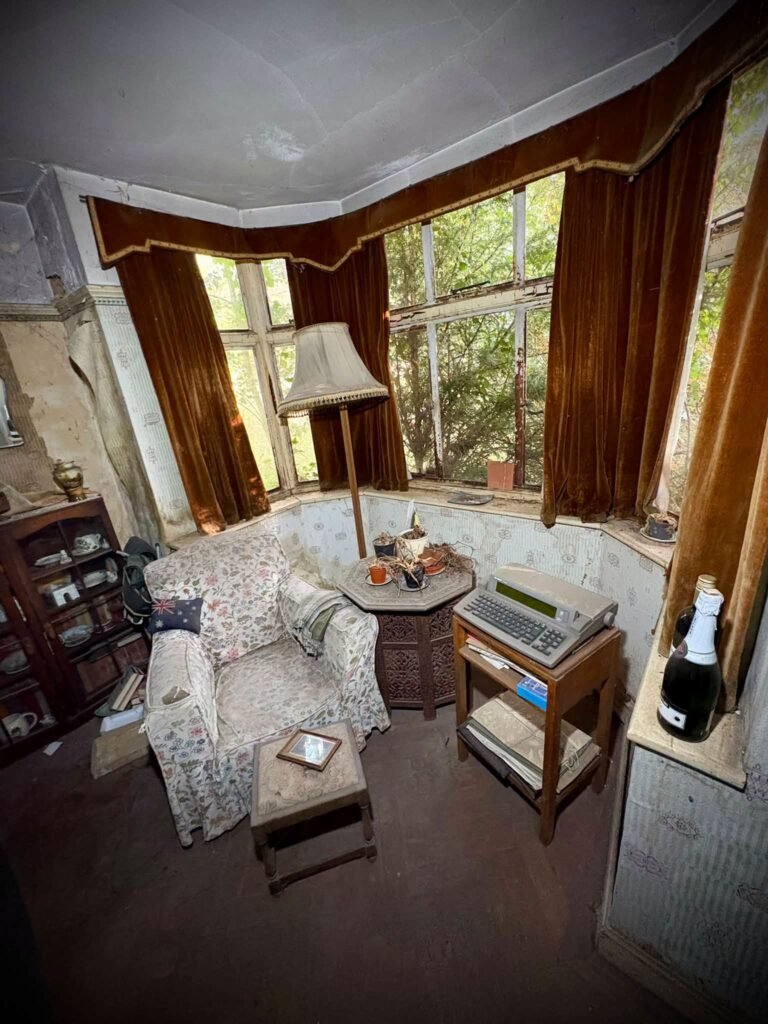
The post also mentions retro items left about the house, visible in the photographs. An old word processor sits on a small wooden table in the bay window. A floor lamp with a fringed shade stands beside the armchair. A bottle stands on the windowsill. These are not antiques arranged for display. They are the things that were in use, or at least in place, when the house was last lived in.
The fireplace mantel
One photograph is worth lingering on, because it holds the most personal objects in the house. The wooden fireplace surround is topped with three framed pictures: a group photograph of several people, a framed print of a riverside chateau, and a portrait of a young woman. Two small golden bird ornaments sit between them. On the left, leaning against the group photograph, is a white card with a small photograph on it — the membership card the post describes.
In front of the fireplace, books are piled on a small table and spilling onto the floor. A road atlas and other books lie open or stacked at angles, as if someone had been sorting through them and stopped halfway. The fireplace itself is tiled in ochre and cream, with a bricked-up opening that has not held a fire in a long time.
It is worth saying plainly what this photograph does not show. It does not name the people in the portraits. The young woman in the portrait may be Majory herself at a younger age, or a relative, or nobody connected to the house at all. The post does not say, and this article does not guess. The faces are shown here because they are part of the house as it was left, not because their identities are known.
What the five photographs show
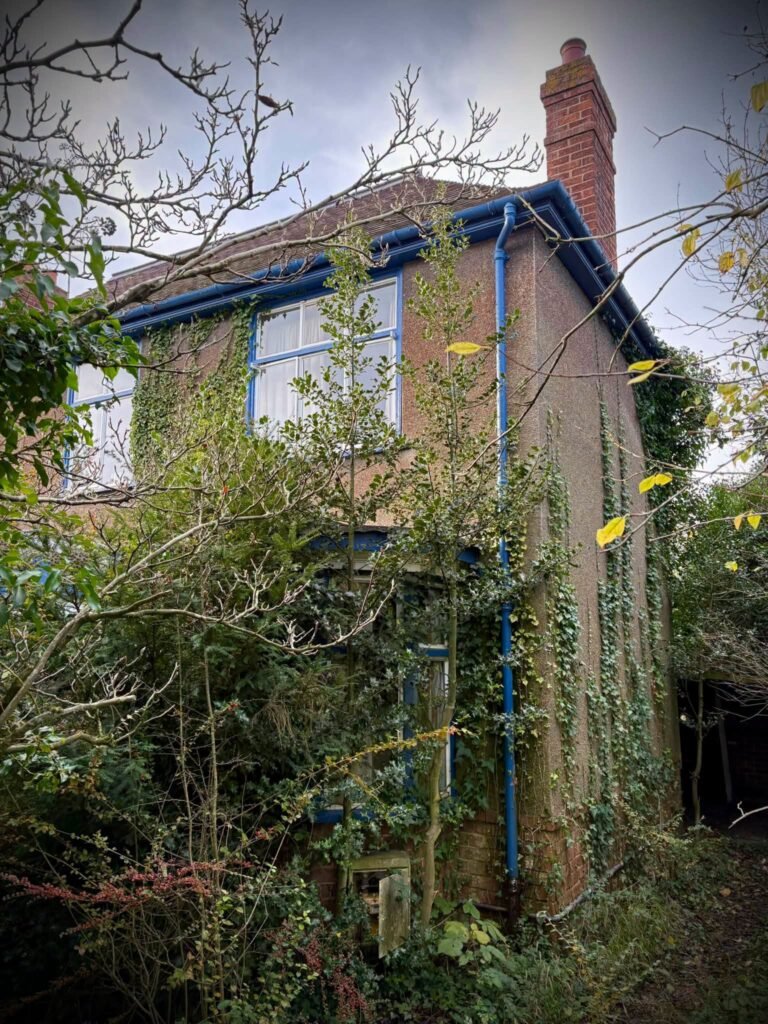
The first photograph is the outside of the house: a two-storey home, its walls partly covered in ivy, with blue-painted window frames and gutters and a tall brick chimney. Bare branches and overgrown shrubs crowd the front. The garden has not been cut back in a long time.
The second photograph is the bay-window living room. A floral-patterned armchair sits beside a small table holding a potted plant, and an old word processor rests on a wooden side table. Heavy brown curtains frame windows that look out onto thick green growth. A framed photograph lies on a footstool. The ceiling is stained, and the wallpaper is peeling at the edges.
The third photograph is the fireplace described above, with its three framed pictures, the golden birds, and the membership card.
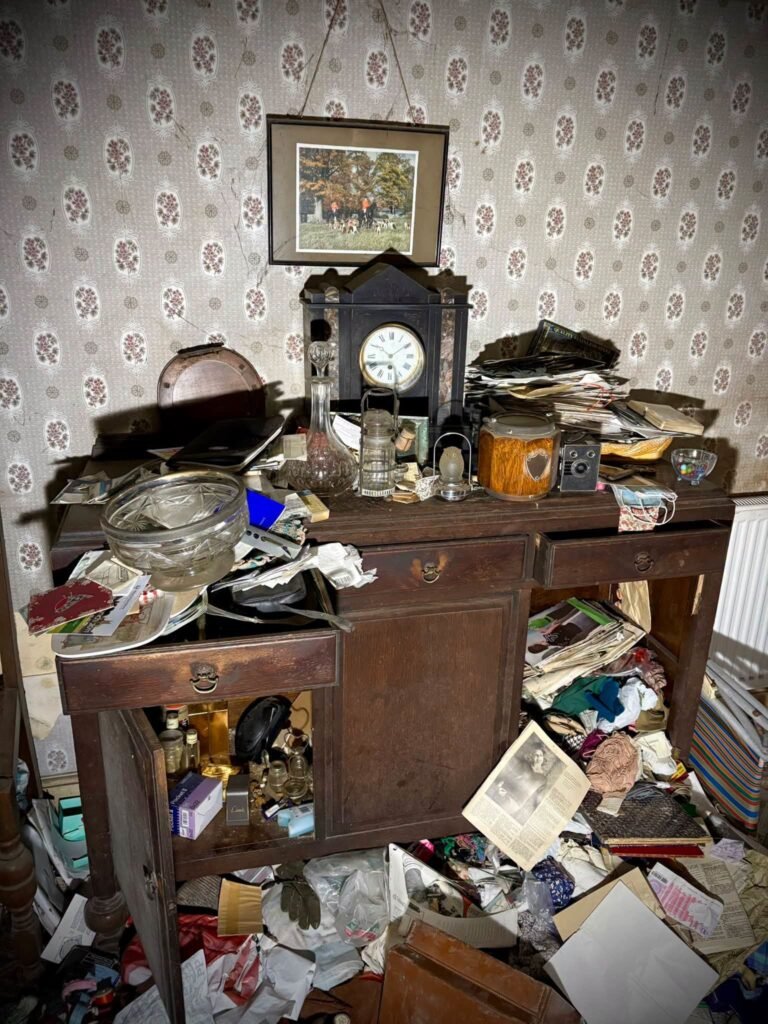
The fourth photograph is a dark wooden sideboard, its top crowded with a mantel clock, a glass decanter, an old box camera, a cut-glass bowl, and stacks of papers and letters. The drawers hang open. A framed hunting print hangs above it. The floor around it is covered in scattered papers and clothes.
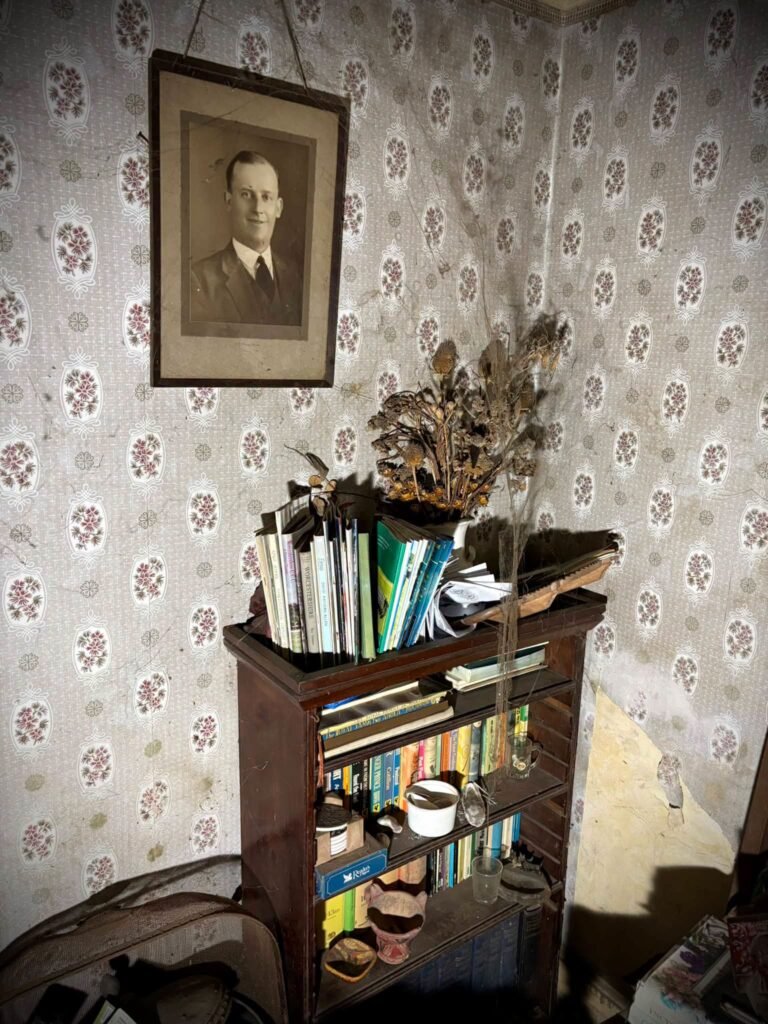
The fifth photograph is a bookshelf in the corner, its shelves full of books, with a vase of dried flowers on top and a framed portrait of a man in a suit hanging above it. Cobwebs hang from the ceiling. One of the book spines reads “Worcestershire”, though the post does not say which county’s cricket club Majory belonged to, and this article does not claim it from a book spine.
Decay is already setting in
The post is direct about the state of the house. Some parts have started deteriorating and falling apart. Cobwebs dangle from the ceilings. The smell of damp and mould runs through the house, and the post calls it a sign of neglect and decay.
That is visible in the photographs too. The wallpaper is stained and peeling. The ceilings are marked. Plants have grown up against the windows outside. Ivy has taken hold of the walls. Three years is not a long time for a house to stand empty, but it is long enough for damp to get in and for the garden to start taking the building back.
The post calls it “another sad once loving home left to become derelict over time”. That is the post’s own wording, and it fits what the photographs show: not a house that was stripped or vandalised, but one that was simply left, and is now quietly coming apart.
What is not known here
The post gives no location for the house — no town, no county, no road. It gives no address, and this article publishes none. It does not say who owns the house now, whether it has been sold, or what will happen to it. It does not say how old the house is, or when Majory moved in. Her surname is not given. The county cricket club is not named.
All of those are [TO VERIFY]. They are listed here so the reader knows exactly where the verified facts end. The house is private property, and its location is not public. Do not attempt to find or enter it.
Frequently Asked Questions
Who was Majory?
Majory was the elderly lady who lived in this house, according to the Luke2Explore post of 23 November 2026. She died in 2023. Her surname, age, and life history are not given in the post, so they are [TO VERIFY].
When was the house last lived in?
The house has been left derelict since Majory died in 2023. A calendar in the kitchen is still on May 2023. The exact date she died is not stated in the post.
What is inside the house?
Her possessions, left as if time had frozen: family photographs, county cricket club membership cards, coats in the hallway, clothes on hangers, books, a word processor, a mantel clock, and retro items throughout. The five photographs here are 5 of the 69 in the original post.
Where is Majory’s house?
The post does not give a location. No town, county, or address is stated, and this article does not publish one. The house is private property.
What is the cricket connection?
Her county cricket club membership card, dating back to 2020, was left on top of the fireplace, and more memberships were left on the windowsill. The post says cricket looked like her hobby. The club itself is not named in the post.
Can I visit the house?
No. The location is not public, the house is private property, and entering an abandoned building is trespassing and can be dangerous. This article is not a guide to finding or entering it.
Disclaimer
This article is based only on the Luke2Explore Facebook post of 23 November 2026 and the five photographs in that post shown here. The caption is quoted as published. Location, ownership, the house’s age, Majory’s surname, and the name of the cricket club are not stated in the source and are marked [TO VERIFY]. Do not attempt to find or enter this property. Abandoned buildings are private property, may be structurally unsafe, and entering them is trespassing. This article is general information only, not legal, tax, or financial advice; rules differ by state and county, so check county records and a local professional before acting.
Photos
Photos by Luke2Explore, via the original Facebook post: https://www.facebook.com/Luke2Explore/posts/pfbid0VxYZVZWEPAibbYSsL2dVtCvzPceTVuK8Pdys44YqnRK72REWK856D4vpU4PJGGbsl — 5 of the 69 photos are shown here.