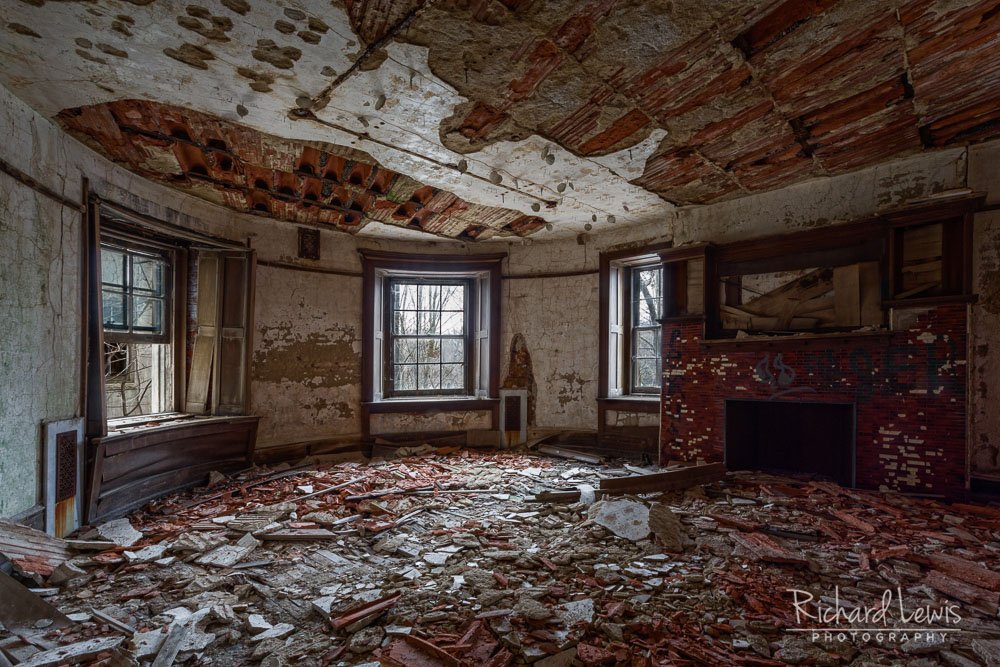
Yes, the McNeal Mansion Burlington is real, and yes, the city of Burlington, New Jersey really bought it for $1.49 in 2016. That price was not a bargain. It was a warning.
This 10,000-square-foot mansion, built around 1890 for a pipe magnate, stands on the Delaware River bank across from Bristol. Empty since the 1970s, burned through its main hall and grand staircase, it would cost about $5,000,000 to bring back, per a photographer who documented it in 2016.
That is the story here: how a house goes from a family’s pride to a city’s problem, and why some buildings are abandoned because nobody can afford to save them.
Key takeaways
- The McNeal Mansion in Burlington, New Jersey is a roughly 10,000 sq ft mansion built around 1890 by pipe-foundry industrialist Andrew McNeal.
- Andrew McNeal was the only person who ever lived in it as a home; U.S. Pipe later used it as offices, and it has sat empty since about 1975.
- Fire damage, vandalism, and decades of neglect have left it in ruins; restoration was estimated at about $5,000,000 in 2016.
- Burlington bought the building for $1.49 in 2016 with restaurant plans that never happened; it is reported as available for developers to demolish or renovate.
- The property is fenced and closed to the public indefinitely. Do not enter without permission.
Who built the McNeal Mansion in Burlington, and why?
Andrew McNeal built it. He was a local industrialist who founded a pipe manufacturing plant and foundry on the New Jersey bank of the Delaware River in 1866. The business grew into U.S. Pipe when his company was incorporated into it in 1899.
The house went up beside the works, around 1890 — some accounts say 1894. It was an industrialist’s house at the edge of his own plant — never a country retreat far from work.
What the record proves, and what it does not
| What the record shows | What it does not show |
|---|---|
| Built around 1890 by Andrew McNeal, pipe industrialist | An exact construction date — accounts differ between 1890 and 1894 |
| His foundry founded in 1866, folded into U.S. Pipe in 1899 | The architect’s name or the original building cost |
| McNeal was the only person to live in it as a home | Why no family member stayed on after him |
| U.S. Pipe added three wings and used it as offices | What the interiors looked like in its prime |
How did a 10,000 sq ft mansion end up abandoned?
Andrew McNeal remained the only resident. After his time, the company took the house over, added three wings, and ran its corporate offices from inside it. When U.S. Pipe moved its headquarters to Alabama in 1953, the mansion was stepped down to a regional sales office.
Around 1975, as the company scaled back in New Jersey, the building was abandoned — half a century of emptiness.
The decades since have followed a familiar pattern. Proposals for reuse came and went, and none gained traction. Half-finished renovation work sits scattered through the interior. Fire did the worst damage, burning through much of the main hall and the grand staircase. Vandalism and weather finished what the flames started.
In 2016, the city of Burlington bought the building for $1.49, planning to turn part of the property into a restaurant. Like the plans before it, this one never materialized. The city did not buy a mansion. It bought a liability with a famous name — a fenced, fire-damaged ruin on the New Jersey Register of Historic Places, listed because of its history, not its condition.
What does the documented damage actually look like?
The clearest record comes from photographer Richard Lewis, who documented the mansion in 2016 and described total devastation: crumbling walls, ceilings, and floors, ruined architectural details, fire-ravaged master stair, and a built-in safe standing empty upstairs. Signs of failed renovation projects were everywhere.
His restoration estimate was about $5,000,000. Put that next to the $1.49 purchase price and the real math snaps into focus: the building is not cheap because it is small or hidden. It is cheap because saving it would cost a fortune, and every year of waiting makes the figure worse. People who know the property have written that there is little hope of rehabilitating it, and the current reported position is that it is available for developers to either demolish or renovate.
Can the McNeal Mansion be saved — or is demolition next?
The options tell you how narrow the path is. Restoration would mean rebuilding a fire-gutted interior inside a 130-year-old shell, at a cost estimated in the millions, for a building whose last serious reuse plan died years ago. Demolition would erase a registered historic place that can never be rebuilt. Doing nothing — the current default — lets fire damage, water, and time keep working.
This decision framework matters for other abandoned mansions too:
- Can the structure still be saved? The walls are solid and the frame is steel — the one real point in its favor.
- Is there a use that pays for the rescue? Offices, a restaurant, apartments — every version has been proposed here, and every version has stalled.
- Who pays? The city bought it for $1.49 and has no $5,000,000. A developer would need a plan that survives contact with those numbers.
- What does waiting cost? Every winter the building sits open to weather, the estimate climbs and the demolition argument gets easier.
Until a developer with a funded plan appears, the honest status is: standing, fenced, and waiting.
Why does the McNeal Mansion matter to New Jersey history?
Because it is the house version of an industrial story. Burlington’s riverfront was a working landscape — foundries, pipe works, shipping — and its historic-register listing recognizes that commerce, industry, and architecture together.
That is also why this mansion is different from the grand country estates people picture when they hear “abandoned mansion.” It was built by the factory, for the factory’s owner, next to the factory. When the industry left New Jersey, the house lost the reason it existed.
Readers who follow houses that sit empty will recognize the pattern: the building outlives the economy that built it, then has to earn a second reason to exist.
How can you follow this story without trespassing?
The property is closed to the public indefinitely and fenced. The interior is structurally unsound, with fire damage and crumbling floors. An empty look is not permission, and a fence is a clear answer.
Use this checklist instead:
- Do not enter, climb, or cross the fence, and do not share or seek entry routes.
- Follow the story through published sources: local press, the photographer’s documented visits, and official city records.
- If the property is ever listed for development, go through the listing agent or the city.
- Visit historic houses and museums that are open to visitors and tell the same industrial story lawfully.
This mansion is not for sale to a casual buyer, and it is not a tour site. It sits in a different world from homes that are actually for sale — lived-in houses with agents, prices, and appointments, like the Noonan Home in Alexandria. Do not confuse the two.
Photos
Photos for this post will be added by the site owner, with a lawful image only. Do not use a private interior photograph taken without permission, and do not republish another photographer’s images without a license.
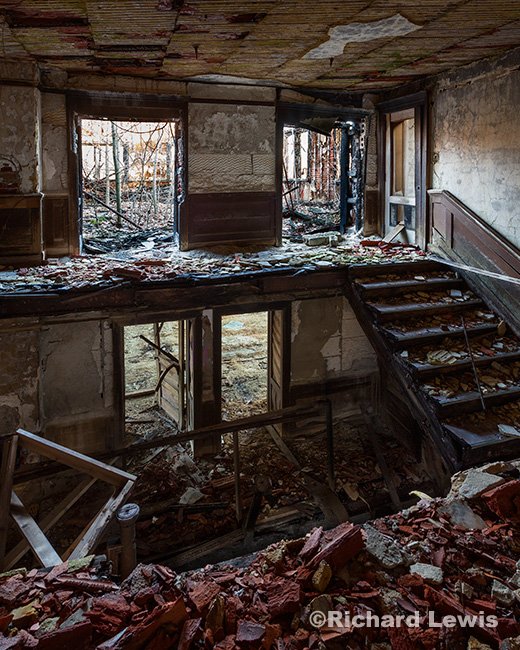
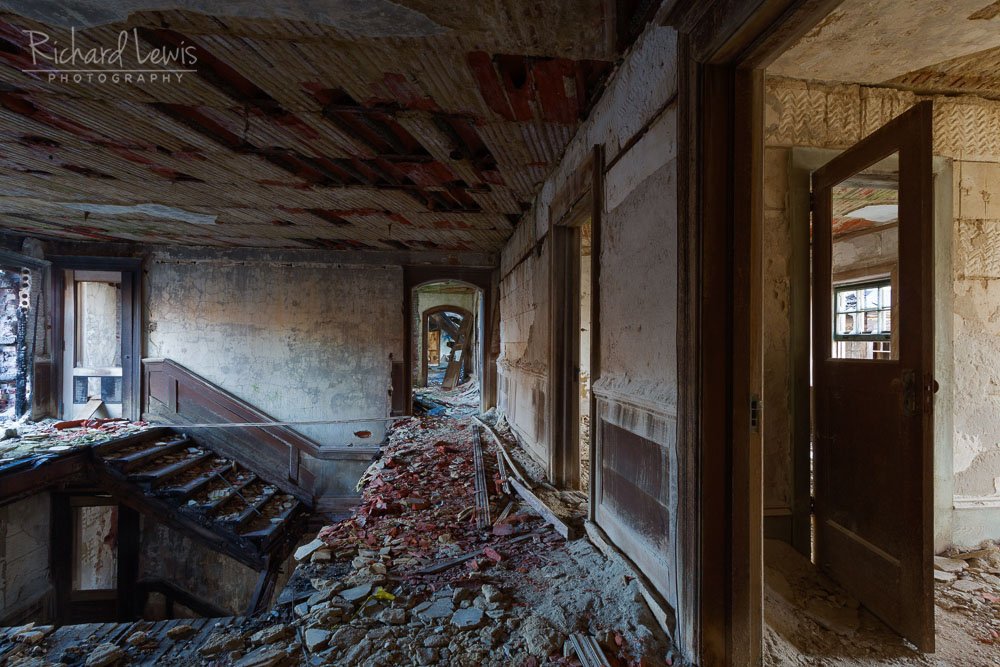
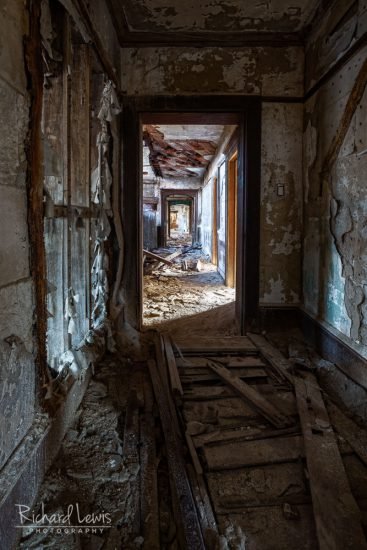
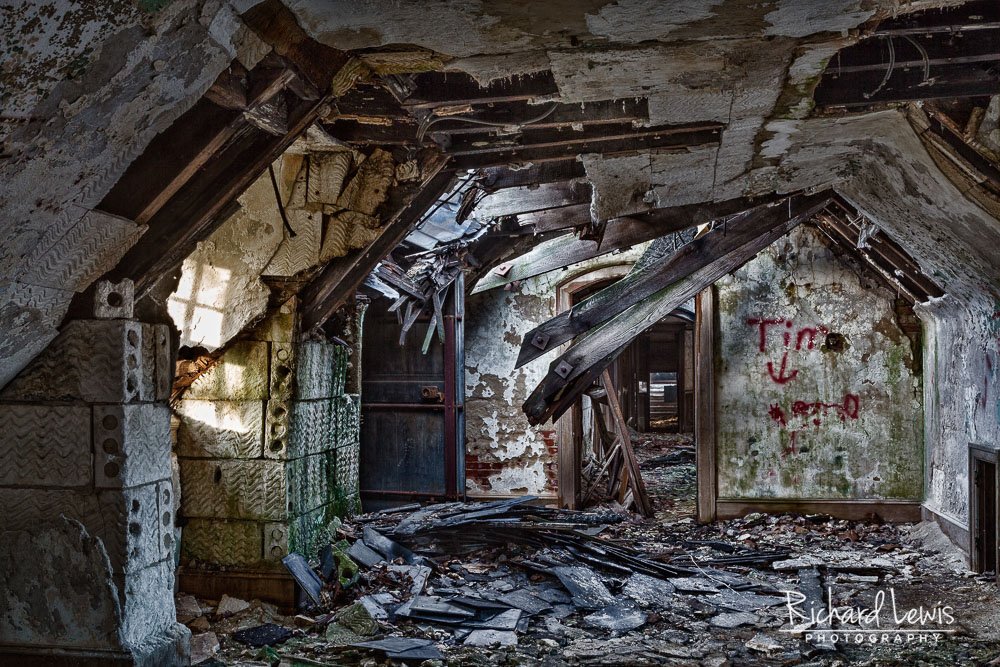
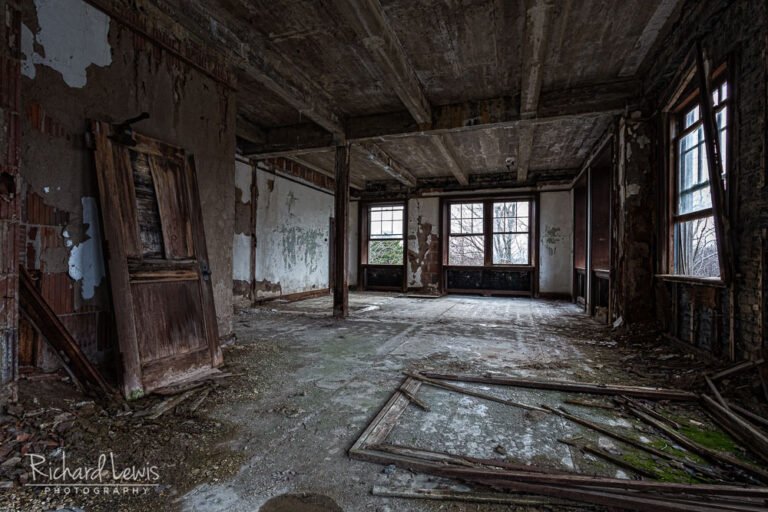
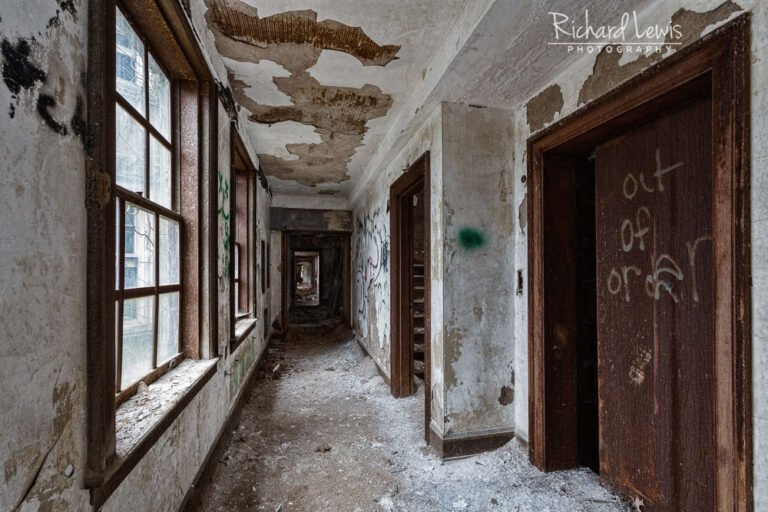
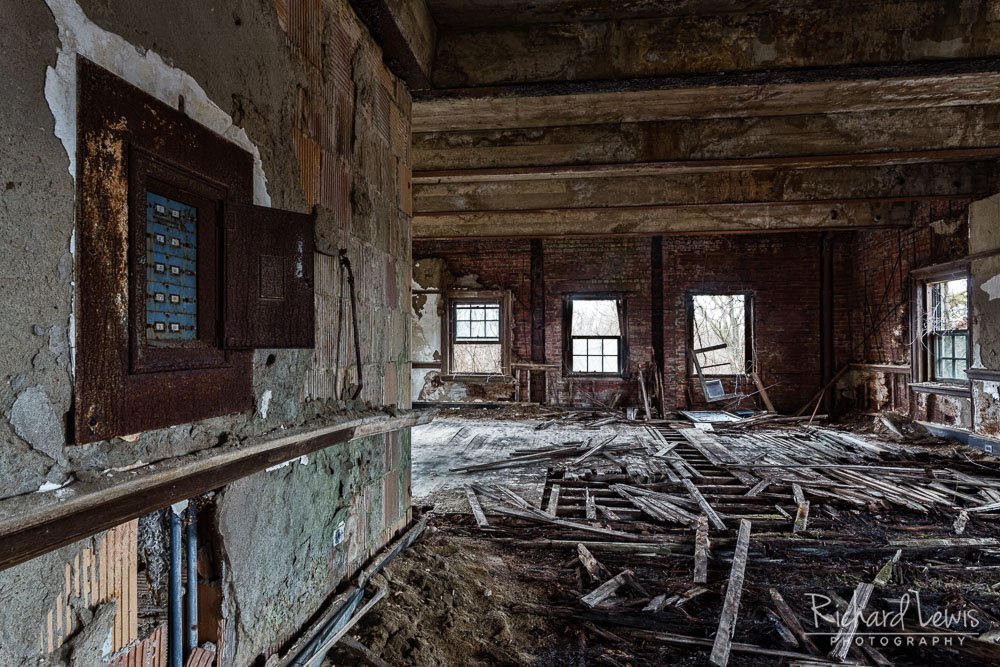
Photos: Richard Lewis Photography (2016) — richardlewisphotography.com
In the meantime, you can see photographs matching this story on the photographers’ own pages: Richard Lewis’s 2016 photo series documenting the mansion’s devastation, and the Business Insider photo feature on the abandoned mansion.
Where the facts came from
- Business Insider photo feature by Erin McDowell: 10,000 sq ft, dates back to 1890, across the river from Bristol in Burlington, New Jersey; city bought the building for $1.49 in 2016 with restaurant plans that never materialized; available for developers to demolish or renovate.
- Richard Lewis Photography (2016, updated 2017): built around 1894 as Andrew McNeal’s dream house; U.S. Pipe corporate offices, then regional sales office, abandoned in 1975; fire, vandalism, and neglect; restoration estimated at about $5,000,000; listed on the New Jersey Register of Historic Places.
- Local and regional press (April 2024): headquarters moved to Alabama in 1953; McNeal the only resident; several fires; property in bad shape.
- Original writing for abandoned.blog; no listing or article text was copied.
Frequently asked questions
Is the McNeal Mansion still standing?
Yes, per the latest documented reports: a fenced, fire-damaged ruin on the Delaware riverbank in Burlington — standing, but barely.
Can I visit or go inside the McNeal Mansion?
No. The property is closed to the public indefinitely and fenced. Do not enter without permission.
Why did Burlington buy it for only $1.49?
The price reflected the building’s condition and the cost of any rescue, not its size or history. The city’s restaurant plan never materialized.
Who was Andrew McNeal?
A Burlington industrialist who founded a pipe manufacturing plant and foundry in 1866. His company was incorporated into U.S. Pipe in 1899, and he was the only person who ever lived in the mansion as a home.
Is the McNeal Mansion for sale?
It has been reported as available for developers to either demolish or renovate. There is no public residential listing; any route would go through the city, not a normal house sale.
Final thoughts
The McNeal Mansion is the rare abandoned house whose price tells the truth. One dollar and forty-nine cents is what a 10,000-square-foot mansion is worth when the stairs are burned and the rescue costs $5,000,000 nobody has.
That does not make it worthless. It makes it a monument to a specific American story: the industrialist’s house beside the works, orphaned when the industry moved south. Whether it gets a second life or a demolition crew, it has earned its place in the record — which is more than most ruins get.
Disclaimer: This post is general information only, not legal, tax, or financial advice. Rules differ by state and county. Check county records and a local professional before acting.