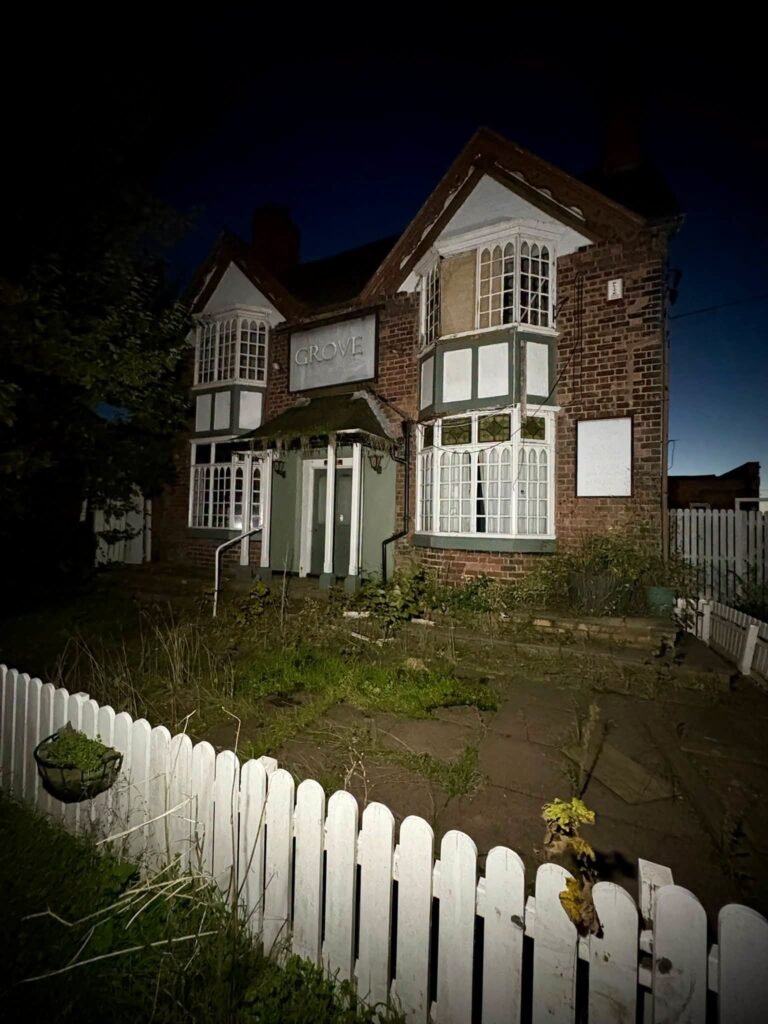
The Grove Inn in Shropshire is the kind of pub that used to anchor a village. A red-brick building dating back to 1855, now Grade II listed, it spent decades as a popular community local and rural pub serving Walcot and the surrounding countryside. Today it stands closed — shut for a considerable period — in a derelict, abandoned state.
This post sticks strictly to what is published in a public Facebook post by Luke2Explore, who photographed the building as it stands now. Where that post gives no fact — no street address, no closure date, no owner, no sale price — this article invents none.
Key takeaways
- The Grove Inn is a red-brick pub in Shropshire dating back to 1855, and it is Grade II listed.
- The pub has been closed for a considerable period and now stands in a derelict, abandoned state.
- For decades it served Walcot and the surrounding countryside as a popular community local and rural pub.
- It was known as a dining pub: carvery, hot-stone (lava rock) steaks, kangaroo burgers, wedding receptions, Sunday roast dinners, and local community events.
- It was a gathering spot for local sports teams, village young farmers, and railway and commuter travellers when the nearby Walcot railway station was active.
- Inside, the pub has been stripped back to the bar, the walls, and disrepair.
- No street address, closure date, owner, or sale price is published in the post, and none is stated here.
What was the Grove Inn when it was open?
For decades, the Grove Inn was a popular community local and rural pub serving Walcot and the surrounding Shropshire countryside. That is the post’s own description: a village pub with regulars.
It was known as a dining pub, and the post names its draws: a carvery, hot-stone (lava rock) steaks, kangaroo burgers, wedding receptions, Sunday roast dinners, and local community events.
The post also describes who gathered there: local sports teams, village young farmers, and railway and commuter travellers back when the nearby Walcot railway station was active.
What does the Grove Inn look like today?
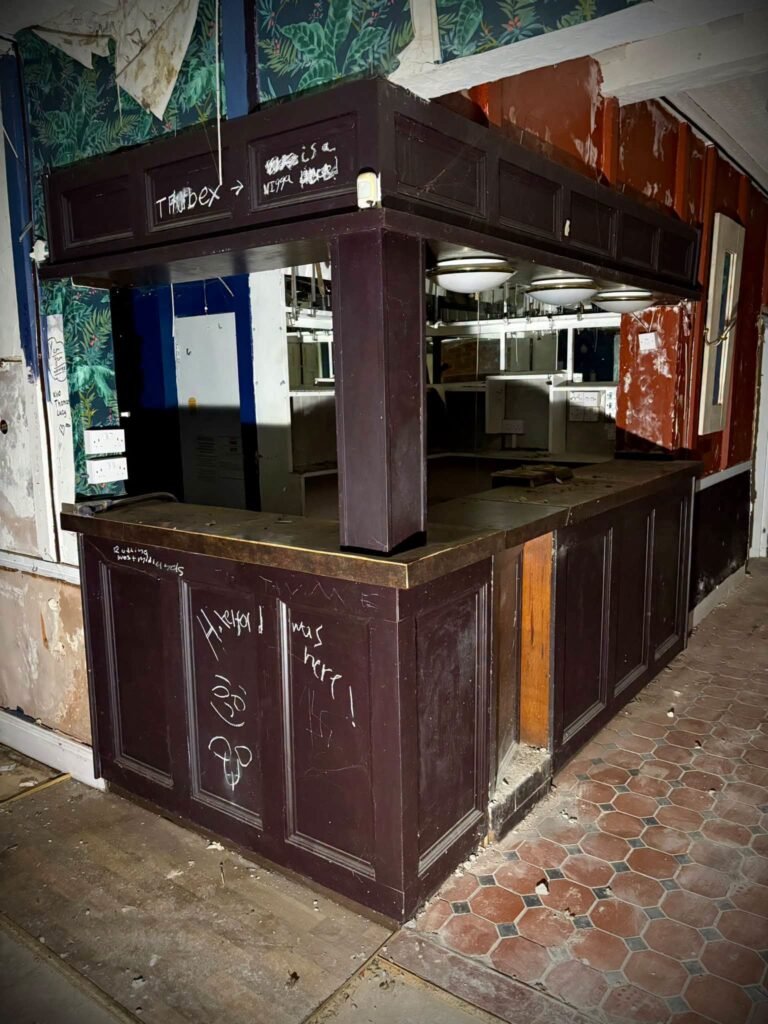
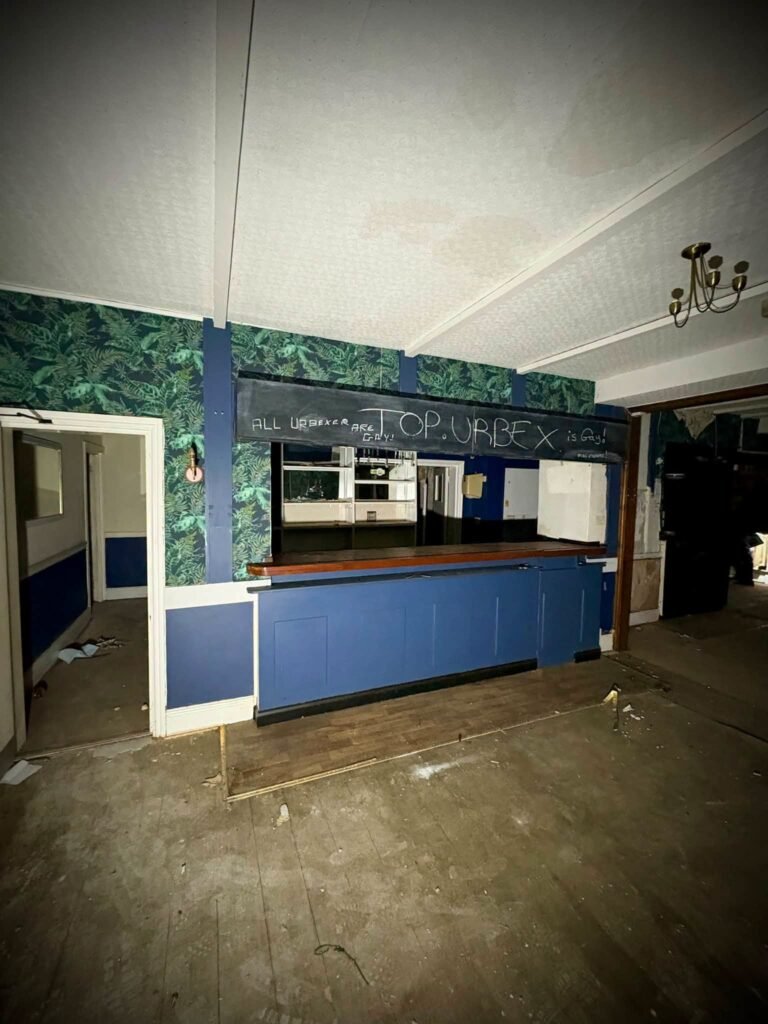
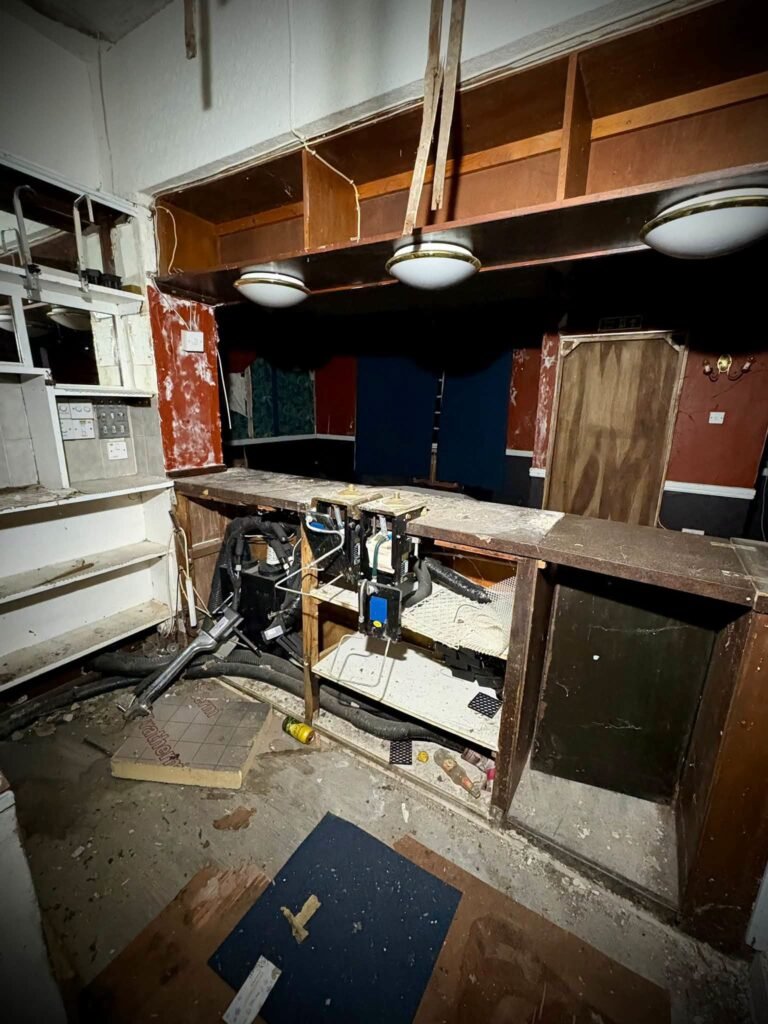
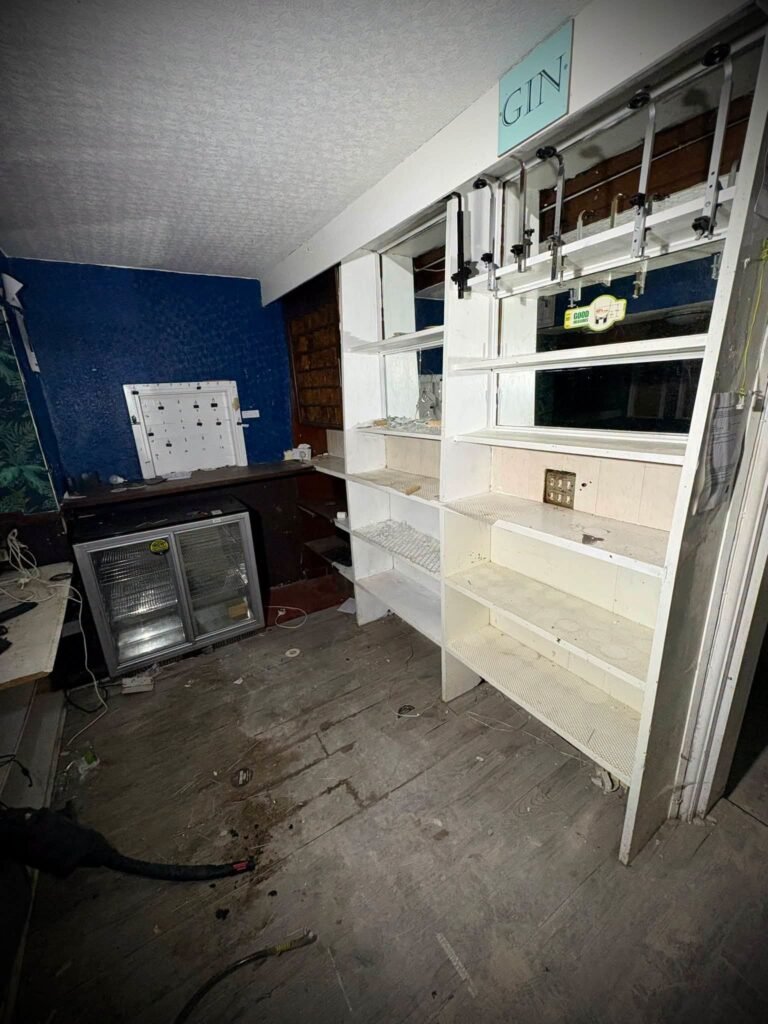
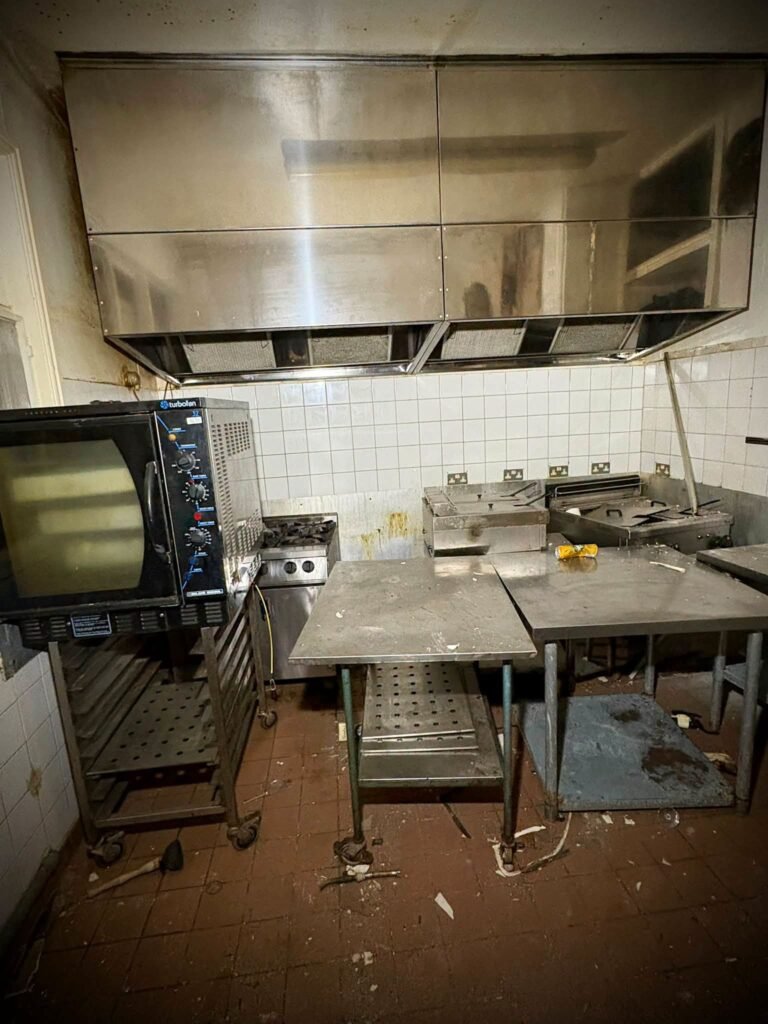
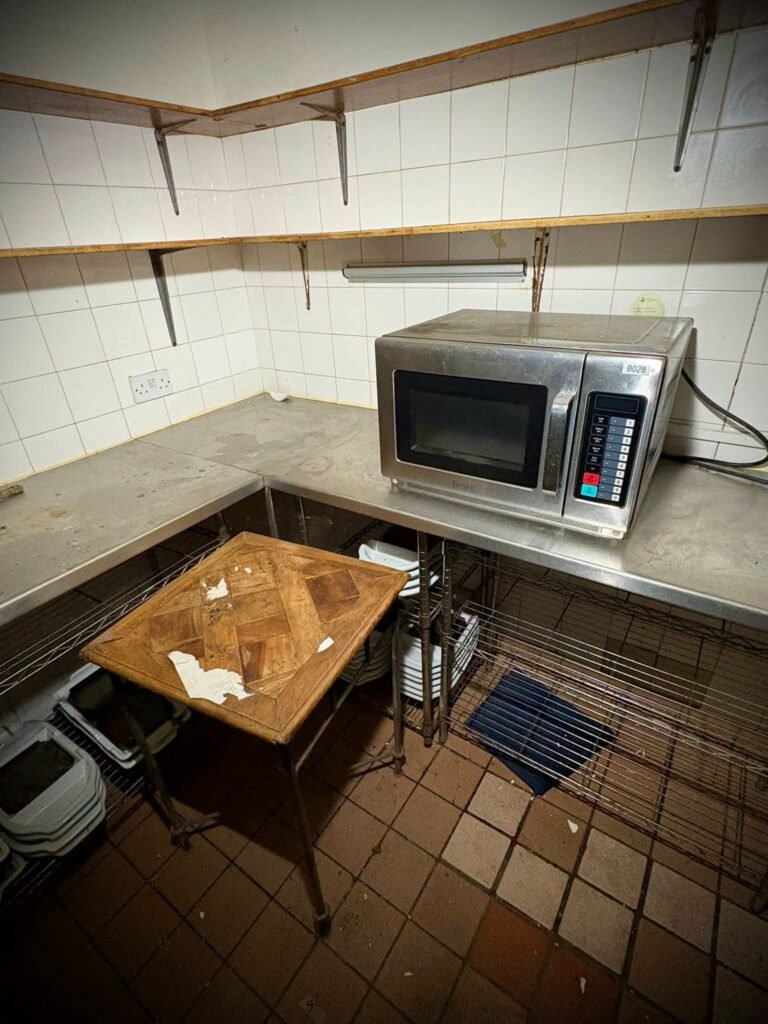
The post describes the pub as closed for a considerable period and in a derelict, abandoned state. Inside, it has been stripped: the photographs show only the bar, the walls, and disrepair. Fixtures, fittings, and furniture are gone.
The seven photographs shown here walk through that emptiness: the night exterior with its GROVE sign and white picket fence; a dark bar room marked with graffiti; a blue-painted bar; the stripped bar with its taps; back-bar shelves that once held rows of gin; a commercial kitchen; and a kitchen prep corner.
It is the kitchen photographs that land hardest: a kitchen built for carveries and Sunday roasts, now empty. The post gives no date for when the last meal was served there, and none is stated here.
When did the Grove Inn close, and who owns it now?
The post does not say. It describes the pub only as closed for a considerable period. No closure date is published, so no closure date appears in this article. The same goes for ownership and money: no owner is named, no sale price is given, and the building is not presented as for sale.
What the post does give is the building’s age and status: a red-brick building dating back to 1855, Grade II listed. Beyond that — beyond 1855 and the listing — no building history is given, and none is added here.
Why do rural pubs like this one fall silent?
Nothing in the post explains why the Grove Inn closed, and this article will not guess at its reasons. The pattern is a familiar one across rural Britain: rising costs, changing drinking habits, and the slow arithmetic of keeping a big old building going. Dining pubs once looked like the answer, and for a time, at the Grove Inn, that formula clearly worked. That general picture explains the type; it does not explain this pub.
How can you follow a story like this without trespassing?
Use this checklist whenever photographs of an abandoned building make you want to see it yourself.
- Do not enter private property without permission. A derelict pub can have weak floors, broken glass, and no lighting.
- Do not share or seek location clues, entry routes, or directions. The post gives Walcot and Shropshire; that is enough.
- Treat the photographs as the visit. Seven of the post’s sixteen photos are shown here; they are the lawful way to see inside.
- If a building like this is ever formally opened or listed for sale, go through the owner or agent — not through a fence.
That checklist protects the building as well as the curious.
Photos
Photos: Luke2Explore on Facebook — original post: https://www.facebook.com/Luke2Explore/posts/pfbid09asscqwnMWjQ7NFjXBadeKyi25P3MdQ6J9XXJtCH1pNczUmcx6n9RKZ5S3pNM74dl (7 of the 16 photos in the original post are shown here; the rest were not accessible without signing in to Facebook).
Where the facts came from
Every factual statement in this article comes from a single public source: a Facebook post by Luke2Explore about the abandoned Grove Inn in Shropshire. The post includes sixteen photographs; seven are shown here, one as the featured image and six in the gallery above.
Anything the post does not state — a street address, a closure date, an owner, a sale price — is not stated here either.
Frequently asked questions
Where exactly is the Grove Inn?
In Shropshire, serving Walcot and the surrounding countryside. The post gives no street address, and none is published here.
When did the pub close?
That is not published in the post. It is described only as closed for a considerable period.
Who owns the building, and is it for sale?
No owner is named in the post, and no sale price or listing is mentioned. It is not presented as for sale.
How old is the building?
The post describes a red-brick building dating back to 1855, and says it is Grade II listed. No further building history is given.
What was the pub known for?
Its carvery, hot-stone (lava rock) steaks, kangaroo burgers, wedding receptions, Sunday roast dinners, and community events — and as a gathering spot for sports teams, young farmers, and railway and commuter travellers.
Can I visit or go inside?
No. Do not enter private property without permission, and do not use the post to try to find a way in. The photographs here are the way to see it.
Final thoughts
There is a particular sadness to a stripped pub. A house can be emptied and still read as a house; a pub emptied of its fittings, its kitchen equipment, and its people reads as a room that has forgotten its purpose.
What the post preserves, almost in passing, is the memory of the full house: teams in after a match, young farmers at the bar, travellers from the station when Walcot’s trains still ran, wedding parties, Sunday dinners.
Disclaimer
Disclaimer: This post is general information only, not legal, tax, or financial advice. Facts about the Grove Inn come solely from the public Facebook post by Luke2Explore described above. Rules on listed buildings differ by area — check the local authority and a local professional before acting. Do not enter private property without permission.