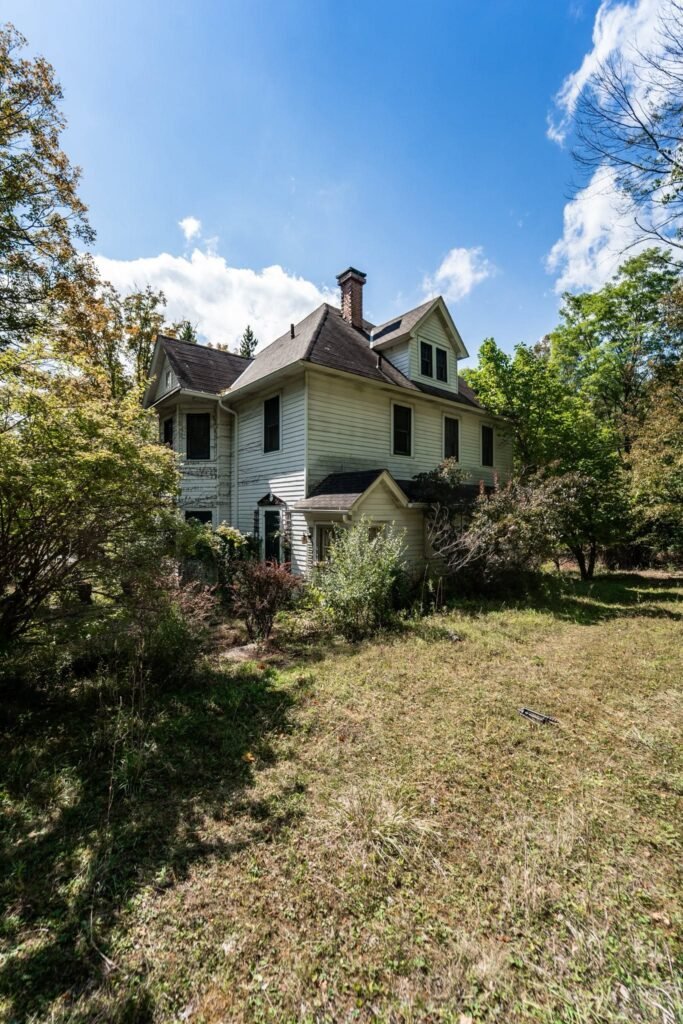
On 6 September 2025, the Facebook page BigBankz posted nine photographs with a short, striking claim: hidden away in the mountains sits a beautiful abandoned Victorian mansion with everything frozen in time.
That sentence is the whole of the public record. Of the nine photographs, three are shown in this article — the remaining six were not accessible without signing in to Facebook. The post publishes no exact location or state, no owner name, no year built, and no square footage. So this article refuses to invent a backstory. Instead it reads the three visible photographs the way a careful viewer should: noting exactly what each frame proves, and what it merely suggests.
There is a discipline to looking at empty houses honestly. A made bed does not prove someone left in a hurry. An intact window does not prove a house was loved. What follows is a walk through the evidence we actually have — plus a clear accounting of everything we don’t.
The Exterior: A White Two-Story Victorian Among the Trees
The first photograph, which also serves as this article’s featured image, shows the house from its yard on a bright day. White clapboard siding. Two full stories under a steep, dark roof. A tall brick chimney rises from the ridge, and gabled dormers break the roofline on the upper floor. The tall, narrow proportions and asymmetrical massing read instantly as Victorian-era building.
What the frame proves: the structure stands, the siding is largely intact, and the roofline is straight — no visible sag, no collapsed section. A straight ridge on an empty house usually means the roof has been keeping water out, and a dry roof is the single biggest factor in whether an old house survives abandonment.
What the frame suggests without proving: nobody has mowed in a long time. The grass in the foreground stands tall and patchy, and young trees and brush crowd the walls on two sides. Vegetation pressing against siding traps moisture and invites rot, so the house is in a slow race between a sound roof and an advancing yard.
The post does not publish the state or county, so the mountain range in the caption stays a mystery. I won’t guess at it here — “the mountains” is all the record gives, and white Victorian farmhouses like this one stand in ranges across the country.
A Bedroom Wrapped in Floral Wallpaper
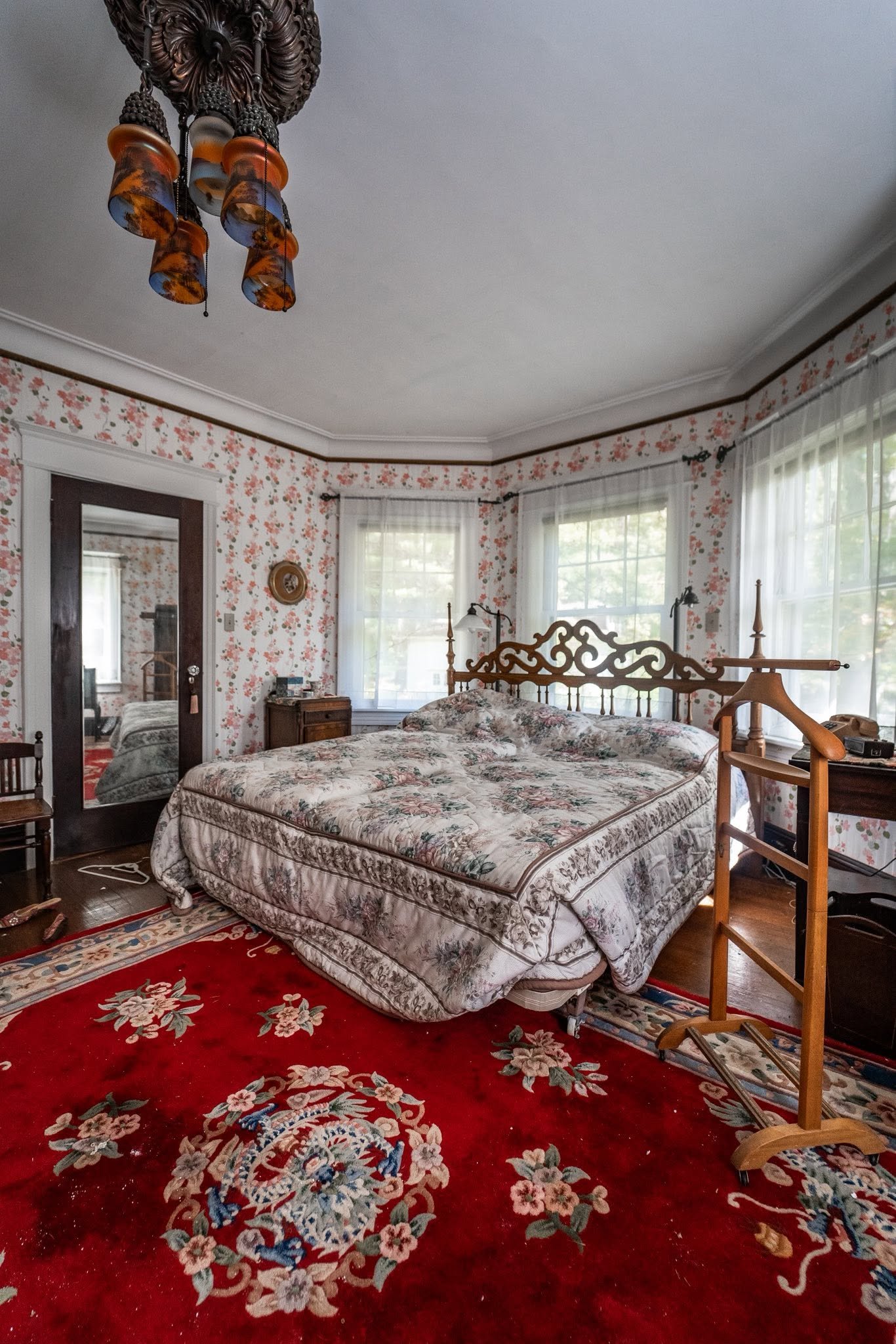
The second photograph moves inside, into a bedroom where the walls wear a faded floral wallpaper. A window lets in flat daylight; the painted wood trim around it is worn but unbroken. The room reads as a sleeping space once decorated with care — wallpaper is a deliberate choice, and patterned paper like this was neither cheap nor casual in its day.
Look at the surfaces. The paper peels in places and carries water stains in others, which points to small envelope failures over the years — a flashing gap, a window left open to weather, seasons of condensation. But the walls stand, the ceiling is up, and there is none of the catastrophic plaster collapse you see in houses where the roof has failed.
The year the house was built is not published in the post, so I won’t date the wallpaper to a decade. The pattern belongs to an era when floral papers covered bedroom walls as a matter of course, and the room was clearly somebody’s. Somebody picked that paper and lived with it.
Two Single Beds, Still Made
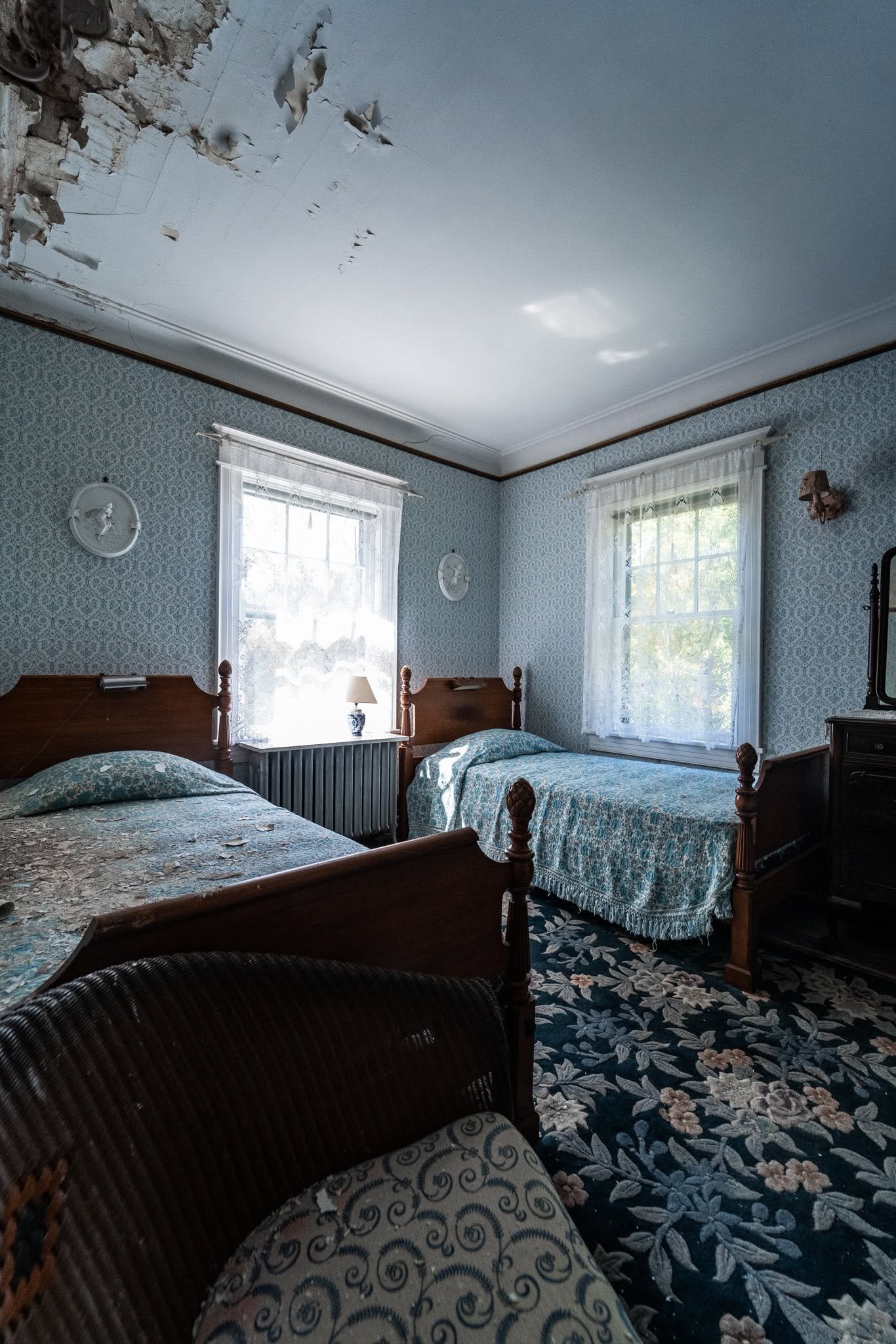
The third photograph shows another bedroom, and it is the one that gives the “frozen in time” claim its weight. Two single beds stand side by side, both still made, the bedding faded but not stripped.
This is the image people will remember, and it deserves a slow look. Made beds in an empty house write an instant story in the viewer’s head — someone left, and never came back. The photograph proves the beds are made. It does not prove the story. Beds get left made in estate clearances, in houses emptied room by room, in rentals between tenants. The post publishes no account of who lived here or when they left, so the honest reading is simpler: the room was last arranged, not last slept in.
Notice, too, what is missing from both interior frames: no smashed furniture, no graffiti, no piles of debris. Among the abandoned houses we’ve documented, that kind of restraint is rarer than you’d expect.
“Frozen in Time”: A Room-by-Room Evidence Check
“Frozen in time” does a lot of work in the original caption, so let’s audit it against the three photographs we can actually see. The table below separates what each image proves from what it cannot prove.
| Photograph | What it proves | What it does NOT prove |
|---|---|---|
| White two-story exterior | The house stands; siding and roofline intact; the yard is overgrown | The state, the age, the owner, or how long it has been empty |
| Bedroom with floral wallpaper | Walls and ceiling intact; water staining and peeling in places | When the paper was hung, who chose it, or when the room was last used |
| Bedroom with two single beds | Two beds remain, both made; the room is undisturbed | That anyone “left in a hurry,” or when the beds were last slept in |
The verdict: “frozen in time” is fair as a description of the rooms’ undisturbed condition, and it overreaches if you read it as a claim about the day everyone left. The photographs support stillness, not a timeline. That is the standard I try to hold across everything published on abandoned.blog: show your work.
Photos: BigBankz on Facebook — original post: https://www.facebook.com/BigBankz2/posts/hidden-away-in-the-mountains-sits-this-beautiful-abandoned-victorian-mansion-wit/122120020766955751/ (3 of the 9 photos in the original post are shown here; the rest were not accessible without signing in to Facebook).
What the BigBankz Post Does Not Say
Honesty requires a list. The following facts are not published in the post: the exact location or state; the owner’s name; the year the house was built; the square footage or acreage; how long the house has been vacant; whether it is for sale, in foreclosure, or held in an estate; and what the other six photographs show.
That is a long list of unknowns, and it is the point. Abandoned-house content online is full of confident narration laid over thin evidence — build dates asserted from a roof shape, tragedies invented from a made bed. The record here supports exactly one confident sentence, the one BigBankz wrote. Everything else is looking.
If you recognize the house, the responsible move is to keep its location to yourself. Publishing addresses of empty houses draws vandals, scrappers, and liability to structures that have survived this long by being overlooked.
How a Mountain Victorian Ends Up Empty
Nothing in the post explains why this house is empty, so what follows is general context — not this house’s history. Mountain houses empty out for a handful of recurring reasons: an owner dies and the heirs live far away; a remote property costs more to keep than it earns; or the land simply stops supporting the life built on it.
The ones that survive tend to be the houses with sound roofs and someone who kept paying the small bills — taxes, insurance, a patched shingle — long after they stopped living there. That pattern may or may not describe this house. The exterior photograph shows a roof that has held, which fits either an owner who cared or plain luck. The post does not say which.
Before You Go Looking for It
An abandoned house is still somebody’s property. Entering without permission is trespassing in every state, and empty houses carry real hazards: rotted floors, bad air in low spaces, and the occasional occupant who got there first.
If a house like this ever comes onto the market, the path runs through public records, not through a fence. County assessor and recorder offices show ownership, tax status, and liens, and a local professional who knows rural property can say whether an approach is even possible.
Frequently Asked Questions
Where is this abandoned Victorian mansion located?
The exact location is not published in the BigBankz post — only that it sits “in the mountains.” No state or county is given, and this article does not speculate. If you recognize the house, keep the location private to protect the property.
Who owns the mountain Victorian?
The owner’s name is not published in the post. Ownership of a property can normally be checked through the county assessor’s office — but without a known county, that trail starts nowhere public.
When was the house built?
The year built is not published in the post. The tall proportions, clapboard siding, and gabled dormers are consistent with Victorian-era construction, but style alone cannot date a house reliably; those forms were built for decades.
Can I visit or go inside the house?
Not without the owner’s permission. Entering an empty house uninvited is trespassing, and vacant structures are dangerous: weak floors, mold, and no one nearby to call for help. Admire the photographs and leave the fence line alone.
Why is the furniture still inside?
The post does not say. In general, furnished empty houses usually trace to estates that stalled, heirs who lived far away, or owners who simply stopped coming back. Any of those could apply here — or none. The three visible photographs show undisturbed rooms; they do not explain why.
Is the mansion for sale?
Not as far as the public record shows. The post mentions no listing, no price, and no agent. If that ever changes, it would surface through county records or a local listing — not through a photo set on Facebook.
How is this different from the old houses listed for sale on this site?
Abandoned houses and houses for sale are different categories with different rules. A for-sale house — for example, the 1902 Noonan home in Alexandria, Minnesota — has an owner, a price, and a legal way inside. Note the distinction: that Noonan home is a lived-in house currently for sale, not an abandoned property. The mountain Victorian in this article has no listing, no price, and no published owner, which is why this article sticks to the photographs.
This article is general information only — not legal, tax, or financial advice. Property rules, trespass law, and tax-sale procedures differ by state and county. Check county records and consult a local professional before acting on anything you read here.