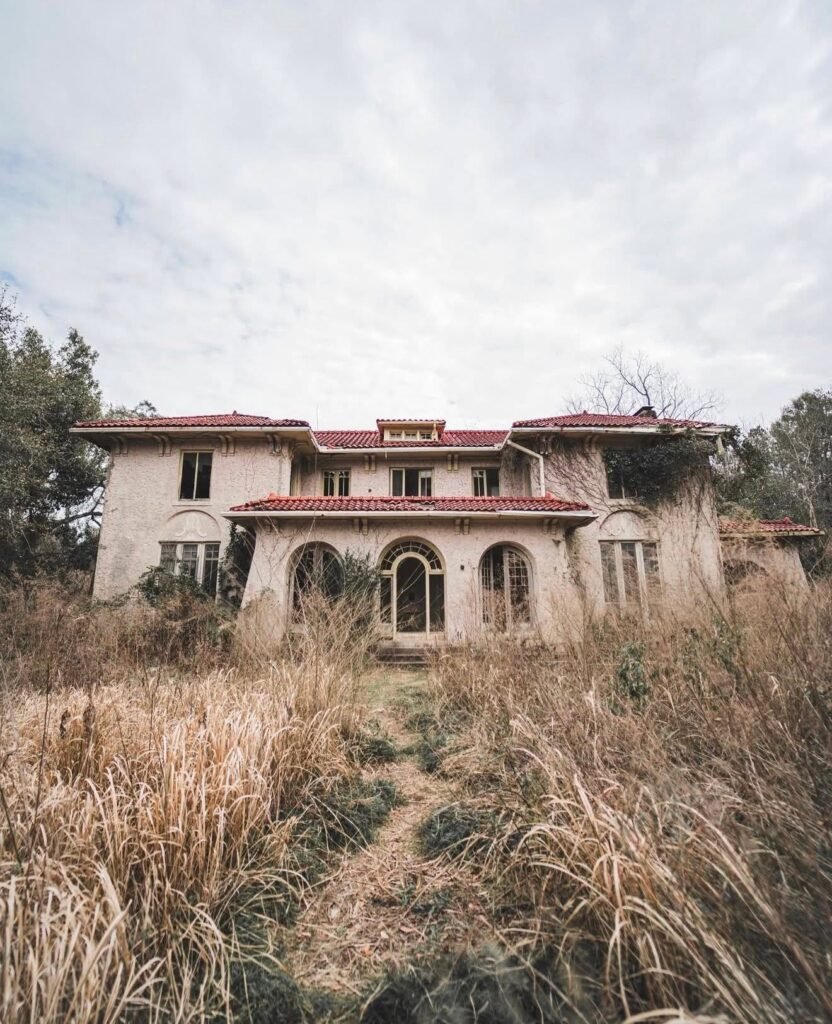
On 18 November 2025, the explorer BigBankz published a short Facebook post about a place called the Outlaw Mansion of southern Alabama. The post is brief — a few sentences and eight photographs — but it lands two facts that give the whole thing its weight: this was the very first abandoned mansion BigBankz ever explored, and the building burned down a few years ago.
There is no address in the post. No owner is named. No date or cause is given for the fire. Those absences are worth stating up front, because most of what circulates online about lost places is stitched together from guesses, reposts, and confident-sounding captions. This article will not do that. Everything that follows comes from the post itself — and where a fact is not in the post, this article says so plainly.
What follows is a record of what the post does and does not establish: the first exploration, the fire, the photographs, and the questions people keep asking now that the house is gone.
The First Abandoned Mansion BigBankz Ever Explored
The heart of the post is a personal milestone. Before this house, there were no abandoned mansions in BigBankz’s exploring history. After it, there were many. The Outlaw Mansion of southern Alabama was the starting point — the place where the habit began.
Firsts carry a particular charge in this world. The building where you learn how a dead house feels — the dust hanging in the air, the way afternoon light moves through rooms nobody heats anymore, the sound of your own footsteps on floors nobody maintains — becomes the baseline for everything that comes after. Every later mansion gets measured against the one that started it all.
The post does not describe the interior of the Outlaw Mansion in words, so the specifics of that first visit are not published. What is published is its position in the order of things: first. That single word says more about what the house meant to the explorer than any room-by-room description could.
For readers of our abandoned mansions archive, the pattern is a familiar one. Many explorers can name the building that started it all for them, and many of those buildings no longer stand. That is part of why posts like this one get shared and saved: they mark the beginning of a story, even when the building at the center of it is already gone.
What the Three Photographs Show
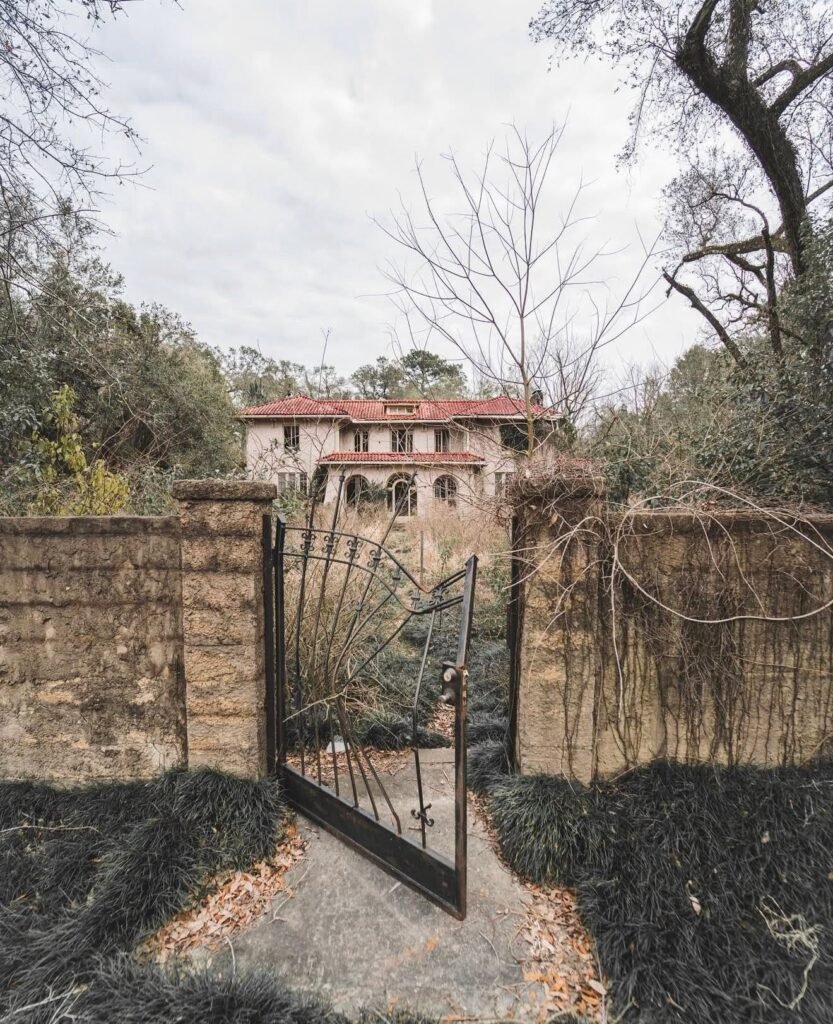
Three of the post’s eight photographs are reproduced here, and they supply the visual record that the post’s short text does not. The front facade shows a two-story stucco mansion with red tile roofs — a Mediterranean-inflected design with an arched entry that reads as deliberate and formal, even in decay. It is the kind of house that was built to be looked at, not merely lived in.
The first image is the wrought-iron gate: tall, dark, and still standing at the entrance long after the household behind it stopped functioning. Gates like that were statements of arrival. They marked a boundary between the road and the property, and they tended to outlast everything they once guarded.
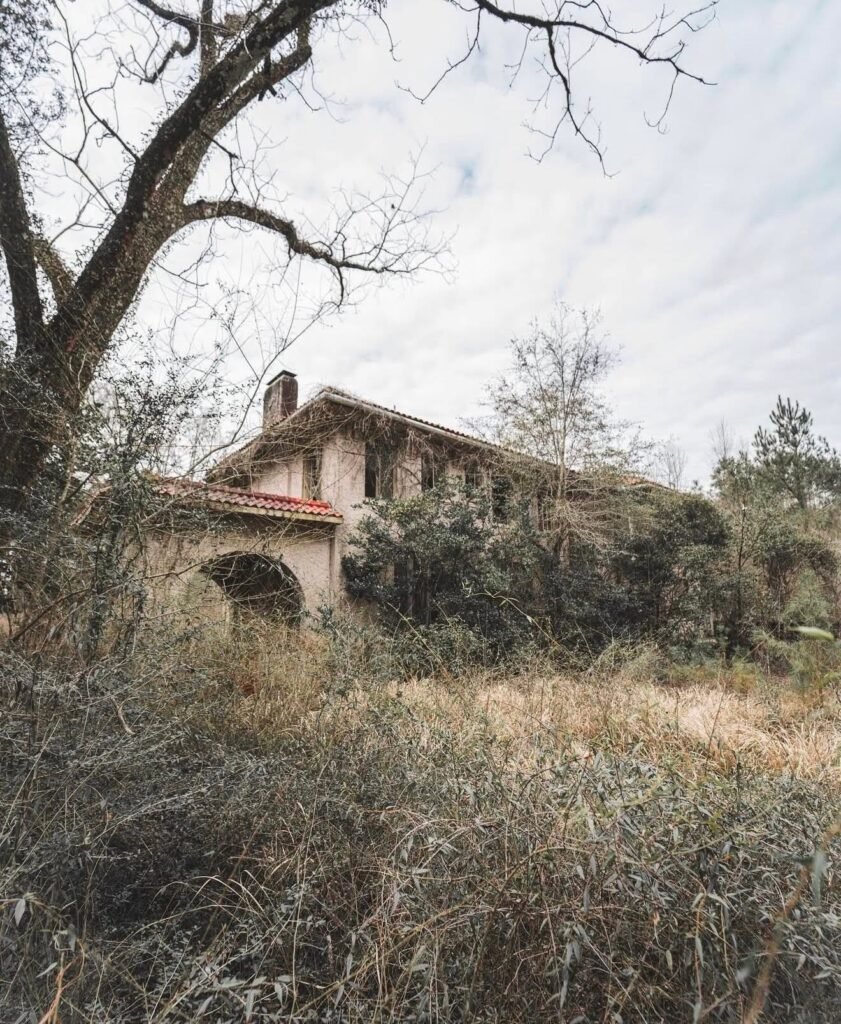
The third photograph looks at the house from the side, where trees press in close around the walls. This is what abandonment looks like from the outside over time — vegetation softening the edges, filling the gutters, and slowly rewriting the outline of the building. The house is still recognizable, but the land is taking it back in slow increments.
The remaining five photographs from the original post were not accessible without signing in to Facebook, so they are not reproduced here. The credit line below the gallery gives the original post’s address for anyone who wants to see the full set.
Photos: BigBankz on Facebook — original post: https://www.facebook.com/BigBankz2/posts/the-outlaw-mansion-of-southern-alabama-the-very-first-abandoned-mansion-ever-exp/122136704690955751/ (3 of the 8 photos in the original post are shown here; the rest were not accessible without signing in to Facebook).
The Fire That Ended It
The post’s second verified fact is the blunt one: the mansion burned down a few years ago. Written on 18 November 2025, that phrasing points to the early 2020s — but that is arithmetic, not a published date. The post gives no exact year, no month, and no account of the night it happened.
No cause is given either. The post does not say whether the fire was accidental, weather-related, or deliberately set, and it does not say whether anything of the structure survived. Where a fact is not in the post, this article says so: the date and the cause of the fire are not published.
Fire is the most common ending for houses like this, and the reasons are general rather than specific to this property. Empty buildings have no one to smell smoke early. Wiring ages unmaintained. Vacant structures draw risks ranging from lightning strikes to trespassers, and rural properties often sit far from the kind of water pressure that stops a structure fire once it takes hold. None of that is claimed about this particular fire — it is the background reality that explains why so many abandoned mansions end the same way, and why the ones that survive tend to be the ones somebody is still watching.
Timeline: What the Post Does and Does Not Establish
Because the source post is short, it helps to lay out exactly what it pins down and what it leaves open, in the order things happened.
- First explored. The Outlaw Mansion was the very first abandoned mansion BigBankz ever explored. When that exploration took place is not stated — only its position as the first.
- Burned down. The post, dated 18 November 2025, says the mansion burned down “a few years ago.” No exact date and no cause are published.
- Today. The building is gone. The surviving public record is the Facebook post itself — eight photographs, three of which are shown here — plus whatever county records may exist for the parcel, which this article has not independently checked.
That is the whole of the verified timeline. Anything else you may read about this house — an address, a previous owner, a year for the fire — comes from somewhere other than this post, and should be weighed accordingly.
What Is Not Published — and Why This Article Says So
It is tempting to fill gaps, and the name “Outlaw Mansion” invites speculation all by itself. Was there an outlaw connected to the house, or is the name an explorer’s nickname, a local legend, or a joke that stuck? The post does not say. The origin of the name is not published.
The same applies to the exact location. “Southern Alabama” covers an enormous region, and the post gives nothing more precise. This article will not narrow it down, because narrowing it down would mean inventing or borrowing facts the post does not contain. Publishing a guessed address for a burned property helps no one — it can point strangers at the wrong parcel, or the right one, uninvited.
The owner is not named in the post. The date of the fire is not given. The cause of the fire is not given. Repeating that list is not padding; it is the point. A short source honestly described is more useful than a long article built on assumption.
If you are researching the property for legitimate reasons — a title search, an insurance history, or curiosity pursued properly — the correct next step is the county records office, not a comment thread. Rules differ by state and county, and only local records can confirm ownership, parcel boundaries, or fire reports.
Visiting, Trespass, and Better Ways to See Old Houses
A house that has burned down cannot be visited in any meaningful sense, and the Outlaw Mansion’s precise location is not public in any case. But the questions people ask about it are the same ones they ask about standing abandoned houses, so they deserve a straight general answer.
Do not enter abandoned buildings. They remain private property even when they look forgotten, and they are dangerous in ways photographs hide: rotted floors, collapsing stairs, mold, and — in burned structures especially — weakened framing that can fail without warning. Trespass rules differ by state and county, and “abandoned” is not a legal category that makes entry permissible. What looks like harmless exploring can end with injury, arrest, or both.
There are better ways to engage with old houses. The abandoned.blog homepage gathers both abandoned properties and historic homes with a future — including lived-in houses currently for sale. One example is the 1902 Noonan home in Alexandria, Minnesota: to be clear, that is a lived-in house listed for sale, not an abandoned property. Walking through an old house with an agent, on the market and maintained, teaches you more about historic construction than any trespass ever could — and nobody gets hurt.
Frequently Asked Questions
Where exactly is the Outlaw Mansion in Alabama?
The exact location is not published in the BigBankz post — only “southern Alabama.” This article does not provide a more specific location, and you should be skeptical of any source that claims to.
Who owned the Outlaw Mansion?
No owner name appears in the post. The owner is not published.
When did the Outlaw Mansion burn down?
The post, dated 18 November 2025, says only that it burned down “a few years ago.” An exact date is not published.
What caused the fire?
The cause of the fire is not published in the post.
Why is it called the Outlaw Mansion?
The post does not explain where the name comes from. Whether it refers to a person, an event, or is simply a nickname is not published.
Can I still visit the Outlaw Mansion?
The building burned down, and its precise location is not public. Do not attempt to find or enter the site. If old houses interest you, tour listed historic homes for sale instead — and check county records and local rules before acting on any property research.
This article is general information only, not legal, tax, or financial advice. Rules differ by state and county — check county records and consult a local professional before acting.