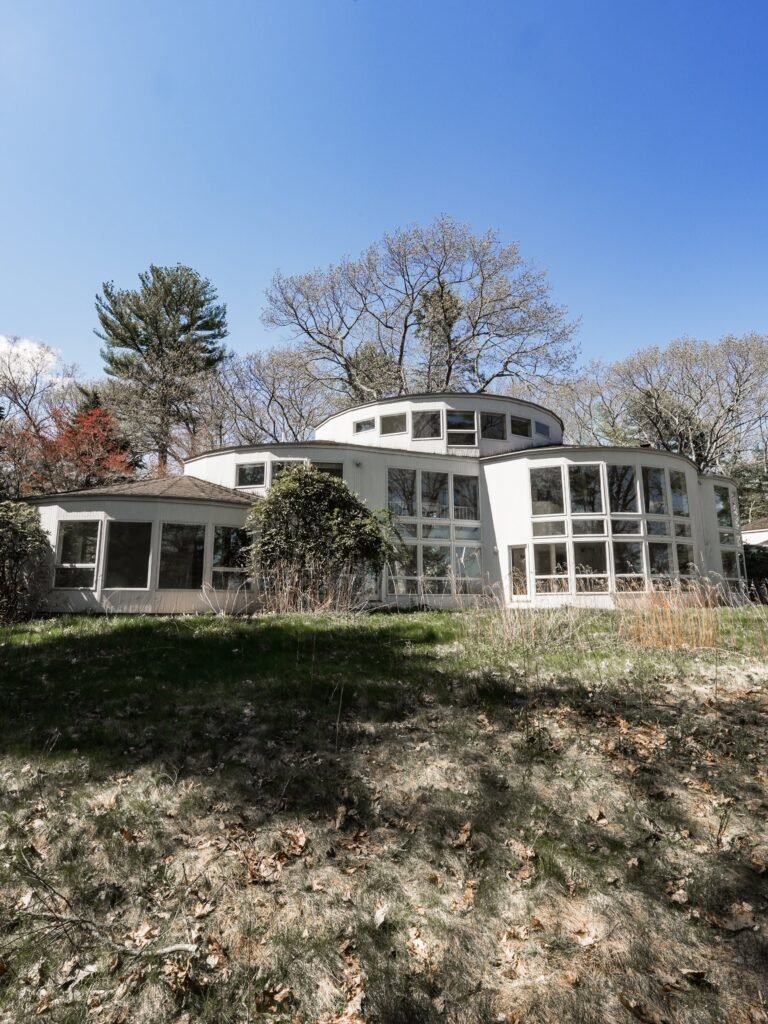
A curved wall of glass still catches the light above an uncut lawn. The first thing the photographs tell you is what this place was built to be: a showpiece. A white mansion wrapped in glass, finished with a small cupola, sitting back on grounds that run to nearly 20 acres.
The second thing they tell you is that the show is over. According to a BigBankz Facebook post dated 9 May 2026, this stunning abandoned glass mansion was last owned by an NHL team owner, measures about 10,000 square feet — and began to collapse in 2020, forcing the home to become unlivable.
That post is the entire public record this article is built on. What follows stays inside it: the four verified facts, what the three shared photographs actually show about collapse risk, and honest answers where the record goes silent.
What the BigBankz Post Actually Says
The original Facebook post includes 13 photographs. Three of them are reproduced here. The caption, as published, states four facts:
- This is a stunning abandoned glass mansion, last owned by an NHL team owner.
- It sits on nearly 20 acres.
- The house is 10,000 square feet.
- In 2020 the structure started to collapse, and the home became unlivable.
That is the complete verified record. The post does not publish an exact location. It does not name the owner or the team. It says nothing about a sale, a price, back taxes, the architect, the build year, or what the interior looks like. On every one of those points, the post is silent — and this article will not invent answers.
That discipline matters, because abandoned-property stories online tend to accumulate invented detail. A guess about a town becomes a “fact” in the next retelling. Here, the line is drawn at the post.
Photos: BigBankz on Facebook — original post (3 of the 13 photos in the original post are shown here; the rest were not accessible without signing in to Facebook).
Reading the Damage: A Collapse-Risk Look at the Three Exterior Photos
Exterior photographs are real evidence, but they are narrow evidence. They show surfaces, silhouettes, and surroundings. They do not show structure. With that limit in mind, here is a collapse-risk reading of the three images — what is visible, and what cannot be judged from the outside.
What the exteriors do show
The main facade photograph shows the curved glass wall still standing, the cupola still in place, and the overall silhouette of the house intact. From a collapse-risk standpoint, that reads as a building that has failed in part, not fallen outright. The damage the post refers to — the 2020 event that made the home unlivable — is not a total structural failure visible from the front.
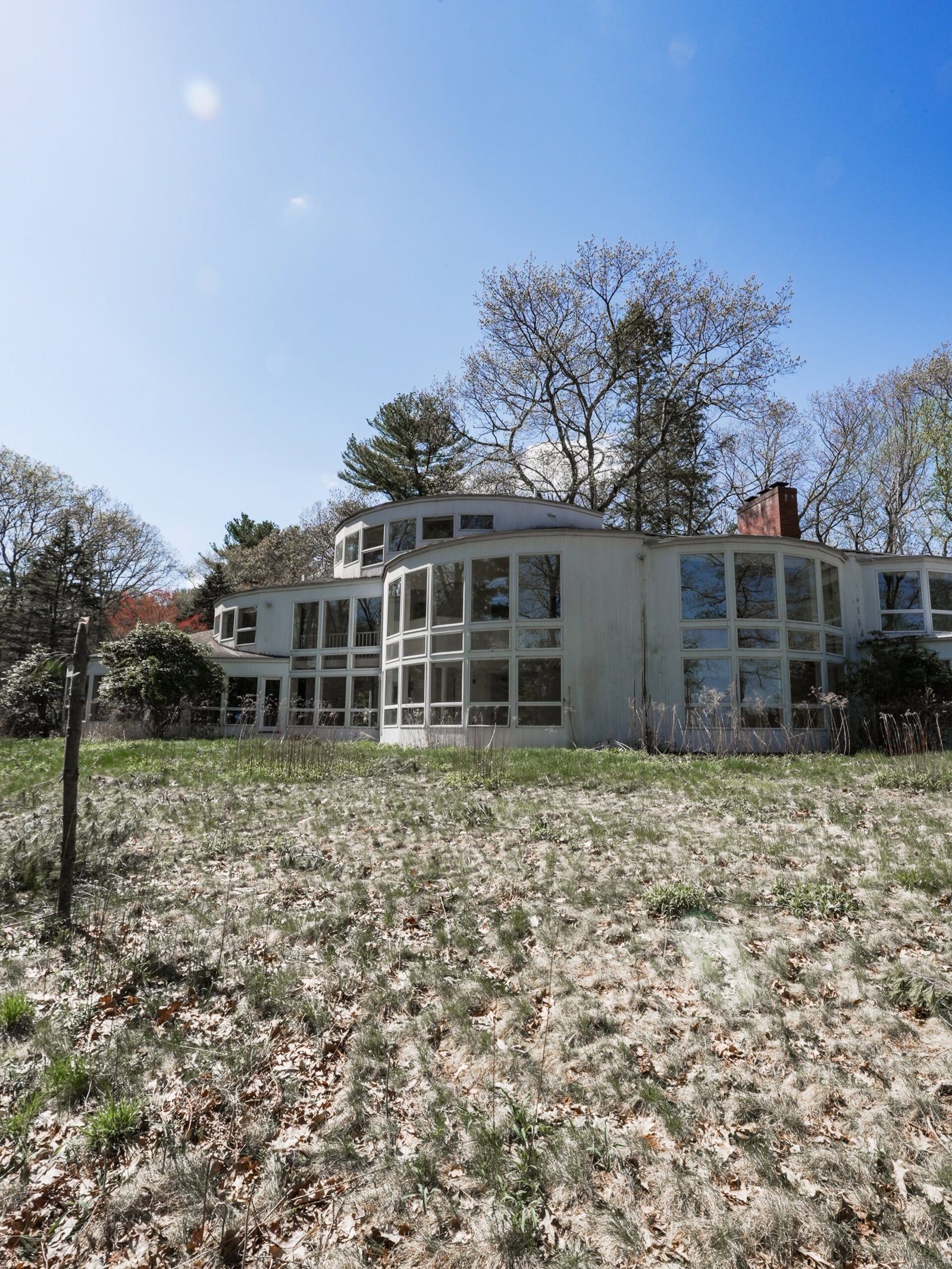
The second angle confirms the same: the glass envelope reads as largely whole from the outside, while the grounds around it have gone unmaintained. Long grass and encroaching vegetation are not structural damage, but they are a clock. Vegetation against a building traps moisture, and moisture is the slow engine of rot in any structure, glass-walled or not.
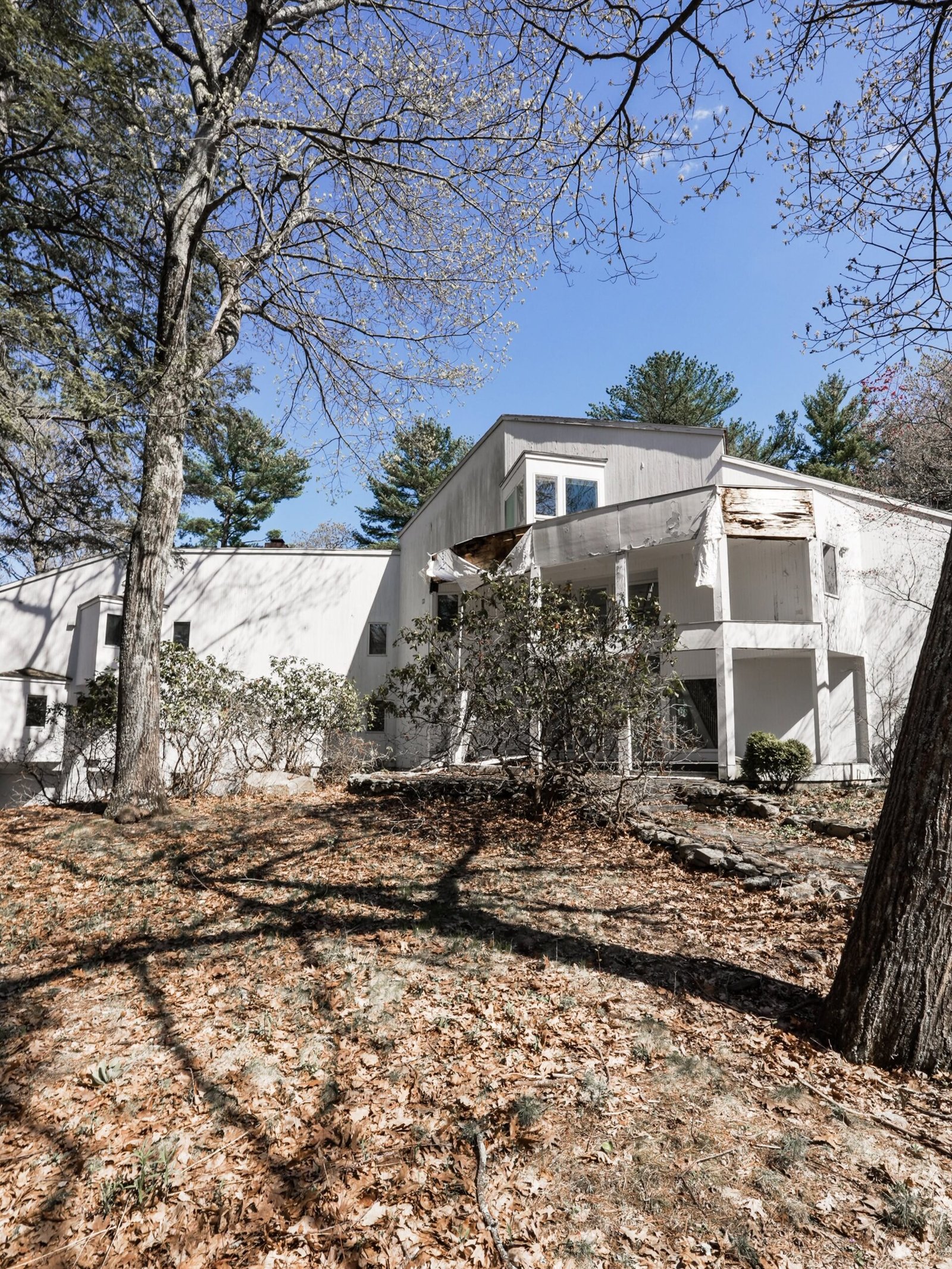
The third photograph shows the columned terrace wing, and this is where visible damage concentrates. The terrace wing reads as the weakest part of the composition: weathered columns, a roofline and terrace edge that show the wear of years without maintenance. If the 2020 collapse touched this wing — and the post does not say where the failure occurred — this is the part of the house that looks most consistent with that story.
What no exterior photo can show
Everything that actually decides whether a building can be saved is invisible here. Foundation condition. The state of the load-bearing frame behind the glass. Whether water has been entering the wall cavities for six years. The condition of the roof deck, the electrical and plumbing systems, and the extent of mold or rot inside the 10,000 square feet of interior — none of it can be judged from three exterior shots.
So the honest reading is a split one: the house still stands and its signature glass wall survives, which is more than many abandoned mansions can claim; but the visible damage on the terrace wing, plus six years of exposure since the 2020 collapse began, means no one should assume the structure is sound. That judgment requires a licensed structural engineer on site — not a photograph.
The NHL Team Owner Connection
The ownership detail is the hook of the whole story: last owned by an NHL team owner. It is also the detail with the thinnest sourcing. The post states it as a fact and offers no name, no team, no dates of ownership, and no explanation of how or when the property changed hands.
That is worth stating plainly, because the gap invites speculation. This article will not fill it. No owner name is published in the post, no team name is published in the post, and no sale or transfer history is published in the post. Anything beyond that sentence is guesswork, and guesswork about a living person’s property is exactly the kind of thing that should not be printed.
What can be said is why the detail matters to readers: a mansion tied to a professional sports fortune reads differently from a mansion with no history at all. It raises the stakes of the loss. A 10,000-square-foot glass house on nearly 20 acres represents an enormous original investment — and its collapse represents an equally enormous write-off. The scale of the waste is the story, not the name on the deed.
2020 to 2026: Six Years After the Collapse Began
The post dates the structural failure to 2020 and says it forced the home to become unlivable. It does not describe what failed — a roof section, a foundation wall, a terrace, a load path behind the glass — and it does not say whether anyone attempted repairs.
What the calendar says on its own: six years have passed since that failure. Six winters of freeze-thaw cycles, six summers of heat and rain, six years of vegetation pressing in around the foundation. For an unlivable, unmaintained building, time is not neutral. Every season of exposure compounds the original damage, and the photographs — overgrown grounds, weathered terrace wing — are consistent with a property that has had no meaningful maintenance in that interval.
The BigBankz post itself is dated 9 May 2026, which makes it a recent snapshot rather than a historical account. The house was standing when the photos were taken. Whether it is standing today, or what its current legal status is, is not published in the post.
Could a 10,000-Square-Foot Glass House Be Saved?
In the abstract, saving a collapsing mansion requires three things: an owner willing to spend, a structure worth the spend, and a local jurisdiction willing to permit the work. None of those three is confirmed for this property. The post does not name an owner, does not assess the structure beyond the 2020 collapse, and does not identify the county whose rules would apply.
The honest comparison is with properties that are actually on the market. Take the 1902 Noonan home in Alexandria, Minnesota — a lived-in house currently for sale, not an abandoned property — where a buyer gets inspections, disclosures, and a legal transfer. An abandoned, collapsing mansion offers none of that: no inspection, no disclosure, no clear path to ownership. Different categories, different rules.
That is why the right next step for anyone genuinely interested in a property like this is paperwork, not a road trip: county records to establish ownership and tax status, and a local professional — an engineer for the structure, an attorney for the title — before a dollar changes hands. Curiosity is free; collapsed mansions are not.
For readers who came for the story rather than a purchase, our archive of abandoned mansions holds more of these accounts. And new stories are published regularly here on abandoned.blog.
Frequently Asked Questions
Where is the abandoned glass mansion located?
The exact location is not published in the post. No town, county, or state is named, and the photographs themselves carry no identifying markers that can be stated with confidence. Any location you see attached to this story elsewhere is unverified.
Who was the last owner of the glass mansion?
According to the post, the mansion was last owned by an NHL team owner. No owner name is published in the post.
Which NHL team did the owner belong to?
No team name is published in the post. The post says only “an NHL team owner,” with no further identification.
How big is the abandoned glass mansion?
The post gives two figures: the house is 10,000 square feet, and it sits on nearly 20 acres.
When did the mansion start to collapse?
In 2020, according to the post. The structural failure forced the home to become unlivable. The post does not describe which part of the structure failed.
Is the glass mansion for sale?
No sale status is published in the post. There is no listing, no price, and no indication of whether the property is on the market at all.
Can I visit or explore the mansion?
No address is published, and that is for the best: entering an abandoned, structurally compromised building is dangerous, and in most jurisdictions it is trespassing. Anyone with a serious interest in the property should check county records and consult a local professional before acting — not attempt a visit.
Will the mansion be demolished or restored?
Neither outcome is published. That decision would sit with the owner and the county involved, and neither has spoken publicly in the post. What is known is that the house was still standing when the photographs were taken in 2026.
Disclaimer: This article is general information only, not legal, tax, or financial advice; rules differ by state and county; check county records and a local professional before acting.