The Bovingdon Country Club: An Olympic Hotel Left Behind
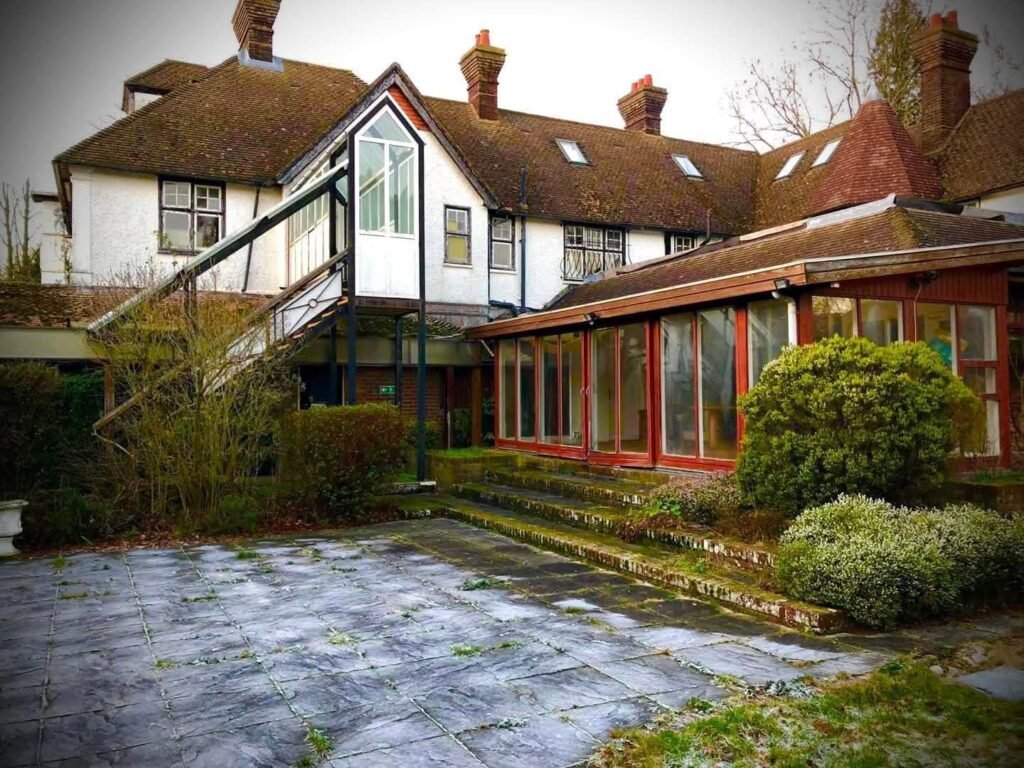
Most abandoned hotels close quietly. This one had already lived three different lives before its doors shut for good in 2014 — a 16th-century manor house, a wartime country club that entertained celebrities, and finally a hotel named after Britain’s only Winter Olympic bobsleigh gold medallist. The photographs, taken on an explore in 2022/23, show what is left of all three.
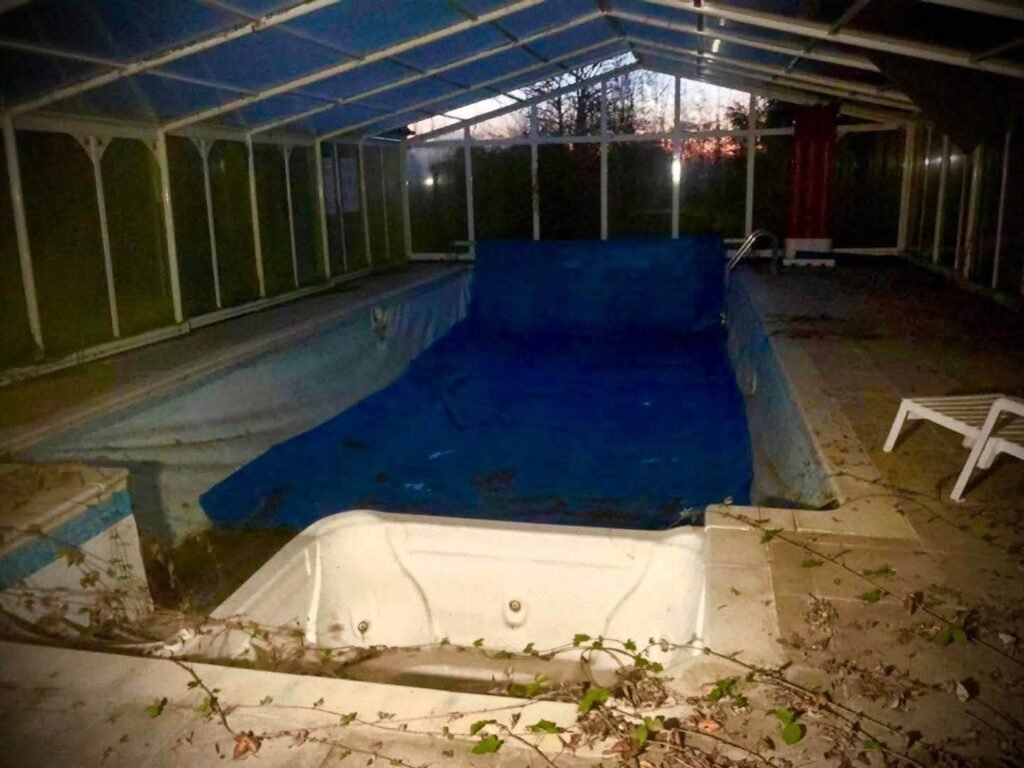
The building is the Bovingdon Country Club, later the Bobsleigh Hotel, photographed by Luke2Explore. The post that published the pictures gives the outline of its history, and the rooms in the photographs fill in the rest: a dining room with its chandelier still hanging, twin beds made up with bare striped mattresses, and an indoor pool under a glass roof, all of it going back to nature.
Three lives in one building
The building began as a manor house in the 16th century, according to the post, and became known as the Bovingdon Country Club in the 18th century. Its second life came during the Second World War, when it was visited by celebrities who came to entertain troops based at the airfield next door. The post names Bob Hope, James Stewart and Glenn Miller among them.
The third life began in 1964, when the name changed to the Bobsleigh Inn after the owner’s son, Tony Nash — the British bobsleigh champion who won gold at the Winter Olympics in Innsbruck, Austria. The post states this is the only bobsleigh gold medal the country has won at a Winter Olympic Games. Tony Nash died in March 2022, according to the post.
That timeline is worth pausing on, because it explains why the building looks the way it does in the photographs. A manor house gives it the chimneys, the tiled roofs and the Tudor-style frontage. A country club gives it the bar, the dining room and the large kitchen. A hotel gives it the 46 rooms. Each era added a layer, and the photographs show the layers sitting on top of each other, all of them empty at the same time.
What the photographs show
The hotel closed in 2014 after the old owners said the business was not operating at a viable level, according to the post. It had also been used as a restaurant, which was popular. The photographs show a place that would have looked fancy before it closed, in the post’s words — and the evidence supports that description.
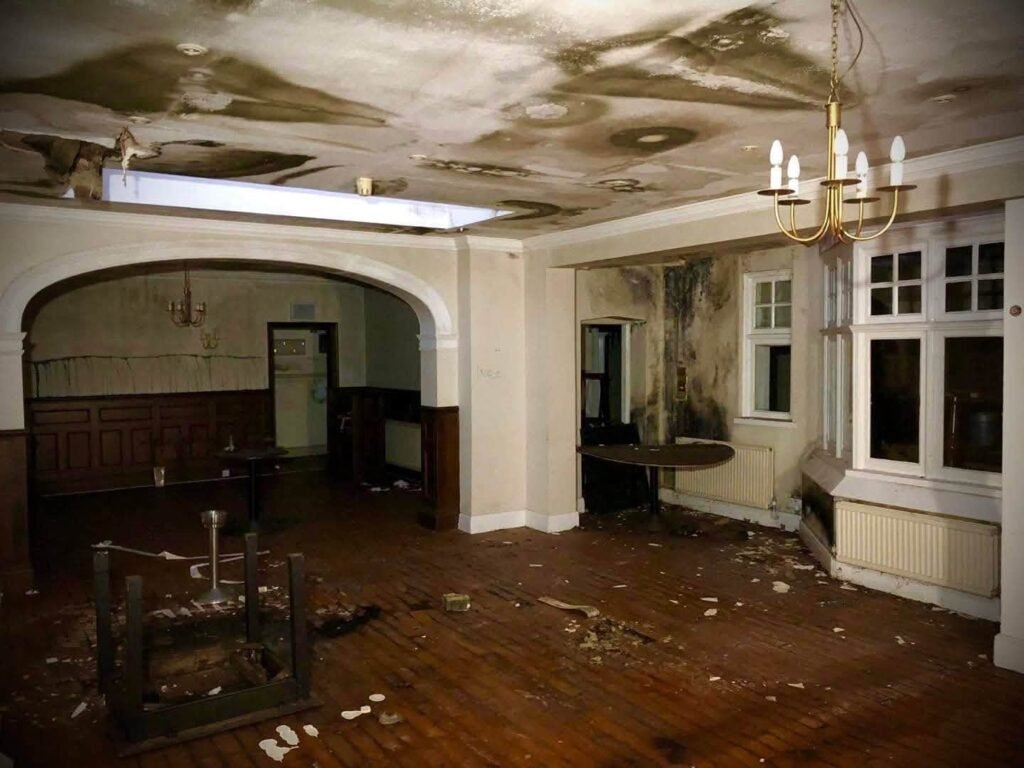
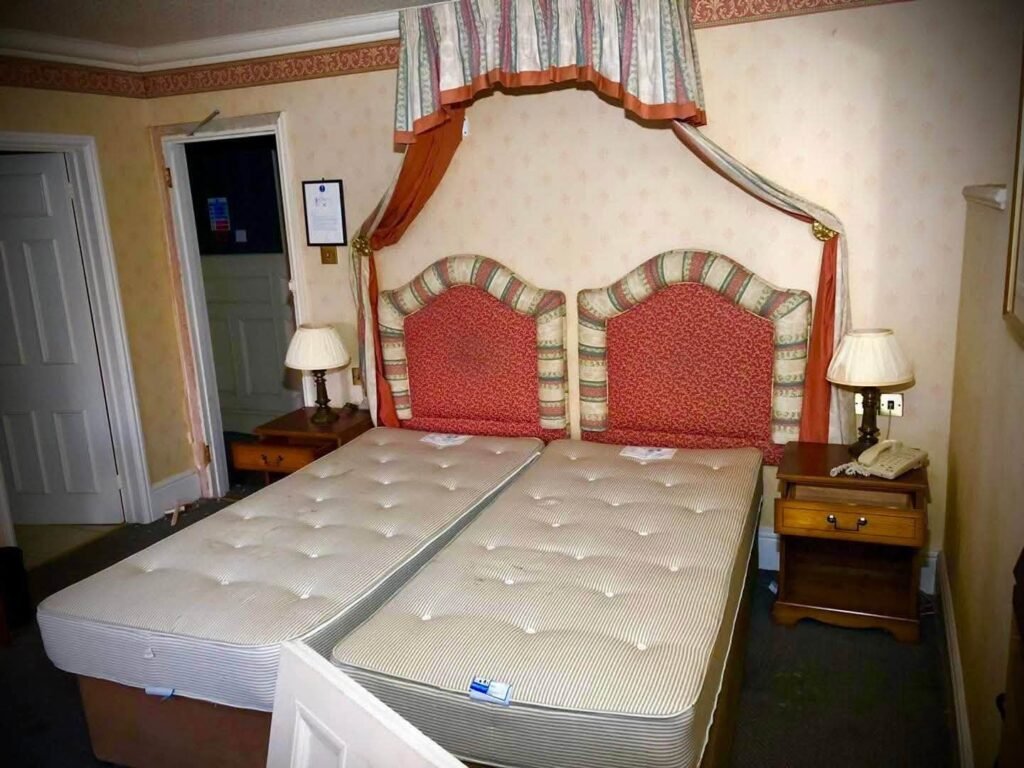
The dining and bar room still has its brass chandelier, though the ceiling above it is water-damaged and peeling, and the wooden floor is strewn with debris. The bedroom photograph shows twin single beds with red patterned upholstered headboards and a draped canopy, bedside tables with lamps, and an old telephone — hotel items left behind, exactly as the post describes them. The indoor swimming pool sits under a glasshouse roof at dusk, its blue cover in place, a white sun lounger beside it, vines growing over the glass.
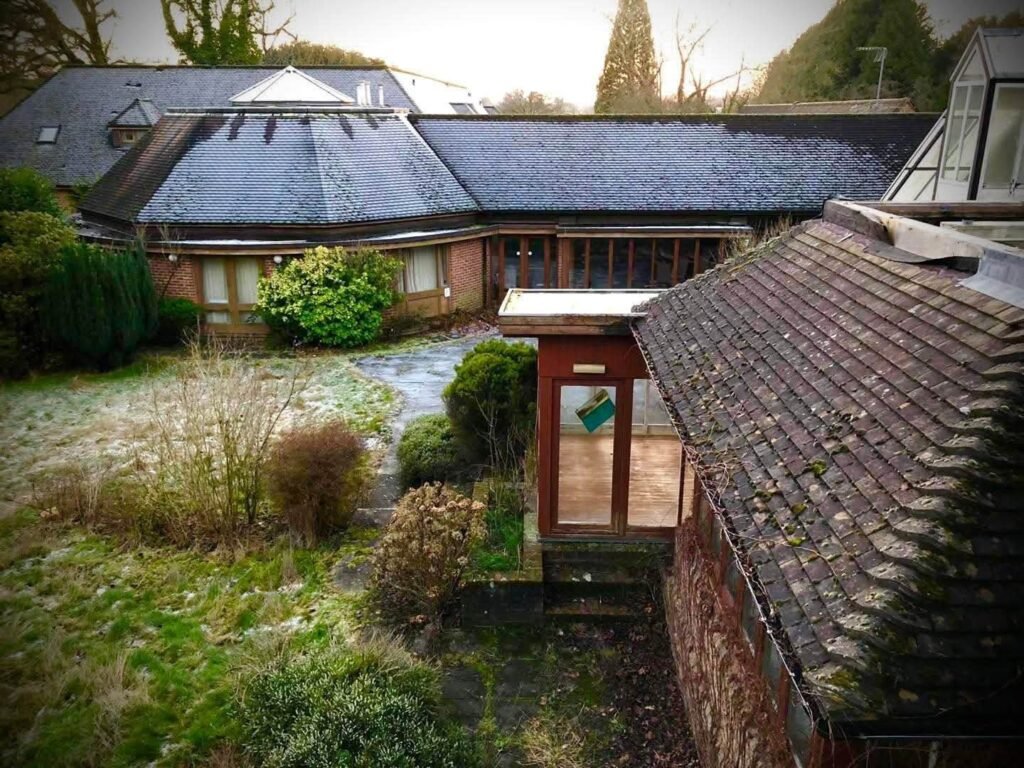
Behind the hotel was a derelict caravan site, with caravan homes left empty and nature taking over them. The explorer guesses it was part of the hotel as a holiday site too. That is presented as a guess in the post, and it stays a guess here: no confirmation is given.
An uncertain future
The post adds that the hotel did have plans to be demolished so apartments could be built, a while back, but the explorer does not know whether those plans went ahead. Nothing more recent is stated, and nothing is claimed here. The building was still standing, still roofed and still recognisable when photographed in 2022/23.
That uncertainty is the honest end of the story. A building with four centuries of history, a wartime celebrity past and an Olympic connection does not get a tidy ending in the source material, and inventing one would be worse than leaving the question open. What can be said is what the photographs prove: the rooms, the pool and the grounds are still there, still furnished in places, and still waiting for whatever comes next.
For a contrast with a house that is lived in and on the market, see this 1902 home in Alexandria, Minnesota, where the questions are about upkeep and price rather than about what a closed hotel leaves behind. More houses in this state are gathered in the Abandoned Houses category, and the site’s front page is abandoned.blog.
FAQ
Where is the Bovingdon Country Club?
The post names the hotel but gives no address, and no address is given here.
Who was Tony Nash?
According to the post, the British bobsleigh champion whose son’s family owned the hotel, and who won a gold medal at the 1964 Winter Olympics in Innsbruck. The post states it is Britain’s only Winter Olympic bobsleigh gold medal.
When did the hotel close?
In 2014, according to the post, after the owners said the business was not operating at a viable level.
How big was the hotel?
The post says 46 rooms, with a swimming pool, a bar, a large kitchen and a restaurant.
Was the building really a 16th-century manor house?
That is what the post states: built in the 16th century as a manor house, then known as Bovingdon Country Club from the 18th century. No separate verification is given in the post.
What happened to the caravan site behind the hotel?
It was derelict, with empty caravan homes being taken over by nature, according to the post. Whether it was part of the hotel is the explorer’s guess, not a confirmed fact.
Is the hotel being demolished?
Plans to demolish it for apartments existed a while back, according to the post, but whether they went ahead is not known.
Can I visit it?
No visiting information is given here, and entering private property without permission is not encouraged.
Disclaimer
This article is general information only, not legal, tax, or financial advice. Rules on abandoned and private property differ by state and county; check county/local records and a local professional before acting.
Photos
Photos by Luke2Explore, via the original Facebook post: https://www.facebook.com/Luke2Explore/posts/pfbid02fRXuoej9Bz3WGbf5vtxV1LdGJ4u99zWsvuD15zV1kRWfDfAVpdWBQxSn6UHk4LFwl — 5 of the 43 photos are shown here.