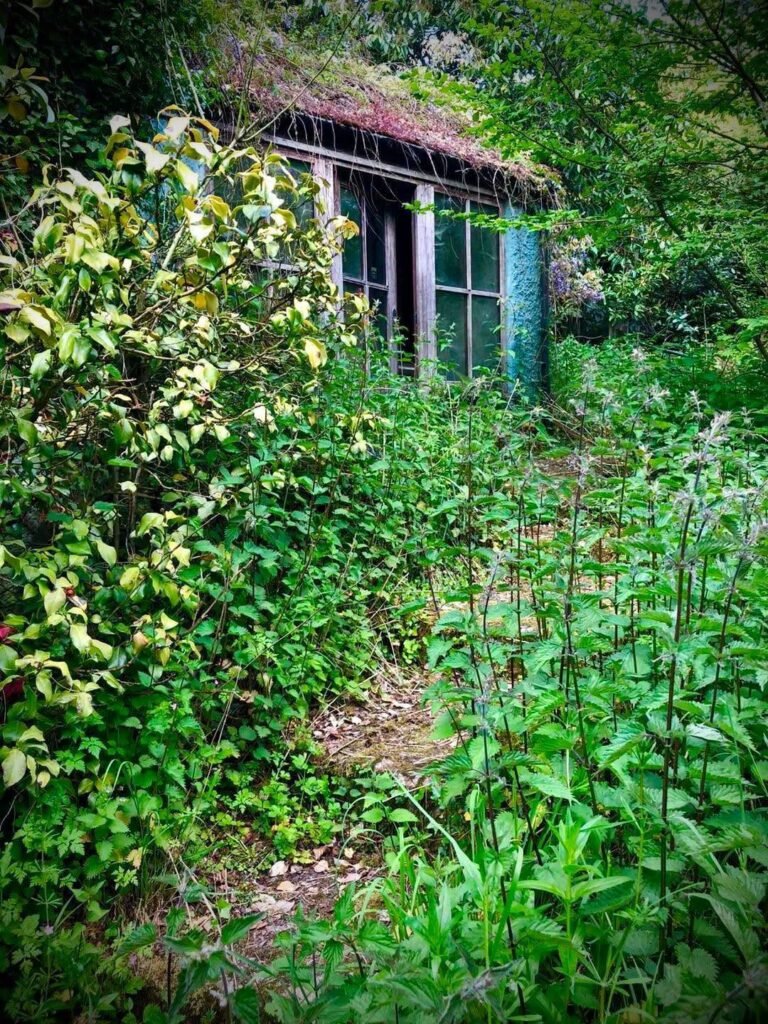
Buddha House Revisited: A Traveller’s Hoard in the Hills
Most abandoned houses get one visit from an explorer: a look around, some photographs, a post, and then the house is left to whatever comes next. The Buddha House got two. The explorer first went there in 2023, and then went back a year later, in 2024, to see how it looked. The post he published on 7 September 2026 is about that second visit, and about what had changed in a year.
The house is tucked away, hidden in the hills of a forest. The post does not say where, and this article does not either. What it does say is that the explorer and his companions figured out a man once lived here, and that the clues pointed to a traveller — someone who liked to go abroad and bring things home. Buddha ornaments. Other cultural ornaments and little statues from other sides of the world. A house full of souvenirs, in the middle of nowhere.
First visit 2023, second visit 2024
The value of a revisit is that it turns a single snapshot into a short story. One visit tells you what a house looks like. Two visits tell you which way it is going. And this house, the post says, was going downhill fast.
| First explore, 2023 | Revisit, 2024 | |
|---|---|---|
| Overall state | Interesting explore, house stunning in its own little way | A lot more trashed |
| Contents | Very hoarder style, things everywhere | Things missing, but still a lot left behind |
| What stood out | Buddha ornaments, travel statues, vinyls, piano | The same rooms, emptier in places |
| The explorer’s feeling | An interesting explore | Sadder — the place was being picked apart |
The table is built only from what the post says. It does not say who took things, or when, or whether anything was taken legally. It says things were missing. In an empty house in a forest, that is usually the story: somebody finds it, somebody takes what they want, and the rest stays until the roof gives way.
The post also mentions mice or rats hiding among the rubbish, with lots of droppings about. That is a small detail, but it tells you the house had been open to the weather and to animals for a long time. A lived-in house does not smell of droppings. An abandoned one does, quickly.
A traveller’s souvenirs
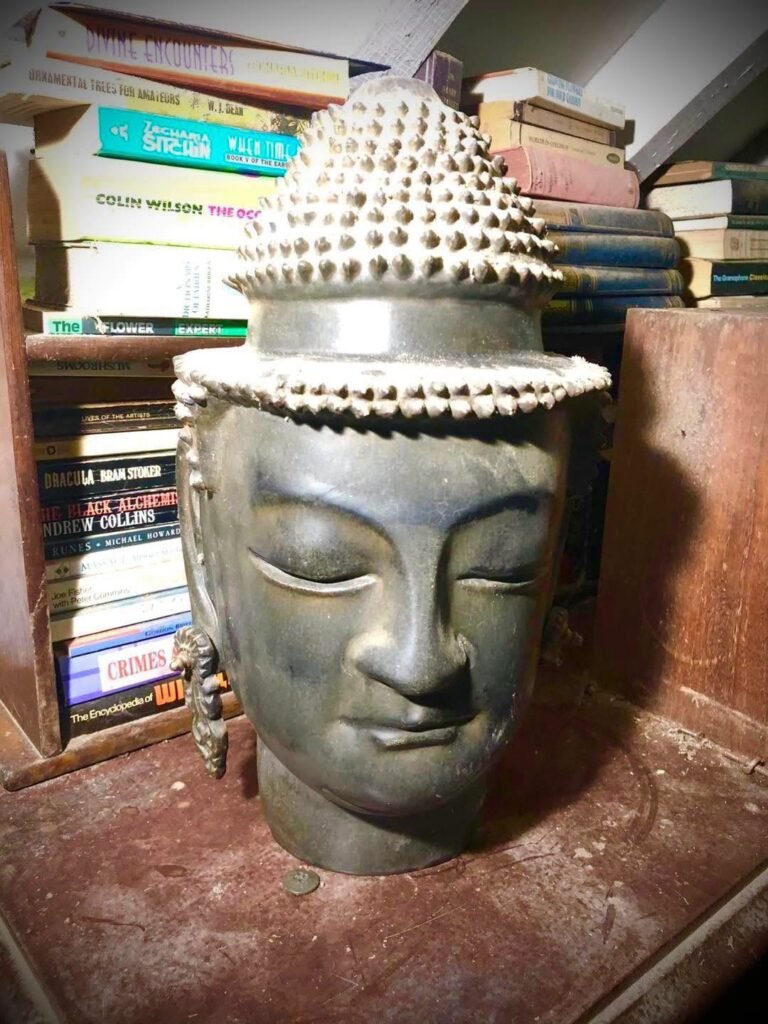
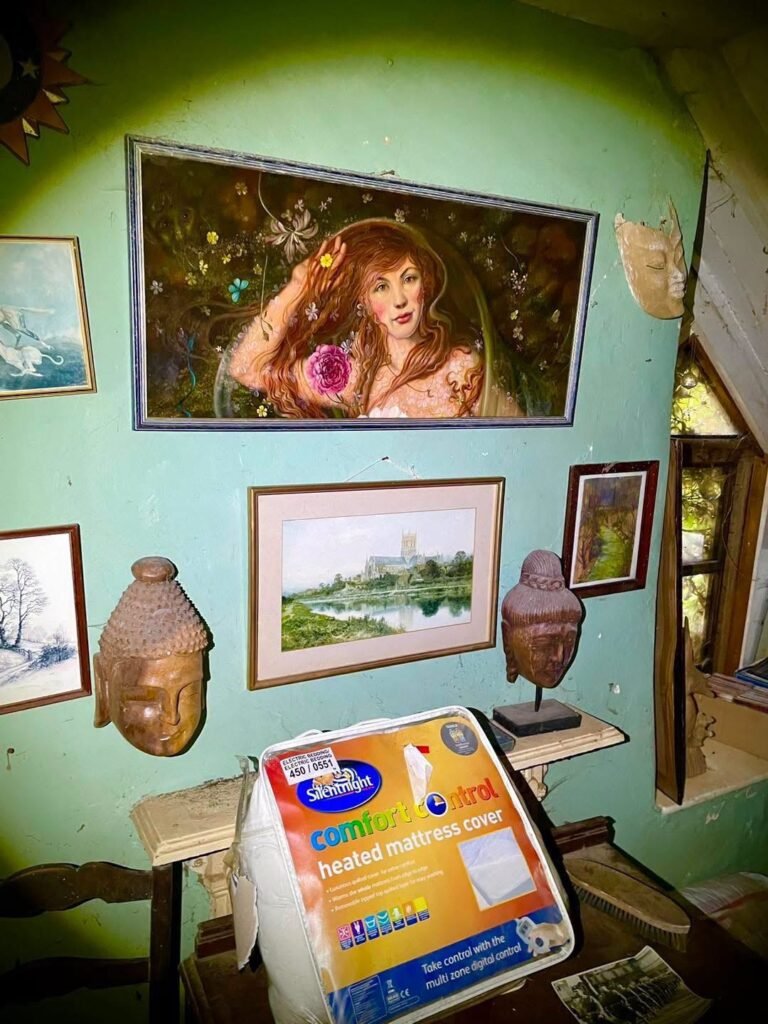
The name of the house comes from its most distinctive contents. The post says the man who lived here liked to travel and bring items back home — Buddha ornaments, and other culture ornaments and little statues from other sides of the world. The third photograph shows one of them: a stone Buddha head standing before a bookshelf of old books. The fifth shows two more Buddha heads flanking a large framed portrait on a green wall.
It is worth being careful about what this proves. The post says the explorer “figured out” a man once lived here, from the clues in the house. That is the explorer’s reading of the evidence, not a document. The statues are real — they are in the photographs. The story that they came from the owner’s travels is the explorer’s inference, and it is repeated here as his inference.
What is certain is that somebody collected these things, and cared enough to display them. The Buddha heads are placed, not dumped. One stands on a shelf in front of books. Two flank a portrait. Whatever else the house was — and the post is clear that it was hoarder-style, with things everywhere — the statues were given pride of place.
The music room that never went quiet
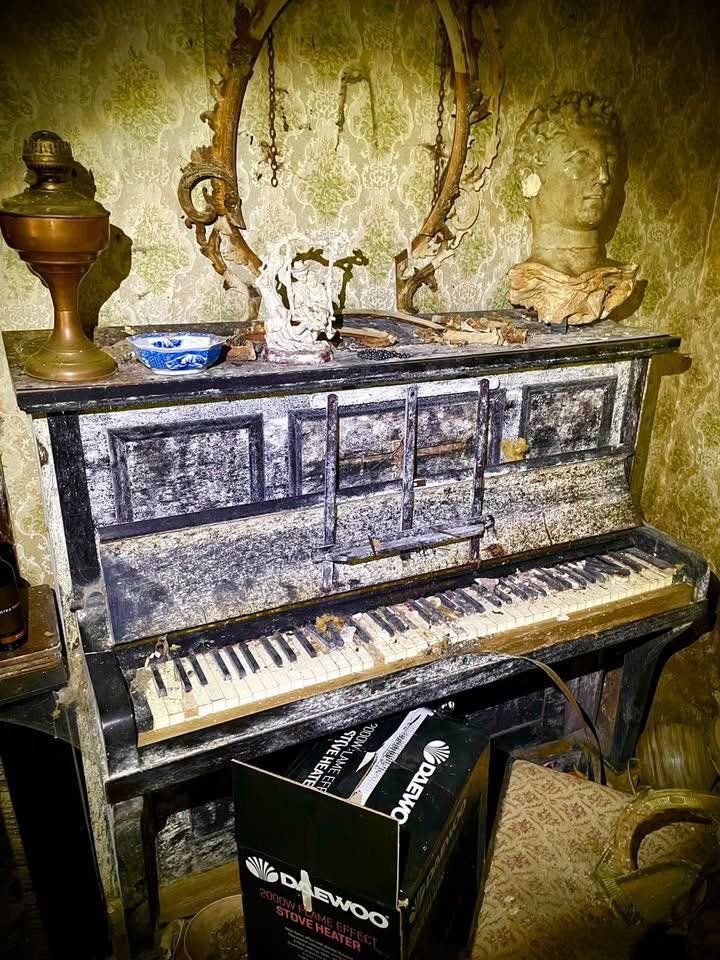
The man was also, the post says, a fan of music, with a lot of vinyls, CDs and a retro music system. He even had his own piano. The second photograph shows that piano: filthy, its keys stained, a classical bust and a brass lamp on top of it, ornaments crowded around. A modern box for a stove heater leans against its base, which is the kind of anachronism that abandoned houses collect — something new, left in a room where everything else is old.
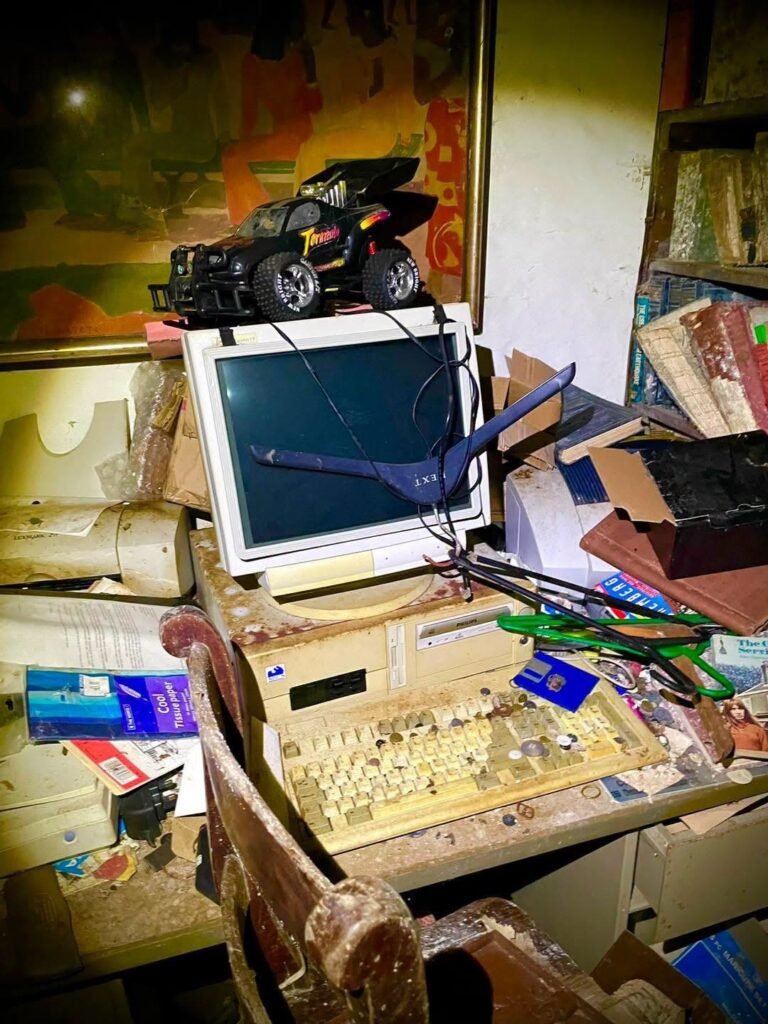
The fourth photograph shows the other side of the music habit: a cluttered desk with an old CRT computer, a keyboard, floppy disks, and a toy truck. The computer and the floppy disks date the room. This was somebody’s desk in the era when a home computer was a heavy beige box and software came on disks. The toy truck on the same desk is unexplained, and the post does not explain it. It just sits there, among the disks.
Put the two photographs together and you get a picture of a man who liked things that made sound — records, discs, a piano, a computer that probably played music too — and who kept all of it, even when it stopped working.
Hoarder house, or just a life collected?
The post calls the house “very hoarder style with things everywhere”, and the photographs back that up. Every surface is covered. Shelves are full. Desks are piled. The piano has ornaments on it and a box leaning against it. There is no clear floor in any of the five photographs.
But there is a difference between a hoard and a collection, and the Buddha House sits on the line. The statues are arranged. The books are shelved. The portrait is hung. The piano, for all its filth, is still a piano in a room, not a piano in a pile. This was a man who kept things, yes — but he kept them in places, and the places meant something.
That is what makes the revisit sad. Between 2023 and 2024, things went missing. The post does not say what, and the five photographs cannot show what is no longer there. What they show is what survived two visits and the years before them: a Buddha head, a piano, a portrait, a desk full of disks. The rest is gone, and nobody recorded what it was.
What we do not know
The post does not name the man, give the house’s location, or say when he left or died. It does not say how long the house had been empty before the first visit in 2023, or what has happened to it since the second visit in 2024. The travel story is the explorer’s reading of the clues, not a verified biography.
For a contrast with a house that is lived in and on the market, see a lived-in 1902 home in Alexandria, Minnesota. More houses in this condition are gathered in abandoned houses and in abandoned mansions, and the site’s front page is abandoned.blog.
FAQ
Where is the Buddha House?
No location is given in the post, and none is given here. It is described only as tucked away in the hills of a forest.
Who lived there?
The post says the explorer figured out a man once lived there. No name is given.
Why is it called the Buddha House?
Because of the Buddha ornaments and statues found inside, which the explorer believed the man brought back from travelling.
When was it explored?
First in 2023, then revisited in 2024. The post about the revisit is dated 7 September 2026.
What changed between the two visits?
According to the post, the house was a lot more trashed on the second visit, and things were missing, though a lot was still left behind.
Was the man a hoarder?
The post describes the house as very hoarder style, with things everywhere. That is the explorer’s description.
Can I visit it?
No visiting information is given here, and entering private property without permission is not encouraged.
Disclaimer
This article is general information only, not legal, tax, or financial advice. Rules on abandoned and private property differ by state and county; check county/local records and a local professional before acting. The account of the house and its owner is as reported in the source post and has not been independently verified.
Photos
Photos by Luke2Explore, via the original Facebook post: https://www.facebook.com/Luke2Explore/posts/revisit-to-the-abandoned-buddha-housethis-was-an-interesting-explore-the-first-t/1551095380389478/ — 5 of the 29 photos are shown here.