The House of Rolf: A German-Born Life Left Behind
Most abandoned houses in this series arrive with almost no history at all. This one arrives with a life story — a short one, told in a few sentences in the post that published these photographs, and enough to give the empty rooms a name. The bungalow belonged to Rolf, who was born in Germany in 1928, moved to England in the late 1930s, and married Jaqueline in 1951. The house has been abandoned since 2020 or 2021. Everything in this article comes from that post and from the five photographs shown here.
The post’s account is taken as the explorer told it. Rolf’s dates and family details are his, not verified from any public record, and they are presented here as the post states them.
A pool that tells you the house is finished
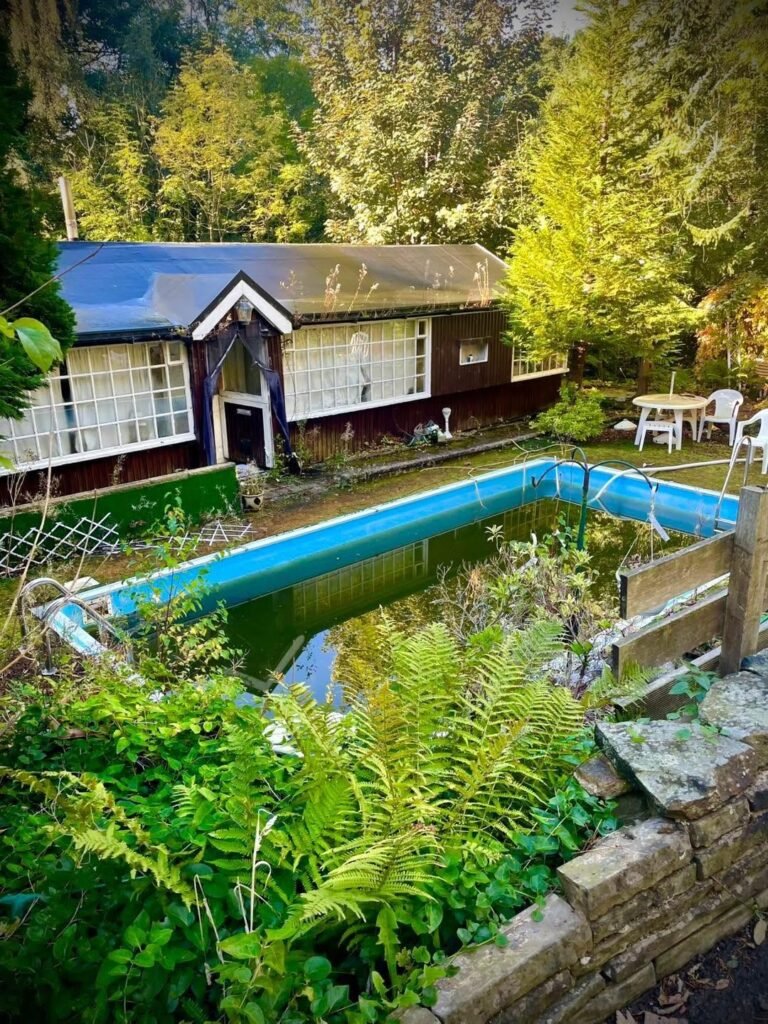
The featured photograph is the outside of the bungalow, and the swimming pool is the first thing you see. It is empty of swimmers and full of green: algae water, ferns growing in it, the blue paint of the pool still visible under the growth. White plastic patio furniture stands on the lawn beside it, and the dark-brown bungalow sits behind, its white grid windows curtained, plants growing on its black roof.
A pool is a thing that needs constant care. The moment it stops being cleaned, it turns green, and then it turns into a pond. This one has gone all the way. It is the clearest single image in the set of how long the house has been left: not a season, but years.
The outbuilding and the garden
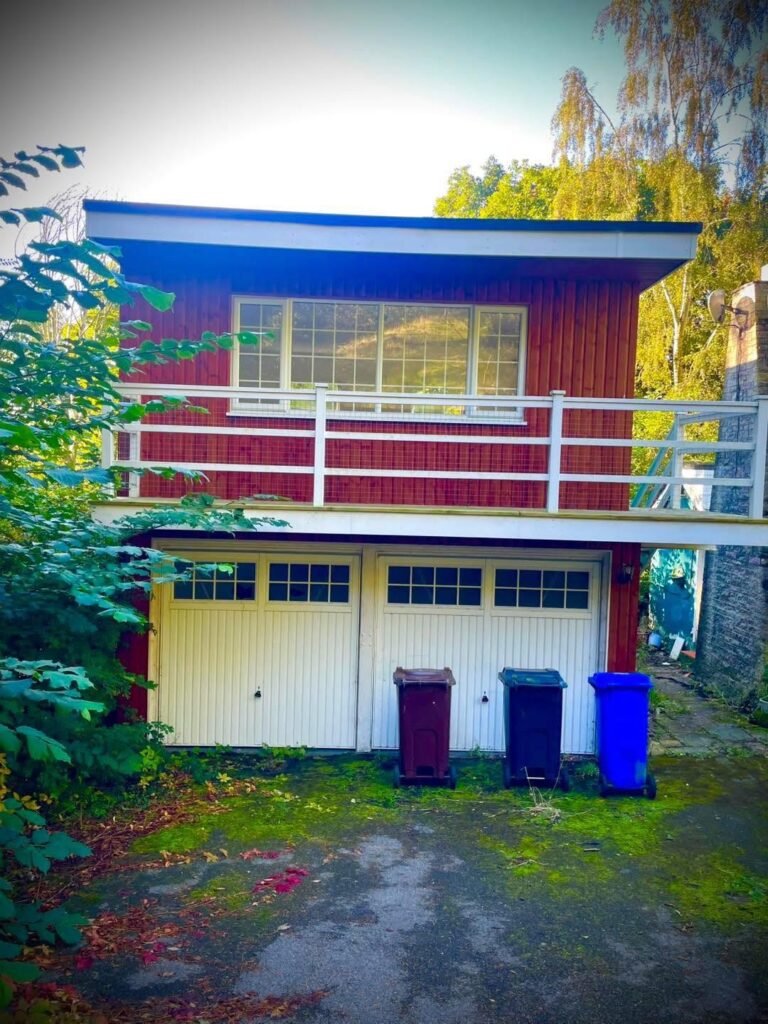
The second photograph shows the other end of the property: a red two-storey outbuilding with a white balcony railing over a double garage, three wheelie bins — maroon, black and blue — standing on mossy ground in front of it, trees closing in around. The bins are the kind of detail that dates a household. They were put out for collection once, and then never again.
The bungalow itself is low and long, a single storey under a flat black roof, with a small gabled porch over the front door. It does not look grand. It looks like a comfortable home that was built for a quiet life — a pool, a garden, a garage, a view of trees.
Pink rooms, kept as they were
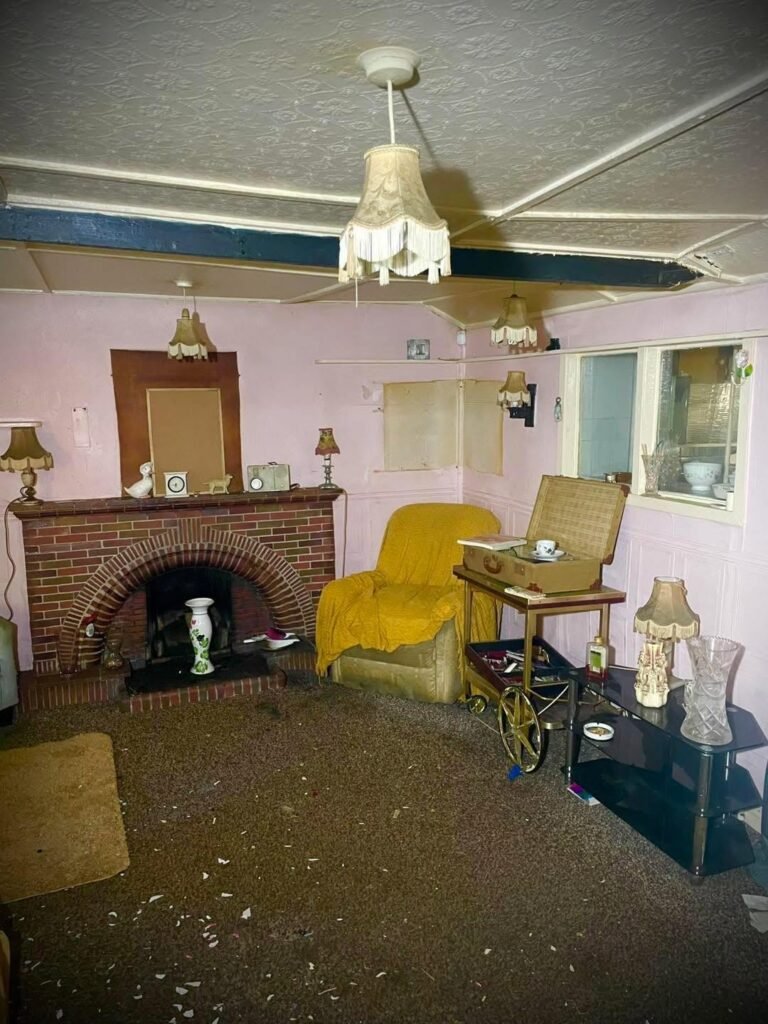
Inside, the living room is pink. A brick arched fireplace holds a vase, a yellow-draped armchair sits beside it, and a hostess trolley carries a suitcase or record player on top. Lamps and a crystal vase stand on a glass table, and fringed pendant lights hang from the ceiling. The room is furnished, decorated and, in the photographs, almost untouched.
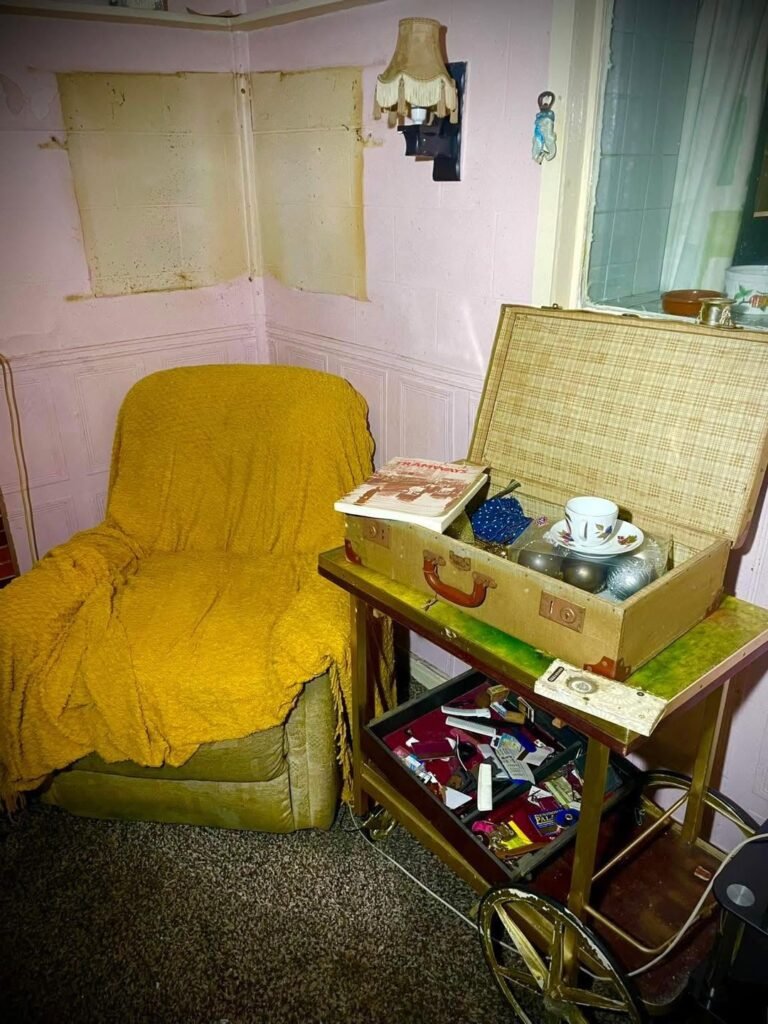
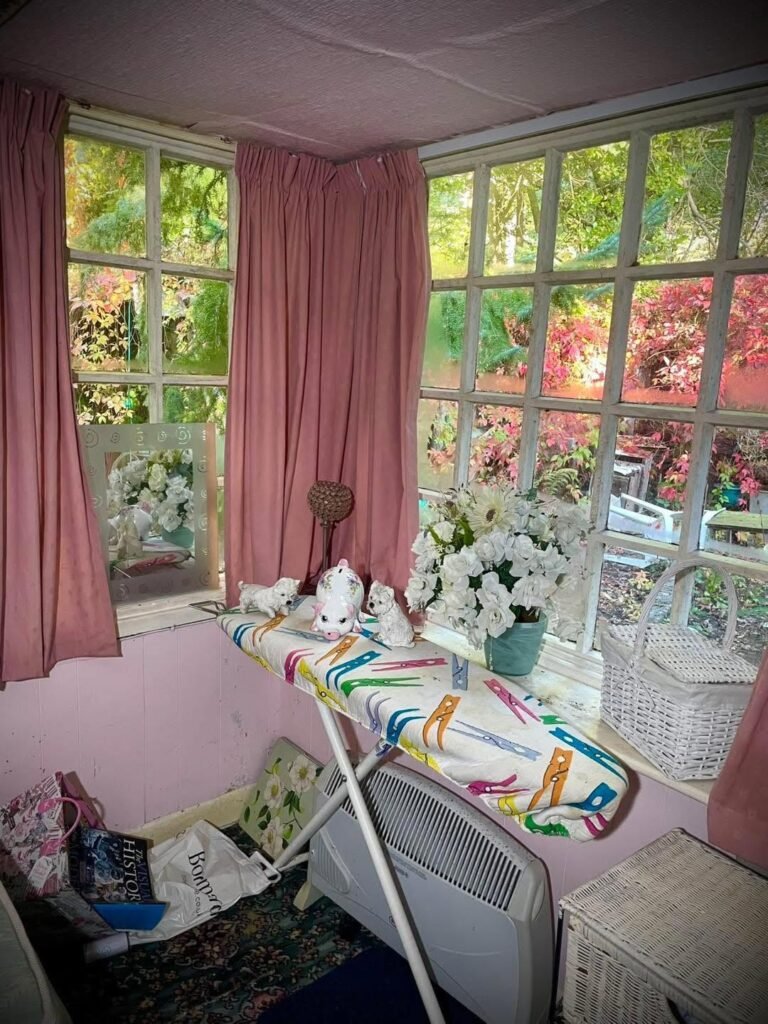
The next photograph looks closer at the same corner: the yellow-draped armchair again, and the open vintage suitcase on the hostess trolley, holding a teacup, some baubles and a book. These are personal things — a cup, a book, small ornaments — left where they were put down. The last photograph looks through a bay window with pink curtains and leaded panes onto the overgrown garden, past an ironing board with a colourful clothes-peg-pattern cover, ceramic pig and dog figures, white flowers in a vase and a white wicker basket.
Nothing in these rooms looks smashed or stripped. The pink is faded, the dust is there, but the house reads as a home that was closed up and left, not as a building that was attacked.
What happened after the explore
The post adds a sad postscript. The explorer visited in 2024, and since then, he says, he has seen other explorers still going to the bungalow, and it has been ransacked. As of the post, he does not know the bungalow’s current situation.
That matters for the photographs. They show the house as it was when he visited in 2024 — furnished, pink, intact. What is there now is not published, and none of it is claimed here. A house that sits empty and known about does not stay untouched for long, and this one, by the post’s own account, already has not.
Rolf’s story ends, in the post, with the marriage in 1951. What happened between then and the abandonment in 2020 or 2021 is not given, and neither is the town or county where the bungalow stands. The house keeps those details, and the photographs keep the rooms.
For a contrast with a house that is lived in and on the market, see a lived-in 1902 home in Alexandria, Minnesota, where the questions are about upkeep and price rather than about what a closed house leaves behind. More houses in this condition are gathered in abandoned houses and in abandoned mansions, and the site’s front page is abandoned.blog.
FAQ
Who was Rolf?
According to the post, Rolf was born in Germany in 1928, moved to England in the late 1930s as the son of a war hero, and married Jaqueline in 1951. These details come from the post and are not independently verified.
Where is the bungalow?
No town, county or address is given in the post, and none is given here.
How long has it been empty?
The post says the bungalow has been abandoned since 2020 or 2021.
What is still inside?
A pink living room with a brick fireplace, a yellow-draped armchair, a hostess trolley with a suitcase, lamps, a crystal vase and a bay window looking onto the garden — as shown in the five photographs here.
What happened to the house after 2024?
The explorer says that since his 2024 visit, other explorers have been going there and the bungalow has been ransacked. Its current situation is not known.
What is the swimming pool like now?
The photographs show it empty and full of algae-green water and ferns, with white plastic patio furniture standing on the lawn beside it.
Can I visit it?
No visiting information is given here, and entering private property without permission is not encouraged.
Disclaimer
This article is general information only, not legal, tax, or financial advice. Rules on abandoned and private property differ by state and county; check county/local records and a local professional before acting.
Photos
Photos by Luke2Explore, via the original Facebook post: https://www.facebook.com/Luke2Explore/posts/the-house-of-rolf-the-abandoned-bungalow-known-as-the-house-of-rolfrolf-who-was-b/1434667728698911/ — 5 of the 26 photos are shown here.