There’s a moment — right when you step onto a wraparound porch and hear the old floorboards shift under your weight — when a house stops being a listing and starts being a story.
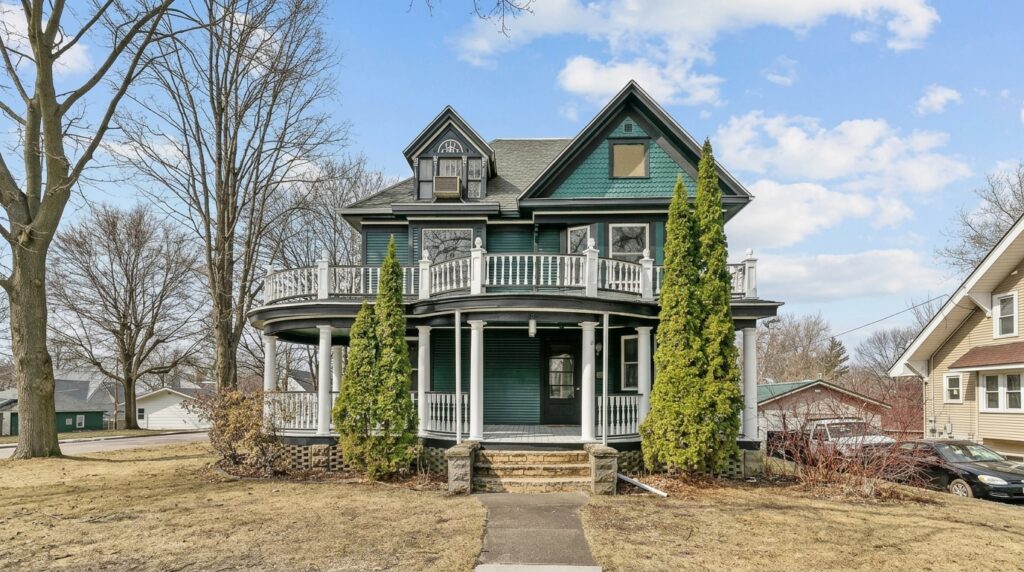
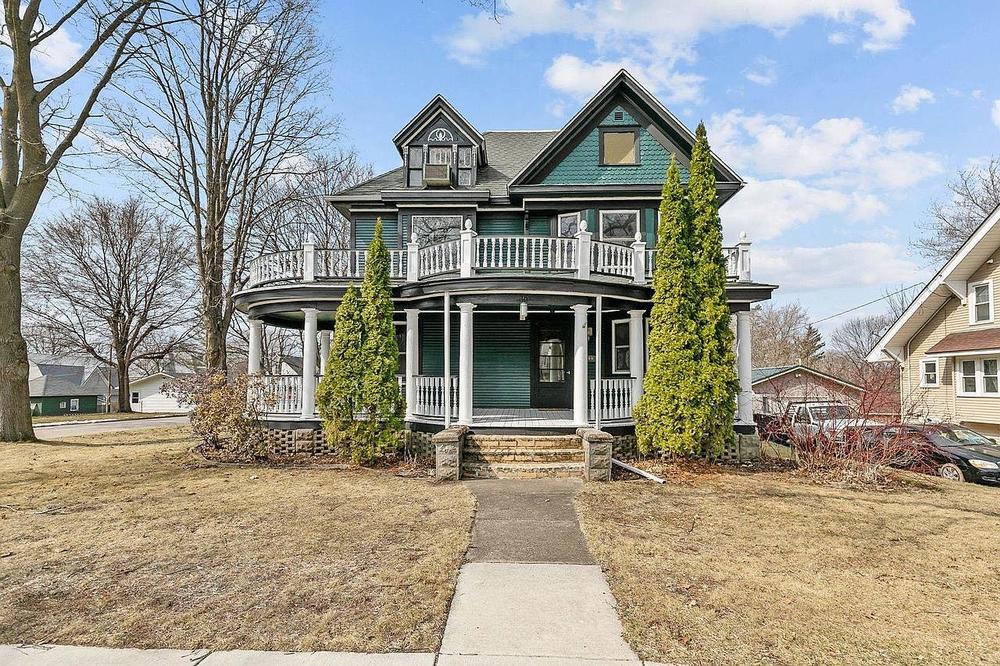
That’s exactly what this 1903 Victorian home in Markesan, Wisconsin feels like.
Five bedrooms. Original oak woodwork. More than 2,500 square feet of history, freshly revived and waiting for someone who appreciates the real thing. At $259,900, it’s the kind of house that makes you stop scrolling.
Let’s take a closer look.
What Is a Victorian Home, Exactly?
Before we walk through the front door, it helps to understand what we’re dealing with.
Victorian architecture refers to the building styles that flourished during the reign of Queen Victoria — roughly 1837 to 1901 — though their influence lingered well into the early 1900s in American small towns. The style is known for ornate detailing, asymmetrical facades, decorative woodwork, and a certain unapologetic grandeur.
In rural Wisconsin, Victorian homes of this era were a statement. A signal that the community was growing, that prosperity was real, that craftsmanship mattered.
This house was built in 1903. That puts it right at the tail end of that golden era — one of the last of a kind, in many ways.
Markesan, Wisconsin: A Town Worth Knowing
You might not have heard of Markesan before. Most people haven’t.
It’s a small city — population around 1,375 — sitting about 33 miles west of Fond du Lac in Green Lake County. It’s the kind of place where downtown is a five-minute walk from anywhere, where neighbors still wave from their porches, and where a house like this one can still exist for under $260,000.
That’s not nothing. In today’s market, that’s remarkable.
Markesan has the quiet, unhurried rhythm of a town that hasn’t tried to be something it isn’t. And for the right buyer — someone who values history, community, and space over noise — it’s exactly the kind of place that starts to feel like home very quickly.
The house sits in town, just steps from downtown. That matters more than people think. You get the walkability without the traffic. The community without the chaos.
Step Inside: A Room-by-Room Look
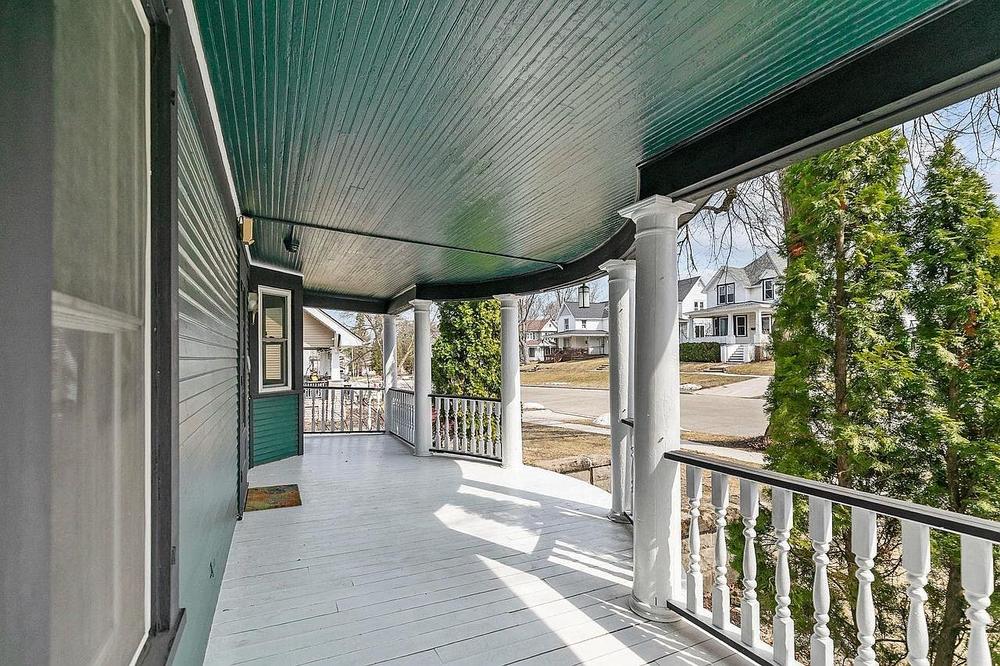
The Wraparound Covered Porch
This is where the house introduces itself.
Wraparound porches were a hallmark of late Victorian residential design — a place to catch the evening breeze, greet neighbors, and watch the seasons turn. This one is covered, which means it’s usable in spring rain, summer heat, and the crisp early days of a Wisconsin fall.
Sit out here long enough and you start to understand why people built houses this way.
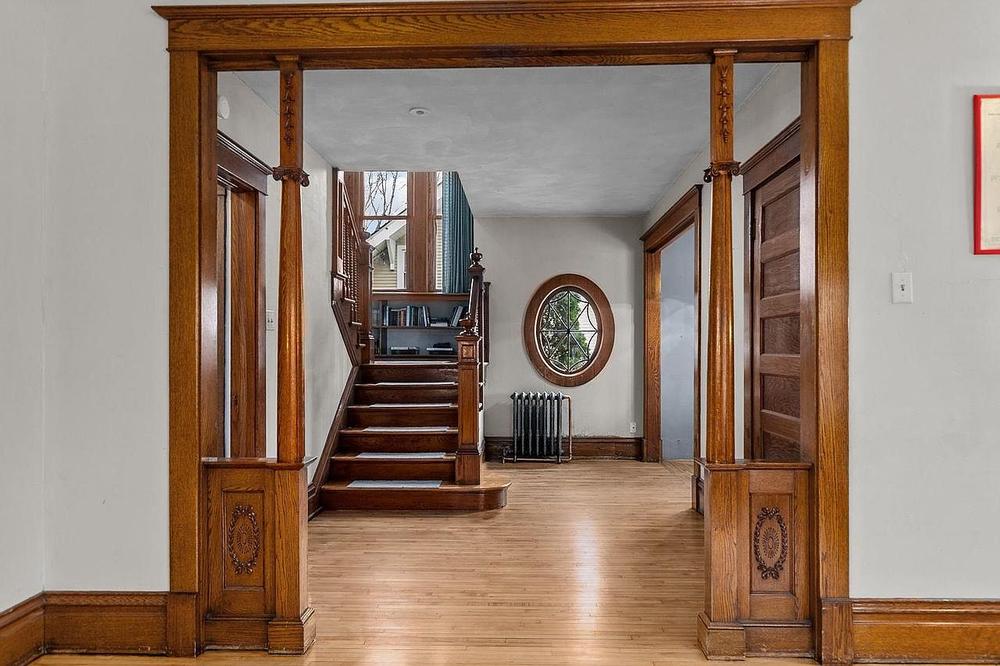
The Main Level: Hardwood Floors & Oak Woodwork
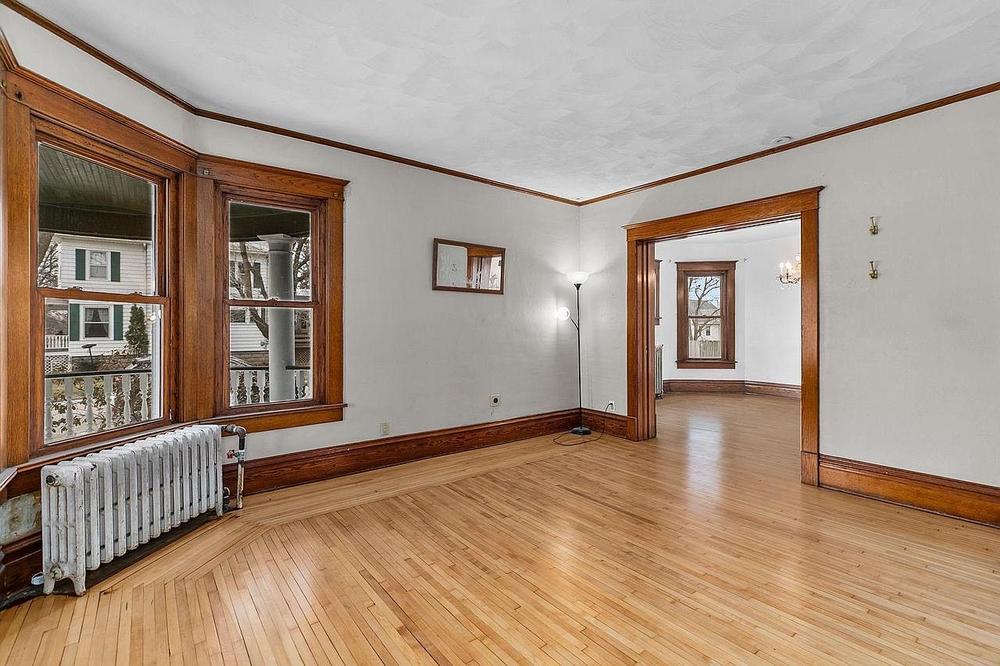
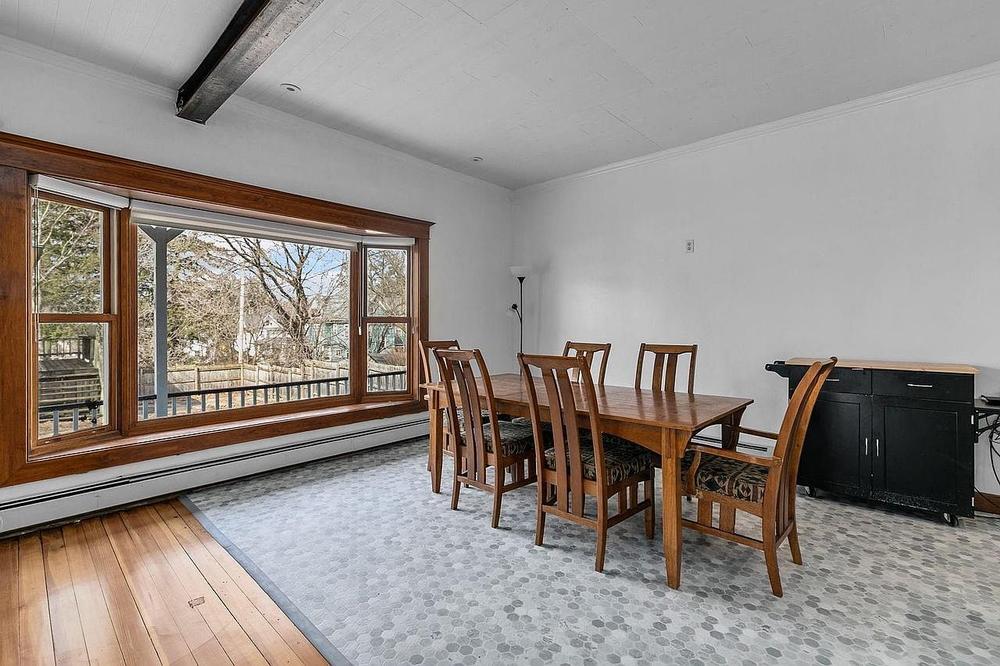
The floors have been freshly sanded and refinished. Walk across them barefoot and you’ll feel the difference between real hardwood and the engineered stuff — there’s a solidity to it, a warmth underfoot that modern flooring simply can’t replicate.
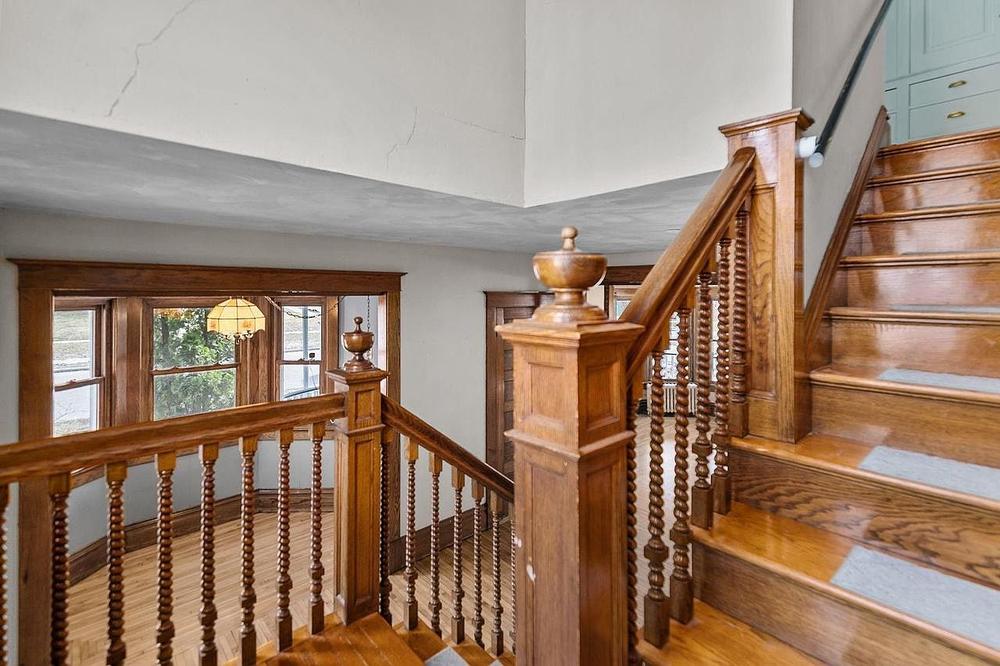
The original oak woodwork is the real centerpiece, though.
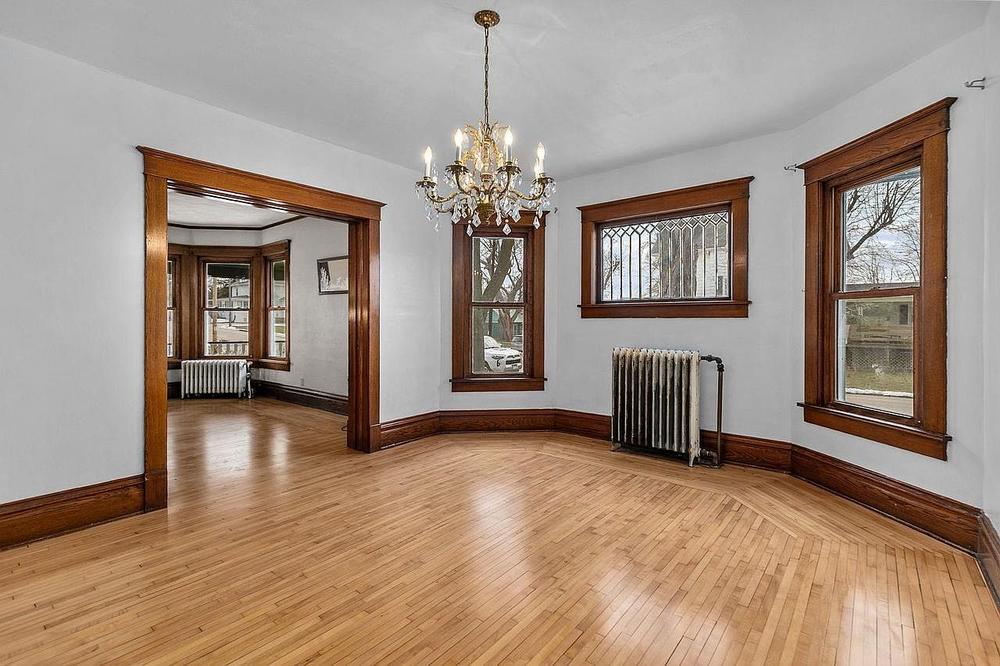
Baseboards. Door casings. Window surrounds. In 1903, skilled craftsmen shaped this wood by hand. You can still see the evidence of that patience — the clean lines, the subtle profiles, the way the grain catches the light on a clear afternoon. It’s the kind of detail that gets covered up during renovations in lesser homes. Here, it’s been preserved.
Five Bedrooms
Five bedrooms in a Victorian home means different things to different people.
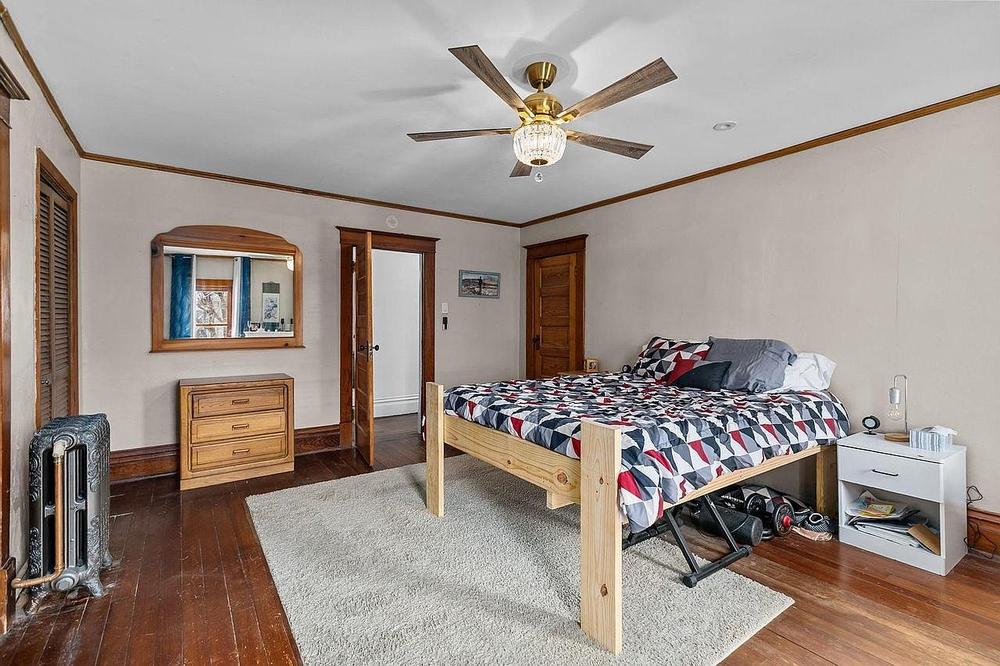
For a large family, it’s space to breathe. For a remote worker, it’s an office with room to spare. For someone who hosts out-of-town guests or parents, it’s the difference between a visit and a stay.
The layout of Victorian homes tends to be generous with room size. These aren’t the boxy, compressed bedrooms of a postwar ranch. They’re real rooms — with real windows, real light, and real breathing room.
1.5 Bathrooms
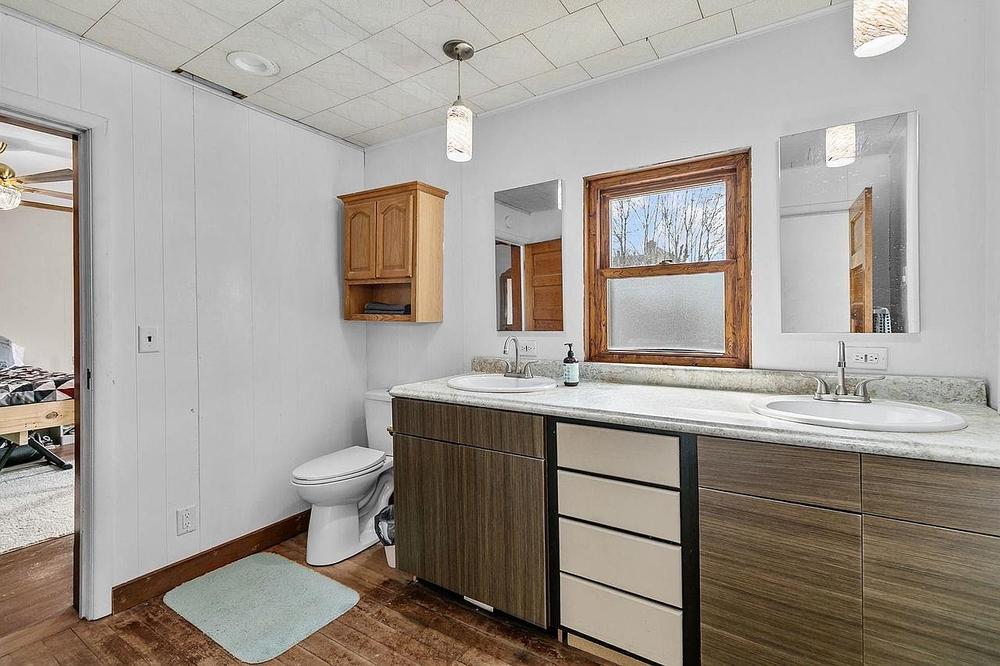
One full bath and one half bath. Practical, honest, and typical of the era.
For buyers who love the character of older homes but sometimes worry about functionality, it’s worth noting: 1.5 baths works perfectly well for the right household. And for those inclined toward renovation, a Victorian home with this much square footage leaves plenty of room to expand.
A Brand-New Boiler
Here’s the kind of update that might not photograph well but makes an enormous difference in day-to-day living.
The home has a brand-new boiler for radiant heat. Radiant heating — warm water circulated through pipes beneath the floors or through radiators — is one of the most comfortable heating systems you can have. It heats evenly, quietly, and efficiently. No forced air. No dry heat. Just a consistent, enveloping warmth that old houses like this were designed for.
Replacing a boiler is a significant investment. It’s already done here.
The Updates That Matter
Buying a Victorian home from 1903 can feel like a leap of faith. There’s always that nagging question: What’s going to break first?
This listing takes several big concerns off the table right away.
Here’s what’s already been done:
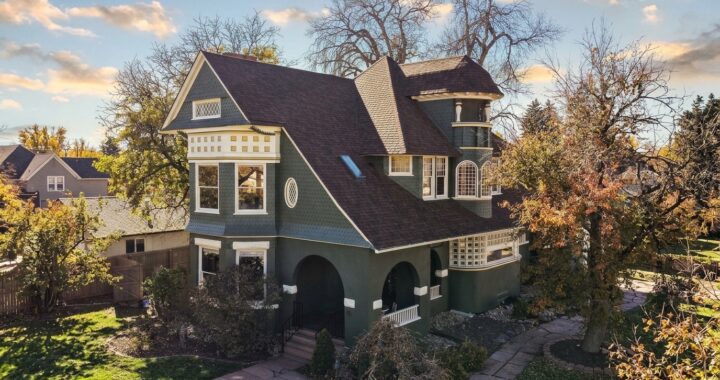
- New dark green exterior paint — freshly applied, with a color that suits the architecture beautifully
- Brand-new boiler — radiant heat, efficient and reliable
- Freshly sanded hardwood floors on the main level
- Well-maintained original oak woodwork — preserved, not replaced
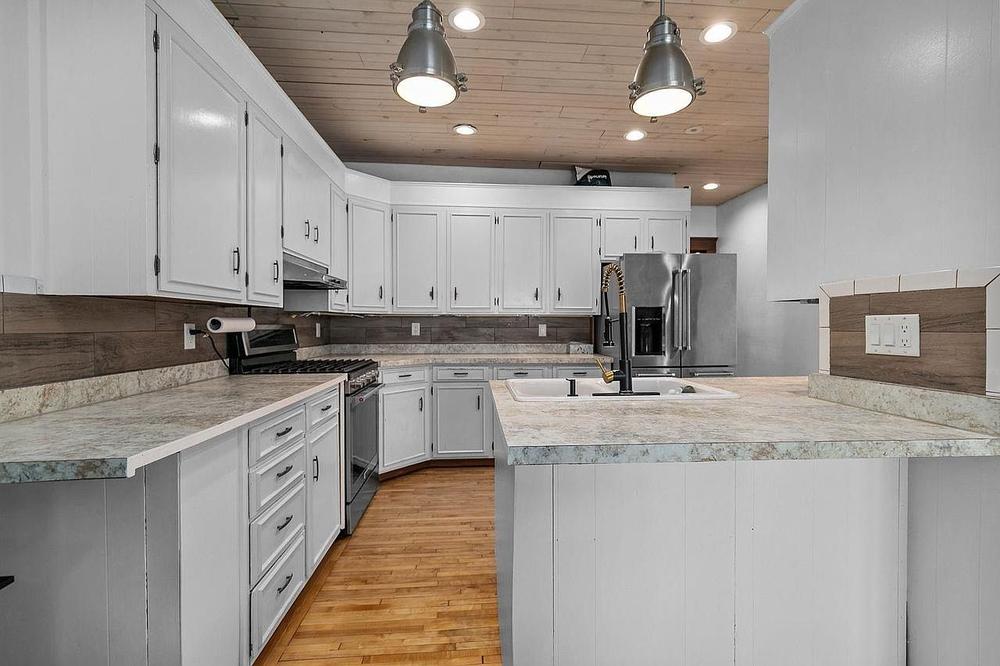
That’s a meaningful combination. Cosmetics and mechanicals. The house looks great and heats properly. That’s a solid foundation for everything else.
The Yard, the Garage & the Lot
.25-Acre Lot
A quarter-acre in town is a comfortable amount of land. Enough for a real backyard. Enough for a garden, a fire pit, or a swing set. Not so much that it becomes a burden to maintain.
In a walkable small town like Markesan, an in-town lot of this size is genuinely valuable.
Fenced Yard
The yard is fenced. That means pets, kids, and summer evenings can all coexist without anxiety.
2-Car Detached Garage
Practical and important, especially in Wisconsin winters.
A 2-car detached garage gives you storage, protection for your vehicles, and — for the handy-minded — a workspace that doesn’t compete with living space.
The History Behind the Walls
Houses built in 1903 have lived through a lot.
Think about what this home has witnessed: two World Wars, the Great Depression, the postwar boom, the moon landing, the rise of the internet. Generations of families have cooked in its kitchen, slept in its bedrooms, and sat on that wraparound porch watching the world change around them.
Victorian homes of this era were typically built by skilled local craftsmen using old-growth timber — dense, tight-grained wood that modern lumber simply can’t match. That’s part of why so many of these homes are still standing more than a century later.
If you’ve spent time exploring older American towns and their architectural heritage, you already know that feeling of standing inside a space like this. It’s the same pull that draws people to historic preservation organizations like the National Trust for Historic Preservation — that instinct to protect what’s irreplaceable before it disappears.
This house hasn’t disappeared. It’s been cared for. And now it’s looking for what comes next.
Is a Victorian Home Right for You?
Not everyone is built for a historic home. That’s honest.
Victorian homes ask something of their owners — a willingness to work with their quirks, to appreciate their character, to choose original detail over modern uniformity. They’re not for people who want everything new and everything neutral.
But for the right person? There’s nothing quite like it.
You might be the right buyer if:
- You love original architectural detail — woodwork, wide trim, hardwood floors
- You want more space than a modern home at the same price would give you
- You’re comfortable with a home that has history and occasional personality
- You want a walkable small-town life without paying city prices
- You appreciate radiant heat and well-built, durable construction
If that list sounds like you, this house deserves a serious look.
Why Small-Town Victorian Homes Are Having a Moment
There’s a quiet movement happening in American real estate.
People are leaving expensive metros and rediscovering small towns — places with real community, affordable housing, and a slower pace of life. And in those towns, the Victorian homes that were once overlooked or taken for granted are suddenly being seen for what they are: architectural treasures.
Over at abandoned.blog, we’ve spent years documenting the forgotten mansions, decaying estates, and lost historic homes that no one saved in time. The ones where the woodwork rotted because nobody cared. Where the porch collapsed because nobody fixed the drainage. Where the story ended not with a sale but with a demolition permit.
This Markesan Victorian is not that story — not yet. It’s been maintained. It’s been updated where it counts. It’s ready for a new chapter.
But homes like this don’t stay on the market forever. And the ones that get passed over long enough sometimes do become cautionary tales.
What Other Historic Homes Teach Us
If you’ve ever stood inside a truly grand old house — a forgotten estate or a rambling forgotten château — you know the particular silence those spaces hold.
It’s not an empty silence. It’s a layered one. Decades of voices, of meals, of arguments and laughter and long winter nights. You can feel it in the way the light falls through old glass, in the creak of floorboards that have been walked on ten thousand times.
We write about those places regularly — the forgotten estate that nobody bought, the Victorian mansion that sat empty for forty years before it finally fell — and the pattern is always the same. Someone should have bought it when it was still viable. When it was still beautiful. When it still had good bones and working heat and freshly sanded floors.
This house in Markesan is that moment for someone. The moment before it becomes a story told with regret instead of joy.
You can read more about what happens to homes that get passed over in our exploration of America’s forgotten Victorian mansions — it’s a sobering and beautiful archive of what we lose when we don’t act.
Conclusion
A 1903 Victorian home in Markesan, Wisconsin doesn’t come along every day. Five bedrooms, 2,512 square feet, a new boiler, freshly refinished hardwood floors, original oak woodwork, a wraparound porch, and a fenced yard — all for $259,900.
This is the kind of home that rewards the buyer who sees past a listing and into a legacy.
It has survived 120 years. It’s asking for a few more decades with the right owner.
Don’t let it become the house someone else writes about with regret.
FAQ
Q: How old is the house in Markesan, Wisconsin?
A: The home was built in 1903, making it over 120 years old. It’s a Victorian-era property with significant original architectural detail still intact.
Q: What style of architecture is this home?
A: Victorian architecture, which was common in small American towns during the late 19th and early 20th centuries. Key features include ornate woodwork, wraparound porches, and generous room sizes.
Q: Is the home move-in ready?
A: Yes. Recent updates include a brand-new boiler, freshly sanded hardwood floors on the main level, and new exterior paint. The original oak woodwork has been preserved.
Q: What heating system does the house have?
A: The home uses radiant heat powered by a brand-new boiler — one of the most comfortable and efficient heating systems available, and particularly well-suited to Victorian-era homes.
Q: Where exactly is Markesan, Wisconsin?
A: Markesan is in Green Lake County, approximately 33 miles west of Fond du Lac. The home is located in town, just steps from downtown Markesan.
Q: Who should I contact to see the home?
A: Contact Kyle Johnson at Emmer Real Estate Group, Inc. — phone number 920-229-9304.
Q: Is $259,900 a fair price for a home like this?
A: For a 2,500+ sq ft, 5-bedroom Victorian with recent mechanical updates and preserved original detail in a small Wisconsin town, $259,900 is a competitive and arguably exceptional price point.
Interested in more stories about historic homes, forgotten estates, and Victorian architecture across America? Explore our full archive at abandoned.blog.