The Abandoned Poets House: A Poet’s Manor Left in Time
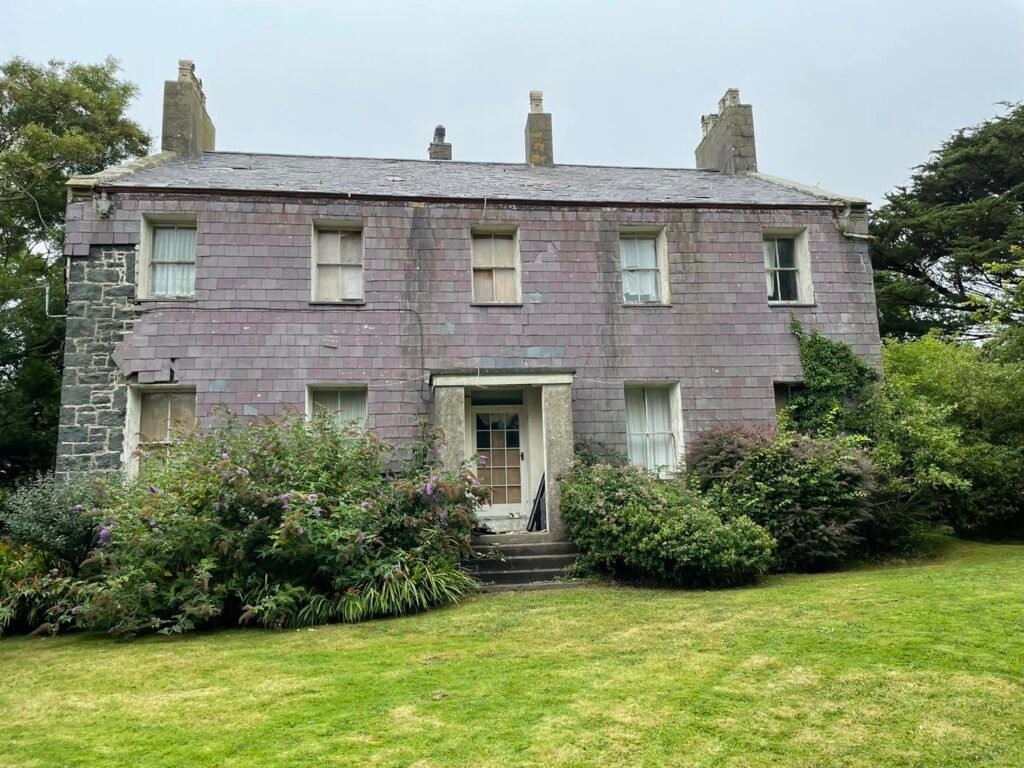
Some abandoned houses are cottages. This one is not. The first photograph shows a grand two-storey manor, its walls clad in slate, its roof low and grey, its front marked by a central porch and five windows across the upper floor. The lawn in front of it is overgrown, the bushes are closing in, and the door is boarded — but the building itself is unmistakably a manor, the kind of house that was built to be looked at.
The explorer who photographed it on a weekend in July 2023 called it the Poets House. The house, the post says, once belonged to a poet and his family. It had not been lived in for a good couple of years. Beyond that, the post is frank about what it does not know: the explorer writes that he is not sure how long it has been abandoned for, and that if he finds any more history about the home and family he will edit the post and re-post it.
A manor, not a cottage
The difference between a cottage and a manor is not just size. It is intention. A cottage is built to shelter a family. A manor is built to say something about the family — about standing, about taste, about permanence. The Poets House says all of that in its first photograph: slate cladding, dressed stone at the corner, tall chimneys, a porch with columns, a lawn that was once kept.
The post calls it “one of my explores from the weekend” and “a stunning old building”. Both phrases are doing work. The first says this was a routine visit, one stop among others. The second says the building stopped the explorer in his tracks anyway. That combination — ordinary visit, extraordinary house — is the whole appeal of the post.
The house has a time capsule inside, the post says, and the photographs that follow are the evidence. Walking back in time, the explorer writes, and seeing things still left behind, and trying to learn and find out more about the building and owners. That is the work of the explore: not just photographing rooms, but reading them.
The hallway still welcomes no one
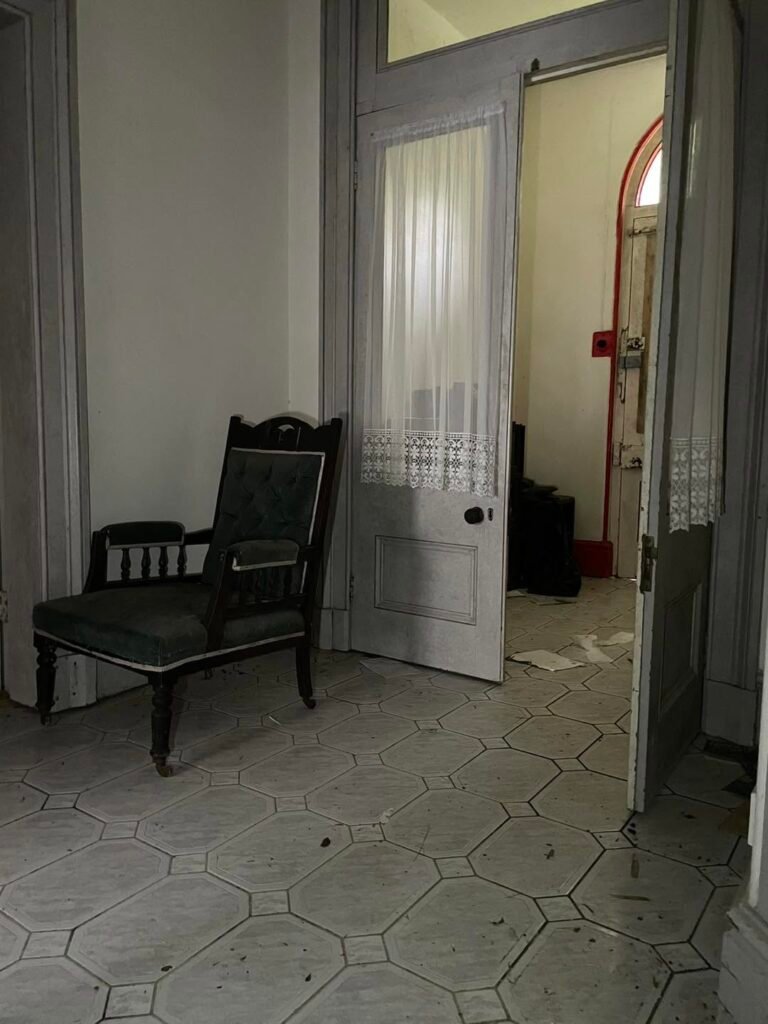
The second photograph is the hallway, and it is the most formal room of the five. Hexagonal tiles cover the floor. A dark armchair stands against the wall. A door with a lace curtain stands half open, leading through to an arched doorway beyond. The walls are pale, the light is thin, and the whole space has the hush of a house that has not heard footsteps in years.
A hallway is a room for arriving. It is where guests were met, where coats were taken, where the house introduced itself. In the photograph, the armchair sits empty and the lace curtain hangs still. The house is still introducing itself, but there is nobody left to introduce it to.
The lace curtain deserves a mention, because it is the kind of detail that survives in abandoned houses when grander things do not. It is delicate, it is personal, and it is still hanging. Somebody chose it, hung it, and left it. It has outlasted the family that lived behind it.
Two green armchairs and a dead television
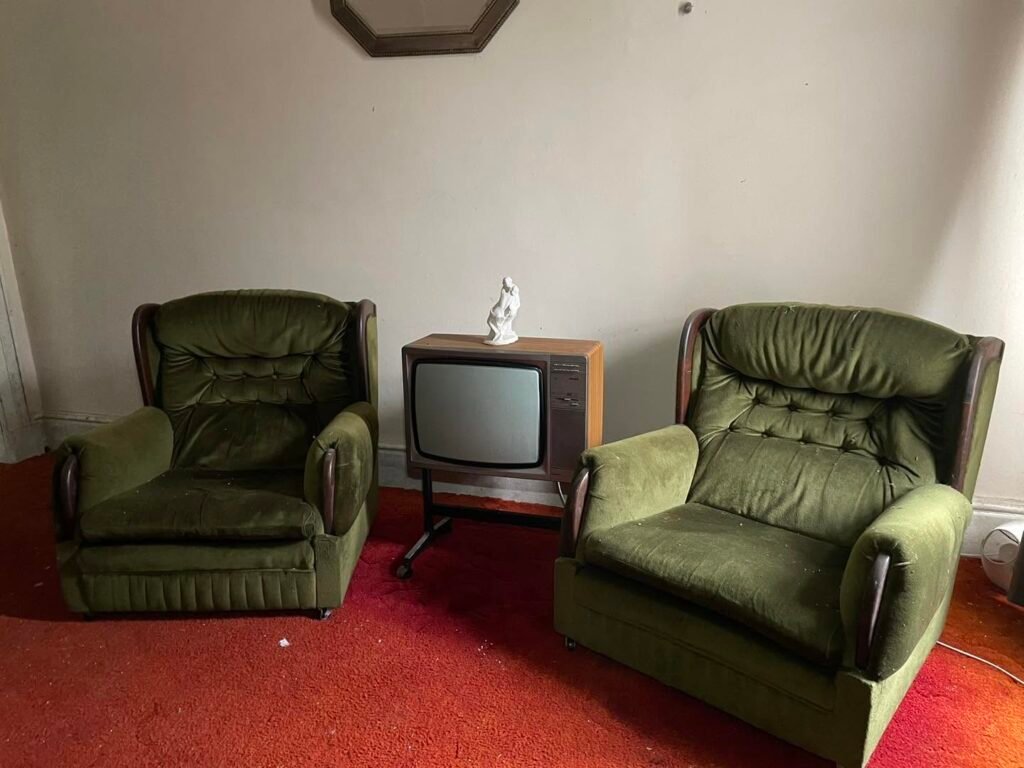
The third photograph shows a sitting room: two green velvet armchairs flanking an old CRT television, with a small white statue standing on top of the set. The chairs face the television, as chairs in a sitting room do. The statue — a small figure, white, unidentifiable from the photograph — sits on top of the dead screen like a household god.
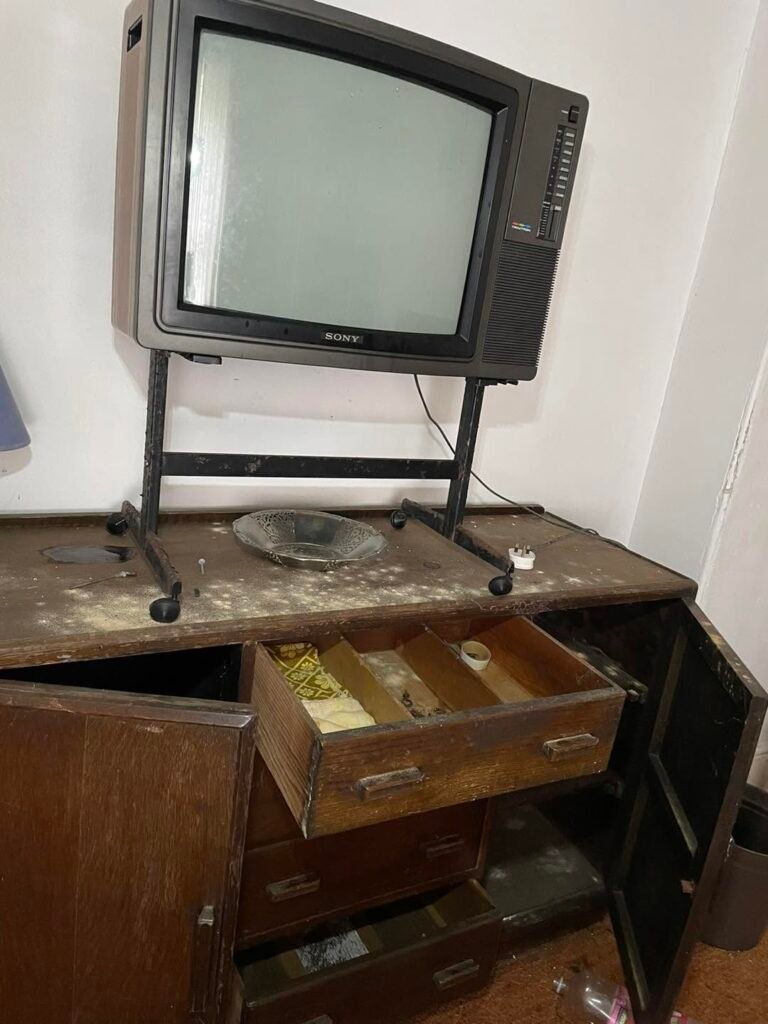
The fifth photograph is the same television’s cousin: an old Sony CRT on a stand, above a dusty sideboard with an open drawer. Two dead televisions in one house, from an era when a television was a piece of furniture, heavy and expensive, and not something you threw away when it stopped working. You kept it. And then you left it, along with everything else.
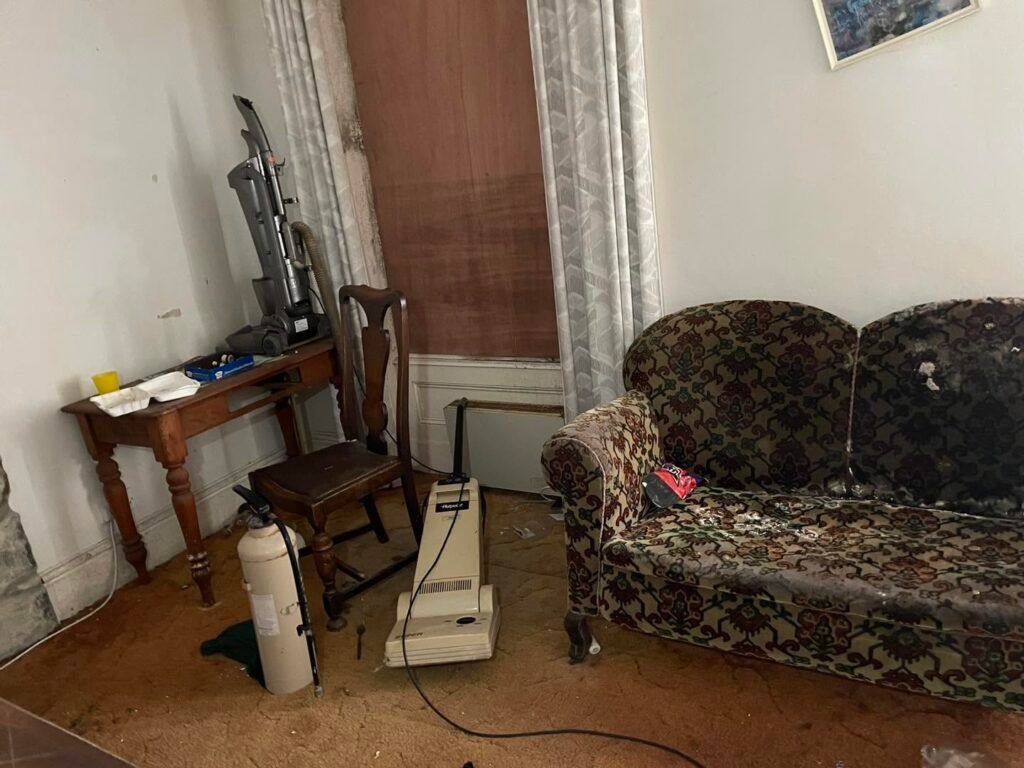
The fourth photograph shows the other side of the same story: a mouldy floral sofa, two vacuum cleaners standing beside it, a wooden chair, and a boarded-up window. The vacuum cleaners are the detail that catches the eye. They are tools for cleaning a house, left in a house that will never be cleaned again. Somebody owned two of them, used them, put them down — and then the house went quiet.
| What the post says | What the five photos show | What is not known |
|---|---|---|
| The house belonged to a poet and his family | A grand slate manor with a porch and five windows | Which poet, or when the family lived there |
| It has not been lived in for a good couple of years | Rooms left furnished, televisions dead, windows boarded | Exactly how long it has been empty |
| There is a time capsule inside | Furniture, statues, curtains and appliances in place | What the rest of the 36 photos show |
| The explorer will re-post if he finds more history | — | Whether more history was ever found |
The article the post points to
The post ends with a link to an online news article about the place, from the Telegraph, titled “In search of the man who went into the west”. The post does not quote the article, and this article does not summarise it — the Telegraph piece was not read for this post, and its contents are not claimed here. The link is mentioned because the post mentions it, and because it is the explorer’s own lead for anyone who wants to know more about the poet and the house.
That matters, because it is the one thread the post leaves hanging. The explorer says he will edit and re-post if he finds more history. Whether he did is not published in the post, and it is not claimed here.
What we do not know
The post does not name the poet, give the house’s location, or say when the family left. It does not say how long the house has been empty beyond “a good couple of years” as of July 2023, or what has happened to it since. The identity of the poet and the contents of the linked Telegraph article are not verified here.
For a contrast with a house that is lived in and on the market, see a lived-in 1902 home in Alexandria, Minnesota, where the questions are about upkeep and price rather than about what a closed house leaves behind. More houses in this condition are gathered in abandoned mansions and in abandoned houses, and the site’s front page is abandoned.blog.
FAQ
Where is the Poets House?
No location is given in the post, and none is given here.
Which poet lived there?
The post does not name the poet. It says only that the house once belonged to a poet and his family.
When was it explored?
The post is dated 24 July 2023, and describes the visit as from the weekend.
How long has the house been empty?
The post says it had not been lived in for a good couple of years, and that the explorer was not sure exactly how long it had been abandoned.
What is still inside?
According to the photographs: armchairs, sofas, two CRT televisions, a sideboard, vacuum cleaners, lace curtains and a small white statue.
What is the Telegraph article?
The post links to a Telegraph article titled “In search of the man who went into the west”. Its contents are not summarised here.
Can I visit it?
No visiting information is given here, and entering private property without permission is not encouraged.
Disclaimer
This article is general information only, not legal, tax, or financial advice. Rules on abandoned and private property differ by state and county; check county/local records and a local professional before acting. The account of the house and the poet is as reported in the source post and has not been independently verified.
Photos
Photos by Luke2Explore, via the original Facebook post: https://www.facebook.com/Luke2Explore/posts/the-abandoned-poets-house-this-was-one-of-my-explores-from-the-weekend-and-what-/672129524952739/ — 5 of the 36 photos are shown here.