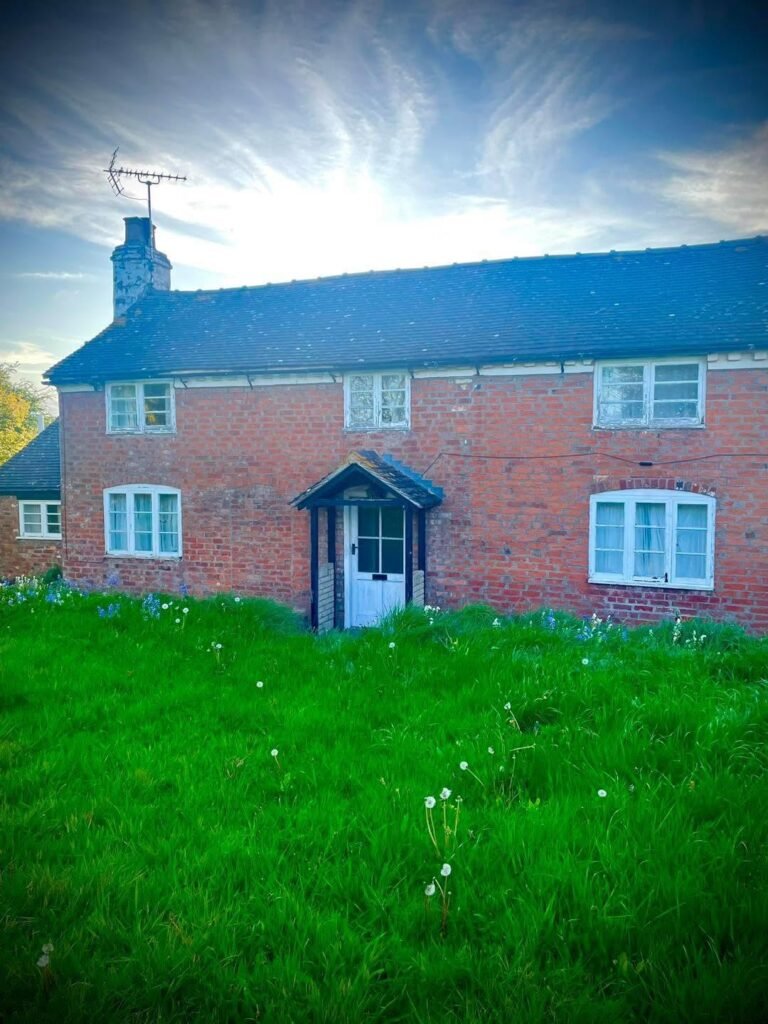
The house is called the Pink House for the simplest of reasons: the bedrooms are pink. The carpet is pink, the bedspread is pink, the jug on the washstand is pink. Walk through the photographs and the colour follows you from room to room, and that is the first clue about who lived here. This was not a house that was decorated once and forgotten. Somebody chose pink, and kept choosing it, for a long time.
The house once belonged to an elderly couple, according to the post that documents it, dated 29 April 2026. Inside, their personal possessions were still in place when the explorer visited: photographs, memory books, and the everyday items the couple would have used. The post describes the house as a time capsule, with time standing still in all the rooms. Everything in this article comes from that post and from the five photographs shown here. No location is given, and no surname is used here.
Two rooms, two people
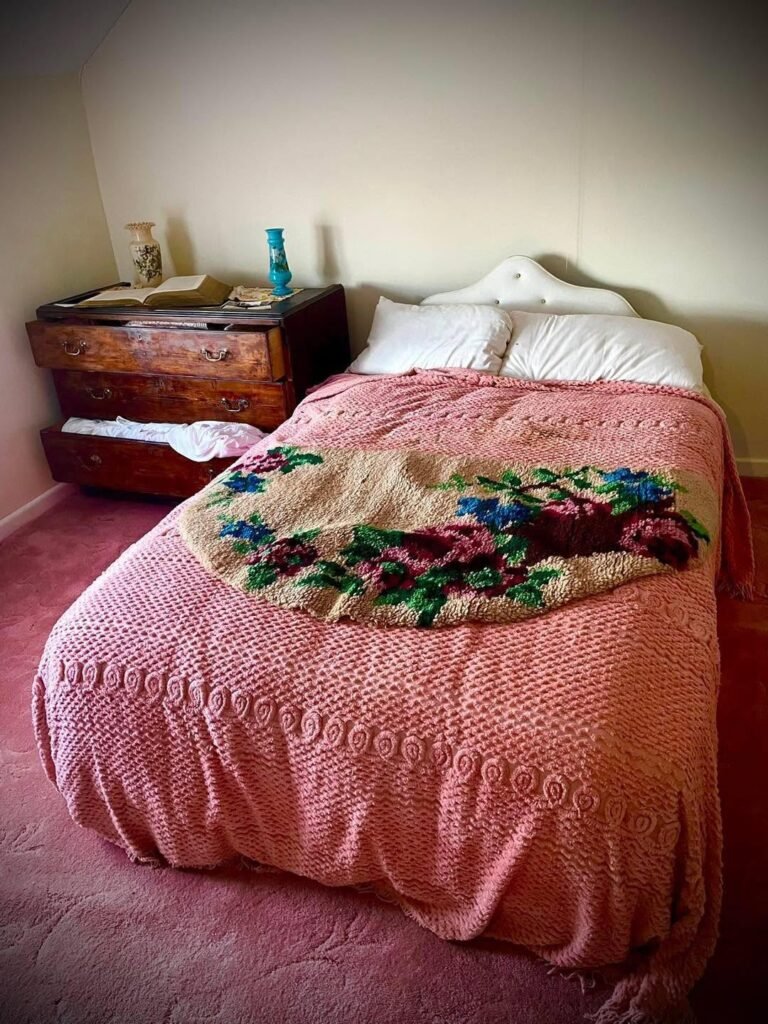
The most interesting thing the post says is that the two bedrooms told two different stories. The lady’s room, the post says, was more neat and tidy, left clean. The gentleman’s room was a bit more disorganised, left as it was. The photographs bear that out in their own way. The pink bedroom in the second photograph is strikingly orderly: the double bed is made, the pink candlewick bedspread is smoothed flat, a floral rug lies folded across the foot of the bed, and the white pillows are plumped and in place. On the wooden chest of drawers beside the bed, an open book lies next to a blue vase, as if somebody had put them down and meant to come back. Nothing is thrown about. It is a room that was left tidy.
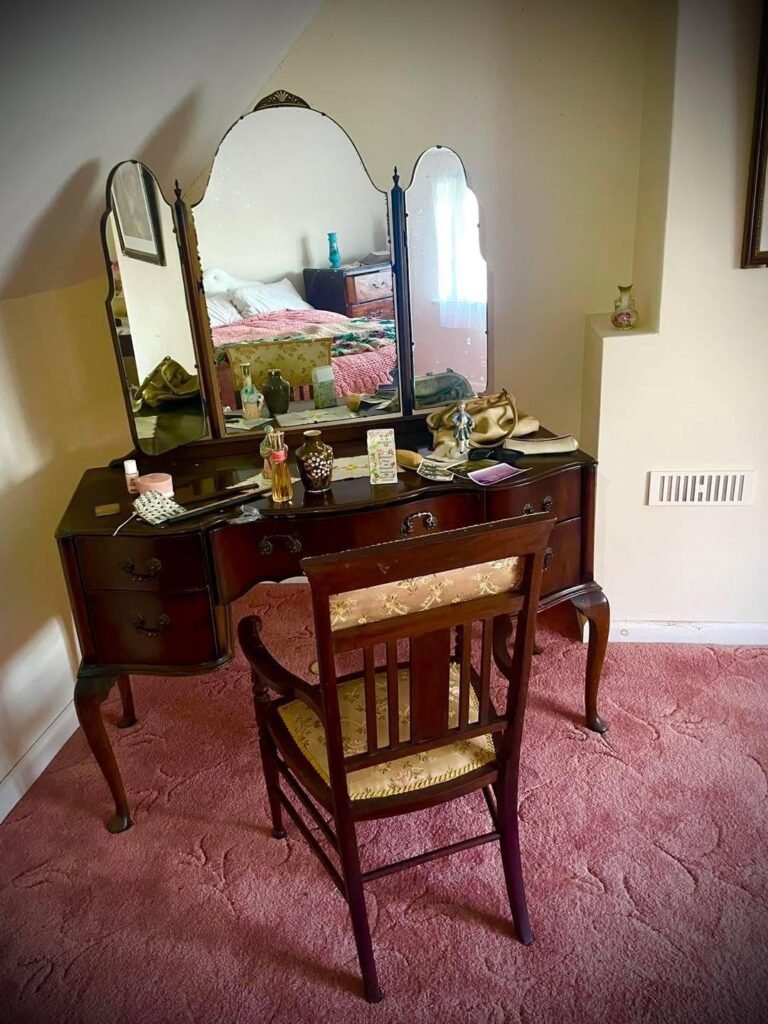
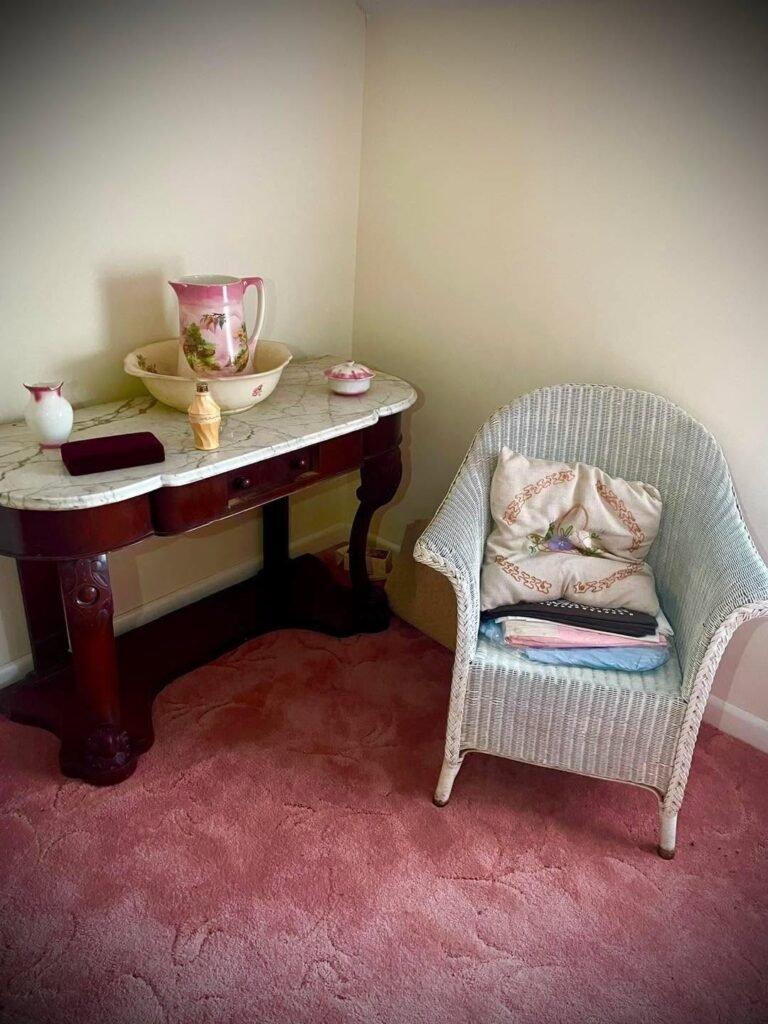
The other photographs show the same care in smaller things. The dressing table in the third photograph is dark wood with a triple mirror, and its surface is still arranged: perfume bottles, a small vase, a hairbrush, a handbag, a few photographs tucked against the mirror. The bed is reflected in the glass, pink and made. An upholstered chair with a floral seat waits in front of the table. The marble-topped washstand in the fifth photograph holds a pink floral jug and basin, a small white vase, and a bottle of perfume, with a wicker chair beside it holding an embroidered cushion and a neat pile of folded clothes. These are not the remains of a house that was ransacked. They are the remains of a house where somebody kept things in their place.
The letter on the desk
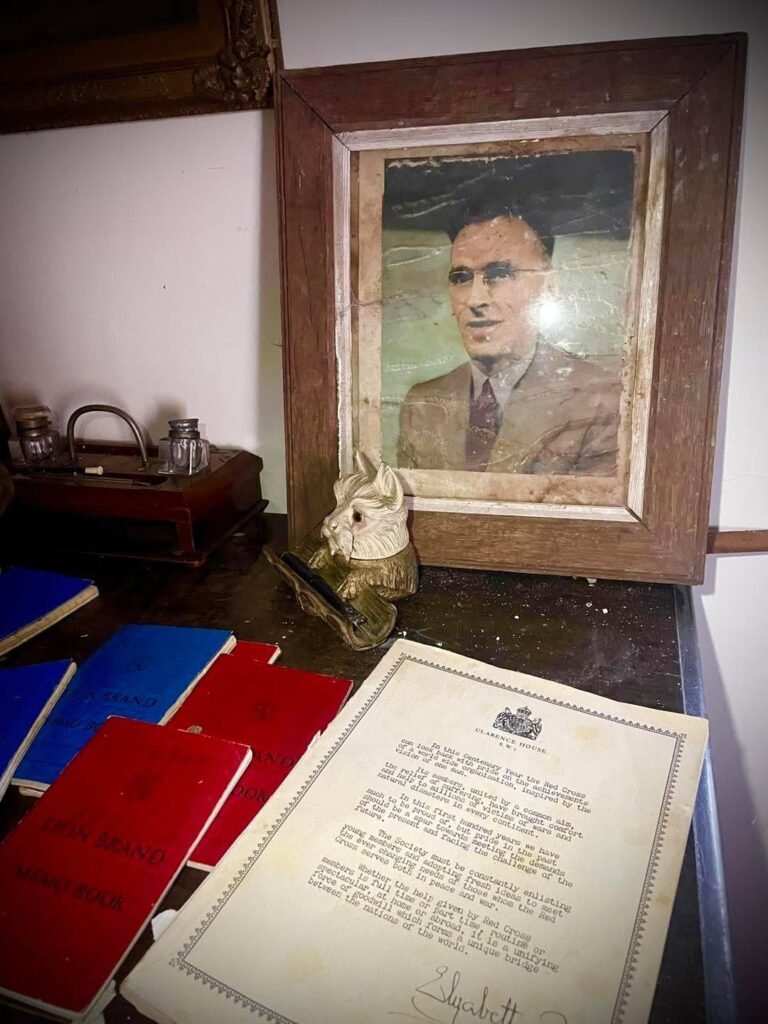
The fourth photograph is the one that gives the house its history. On a desk sits a framed portrait of a man in glasses and a suit, the glass cracked with age. In front of the portrait are red and blue “Lion Brand” memo books, glass inkwells, and a cat-shaped pen holder. And beside them, a letter on headed paper from Clarence House, about the Red Cross — the post says it looked as though one of the couple had been in the Red Cross service after a letter was seen on the table about the services to the group.
That reading is the post’s, and it is presented here as the post’s reading, not as a verified fact. The letter itself, visible in the photograph, is a printed Red Cross message, and the portrait beside it is of a man who could be the gentleman of the house. Nothing in the post proves a Red Cross connection, and nothing here claims one. What the photograph does prove is simpler: somebody in this house kept a portrait, kept notebooks, kept a letter that mattered enough to be left on the desk rather than thrown away.
There is one more odd detail in the post, and it is the kind of detail that makes a house feel real rather than staged. The living room, the post says, strangely had electric working, where the other rooms did not. No explanation is given. A house that has been empty long enough for the power to fail in most rooms, but where one room still lights up, is a house that was left in stages — or a house where somebody came back, or where the wiring failed unevenly. The post does not say which, and neither does this article.
The second chapter
Then the story takes a turn the post is careful to attribute to other people. From what other explorers have discovered, the post says, the house was later cleared out and apparently used as a cannabis grow, adding a very different chapter to the story of the property.
That is an unverified claim from other explorers, and it is reported here only as the post reports it. The five photographs shown here were taken before any clearing out: they show the house as the couple left it, pink and orderly, with the bed made and the dressing table arranged. If the house was later emptied and used for something else, then these photographs are a record of a state that no longer exists — the same way the photographs of other houses in this series are records of rooms that have since been cleared, sold, or demolished.
It is worth being exact about what the photographs establish. They establish that this was a two-storey red-brick farmhouse with a blue slate roof, set behind an overgrown lawn full of dandelions and bluebells, and that inside it the bedrooms were pink, the furniture was old and well kept, and personal possessions — photographs, memory books, letters, perfume bottles, notebooks — were left in place. They do not establish when the couple left, what happened to them, or what happened to the house afterwards. The post gives no dates for any of that, and no dates are given here.
- The exterior: red brick, blue slate roof, white-framed windows, a white front door under a small porch canopy, and a lawn that has not been cut in a long time.
- The pink bedroom: a made double bed in a pink candlewick spread, a floral rug, white pillows, and a chest of drawers with an open book and a blue vase.
- The dressing table: triple mirror, perfume bottles, trinkets, an upholstered chair, pink carpet, the bed reflected in the glass.
- The desk: a framed portrait, Lion Brand notebooks, inkwells, a cat-shaped pen holder, and a Red Cross letter.
- The washstand: a pink floral jug and basin, a small white vase, a wicker chair with an embroidered cushion and folded clothes.
A house that is lived in and for sale is a different kind of place from this one, and the difference is worth seeing side by side: a lived-in 1902 home in Alexandria, Minnesota shows what upkeep and a price look like, where this house shows what happens when upkeep stops and nobody comes back. More houses in this condition are gathered in abandoned houses and in abandoned mansions, and the site’s front page is abandoned.blog.
FAQ
Where is the Pink House?
No location is given in the post, and none is given here.
Why is it called the Pink House?
Because of the bedrooms being pink, according to the post. The photographs show pink carpet, a pink bedspread and pink china in the bedroom.
Who lived there?
According to the post, an elderly couple. No further personal details are given here.
Was one of them in the Red Cross?
The post says it looked like one of them were in the Red Cross service after a letter was seen on the table about the services to the group. That is the post’s reading, not a verified fact.
Why did the living room have electricity when other rooms did not?
The post notes it as strange and gives no explanation. None is offered here.
What happened to the house afterwards?
According to the post, other explorers discovered the house was later cleared out and apparently used as a cannabis grow. That is an unverified claim from other explorers, reported as the post reports it.
Can I visit it?
No visiting information is given here, and entering private property without permission is not encouraged.
Disclaimer
This article is general information only, not legal, tax, or financial advice. Rules on abandoned and private property differ by state and county; check county/local records and a local professional before acting. The account of the house, the couple and what happened afterwards is as reported in the source post and has not been independently verified.
Photos
Photos by Luke2Explore, via the original Facebook post: https://www.facebook.com/Luke2Explore/posts/the-pink-housethis-abandoned-house-known-as-the-pink-house-because-of-the-bedroo/1428988019266882/ — 5 of the 40 photos are shown here.