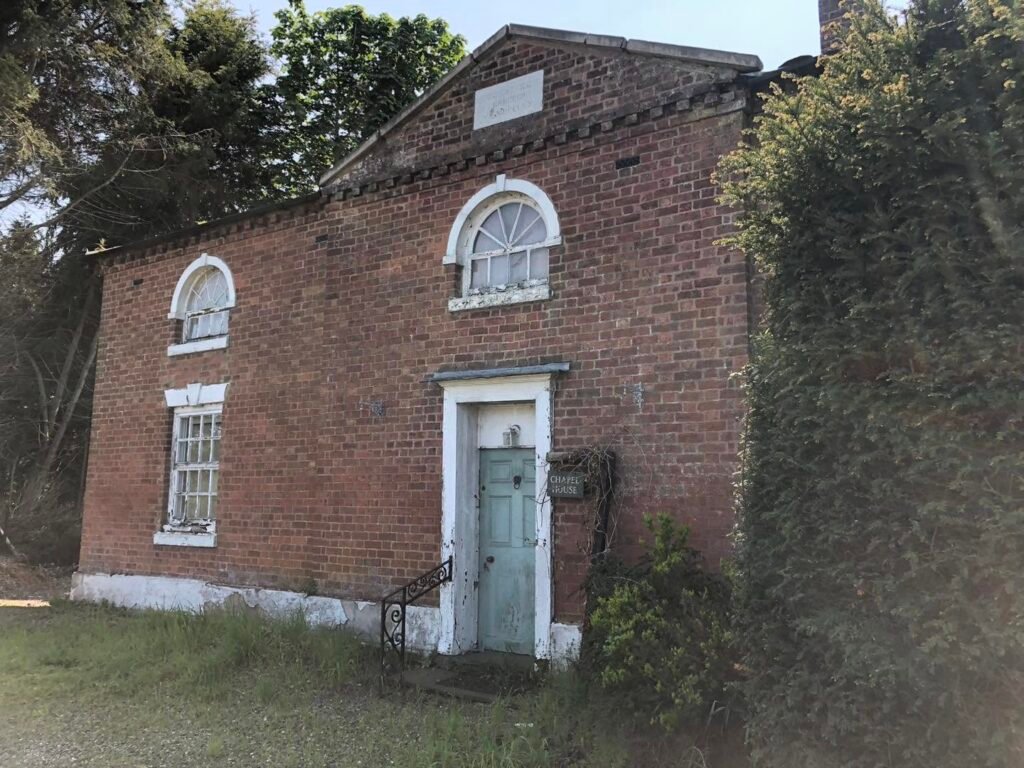
The sign by the door says it plainly: CHAPEL HOUSE. It hangs beside a pale blue door in a red-brick building with tall arched windows, and it is the first thing that tells you this place was not built as a house at all. It was built as a chapel, and then somebody turned it into a home. A family lived here. Then, for reasons the post that documents it does not know, they left — and the house stood empty with everything still inside it.
The post is dated 15 May 2023, and it is careful about what it does and does not know. It says the house is believed to have been abandoned for only between five and six years, as far as the explorer had been told and had found out. That is a short abandonment, and it matters, because the photographs do not look like a house that has been empty for decades. They look like a house that was lived in recently and then stopped, suddenly, with the furniture still arranged and the bottles still on the coffee table.
Everything in this article comes from that post and from the five photographs shown here. No location is given, no surname, and no date is given for when the chapel was built or converted.
A chapel first, a home second
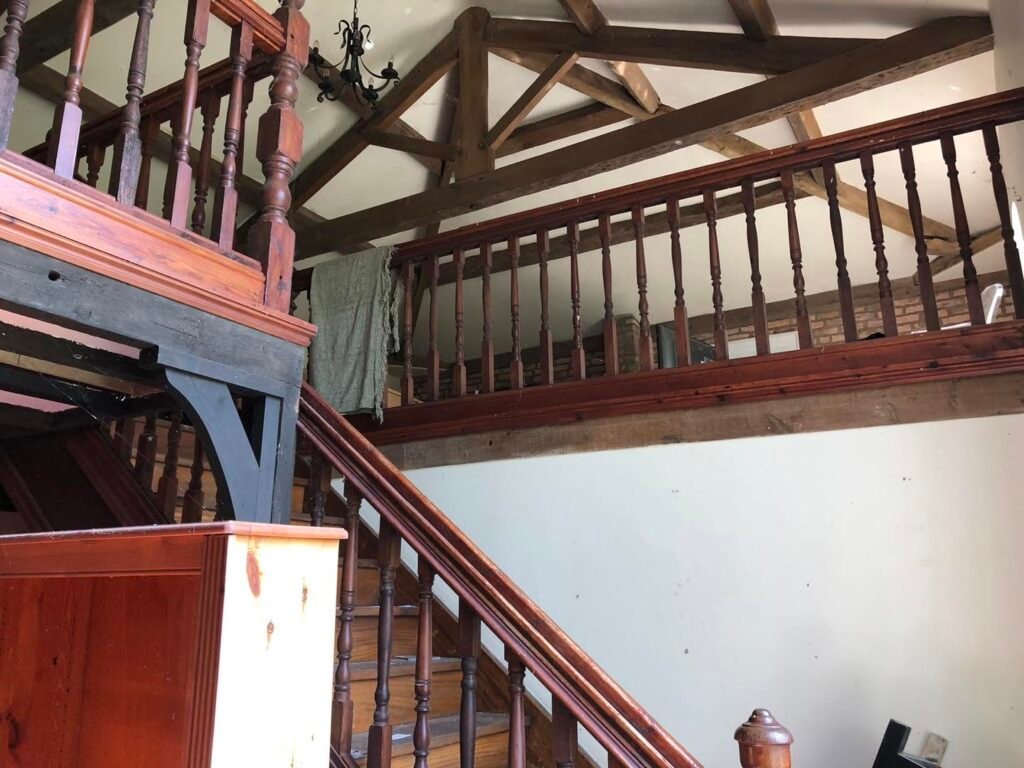
The building gives away its first life in its shape. The front is a plain red-brick gable with two tall arched windows, one above the other, and a stone plaque set into the peak that the photograph cannot quite be read from. The windows are chapel windows, made to let light into a tall single room. Inside, the same tall room is still there: the photographs show exposed roof trusses crossing a high ceiling, a gallery with a wooden balustrade running around the upper level, and a staircase climbing to it. Whoever converted the chapel kept its bones. They put a living room under the trusses, a television against the brick, and sofas where pews would once have stood.
The post says a loving family once lived here. It does not say how many people, or for how long, or when exactly they left. It says the explorer is not sure exactly why the family left the home abandoned, but that he had been told it has a sad story behind it. That is all the post says, and it is repeated here as the post’s account, not as a verified fact. There is no name, no event, and no detail to check, and none is added here.
What the post does say, plainly, is what the explorer hoped would happen next. He hoped the family or friends could try to save the home and collect the items left inside, because some of what was found there looked very valuable and would have meant something to the family. That hope is the emotional centre of the post, and it is worth taking seriously: the photographs show a house full of things that were chosen, kept, and arranged, not a house that had been stripped.
What the five photographs show
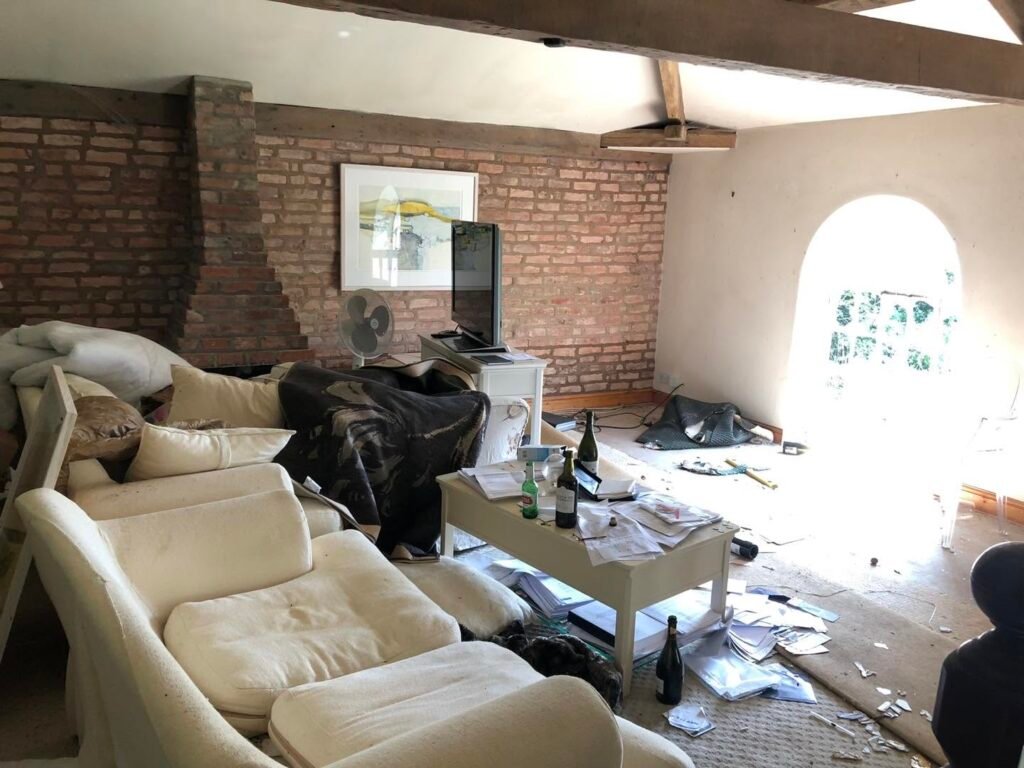
The second photograph is the living room, and it is the most lived-in of the five. Two cream sofas face each other across a low white coffee table covered in bottles, papers and a wine glass. A flat-screen television stands on a white cabinet against the exposed brick wall, with a standing fan beside it. A framed print hangs on the brick — a pale landscape with a yellow shape in it. The arched chapel window fills the far wall with light. Papers are scattered across the floor, a dark throw is draped over one sofa, and a black bag lies open on the floor by the window. It is untidy, but it is the untidiness of a room that was being used, not a room that was being emptied.
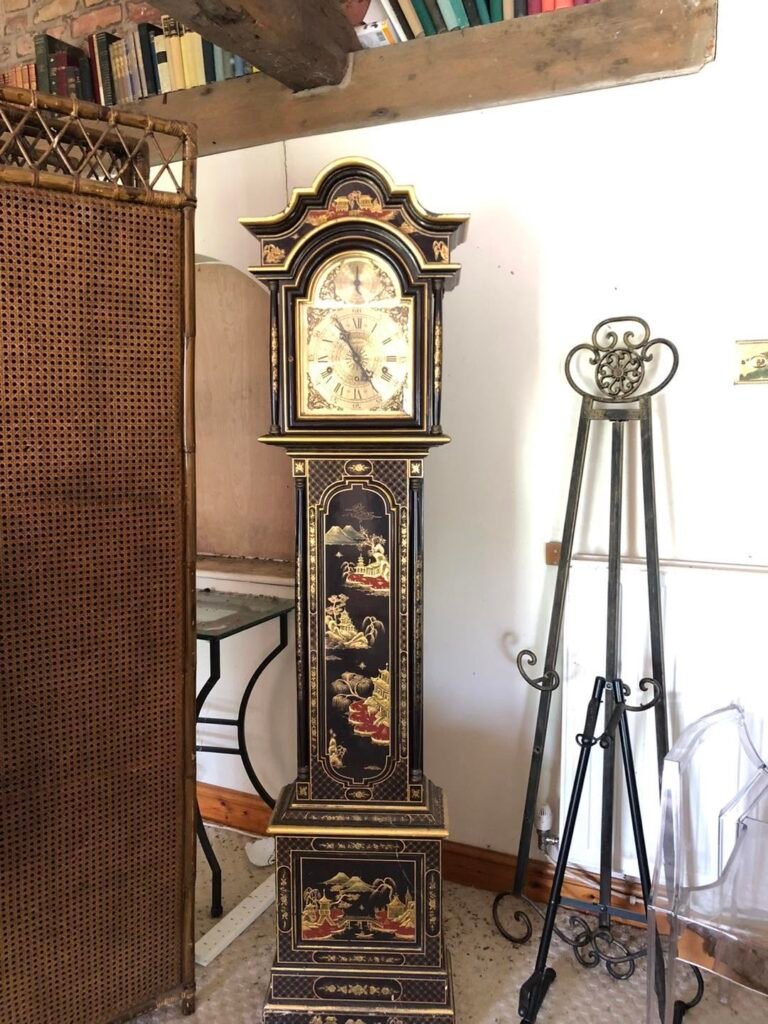
The third photograph is the single most valuable-looking thing in the house. A tall black-and-gold long-case clock stands against a white wall, its case painted with Chinese-style scenes in gold and red: pagodas, mountains, figures on a bridge. The dial is gilt, the hood is arched, and the whole piece is in strikingly good condition. Beside it stands a cane screen and a wrought-iron easel, and above it a shelf of books. A clock like this is not furniture you forget. It is the kind of object the post means when it says some of the items left behind would have meant something to the family.
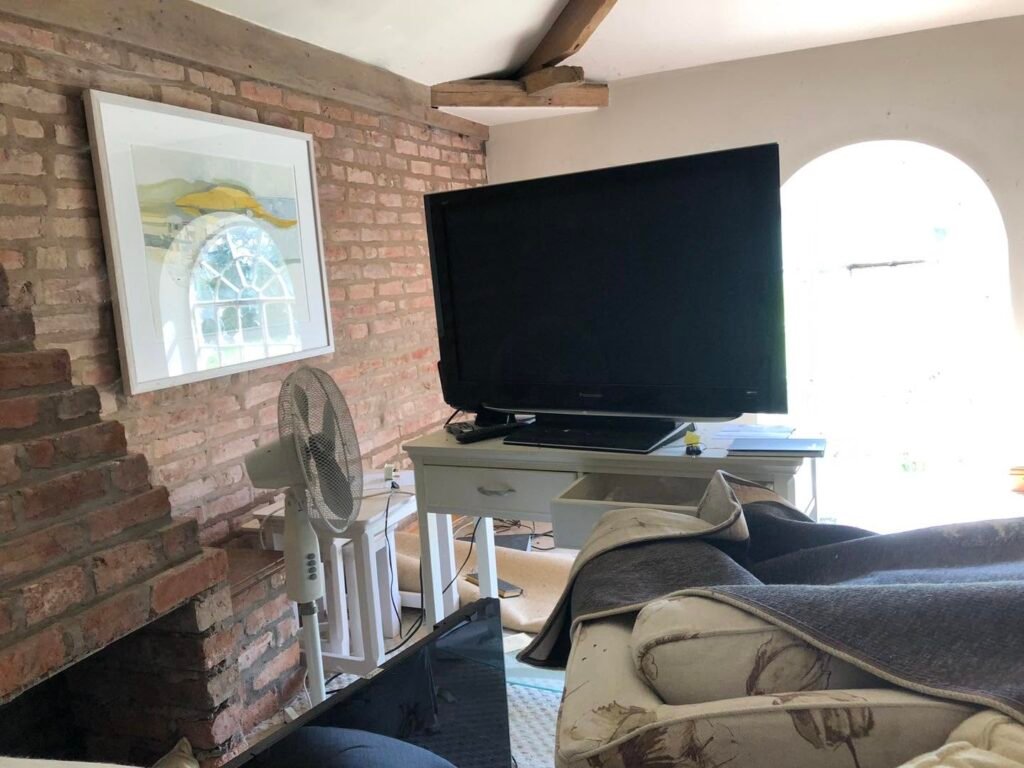
The fourth photograph is a closer view of the same living room from the other side: the television again, this time on a white desk with its drawer hanging open, the framed print on the brick wall, the standing fan, and the back of a floral sofa with a grey blanket thrown over it. The brick chimney breast is visible at the left edge, its steps bare. Nothing here looks broken. The room looks paused.
The fifth photograph looks up the wooden staircase to the gallery. The balustrade is dark polished wood with turned spindles, and above it the roof trusses cross in a pattern of heavy beams. A small black chandelier hangs from the apex, and a green cloth is draped over the gallery rail. It is the photograph that most clearly shows the building’s first life: the height, the timber, the open volume of a chapel that was never divided into small rooms.
The notice at the end of the post
The post ends with a notice, set apart from the rest of the text: “This building is no longer abandoned and has been boarded and sealed up.”
That notice changes how the photographs should be read. The house in these five pictures — furnished, lit by its arched windows, full of a family’s things — is a house in a state that has already passed. By the time the post was written, the building had been secured. Whether the family came back for their things, or whether someone else secured the building, the post does not say. The explorer’s hope that the family might save the home and collect what mattered to them sits alongside that notice without an answer.
It also means the short abandonment the post describes — five or six years — may have been the whole story of this house as an abandoned place. Some houses in this series sit empty for decades. This one was empty for a few years, photographed once, and then closed up. The photographs are the record of that brief window.
What is known, and what is not
| What the post says | What the five photos show | What is not known |
|---|---|---|
| A former chapel converted into a house | Arched windows, high ceiling, roof trusses, gallery | When the chapel was built or converted |
| A loving family once lived here | Furnished rooms, sofas, television, books, a clock | Who the family were, or when they left |
| Abandoned for only 5–6 years (as of 2023) | Rooms that look recently lived in, not stripped | The exact year the family left |
| A sad story behind the leaving, per the post | Nothing that explains the leaving | What happened, or to whom |
| Some items looked very valuable | A lacquered long-case clock, books, furniture | Whether the family recovered anything |
| Boarded and sealed up since | A house still standing in the photos | Who sealed it, or what is inside now |
For a contrast with a house that is lived in and on the market, see a lived-in 1902 home in Alexandria, Minnesota, where the questions are about upkeep and price rather than about what a closed house leaves behind. More houses in this condition are gathered in abandoned houses and in abandoned mansions, and the site’s front page is abandoned.blog.
FAQ
Where is the Chapel House?
No location is given in the post, and none is given here.
Was it really a chapel?
According to the post, it was a former chapel converted into a house. The photographs support that: tall arched windows, a high ceiling with exposed roof trusses, and a gallery are chapel features, not ordinary house features.
How long was it abandoned?
The post, dated 15 May 2023, says it was believed to have been abandoned for only between five and six years.
Why did the family leave?
The post says the explorer is not sure exactly why, only that he had been told it has a sad story behind it. No further detail is given.
What was left inside?
According to the post and the photographs: furniture, a television, books, papers, bottles, and a black-and-gold lacquered long-case clock. The post describes some items as very valuable.
Is it still abandoned?
The post carries a notice saying the building is no longer abandoned and has been boarded and sealed up. Nothing more recent is published.
Can I visit it?
No visiting information is given here, and entering private property without permission is not encouraged.
Disclaimer
This article is general information only, not legal, tax, or financial advice. Rules on abandoned and private property differ by state and county; check county/local records and a local professional before acting. The account of the house, the family and the leaving is as reported in the source post and has not been independently verified.
Photos
Photos by Luke2Explore, via the original Facebook post: https://www.facebook.com/Luke2Explore/posts/the-chapel-house-was-a-former-chapel-and-then-has-been-converted-into-a-house-wh/625612029604489/ — 5 of the 29 photos are shown here.