Introduction: When the Prairie Swallows a Dream
There is a particular kind of silence that only exists in the middle of Kansas.
Not the silence of a quiet room. Not the silence after a conversation ends. This is a deeper quiet — the kind that settles into your chest like dust. The kind that makes a 5,726-square-foot house feel even emptier than it already is.
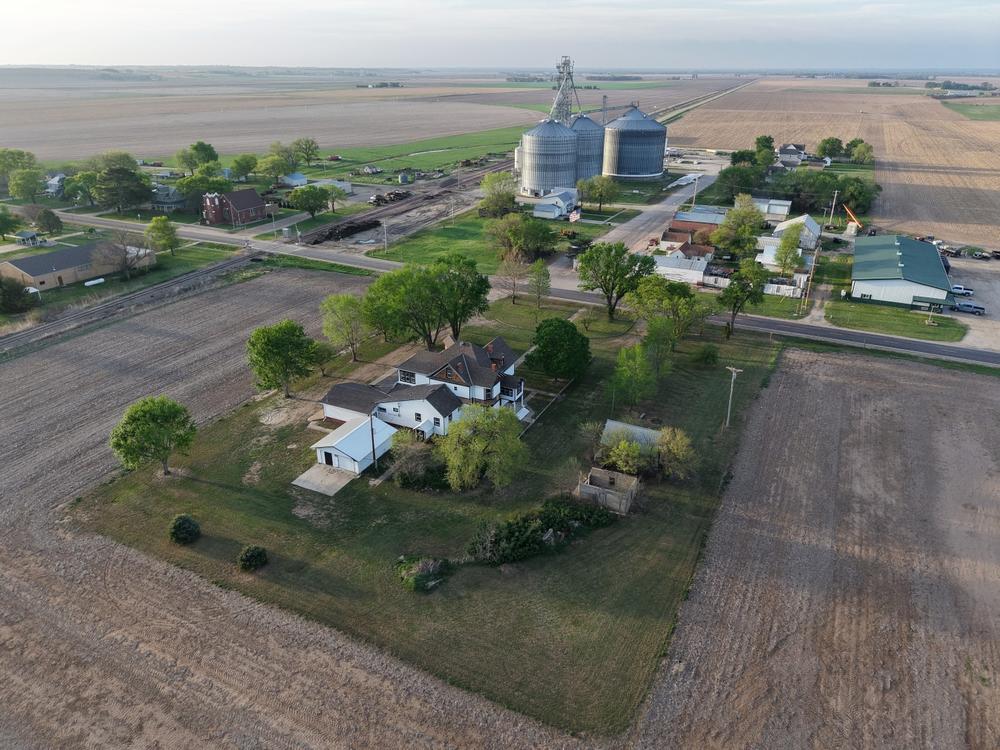
That’s exactly what you feel standing near this abandoned estate along Highway K-148, just outside the tiny community of Norway, Kansas.
Six bedrooms. Four full bathrooms. A half bath. Nearly one and a half acres of land. This place was built for a big family. A family with plans. And somewhere along the way, those plans dissolved — leaving behind peeling wallpaper, sagging ceilings, and a lot of unanswered questions.
It’s been listed for $397,000. It sits about 15 minutes from both Concordia and Belleville. And yet, to most people driving along K-148, it’s just another old house fading into the Kansas sky.
But there’s so much more to it than that.
What Makes This Kansas Estate So Unusual
The Numbers Don’t Lie
Let’s start with the basics. A property this size in rural north-central Kansas is genuinely rare.
- 6 bedrooms, 4 full bathrooms, 1 half bath
- 5,726 square feet of living space
- 1.4 acres of surrounding land
- Listed at $397,000
- Located just outside Norway, KS, near the intersection of Highway K-148
That square footage is striking. Most farmhouses in this region top out around 1,500 to 2,000 square feet. This was something else. This was a statement.
Whether that statement was wealth, ambition, or just a very large family — we may never know for certain.
The Location Tells a Story Too
Norway, Kansas isn’t really a town anymore. Not in any traditional sense.
It sits in Mitchell County, part of north-central Kansas where the land flattens out and the sky seems to stretch forever. The nearest community with any real size is Scandia, Kansas — population approximately 350 — and even that’s more of a dot on the map than a proper town.
Concordia (the Republic County seat) and Belleville are both roughly 15 minutes away. Close enough for groceries and doctor’s appointments. Far enough that whoever lived here truly chose the isolation.
That choice — that deliberate distance from the world — is part of what makes this property feel so haunting now.
A Brief History of the Norway, Kansas Region
Settlement and the Prairie Dream
North-central Kansas was settled heavily during the 1870s and 1880s. Waves of European immigrants — many of them Swedish, German, and Czech — staked claims across the rolling plains, dreaming of fertile fields and permanent roots.
The Homestead Act of 1862 had opened much of this land to settlers willing to live on it for five years and improve it. Families built not just homes but entire communities — churches, schools, general stores, and creameries. Norway was one of these communities. Small, self-sufficient, and proud.
By the early 20th century, many of these rural settlements were thriving. And a home of this size — nearly 5,800 square feet — would have been a symbol of that prosperity. It would have stood out. Neighbors would have talked about it.
The Slow Goodbye
Then came the 20th century’s brutal series of body blows to rural America.
The Dust Bowl of the 1930s. The mechanization of farming. The Great Depression. Each wave pulled people away from the land, away from small towns like Norway, toward cities and opportunities elsewhere.
A property like this one doesn’t fall into disrepair overnight. It happens slowly. One season the roof leaks and nobody fixes it. Then a window breaks. Then a door stops latching. Then the house just… waits.
For decades, sometimes.
If you’re drawn to stories like this, the forgotten estate features we’ve covered from across the Midwest follow eerily similar arcs — ambition, prosperity, then silence.
Walking Through the Abandoned Estate: What You Might Find
The Outside First
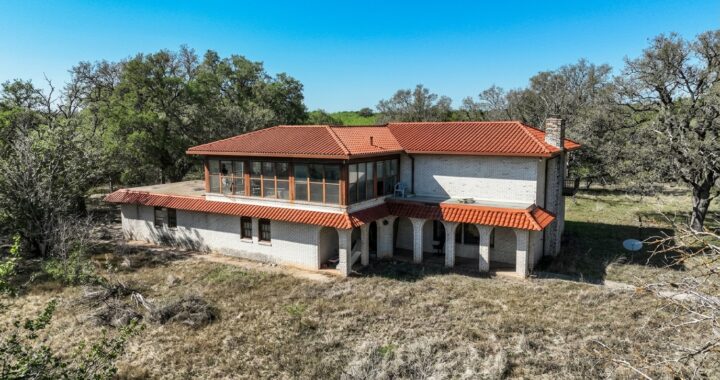
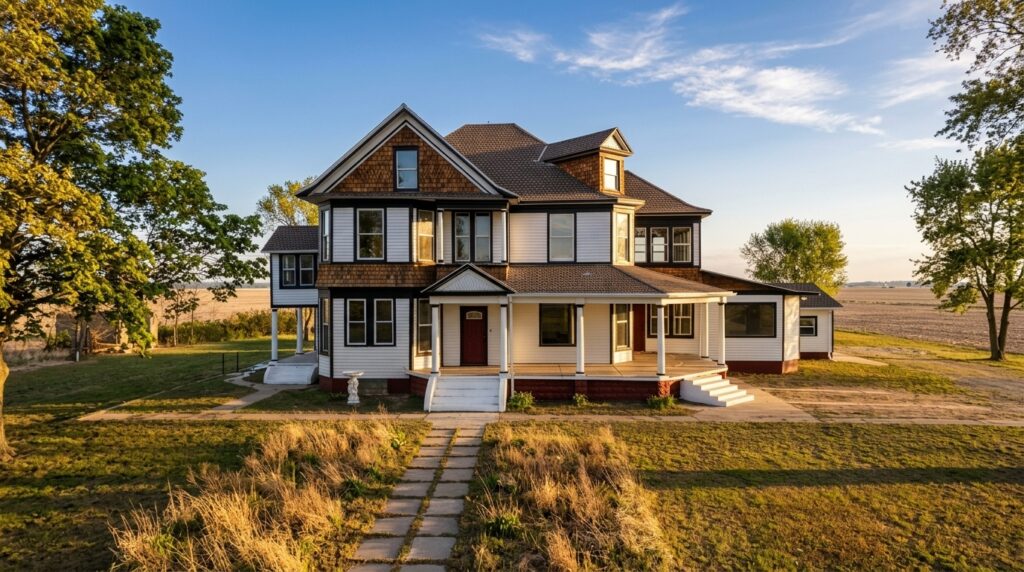
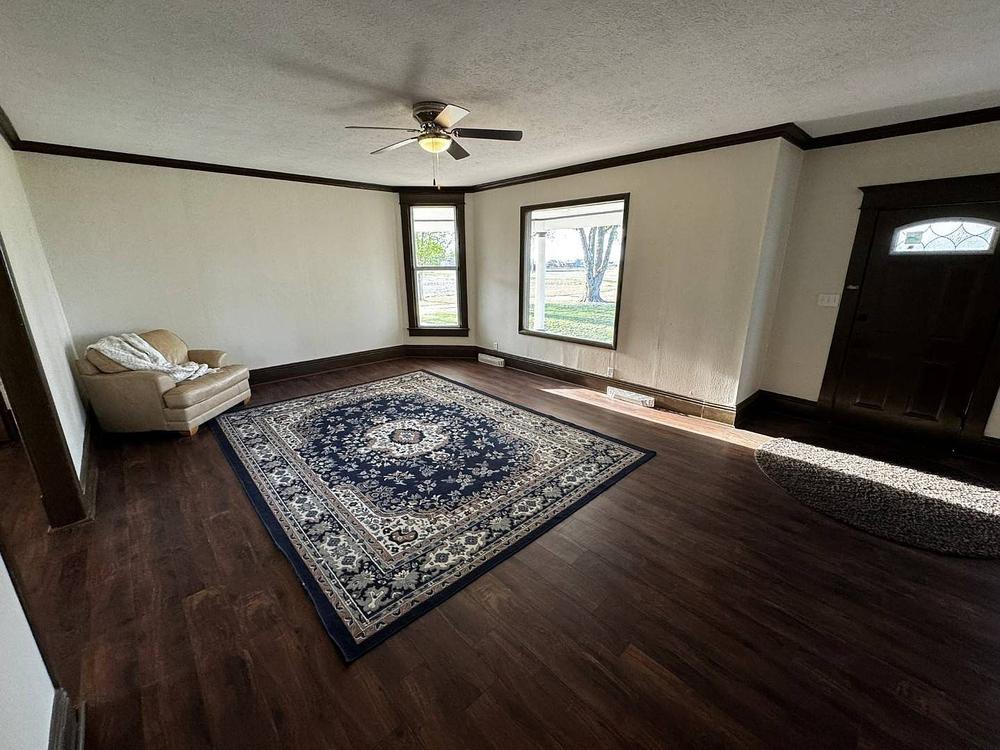
From the road, the property announces itself with that particular dishevelment that old houses wear. The 1.4 acres around it have likely gone to tall grass and creeping vegetation. Trees that were once planted deliberately — maybe a windbreak along the north edge — have grown wild and unkempt.
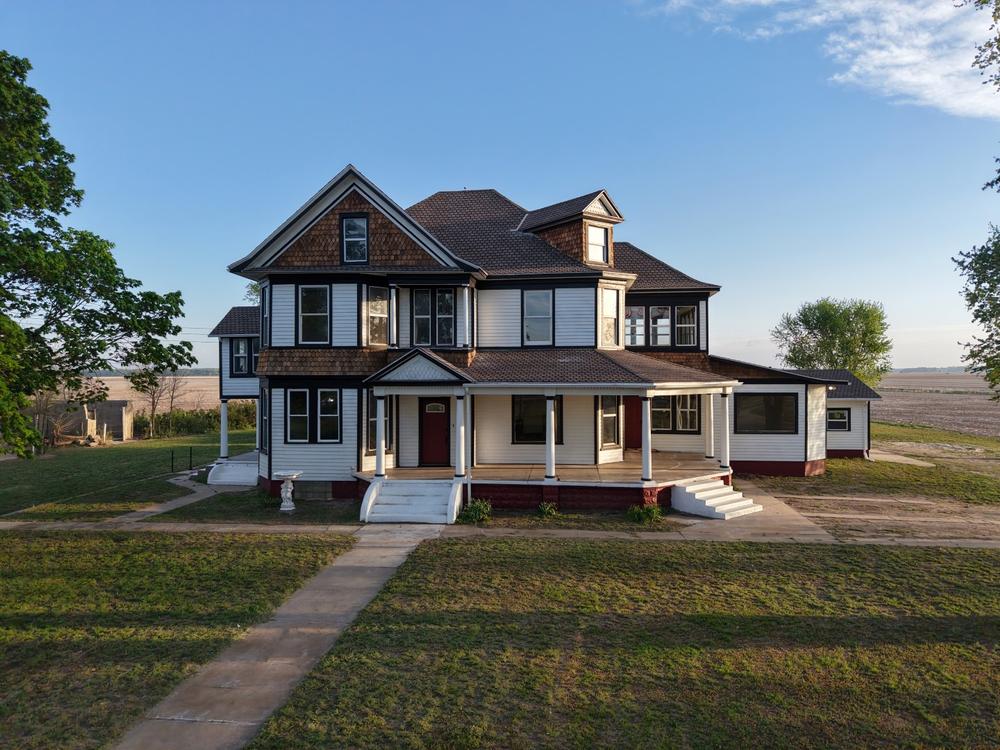
The exterior of a house this size would have taken real craftsmanship to build. Wide eaves. Substantial windows. A porch, almost certainly. These features were standard for homes built during the late 19th and early 20th centuries in this part of Kansas.
By now, the paint has long since given up. Wood shows through in patches, silvered and split by decades of Kansas sun and wind. The gutters sag. The yard doesn’t know what it is anymore.
The Interior: Six Rooms of Memory
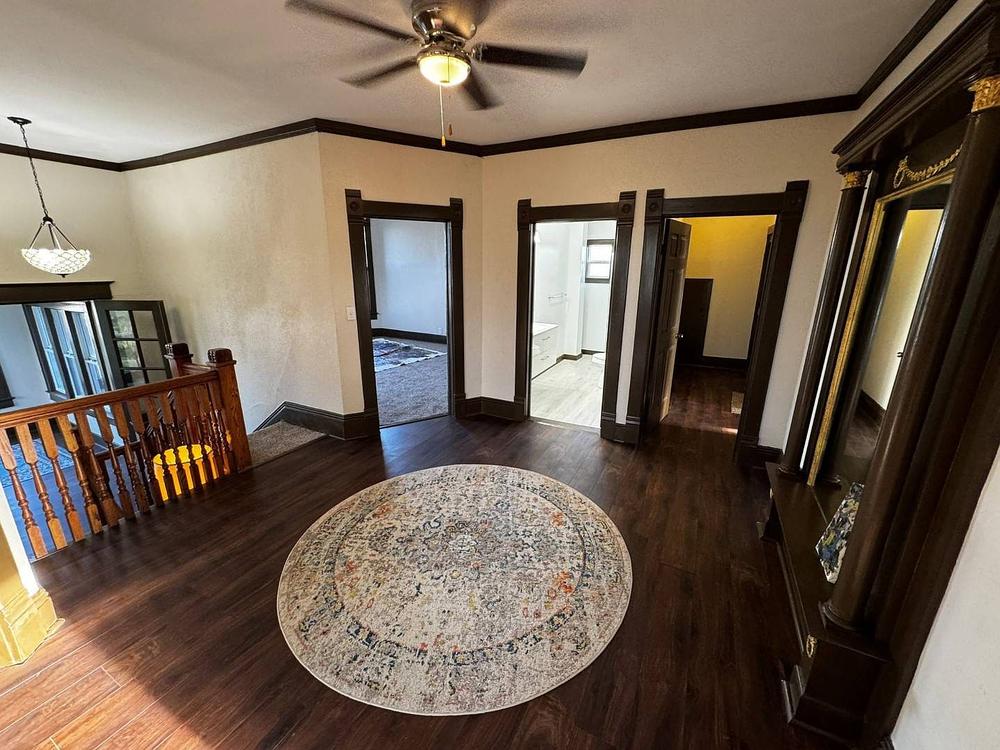
Step inside a house like this and the first thing that hits you isn’t the decay.
It’s the smell.
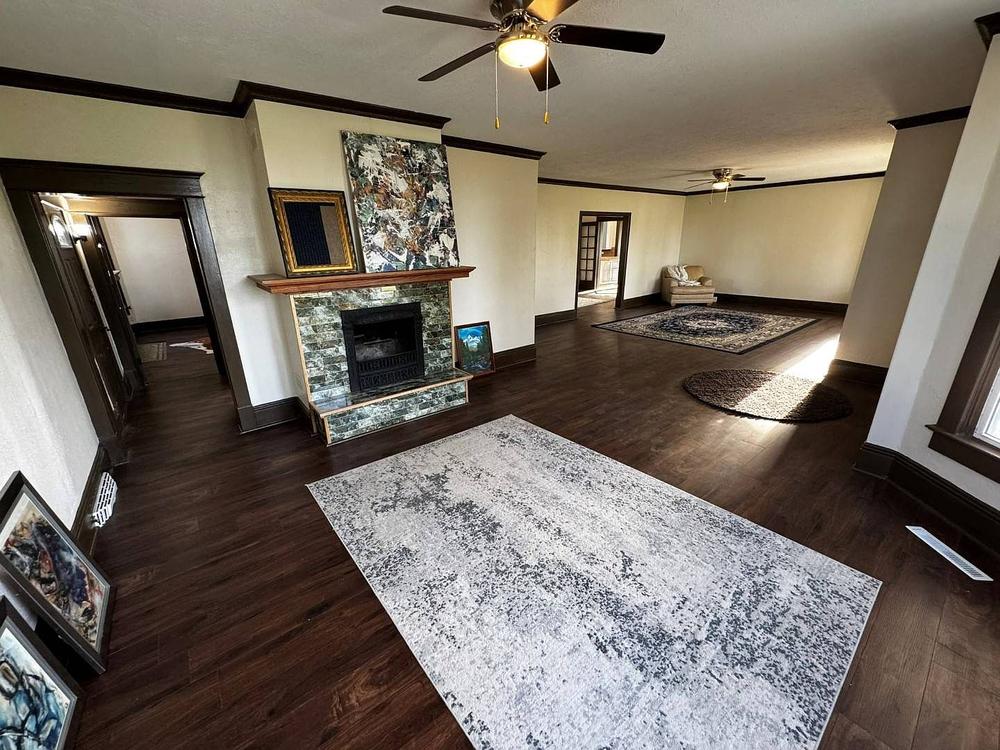
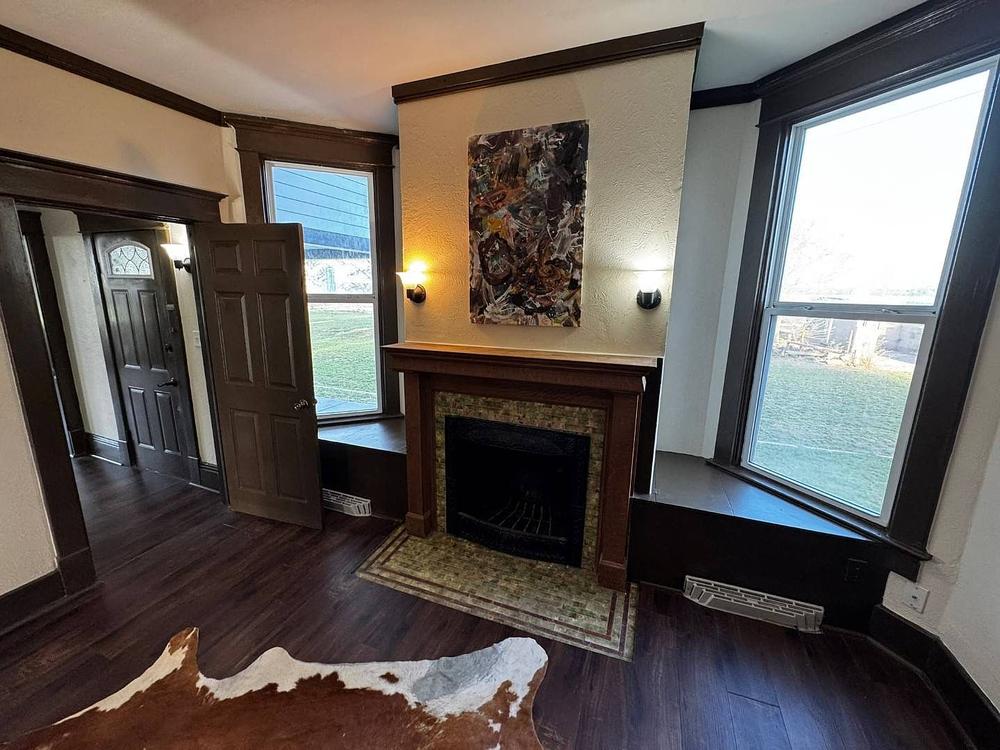
Old plaster. Damp wood. Something faintly floral — remnants of wallpaper paste, maybe, or a perfume that soaked into the walls sixty years ago and never fully left. The air is thick with it.
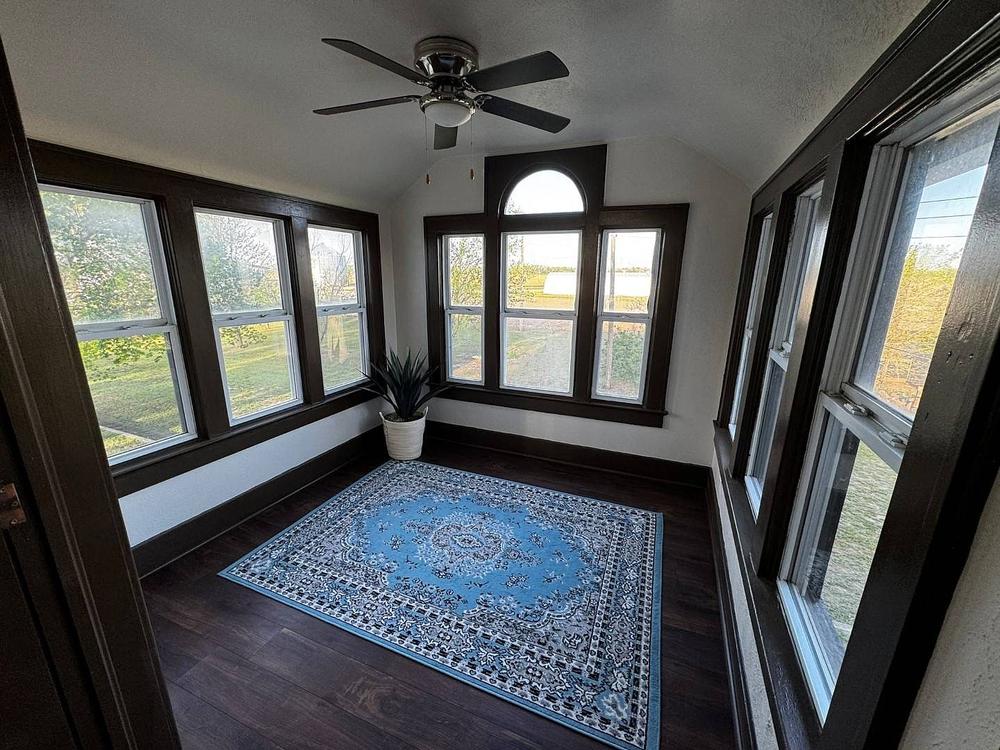
Six bedrooms means six separate stories. Who slept in the small one at the back? A child? A hired hand? Who had the large corner room with the windows facing east, waking every morning to the sunrise over flat Kansas fields?
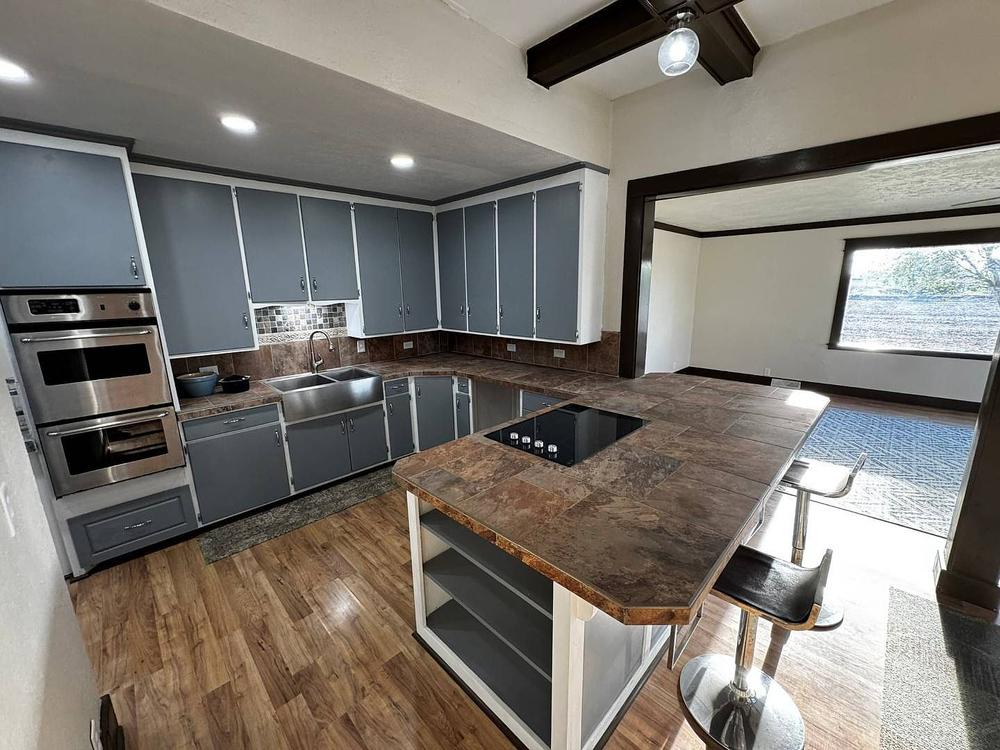
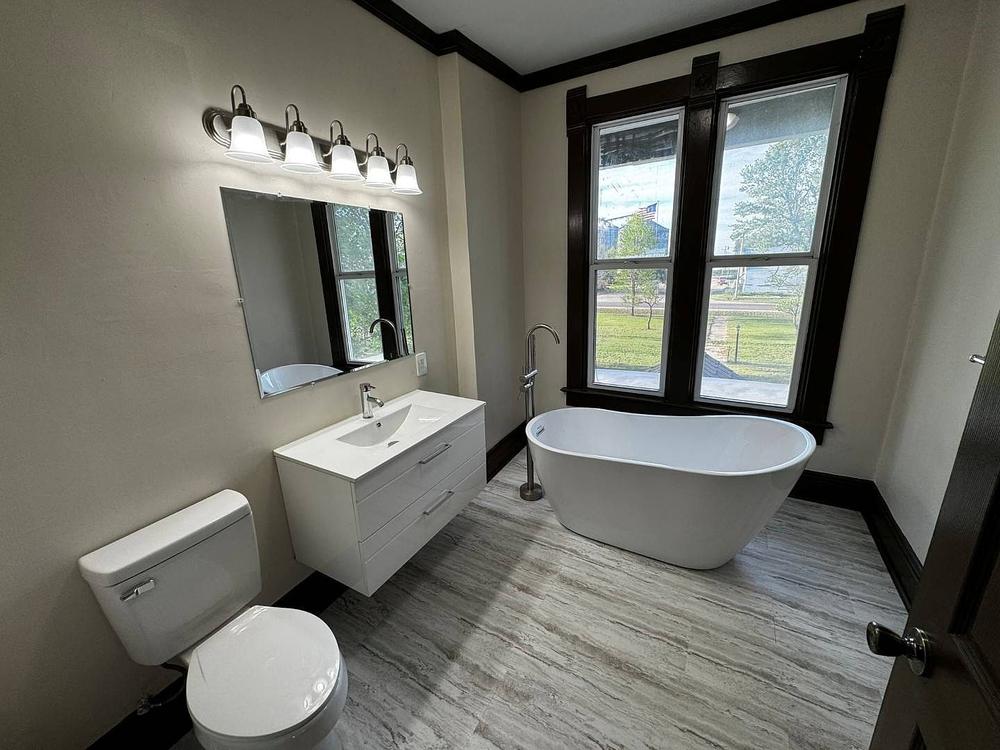
The four full bathrooms suggest multiple generations under one roof. Or perhaps this was intended as something more than a family home — a boarding house, maybe, or a farmstead large enough to house multiple families during the labor-intensive harvest seasons.
What the Half-Bath Tells Us
Here’s a small but interesting detail: the half bath.
In older homes, a half bath — toilet and sink only, no tub or shower — was almost always placed near the back door or service entrance. It was practical. Farm workers could clean up before coming inside without tracking through the main house.
That single architectural choice tells you something about how this household worked. There was a formality here. A distinction between inside and outside, between family and labor.
The house had rules, once.
The Mystery That Remains
Who Built It? Who Left?
The listing doesn’t tell us much. Rural Kansas property records can be difficult to trace — especially for communities as small as Norway, where local historical societies are often the only keepers of such information.
What we do know: a house this size wasn’t built casually. It required capital. It required vision. It required someone who believed deeply that this particular stretch of north-central Kansas was where their future lived.
And then, at some point, they left. Or they died. Or their children moved away and didn’t come back.
This is the story of hundreds of properties across the abandoned landscapes of the American heartland — homes built with everything a family had, left behind when the dream couldn’t survive the realities of rural economics.
$397,000 and a Second Chance
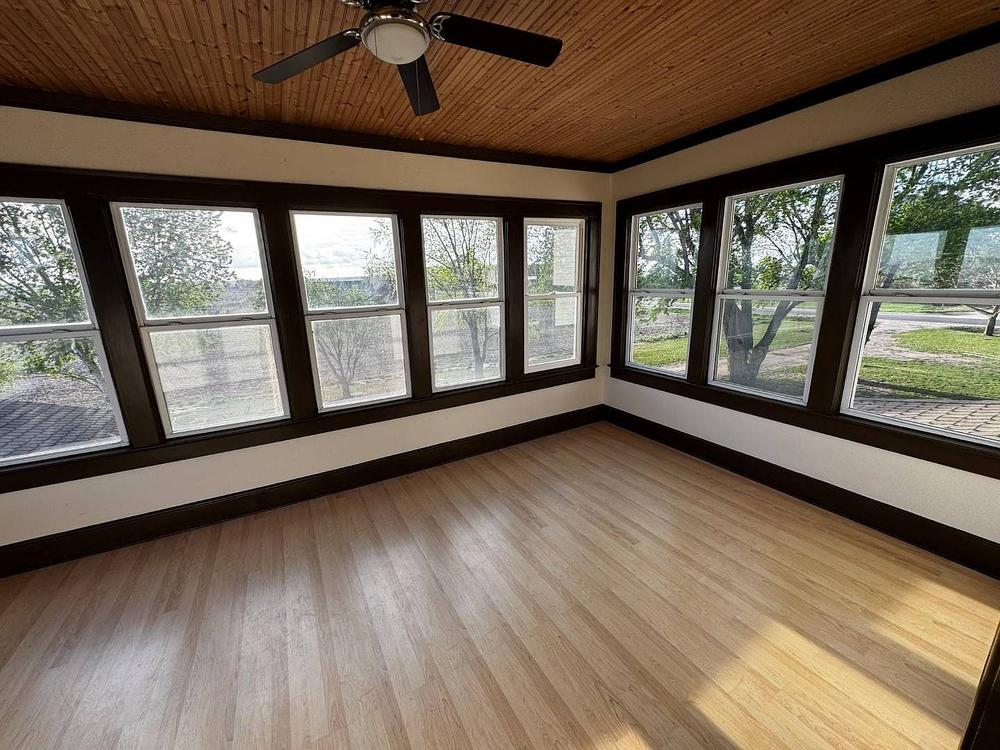
There’s something genuinely moving about the fact that this property has a price tag.
Someone believes it can be saved. Someone thinks that 5,726 square feet of history is worth restoring rather than demolishing. Fifteen minutes from two different towns, sitting on 1.4 acres along a state highway — this isn’t a hopeless case.
It’s a project. A big one.
But the bones are there. In Kansas, when the bones are there, houses can come back.
5 Reasons Abandoned Estates Like This One Matter
- They are irreplaceable historical artifacts. Once a structure this old is gone, it’s gone. The architecture, the materials, the craftsmanship — none of it can be perfectly reproduced.
- They hold community memory. Families grew up here. Meals were cooked, arguments were had, babies were born. A building absorbs all of that in ways we don’t fully understand.
- They tell us who we were. The size of this house, its location, its features — these are clues about early Kansas society, about what prosperity looked like, about how people organized their lives on the frontier.
- They deserve documentation before they disappear. Even if this particular estate is never restored, its story should be told. Its photographs should be taken. Its history should be preserved.
- They inspire people. Ask anyone who’s ever stood inside a genuinely old abandoned building. There’s something that happens. A kind of reckoning with time and impermanence. It changes how you see things.
Exploring Responsibly: An Important Note
This property is privately listed. It has an owner, a price, and presumably people watching over it.
Urban exploration is most meaningful — and most ethical — when it’s done with permission, or through legitimate channels like purchasing, heritage programs, or coordinated historical documentation projects.
If a structure draws you in, the right move is always to research the ownership, reach out, and ask. More often than you’d expect, owners are grateful that someone cares enough to ask.
Never trespass. Never damage. Never take.
The goal is always preservation — of the building, of the story, and of the trust that allows explorers access to places like this at all.
What North-Central Kansas Looks Like Today
Scandia, the nearest community, sits at around 350 residents. That number has been falling for decades.
Republic County, where Belleville serves as the county seat, has watched its population decline steadily since the mid-20th century. These aren’t just statistics — they’re the context for every abandoned building in the region. Every empty farmhouse represents a family that left. Every overgrown field represents a farm that consolidated or collapsed.
This is not a story unique to Kansas. It plays out across Nebraska, Iowa, the Dakotas, and deep into rural Missouri. But there’s something about Kansas — the flatness, the exposure, the relentless sky — that makes it feel more stark here.
The abandoned forgotten estate along K-148 is, in this sense, a monument to an entire era of American rural life.
One worth remembering.
Conclusion: The Abandoned Estate That Still Has a Story to Tell
Six bedrooms. Four and a half bathrooms. Nearly 5,800 square feet of hand-built history sitting on 1.4 acres of north-central Kansas prairie.
This abandoned estate near Norway, Kansas isn’t just a real estate listing. It’s a chapter in a much longer story — about settlement, ambition, community, and the slow retreat of rural America from the places it once called home.
Whether it gets restored or continues to fade, it deserves to be seen. To be documented. To be understood.
The stories carried in old walls don’t last forever. But they last longer when someone takes the time to listen.
If this kind of slow American history speaks to you, explore more forgotten places across the heartland and see what the silence has to say.
Frequently Asked Questions
Where is the abandoned estate near Norway, KS located?
The property sits along Highway K-148, just outside of Norway in north-central Kansas. It’s approximately 15 minutes from both Concordia and Belleville.
How big is the abandoned estate in Norway, Kansas?
The property is 5,726 square feet with 6 bedrooms, 4 full bathrooms, and 1 half bath, situated on 1.4 acres of land.
Is the Norway, Kansas property available for purchase?
Yes — the property has been listed at $397,000. Contact a licensed Kansas real estate agent for current availability and details.
Can I visit or explore the property?
The property is privately owned. Always seek permission before visiting any private property. Trespassing is illegal and disrespectful to property owners and the history of these places.
What county is Norway, Kansas in?
Norway, KS is in the north-central Kansas region near the Republic/Mitchell County line, with Scandia (Republic County) and Concordia (Cloud County) being the nearest larger communities.
Why are there so many abandoned homes in rural Kansas?
Rural Kansas has faced decades of population decline driven by farm consolidation, mechanization, economic shifts, and younger generations relocating to urban centers. Many homes built during the homestead era were eventually left behind as families moved on.
Content is for informational and historical purposes only. Always respect private property and local laws when visiting or researching historic sites.