There’s something electric about stepping into a house that time hasn’t quite caught up with yet.
Not abandoned. Not demolished. Just… waiting.
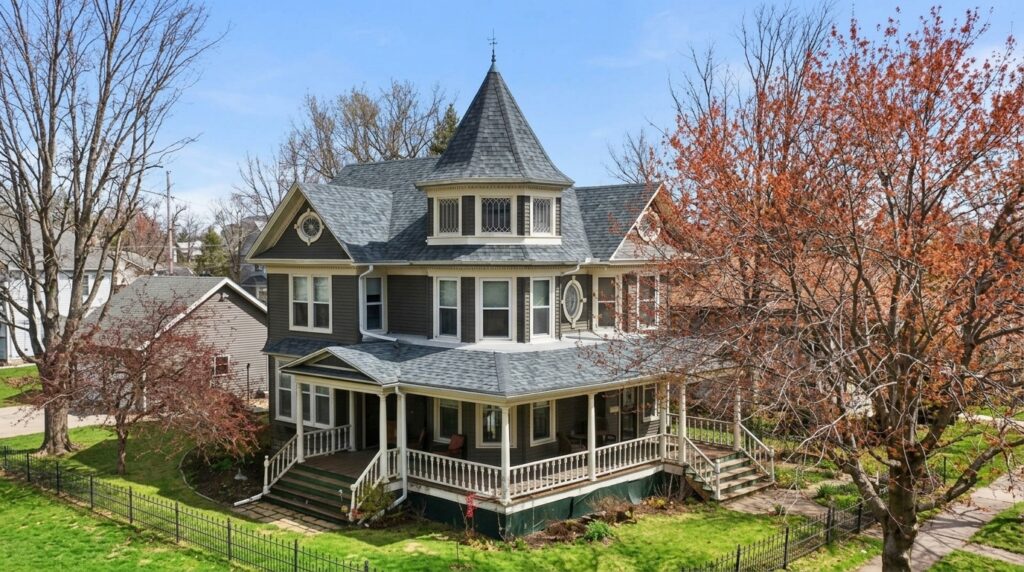
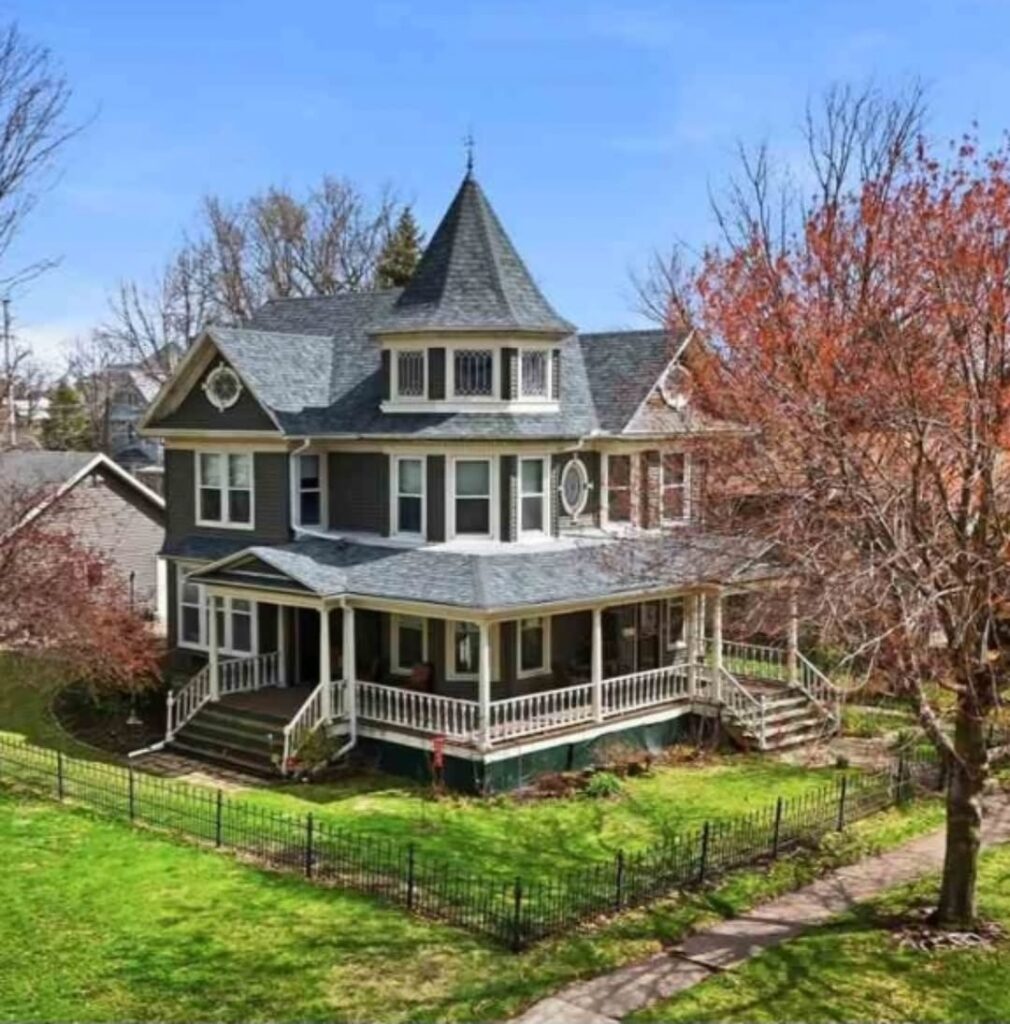
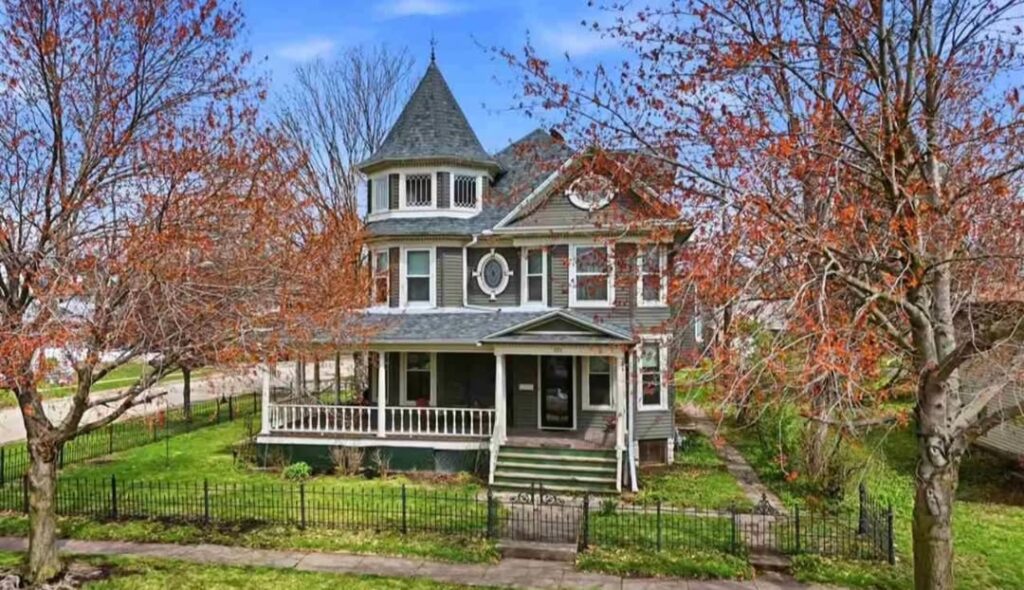
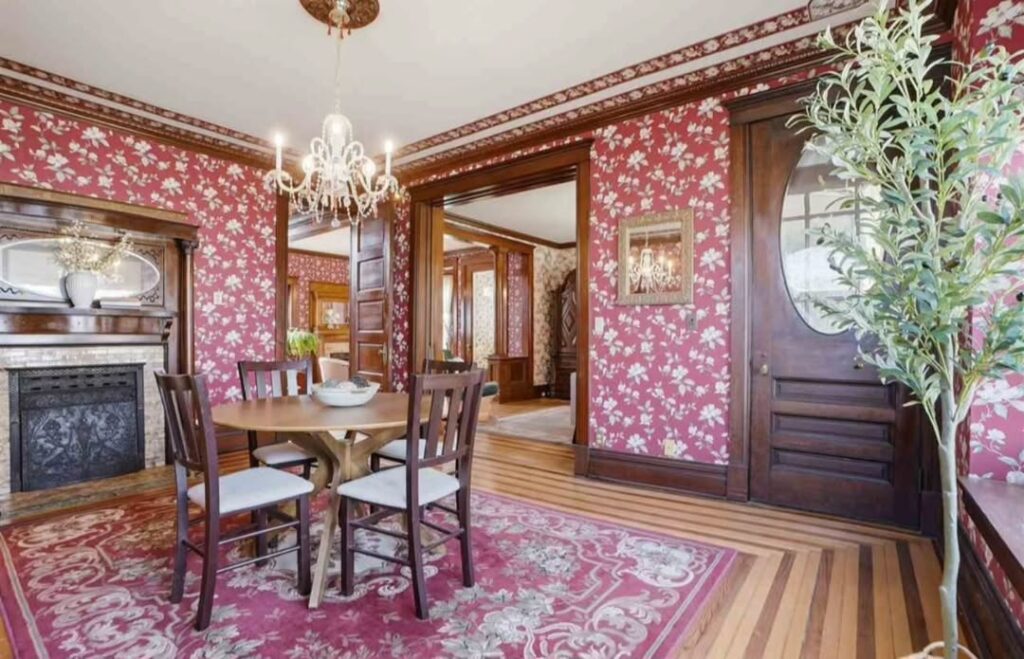
The forgotten 1902 historic home at 320 W Jefferson Street, Washington is exactly that kind of place. It doesn’t scream for attention. It simply stands there, quietly holding more than a century of stories behind its walls — original woodwork intact, vintage floors still creaking with memory, and wallpaper that might just remind you of a certain holiday movie.
At 2,215 square feet, four bedrooms, and two bathrooms, this is not a ruin. It’s a resurrection waiting to happen. And at $319,900, it’s one of those rare finds that makes you stop scrolling.
Let’s walk through it together.
What Makes a 1902 Home So Special?
The Era That Built to Last
Houses built in the early 1900s weren’t constructed for convenience. They were built for permanence.
The American Craftsman and Victorian-era building traditions that dominated residential architecture around 1902 emphasized quality materials, hand-fitted joinery, and attention to detail that most modern construction simply can’t replicate. Thick old-growth timber. Solid plaster walls. Flooring milled from wood that grew for decades before it ever became a plank.
That’s why, when you find a house from this period with its original features intact, it feels like discovering buried treasure.
At 320 W Jefferson, those features survived. Somehow, the decades were kind enough to leave the bones alone.
A House That Wasn’t Gutted
This is the detail that sets this property apart from countless others.
So many historic homes get “updated” — and in the process, lose everything that made them worth updating in the first place. Popcorn ceilings over carved trim. Laminate floors on top of century-old hardwood. Drywall covering original plaster.
Not here.
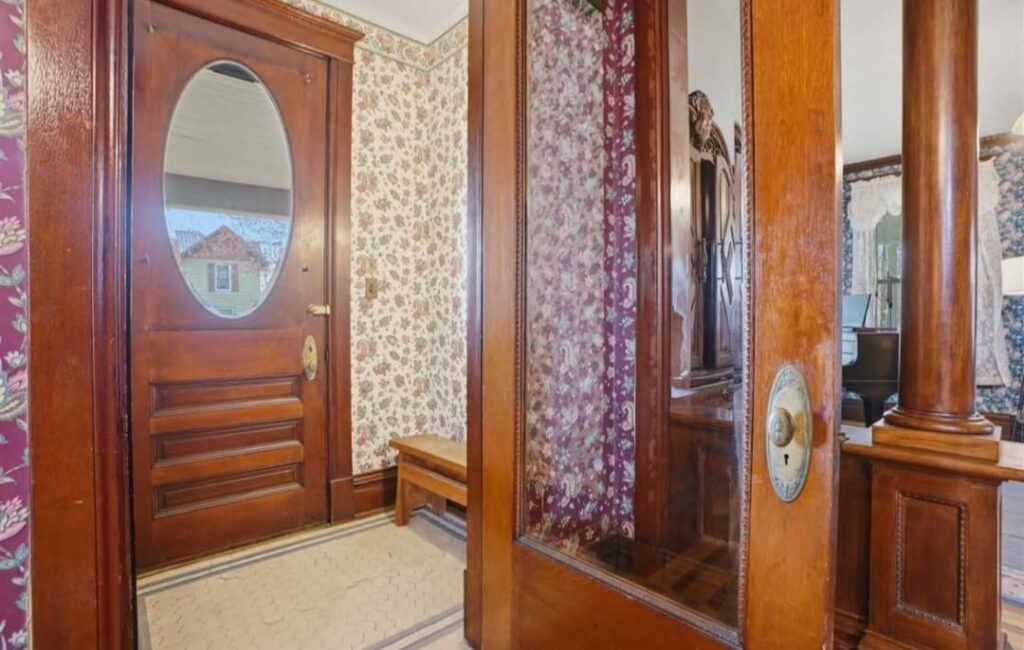
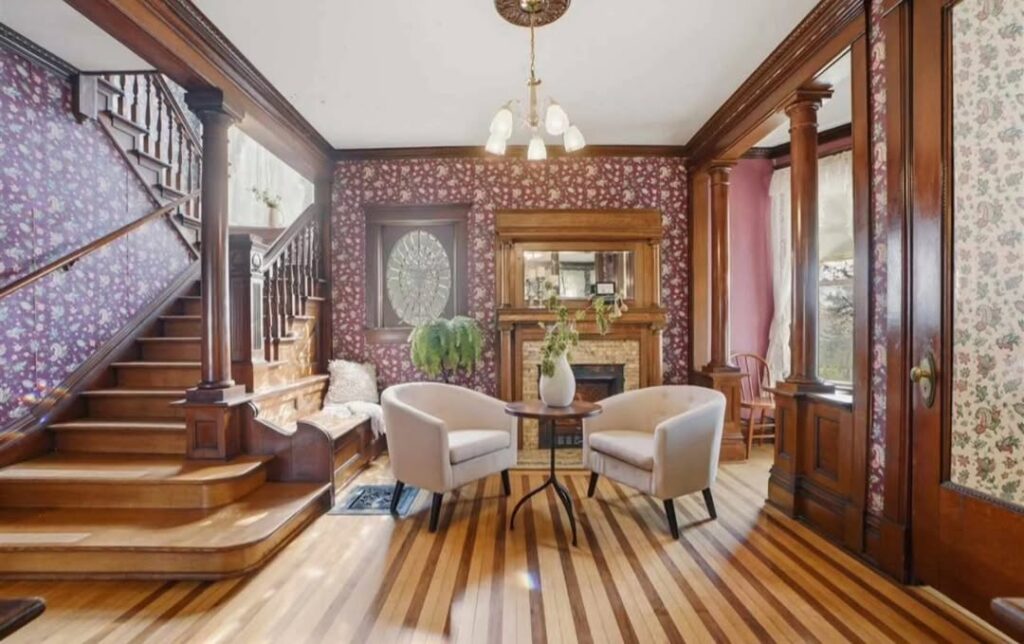
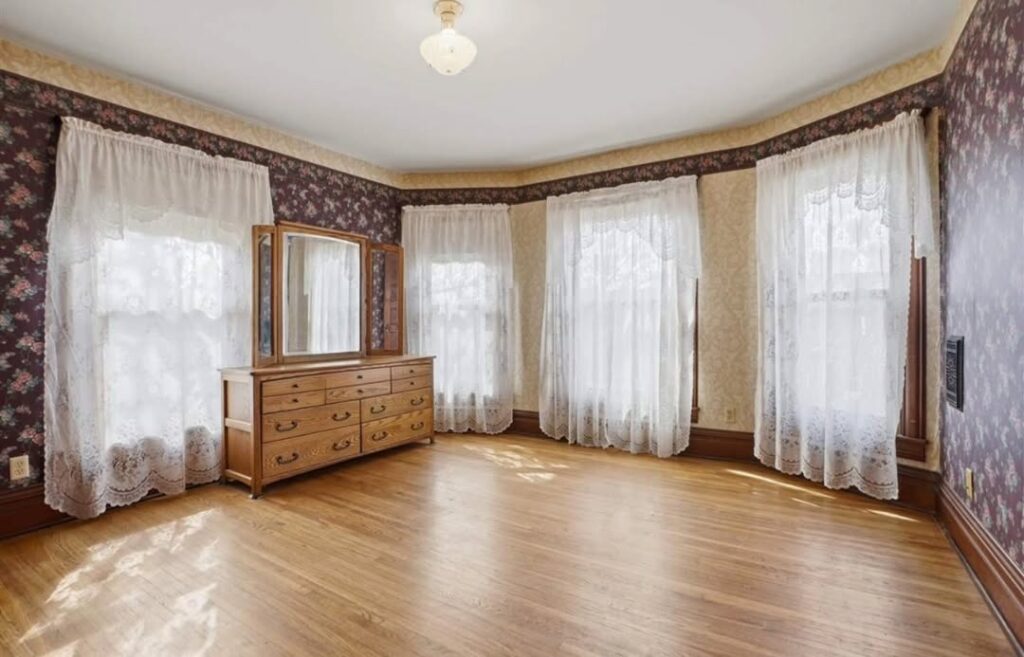
The woodwork at 320 W Jefferson is, by all appearances, original. That means baseboards, door casings, stair banisters, and built-in details that carpenters cut and fitted by hand more than 120 years ago. You simply cannot replicate that at scale today. The character is baked in.
Walking Through the Rooms: What You’ll Actually Find
Original Floors That Tell a Story
Let’s start at the ground level — literally.
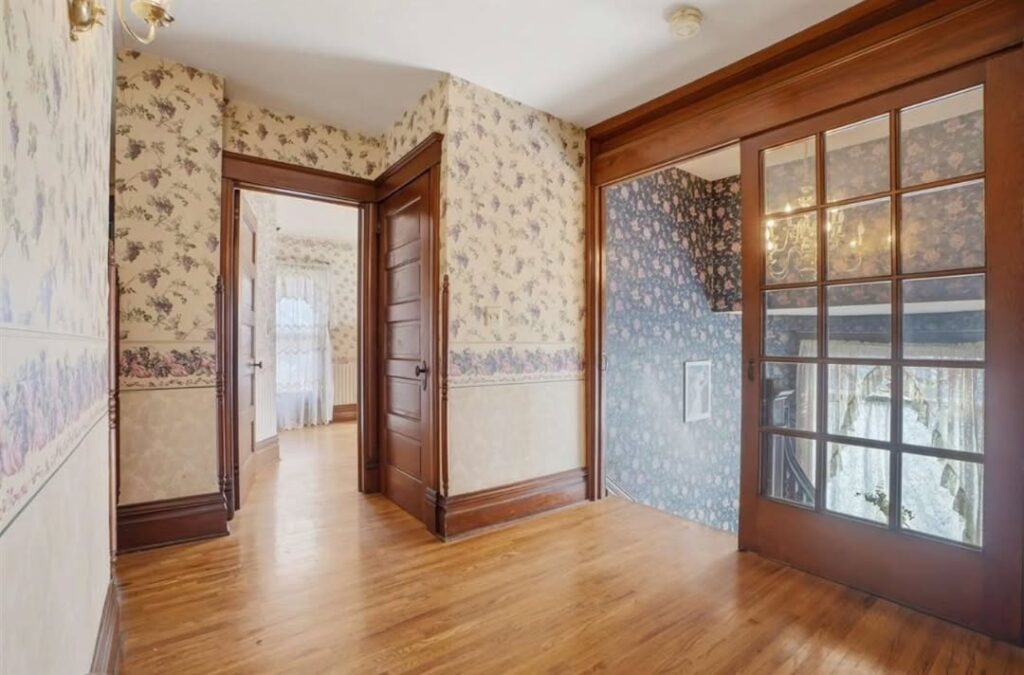
The floors in this house are one of its most compelling features. Original hardwood from a home built in 1902 has a patina that no engineered product, no matter how “distressed,” can fake. There are knots and grain patterns. There are places where generations of footsteps have worn the finish down to something raw and honest.
Walk across them and you feel the weight of everyone who walked before you.
This is the kind of floor that restoration specialists dream about. With the right refinishing — careful sanding, a natural oil or wax finish — floors like these can look extraordinary without losing their soul.
The Woodwork: Hand-Fitted and Still Standing
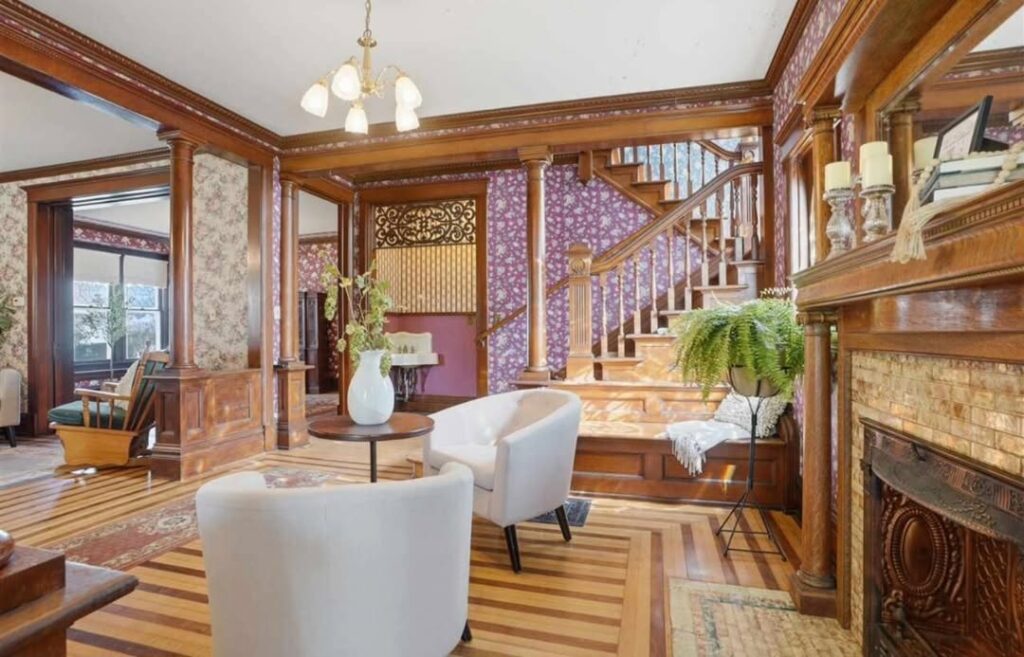
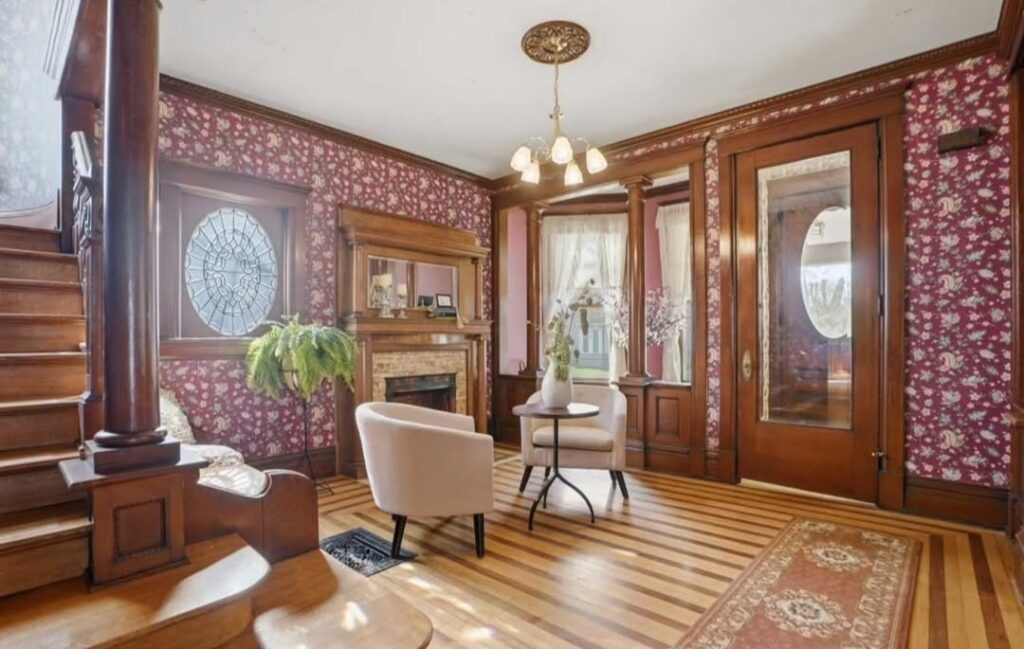
Every room in a house like this tells you something about the craftsman who built it.
Look at the door frames. The window casings. The way the baseboards meet the floors without gaps. In 1902, a finish carpenter took pride in that work because it would be seen. Examined. Judged by neighbors and family members who knew what good work looked like.
That craftsmanship still shows.
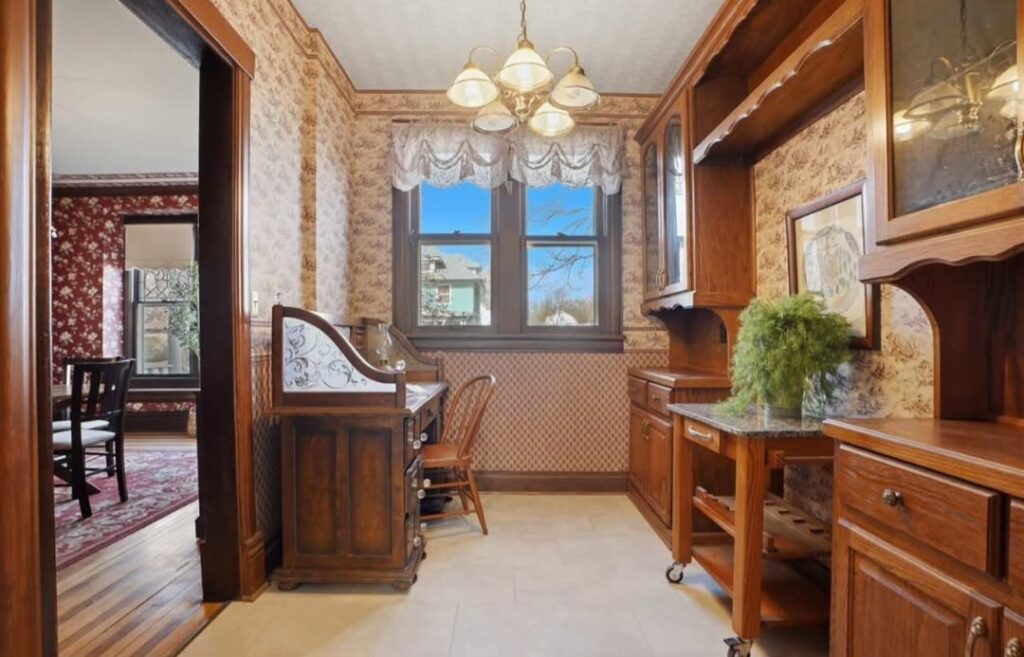
The built-ins — if the listing photos are any indication — are original as well. Shelving, storage nooks, and cabinet details that were designed as part of the house’s architecture, not bolted on afterward. They have the kind of settled, heavy presence that only comes from age and quality wood.
If you love that kind of detail, 320 W Jefferson is speaking directly to you.
The Wallpaper: A Bit of Home Alone Charm
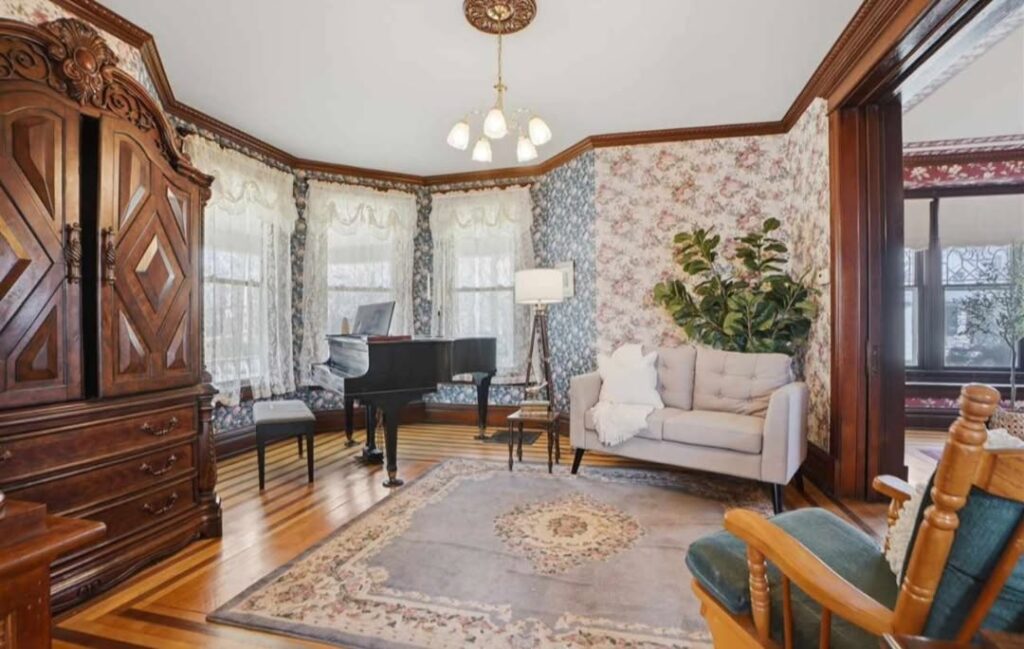
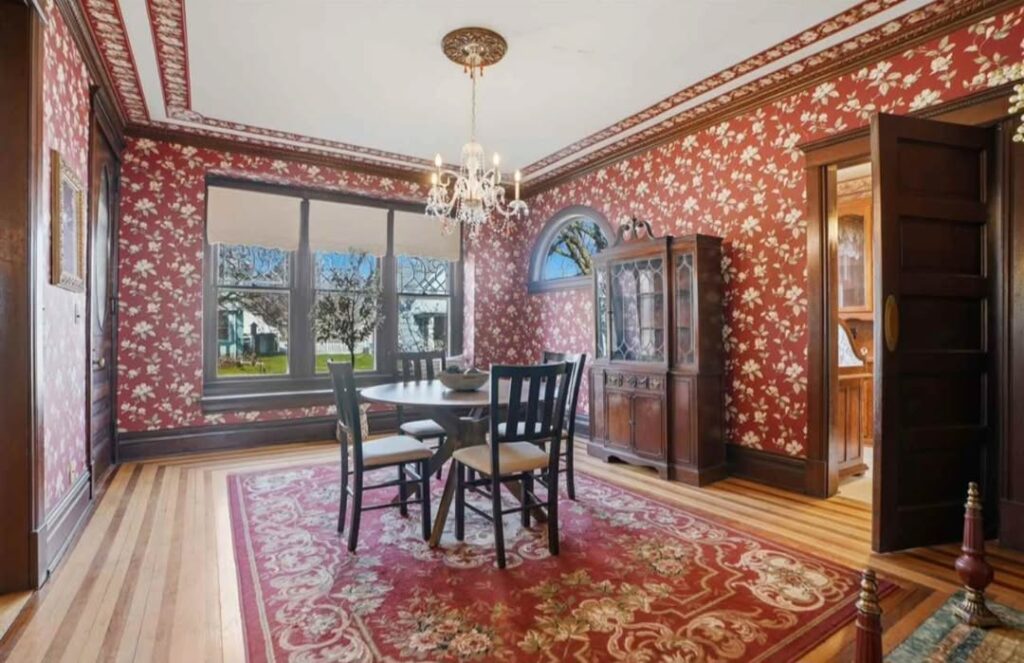
Here’s where things get fun.
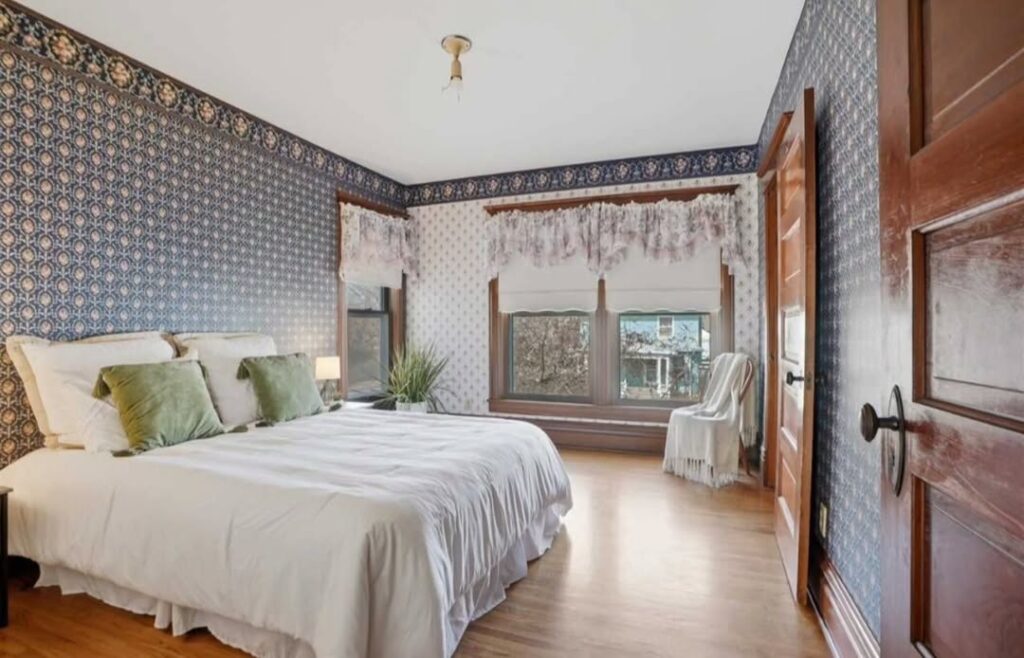
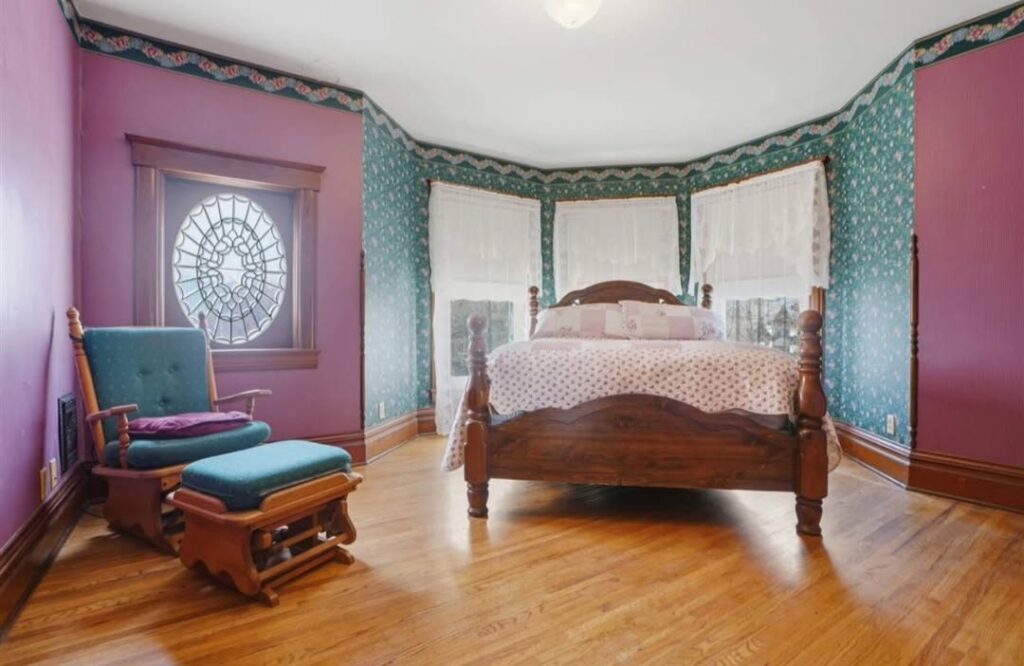
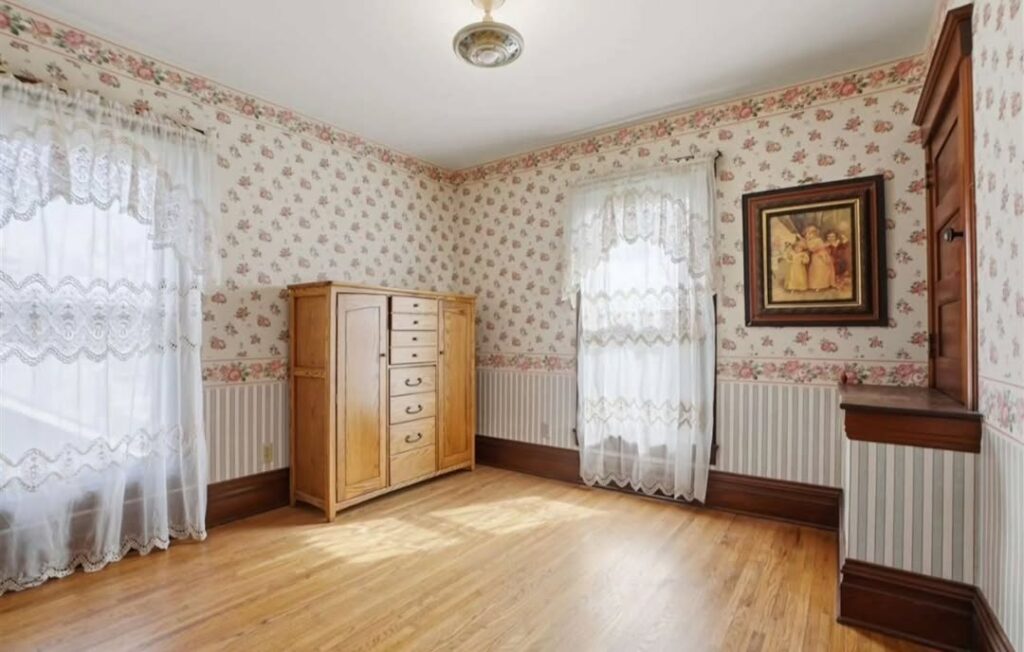
The wallpaper isn’t original. Let’s just get that out of the way. But it’s not modern either — it occupies that delightful middle ground of “definitely not from this decade.” The listing description makes an affectionate nod to Home Alone, and honestly? That’s not a bad comparison.
Bold patterns. That slightly-too-loud energy of a mid-century or late-80s interior design choice. The kind of wallpaper that a grandmother might have chosen specifically because it was cheerful, and has remained cheerful through sheer stubbornness.
For a buyer who wants to restore, this wallpaper is an easy swap. Pull it back, and there’s a very good chance you’ll find original plaster walls in decent condition underneath — a canvas ready for whatever direction you want to take it.
For the urban history enthusiast, though? Leave it up for a while. It has its own story to tell.
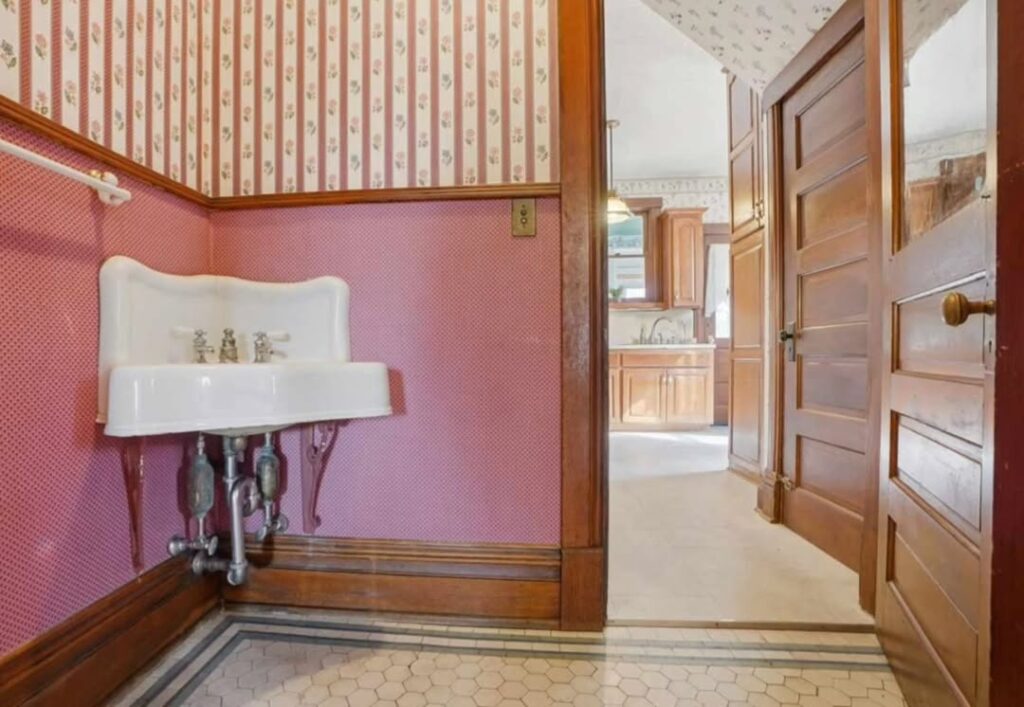
The Hidden Gem: A Vintage Sink Near the Staircase
Don’t miss the sink.
Tucked into the corner near the staircase, this vintage sink is one of those details that would be the centerpiece of a designer’s Instagram post today. Cast iron, probably. Deep basin. Old-fashioned fixtures that have the kind of substantial weight modern tap handles can only pretend to have.
In the early 1900s, utility sinks like this weren’t hidden away — they were practical fixtures placed where they were needed. Near a staircase often meant near a back hallway, a mud room, or a working area of the house where family life actually happened.
It’s a snapshot of domestic history. A reminder that this house wasn’t a showpiece — it was a home.
Whether you restore it to full working order or preserve it as a feature piece, this sink is worth the attention the listing gives it.
The Architecture: What 2,215 Square Feet Looked Like in 1902
Room Layout in the Edwardian Era
By 1902, American domestic architecture had shifted from the ornate excesses of the Victorian period into something slightly more restrained — though still rich with detail. The Edwardian era in home design favored generous room sizes, natural light, and a clear separation between formal and informal spaces.
Four bedrooms in 2,215 square feet meant real rooms. Not the shoebox proportions of modern construction. Ceilings were taller. Hallways were wider. There was often a formal parlor, a dining room separate from the kitchen, and bedrooms sized for actual furniture.
At 320 W Jefferson, you’re likely looking at:
- A front parlor or living room with the most ornate woodwork in the house
- A formal dining room with built-in hutch or china storage
- A kitchen that has probably seen at least one renovation, but may still hide original cabinetry
- Four bedrooms on the upper floor, with original door hardware if you’re lucky
- Two bathrooms — at least one of which likely dates from an early-century upgrade
That floor plan is more livable than many new builds at twice the price.
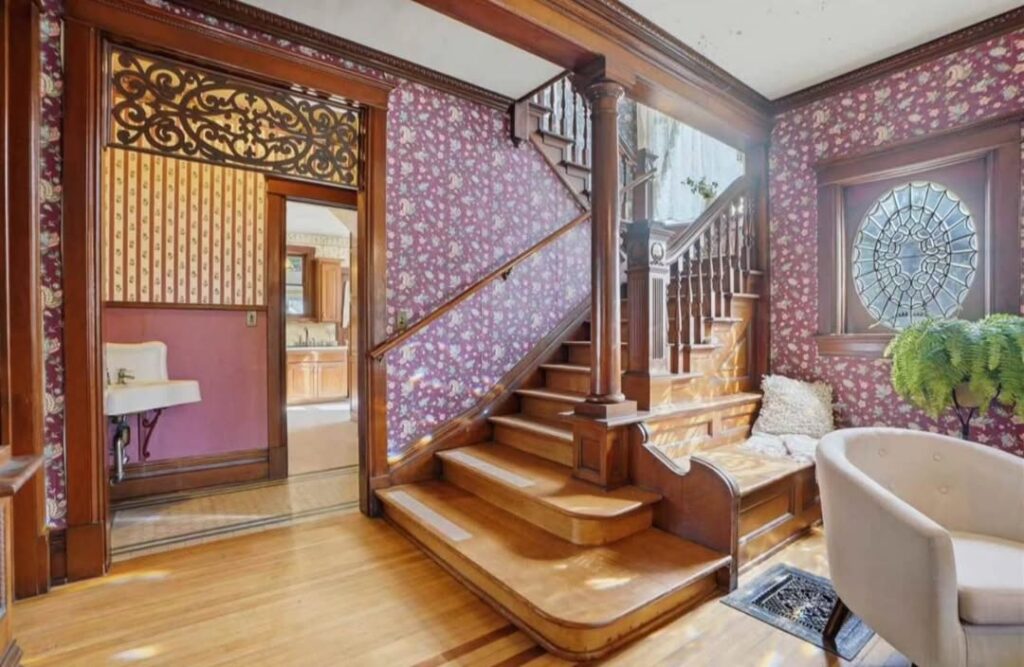
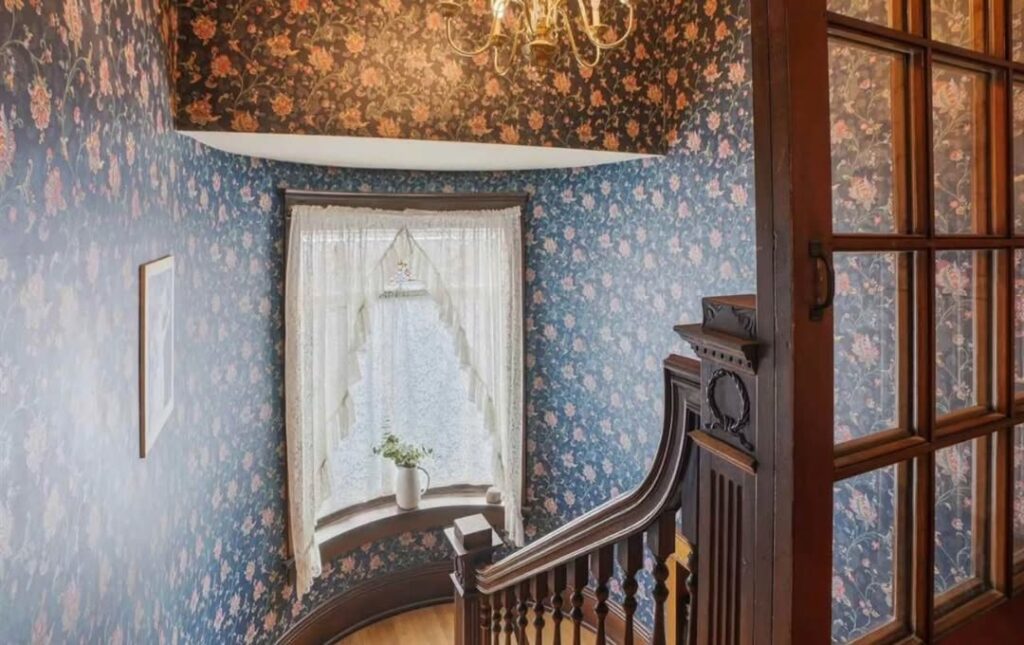
The Staircase: The Heart of the House
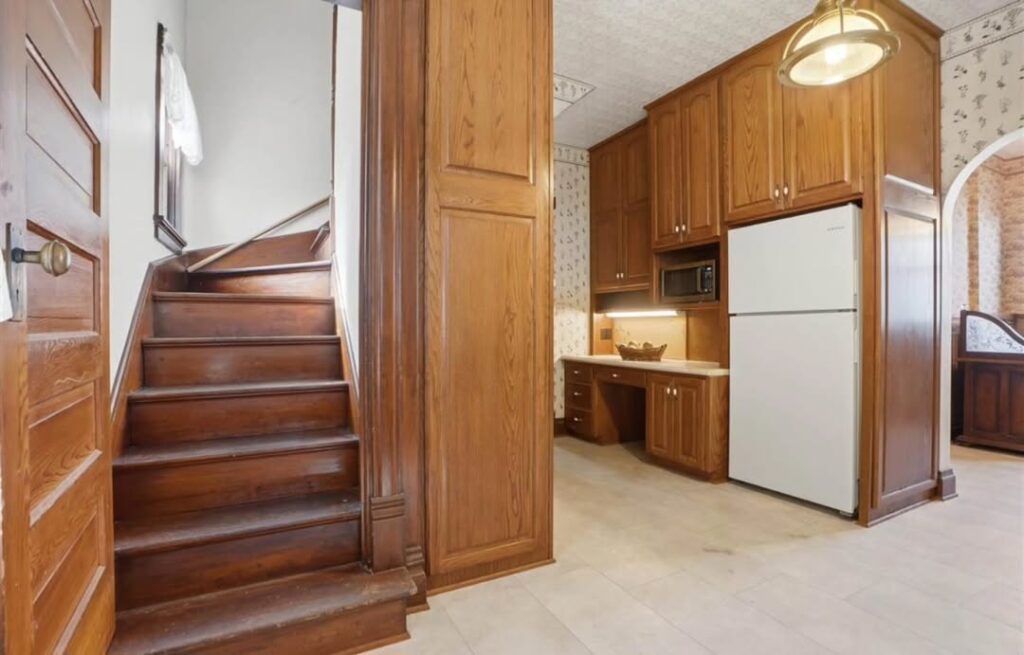
In a home like this, the staircase isn’t just a way to get upstairs. It’s the architectural centerpiece.
The newel post, balusters, and handrail on a well-preserved 1902 staircase are typically the most impressive woodworking in the house. Turned spindles. A wide, smooth handrail worn to a soft glow by 120 years of hands. A newel post that stands like a sentinel at the bottom, carved and solid.
The fact that the listing specifically highlights the area near the staircase — where that vintage sink sits — suggests this is a particularly striking part of the house. It’s the kind of detail that stops you when you’re walking through a showing.
You look up, you look around, and you just stand there for a minute.
Why Historic Homes Like This Are Disappearing
Demolition, Renovation, and Loss
Across America, houses built in this era are disappearing faster than most people realize.
Some are demolished for new development. Others are stripped of their original features during renovations — well-intentioned updates that remove the very things that made them valuable. A few simply collapse from neglect, their interiors rotting away while the neighborhood changes around them.
The ones that survive intact — with original woodwork, original floors, original fixtures — are genuinely rare. That’s not marketing language. That’s arithmetic.
If you want to explore more homes caught between preservation and loss, the team at Abandoned.blog covers forgotten American architecture with the kind of detail and respect these places deserve. The stories there remind you why preservation matters.
The Case for Saving 320 W Jefferson
This house isn’t abandoned. It isn’t at risk of demolition.
But it is at a crossroads.
It could go to a buyer who sees only the surface — the wallpaper, the aging fixtures, the work that needs doing — and strips it back to studs. That happens more than it should.
Or it could go to someone who understands what they’re holding. Someone who sands those floors instead of covering them. Who strips the wallpaper carefully, layer by layer, to see what’s underneath. Who calls a restoration plumber about that vintage sink rather than ripping it out.
That kind of stewardship is getting rarer. And that’s exactly why houses like this one matter.
Who Should Buy This House?
Let’s be direct about it. This house isn’t for everyone. And that’s okay.
This house is for you if:
- You find original woodwork more beautiful than anything from a big-box store
- You’re willing to invest time and care into a restoration project
- You want a house with character — meaning actual, earned character, not a designer’s interpretation of it
- You’d rather have 120 years of craftsmanship than a brand-new build with hollow doors
- You understand that “needs work” and “worth it” can mean the same thing
This house is probably not for you if:
- You want turnkey and move-in ready
- Open-plan layouts are non-negotiable
- You don’t have patience for a house that asks something of you
For lovers of historic architecture, lived-in patina, and the kind of domestic history that doesn’t show up in new construction — 320 W Jefferson is a rare opportunity.
Practical Details at a Glance
| Feature | Detail |
| Year Built | 1902 |
| Square Footage | 2,215 sq ft |
| Bedrooms | 4 |
| Bathrooms | 2 |
| Listed Price | $319,900 |
| Address | 320 W Jefferson St, Washington |
| Key Features | Original woodwork, vintage floors, vintage corner sink, original staircase |
The Neighborhood Context: Washington’s Historic Streets
Streets like W Jefferson St carry their own weight of history.
Washington’s older residential neighborhoods contain some of the most intact examples of early-20th-century domestic architecture in the region. The grid layout, the lot sizes, the setbacks and front porches — it all reflects an era of urban planning that prioritized walkable, human-scaled neighborhoods.
A house like 320 W Jefferson isn’t just a property on a street. It’s part of a historic fabric. When it’s preserved well, it holds the character of the entire block together.
For those drawn to that history — urban explorers of the past who prefer their exploration to happen through doorways rather than fences — resources like Abandoned.blog’s archive of historic American homes offer a deeper look at why these structures matter and how they connect to the broader story of American domestic life.
Conclusion: A Forgotten 1902 Historic Home Worth Remembering
The forgotten 1902 historic home at 320 W Jefferson Street is more than a listing.
It’s a surviving artifact. A piece of craftsmanship that outlasted the people who built it, the decades that tried to modernize it, and the trends that declared it outdated. It’s still standing. Still holding its woodwork. Still creaking on floors that were milled before the Wright Brothers flew.
At $319,900, you’re not buying square footage. You’re buying irreplaceable material history — the kind that can’t be rebuilt once it’s gone.
If you’re the kind of person who stops at an old house and wonders who lived there, what they cooked for dinner, what the stairs sounded like at Christmas morning — this is your house.
Don’t let it wait too long.
Frequently Asked Questions
Q: Is 320 W Jefferson Street, Washington currently on the market? A: The property was recently listed at $319,900. Contact the listing agent for current availability and showing information.
Q: What does “original woodwork” mean in a home this old? A: Original woodwork refers to trim, door casings, baseboards, banisters, and built-in features that were installed when the house was first constructed — in this case, 1902. These details are hand-fitted, made from old-growth timber, and cannot be exactly replicated with modern materials.
Q: Is the wallpaper original to the 1902 construction? A: Almost certainly not. Based on the listing description, the wallpaper appears to be from a later decade — possibly the 1980s or 1990s — and has a bold pattern reminiscent of holiday-movie interiors. It’s an easy cosmetic change that doesn’t affect the structural integrity of the historic features.
Q: What should I look for when buying a historic 1902 home? A: Focus on structural integrity first — foundation, roof, and framing. Then assess the original features: floors, woodwork, plaster walls, and original hardware. Check for original windows and doors. Hire an inspector familiar with older homes. A historic home specialist or preservation architect can help you assess restoration potential before you buy.
Q: Are vintage sinks in old homes restorable? A: In most cases, yes. Cast iron sinks from the early 1900s are exceptionally durable. Refinishing services can restore the porcelain surface, and period-appropriate fixtures are available through specialty plumbing suppliers. In some cases, the original fixtures can be refurbished as well.
Q: Where can I learn more about historic home preservation? A: Organizations dedicated to architectural preservation, as well as sites like Abandoned.blog that document America’s historic and forgotten architecture, are excellent starting points for understanding the value and process of preservation.
All property details referenced in this article are based on publicly available listing information. Always verify current listing status, pricing, and property condition directly with the listing agent or a licensed real estate professional.