Introduction: A Forgotten Estate on a Corner Lot
Some buildings whisper. Others shout.
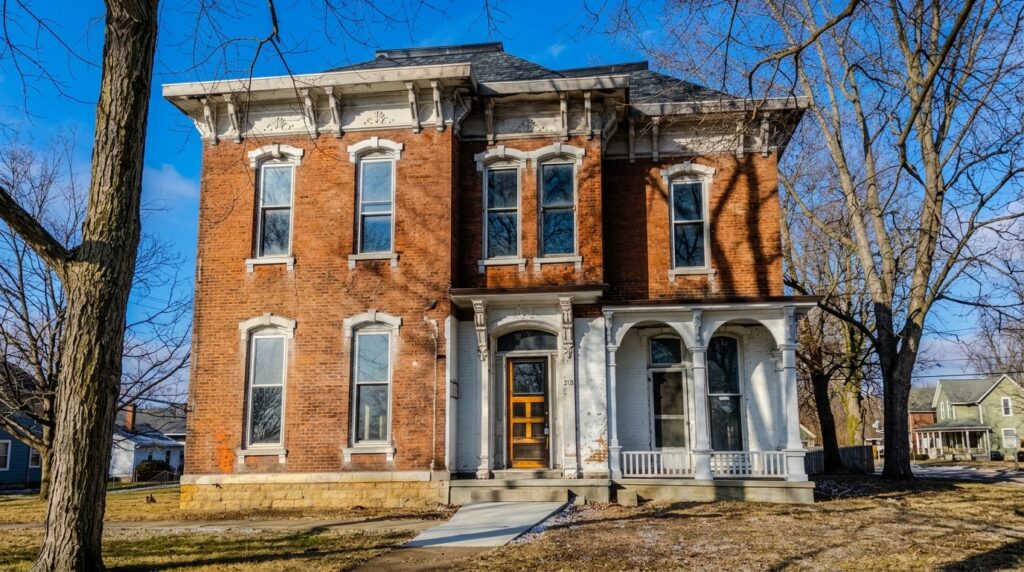
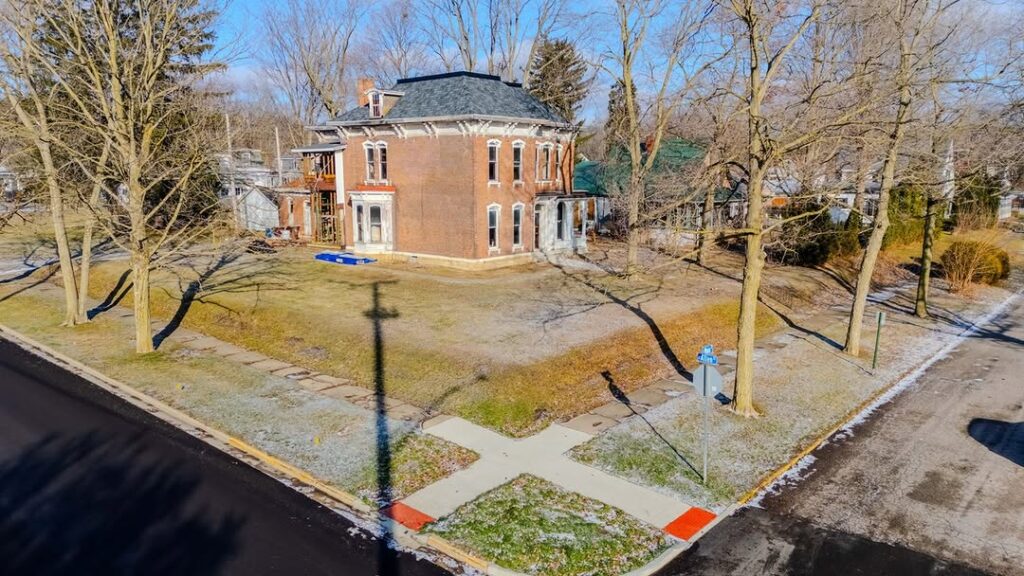
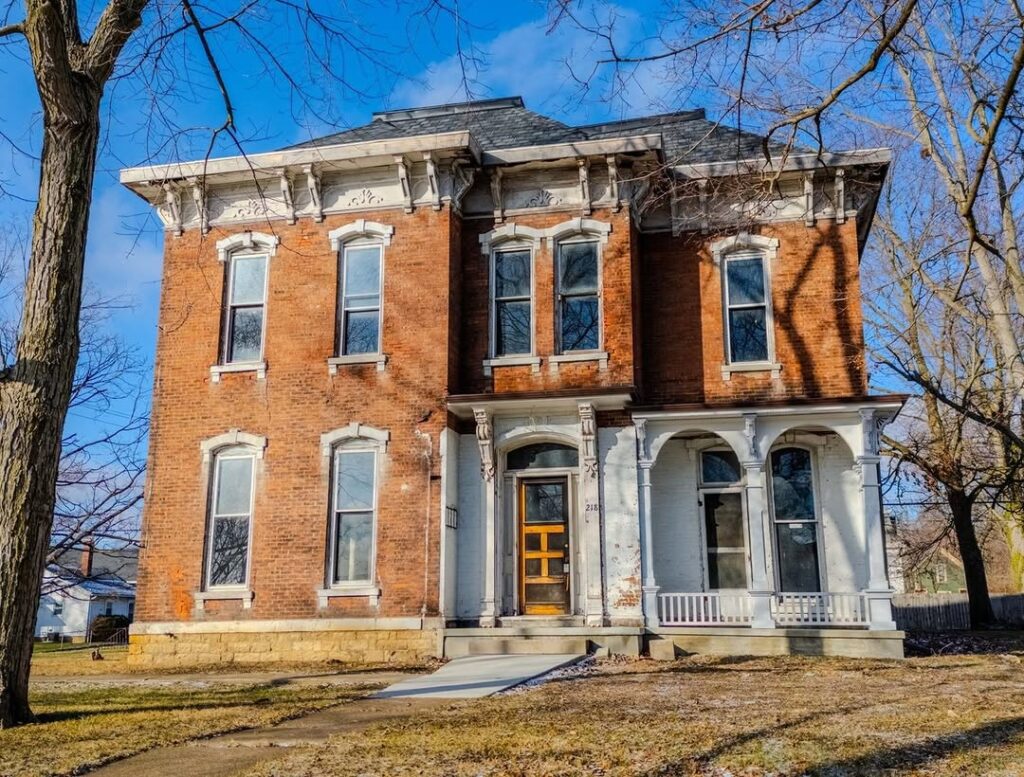
The moment you turn the corner onto Main Street in Wabash, Indiana, this one does neither. It simply stands — four stories of aged brick and bracketed cornice, patient and proud, waiting for someone to finally notice.
This is 218 E. Main Street. A forgotten estate with a story that stretches back to 1885, when a local banker named Frank Morse decided to build something that would last forever.
It has. Barely.
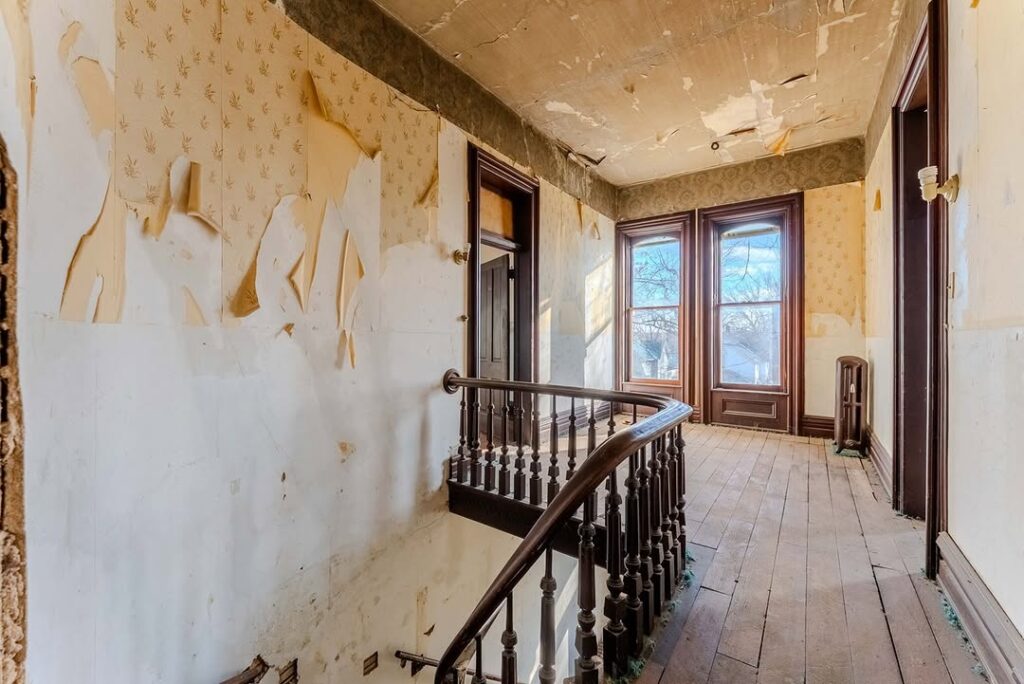
The house sits at $166,500 — an almost absurdly low number for nearly 4,600 square feet of Victorian craftsmanship. But numbers don’t capture what you feel standing in the threshold of a home like this. The dust catches the light. The silence is thick. The walnut staircase sweeps upward through shadow, and you get the distinct sense you’ve stepped not into a ruin, but into a story mid-sentence.
This article is for dreamers. Restorers. History lovers. Anyone who has ever looked at a crumbling façade and seen a home.
The History Behind the House: Who Was Frank Morse?
Every forgotten estate has a founding family. Here, it was the Morses.
Frank Morse was a banker in Wabash, Indiana during the Gilded Age — a period when prosperity and ambition expressed themselves most completely through architecture. In 1885, he commissioned what would become one of the city’s finest Italianate residences, built to signal success, permanence, and taste.
Italianate architecture was at the height of its American popularity between roughly 1840 and 1890. It drew from the romantic rural villas of northern Italy, filtered through the pattern books of architects like Andrew Jackson Downing. The style was characterized by low-pitched roofs, decorative bracketed cornices, tall narrow windows with elaborate hoods, and — as seen here — substantial brick construction that felt almost fortress-like in its solidity.
Morse chose well. Over 135 years later, the bones of his home remain standing.
Wabash itself holds historical significance. In 1880, it becamethe first city in the world to be lit by electric light, a fact that speaks to the progressive, ambitious character of the town during the era this house was built. Frank Morse was building in a city on the rise. That energy, in some ways, is still embedded in the brick.
What Survives: The Remarkable Original Features
Here’s the thing about Victorian homes that are forgotten rather than demolished: they often preserve what more “improved” homes have lost.
The Walnut Staircase
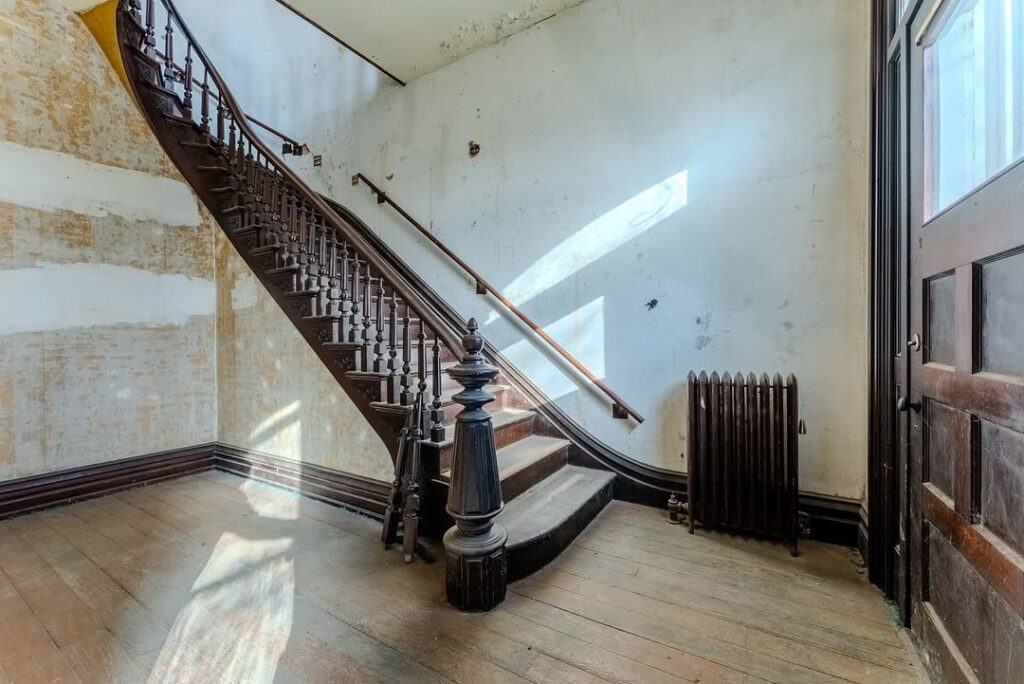
Step through the front door and the first thing that commands your attention is the staircase. Sweeping, wide, constructed in walnut — the kind of dark, dense hardwood that craftsmen of the 1880s worked by hand with a patience modern construction simply doesn’t allow for.
Run your fingers along the banister and you’re touching the same wood Frank Morse touched. That’s not sentiment. That’s the literal truth.
Three Working Fireplaces
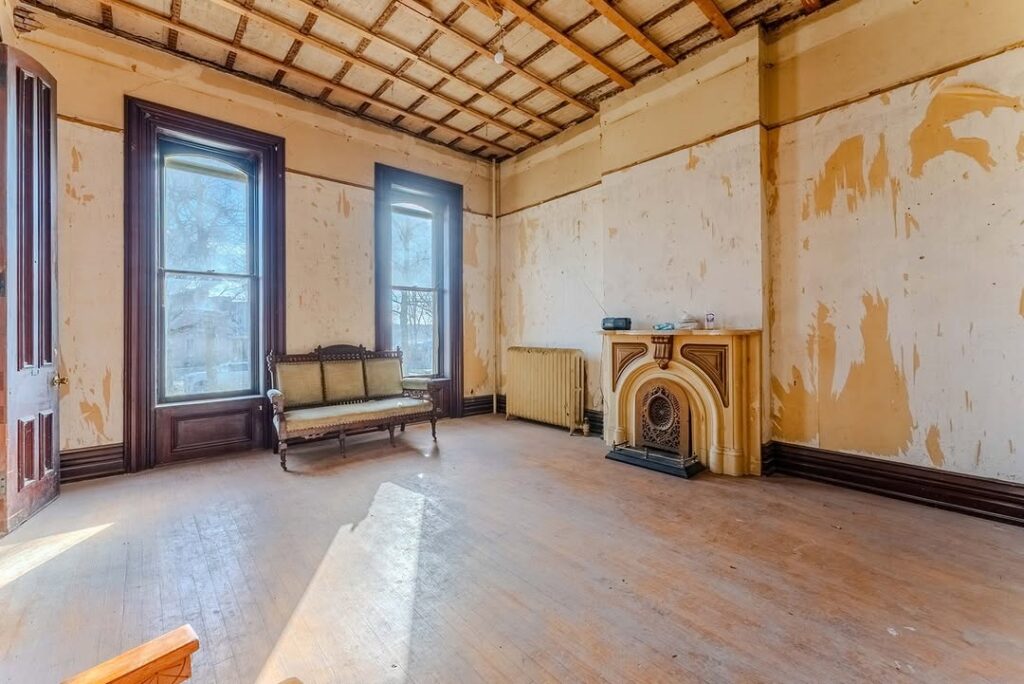
Three fireplaces survive in this home. Each one was once the social center of its room — a gathering point, a source of warmth, a statement of domestic comfort.
In a restoration, fireplaces like these aren’t obstacles. They’re the reason people fall in love with old houses.
Ornate Wood Trim and Solid Doors
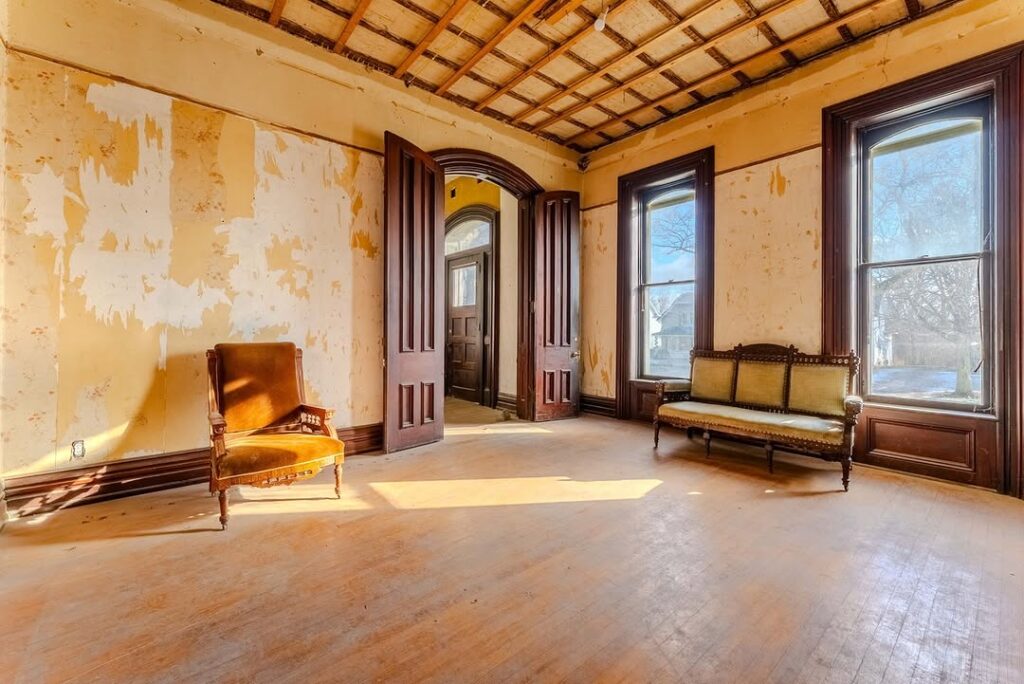
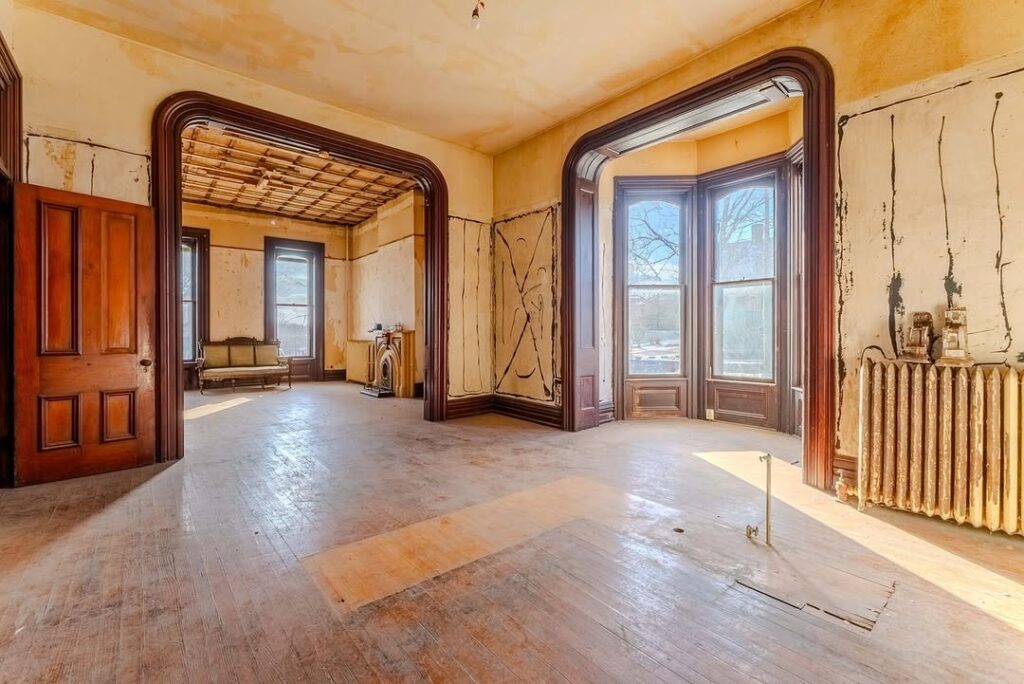
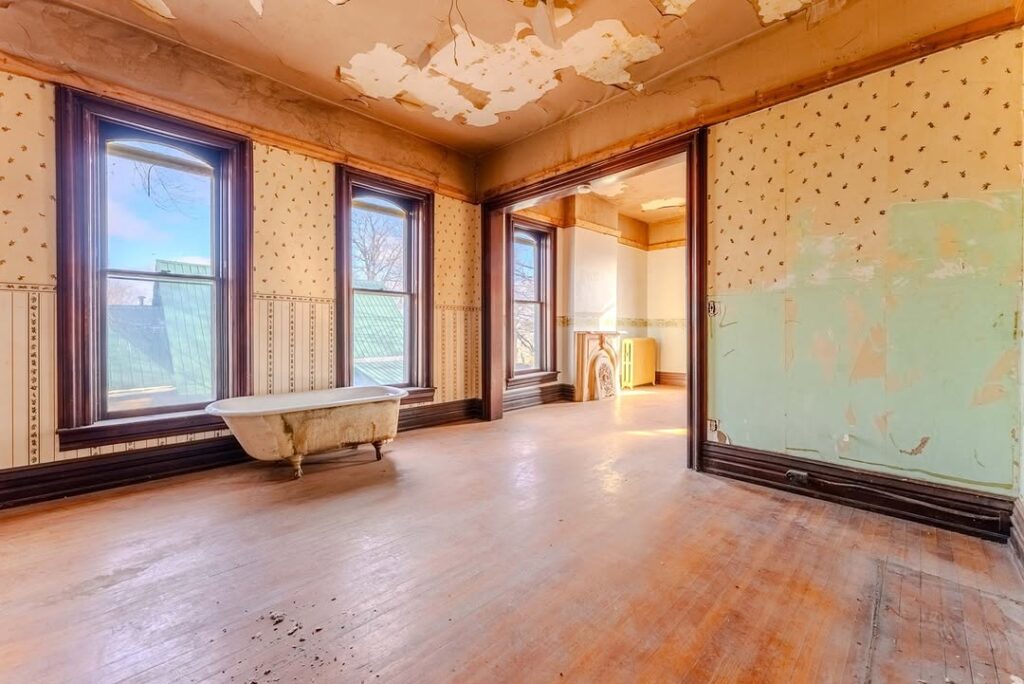
The interior woodwork — the casings, the baseboards, the door surrounds — is elaborate in the way only pre-industrial millwork can be. These aren’t stock profiles cut by a machine. They were shaped by craftsmen who took pride in complexity.
The solid doors are equally remarkable. Interior doors in modern homes are hollow. These are not. Knock on one and you’ll hear the difference immediately.
The Bracketed Cornice
Outside, the roofline is defined by a beautifully bracketed cornice — one of the most characteristic features of the Italianate style. These decorative brackets, spaced evenly beneath the eaves, cast shadows that animate the façade at different hours of the day. In morning light, the house looks one way. At dusk, entirely another.
The Current State: Honest Assessment
Let’s be clear: this is not a move-in-ready home. It never claimed to be.
The listing describes it as requiring significant renovation — and that’s accurate. Restoration projects of this scale are not weekend DIY jobs. They are multi-year commitments that demand budgeting, patience, and a genuine love of process.
But there’s good news, too.
What’s Already Done
- ✅ New roof installed in 2022 — the single most critical structural investment in any old home
- ✅ Interior fully cleared — no demo required to begin assessing walls, floors, and systems
- ✅ Floor plans available — rare for a home of this age; it makes planning considerably easier
- ✅ Newly rebuilt covered front porch — the façade’s most visible feature is already restored
- ✅ Original brick construction intact — exterior masonry shows the durability of 19th-century building materials
The groundwork has been laid. Someone has already done the hardest, least glamorous part of a restoration: they’ve stopped the bleeding.
5 Reasons This Forgotten Estate Deserves a Second Life
1. The Architecture Is Irreplaceable
You cannot build this house new. Not really.
The walnut, the trim profiles, the cornice brackets, the brick — these came from an era when materials were harvested differently, when labor was structured differently, when craftsmanship was a professional identity rather than a marketing claim.
Demolish this house and it’s gone. Restore it and it stands for another 140 years.
2. The Price Reflects Opportunity, Not Worthlessness
$166,500 for 4,597 square feet on a double corner lot in a historic Indiana city.
Compare that to new construction costs — typically $150–$300 per square foot — and the numbers start to reframe the entire proposition. Yes, renovation adds cost. But the bones, the lot, and the location are priced at a fraction of what comparable new construction would demand.
For the right buyer, this is a financial opportunity as much as a historical one.
3. Wabash Is a Town Worth Believing In
Wabash, Indiana isn’t a forgotten town. It’s a small city with a proud identity — home to the world’s first electrically lit municipality, a thriving county seat with genuine civic character.
Historic preservation efforts across the Midwest have demonstrated, repeatedly, that restoring anchor properties in walkable neighborhoods catalyzes broader investment. This house sits on a corner lot on Main Street. It’s not isolated. It’s central.
4. The 4-Bedroom Layout Has Modern Relevance
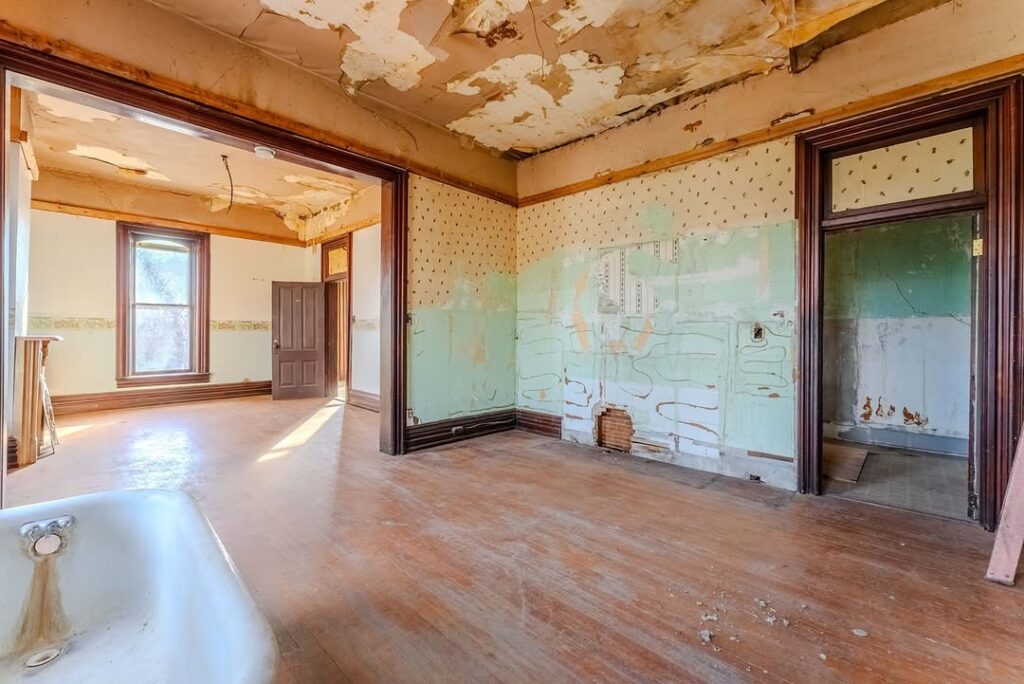
Four bedrooms and four full baths across 4,597 square feet is an unusually generous floor plan — particularly in a period when most Victorian homes of this type had a single bathroom retrofitted decades later.
Whether this becomes a private residence, a bed and breakfast, or a mixed-use heritage property, the layout gives a restorer genuine flexibility.
5. Stories Like This Are Worth Preserving
For readers of abandoned and forgotten places, there’s a feeling that’s hard to articulate — a kind of reverence for what was. The dust. The silence. The sense of time compressed.
But there’s something that surpasses that feeling: watching a forgotten place become a living one again.
This house has that potential. All it needs is someone willing to see it.
What a Restoration Might Look Like
Restoring a property like this isn’t a single project. It’s a sequence of them.
Here’s a realistic phased approach:
Phase 1 — Structural & Mechanical (Year 1)
- Full structural assessment by a licensed engineer
- Electrical system replacement (original wiring is not code-compliant)
- Plumbing inspection and replacement as needed
- HVAC installation (forced air or period-appropriate radiator system)
- Window assessment — repair original frames where possible
Phase 2 — Envelope & Exterior (Year 1–2)
- Tuck-pointing the original brick masonry
- Cornice painting and bracket repair
- Foundation waterproofing and drainage
- Restoration of original window hoods and trim
Phase 3 — Interior Restoration (Year 2–3)
- Refinish original hardwood floors
- Restore or replicate plaster walls
- Restore all three fireplaces to working condition
- Preserve and protect all original woodwork
- Kitchen and bath updates that honor the period aesthetic
Phase 4 — Final Finishes (Year 3+)
- Period-appropriate paint selection (interior and exterior)
- Landscape design for the double corner lot
- Lighting design that complements original architectural features
- Furnishing that reflects the home’s Gilded Age origins
What Makes Italianate Architecture So Enduring?
The Italianate style has outlasted almost every architectural trend that followed it.
Why? Because it was never purely decorative. It was structural expression — the brackets had to carry the weight of overhanging eaves, the thick brick walls genuinely insulated, the tall narrow windows maximized light in rooms with high ceilings. The beauty was, in most cases, functional.
There’s a reason that lovers of forgotten estates and historic preservation return again and again to Victorian-era homes. These buildings weren’t designed to last a decade. They were designed to last a dynasty.
Frank Morse understood that. He wanted his home to outlive him. At 140 years and counting, it has.
Is Buying a Forgotten Estate Right for You?
This isn’t a house for everyone. Let’s be honest about that.
It might be right for you if:
- You have renovation experience or access to skilled tradespeople
- You’re drawn to craftsmanship that can’t be replicated
- You have patience for a multi-year commitment
- You see restoration as meaningful, not just financial
It might not be right for you if:
- You need immediate occupancy
- You’re uncertain about renovation budgeting
- You want a predictable, low-maintenance property
If you’ve ever found yourself scrolling throughstories of America’s most remarkable forgotten homes, you already know which category you fall into.
The Sensory Reality of Walking In
Close your eyes and imagine it for a moment.
The front porch — new boards, fresh under your feet — gives way to a front door that opens on original hinges with a weight modern doors don’t have. Inside, the air is still. Not unpleasant still. More like a library at closing time.
The walnut staircase rises ahead of you, its newel post worn smooth at the top where thousands of hands have rested. The light falls through tall, narrow windows and catches the dust in long diagonal shafts.
Somewhere above you, three fireplaces wait. The ornate trim runs up the walls in profiles that no catalogue sells anymore. The floors are rough, covered in the debris of years, but underneath — you can feel it — the boards are solid.
This house isn’t crying out to be rescued. It’s simply waiting. Patient as the brick it’s made of.
Conclusion: A Forgotten Estate That Deserves to Be Found
Not every forgotten estate has this much left to give.
218 E. Main Street, Wabash is that rare intersection of historical significance, architectural integrity, and genuine restorability. The roof is new. The interior is cleared. The floor plans are available. The bones are extraordinary.
What’s missing is a person with vision — someone who can look at 4,597 square feet of bracketed cornices, walnut staircases, and original brick and see not a project, but a home.
If that person is you, this forgotten estate in the heart of Indiana is waiting at $166,500. The story isn’t finished. It’s just waiting for the next chapter.
FAQ: 218 E. Main Street Wabash Victorian Home
Q: What architectural style is 218 E. Main Street?
A: The home is a true example of the Italianate style, built in 1885. Key features include a bracketed cornice, original brick construction, tall narrow windows, and elaborate interior woodwork.
Q: How large is the property?
A: The home offers approximately 4,597 square feet of living area with 4 bedrooms and 4 full baths, situated on a large corner double lot.
Q: Has any restoration work already been done?
A: Yes. A new roof was installed in 2022, the interior has been fully cleared, and the covered front porch has been newly rebuilt. Floor plans are also available for planning purposes.
Q: What is the asking price?
A: The property is listed at $166,500 — an exceptional value for the square footage and historical significance.
Q: Is it safe to visit the property?
A: 218 E. Main Street is a listed property available for sale through legitimate real estate channels. Always arrange a formal viewing with the listing agent. Never enter any property without proper authorization.
Q: Who built the home originally?
A: The home was built in 1885 for Frank Morse, a local banker in Wabash, Indiana, during the height of the Gilded Age.
Q: What are the biggest restoration priorities?
A: Electrical, plumbing, and HVAC systems will require full replacement or overhaul. Exterior tuck-pointing and interior plaster work are also likely major components of any restoration plan.
Disclaimer: This article is intended for informational and historical appreciation purposes. Always consult a licensed real estate professional and conduct proper due diligence before making any property purchase. Never enter any property without authorization.