
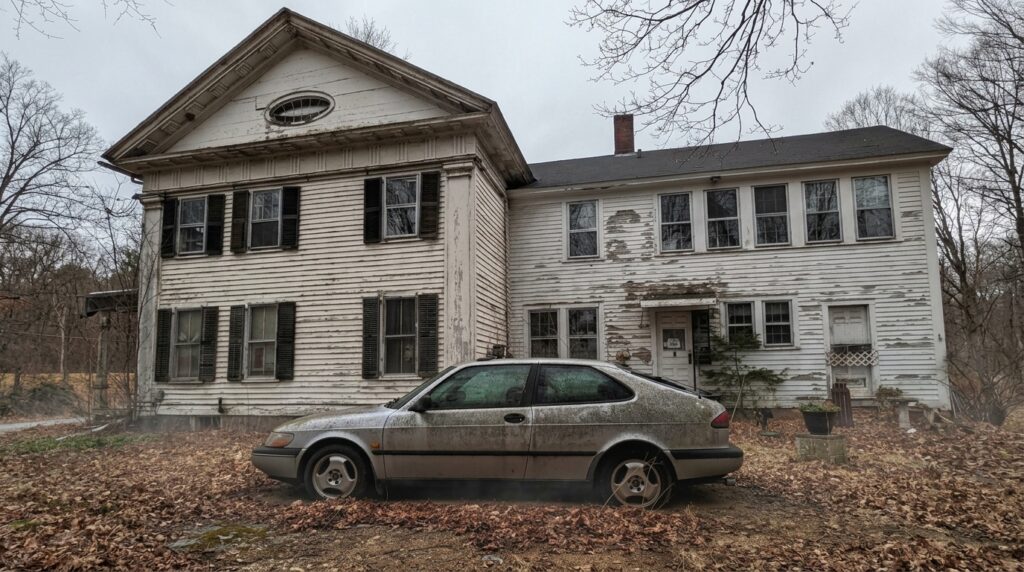
The door creaks open. Dust swirls in a thin shaft of afternoon light. And there, exactly where someone left it decades ago, sits a porcelain teacup on a mahogany side table — still waiting.
This forgotten mansion is not a ruin. It is a time capsule.
Chandeliers still hang from the ceiling. Faded portraits stare down from panelled walls. A grand piano sits in the corner of the ballroom, its keys yellowed but intact. Books remain open on reading room shelves, as if the reader simply stepped out for a moment and never came back.
Abandoned estates like this one fascinate us for a reason. They hold history in suspended animation. They ask questions nobody left behind to answer.
This is the story of one such place — its grandeur, its mystery, and why everything inside still remains.
What Makes a Forgotten Mansion So Haunting?
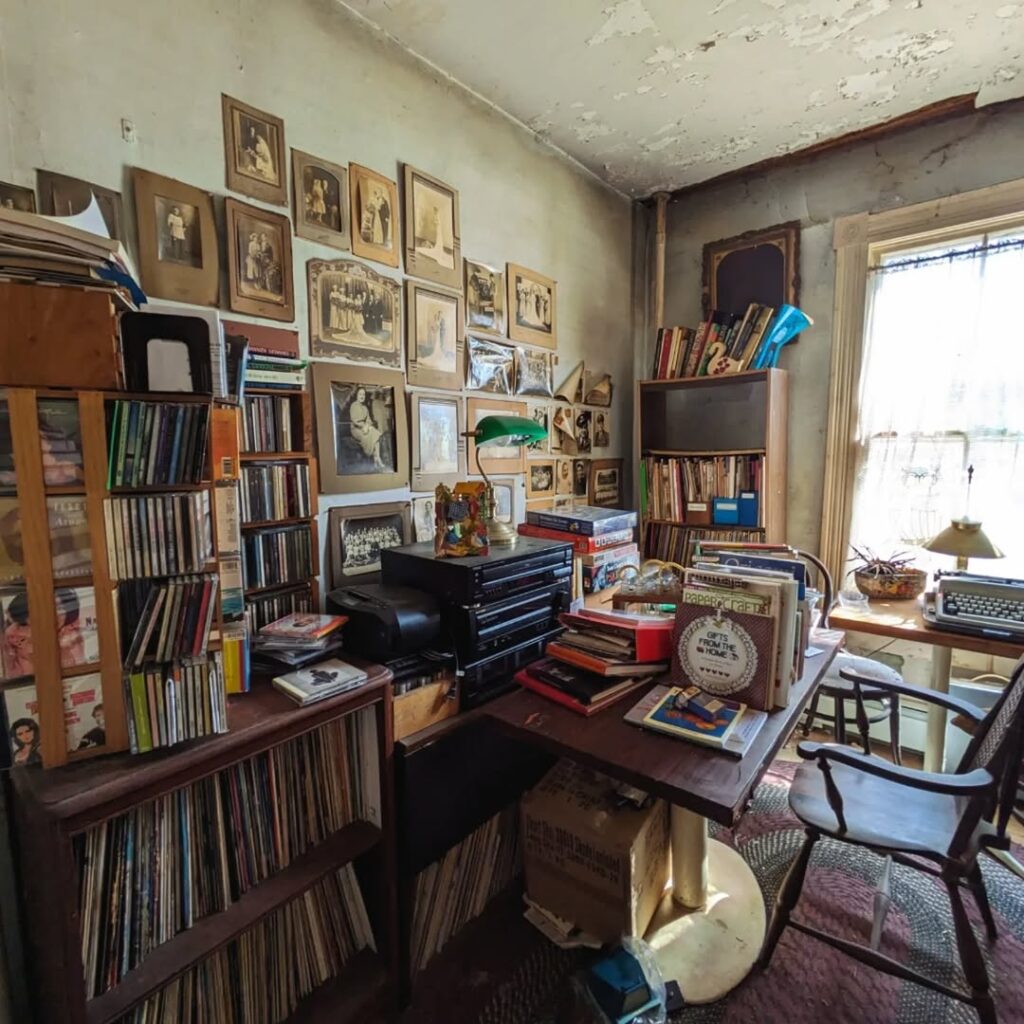
Most abandoned buildings are stripped bare over time. Looters take the furniture. Weather eats the walls. Roofs collapse. Nature reclaims everything.
But every so often, an abandoned château or forgotten estate defies this pattern entirely.
These rare places — sealed by circumstance, overlooked by thieves, protected by remoteness or legal dispute — become something almost sacred. A house where time stopped. A building where the past refused to leave.
What you find inside is not just furniture and fixtures. You find a life, interrupted.
The Silence That Hits You First
Before you see anything, you feel the silence.
It is not the ordinary quiet of an empty room. It is thicker than that. Heavier. The kind of silence that presses against your ears and makes you suddenly, uncomfortably aware of your own breathing.
Every step you take echoes. The floorboards groan beneath your weight — a sound nobody has heard in this room for thirty, forty, maybe sixty years. The air smells of damp wood, old paper, and something else underneath. Lavender, perhaps. A ghost of perfume from another era.
This is what draws urban historians, photographers, and curious souls to places like this. Not the drama. The intimacy.
The History Behind Forgotten Estates Like This One
Grand private estates were once common across Europe and North America. During the 19th and early 20th centuries, wealthy industrialists, aristocrats, and landowners built enormous family homes — often modelled on French châteaux or English manor houses — filled with the finest furnishings money could buy.
These were not just homes. They were statements of power. Of permanence.
The owners fully expected their families to inhabit these walls for generations. Portraits were painted. Libraries were assembled. Silver was polished every morning. Gardens were shaped and manicured year after year.
Then the world changed.
Two world wars, economic collapse, the decline of old money, and the enormous cost of maintaining estates like these drove many families away. Some sold quietly. Others simply locked the doors one day and never returned. A surprising number became entangled in inheritance disputes that dragged on for decades — and during those legal limbo years, nobody moved anything.
The result? A forgotten castle or manor frozen exactly as it was on the day someone last walked out.
According to Historic England, thousands of historic buildings across the UK alone are classified as “at risk” — many standing structurally intact but entirely unoccupied, their interiors preserved by sheer neglect.
7 Things Still Found Inside This Forgotten Mansion
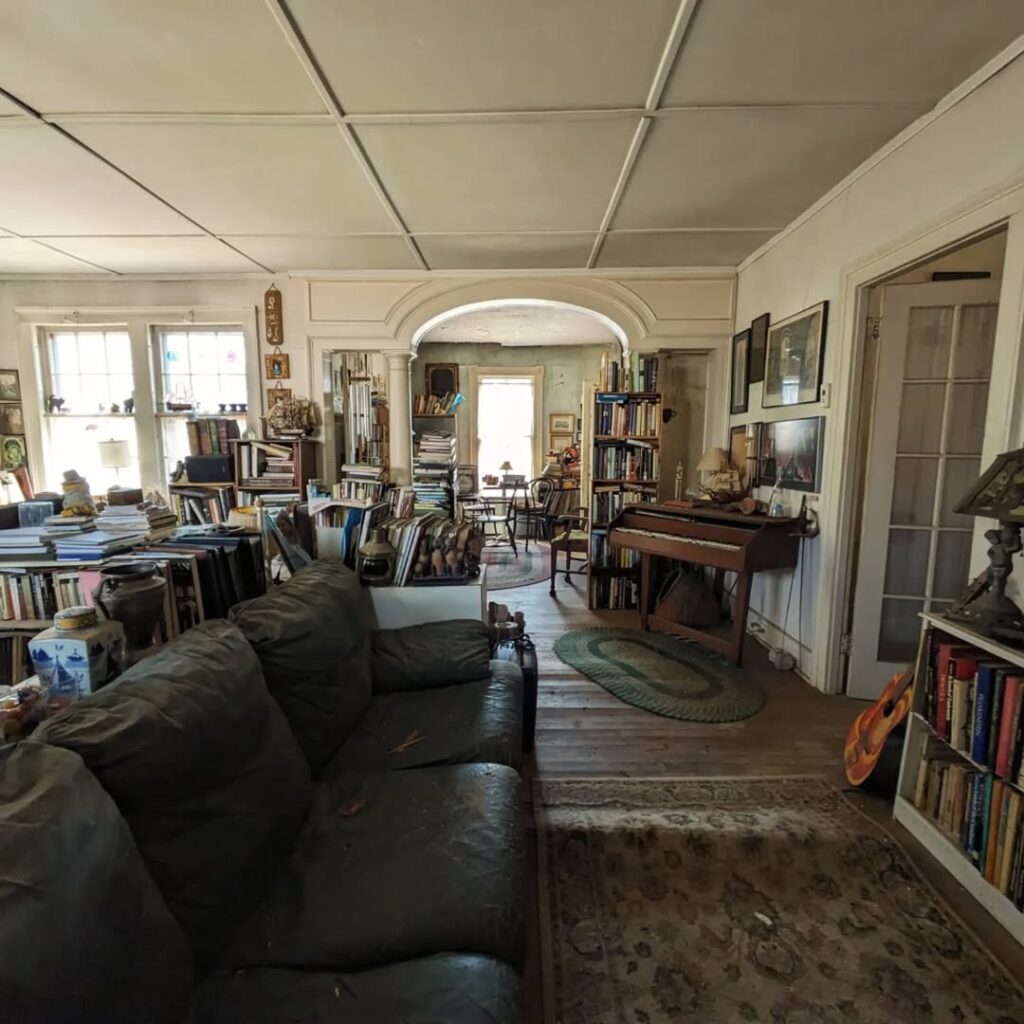
What makes this particular forgotten estate so remarkable is the sheer completeness of what remains. This is not a house picked clean by time. This is a house that kept everything.
Here is what explorers and researchers have documented inside:
1. The Dining Room, Still Set for Dinner
A long mahogany table stretches across the formal dining room. Eight chairs still sit around it, their velvet cushions faded from deep red to a dusty rose. Crystal glasses stand at each place setting, clouded with age but unbroken. A silver candelabra dominates the centre of the table, wax melted into frozen white rivers down its arms.
Nobody cleared this table. Nobody ever came back to do so.
2. A Library Full of First Editions
Floor-to-ceiling bookshelves line the walls of the study. The collection includes leather-bound volumes dating back to the late 1700s. Some sit undisturbed in the same positions they occupied when the house was last lived in. Others lie open, face-down — someone was mid-chapter when they left.
Humidity has warped a few spines. Silverfish have worked their way through some pages. But much of the collection remains legible, a private archive nobody catalogued, preserved by the dry cool air of a room that never opened its windows.
3. Personal Letters, Still Unsealed
In a writing desk on the first floor, researchers found a bundle of handwritten letters. Some were sealed, addressed, stamped — and never sent. Others were half-written, mid-sentence, as though the pen had been set down in the middle of a thought.
The handwriting is elegant, slanted, old-fashioned cursive. The ink is faded to a pale brown. But the words are still readable.
Love letters. Business correspondence. A mother’s note to a son studying abroad. Small human dramas, frozen in paper.
4. The Ballroom, Intact and Enormous
The ballroom is the heart of the house. It runs the full width of the east wing. A painted ceiling stretches overhead, allegorical figures and clouds rendered in muted blues and greens. Three crystal chandeliers hang from iron chains — dusty, cobwebbed, but structurally sound.
The parquet floor retains its geometric pattern, though buckled in places where water seeped through a cracked window long ago. Gilt chairs line the walls, as they would have before guests arrived. A musicians’ gallery overlooks the room from above.
You can almost hear the music.
5. The Kitchen, With Copper Pots Still on the Hooks
Below stairs, the kitchen tells its own story. Rows of copper pots hang from ceiling racks, verdigris creeping across their surfaces. Ceramic canisters labelled FLOUR, SUGAR, and TEA stand on wooden shelves. A cast-iron range takes up an entire wall.
The scale still holds a set of brass weights. A handwritten recipe card is pinned to a beam — somebody’s cake recipe, stained with what might be butter or cream.
6. Bedrooms Frozen in the 1930s
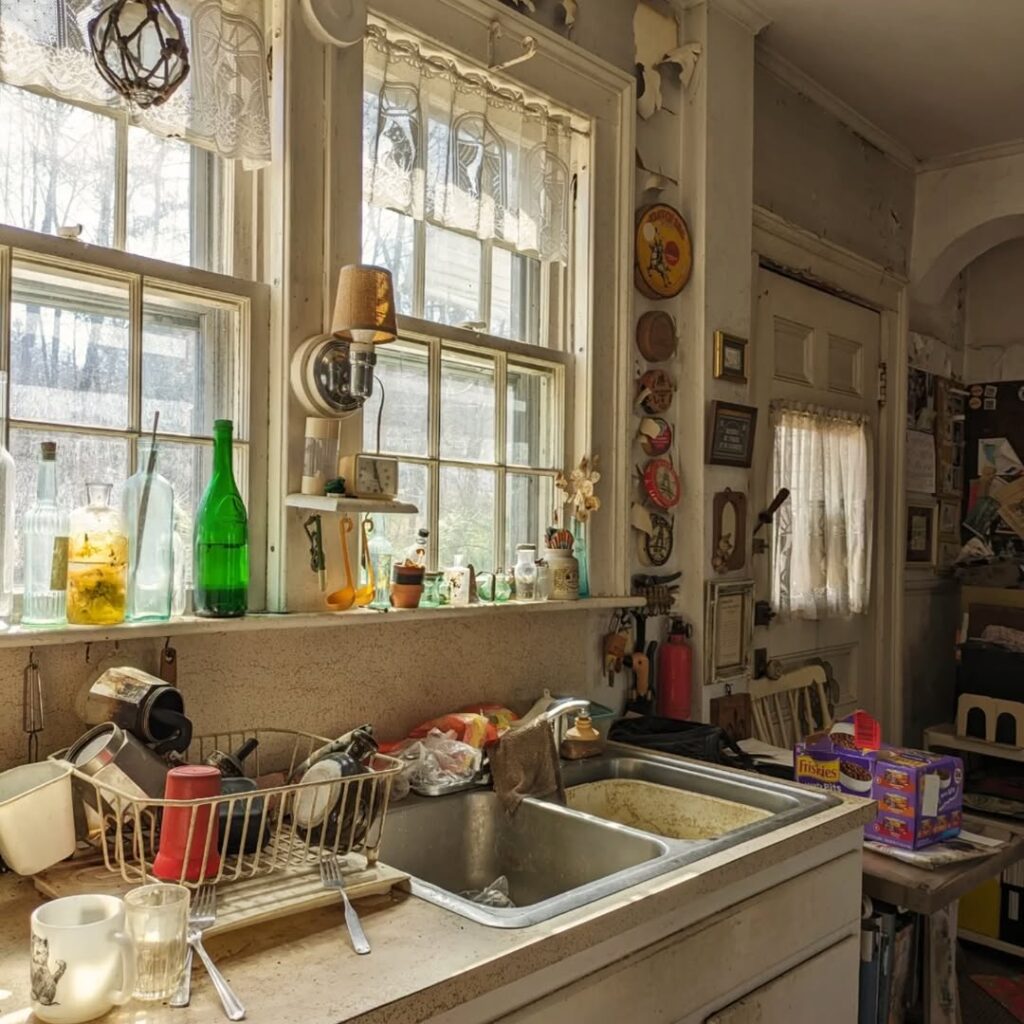
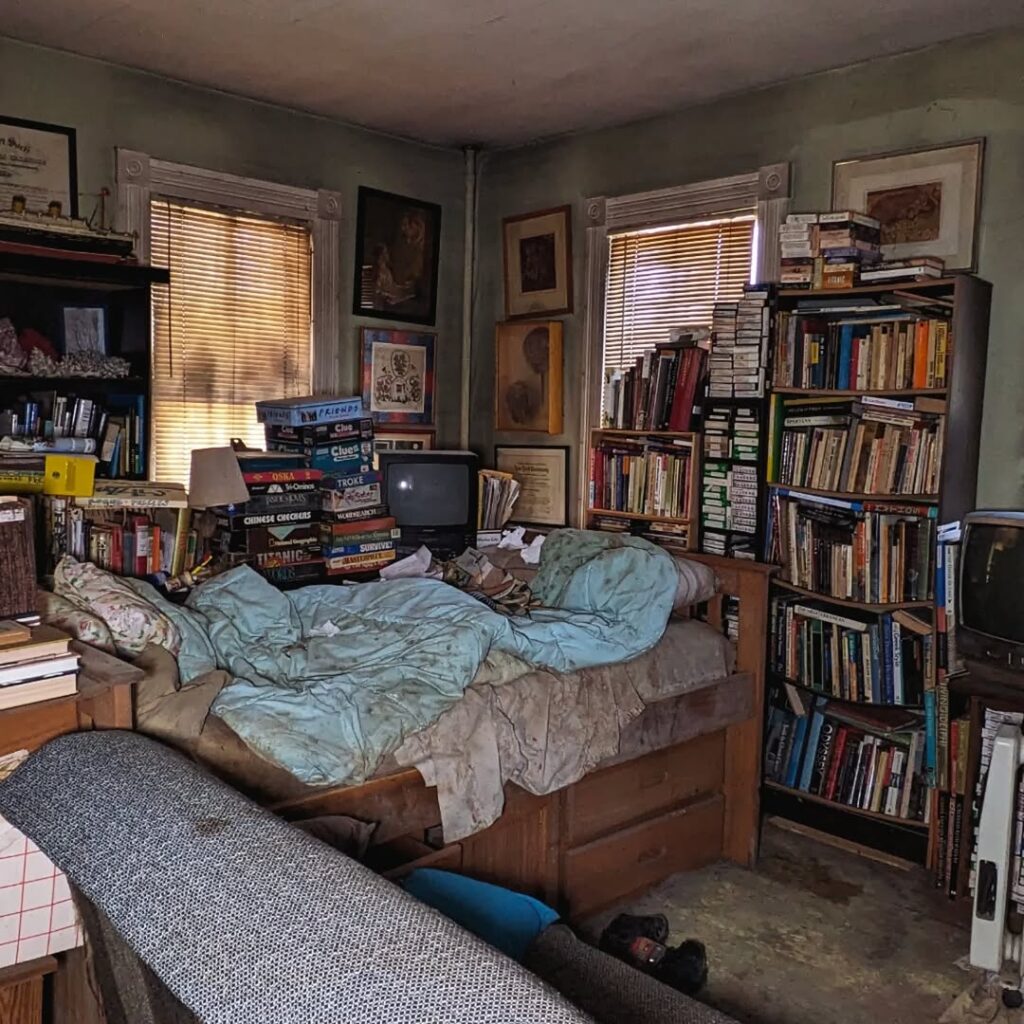
Upstairs, the bedrooms are the most personally affecting rooms in the house. The beds are still made — though the linens have rotted to fragile ribbons. Hairbrushes sit on dressing tables beside glass perfume bottles, their contents long evaporated. A child’s stuffed bear slumps in the corner of one room, button eyes still watching the door.
Wardrobes stand half-open, dresses and suits still hanging inside. The fabrics are fragile with age, colour bleached by light and time, but the shapes remain.
7. The Portrait Gallery, Watching in Silence
Long corridors are lined with oil portraits — family members from several generations, painted in the manner of their era. Heavy gilt frames. Formal poses. The eyes of the subjects follow you as you walk.
These people built this place. They believed it would outlast them in the hands of their children, and their children’s children. They could not have imagined it would end like this.
Why Was This Abandoned Château Never Emptied?
This is the question everyone asks. And the answer is usually complicated.
In many cases, the explanation is legal. A contested estate, no clear heir, a will disputed across different countries — and so the house simply waits, legally untouchable, while lawyers argue in distant offices.
In others, the reasons are more human. A family tragedy. A falling-out so severe that nobody could agree on what to do with the property. Grief so overwhelming that even sorting through belongings felt impossible. The intention to return, again and again deferred, until the years became decades.
Sometimes, houses simply fall off the map. A rural location, a change of road, a forgotten address in a solicitor’s file. The world moves on and forgets to take the house with it.
Whatever the reason, the result is the same — an abandoned mansion sealed into a moment in time, waiting for someone to finally push open the door.
For more on the cultural history of abandoned grand houses, the Victoria and Albert Museum’s archives on country house collections offer remarkable context on what these estates once meant to British and European society.
The Ethics of Exploring Forgotten Places
It is worth being clear here.
Exploring private property without permission is trespassing, regardless of how abandoned a building appears. Many of these estates are still legally owned — by distant heirs, by holding companies, by estates in administration. Entering without authorisation is illegal in most countries and can result in prosecution.
The right way to engage with places like this is through legitimate channels — heritage organisations, guided tours, photography permits, or academic access. Some forgotten estates have been opened to researchers and documentary crews under proper licensing arrangements.
You can learn about responsible heritage tourism and access on sites that cover the urban exploration community thoughtfully and legally.
The stories these places hold are real. They deserve to be told carefully — and accessed responsibly.
What Happens to Forgotten Mansions Over Time?
Without intervention, the story of an abandoned estate follows a predictable arc.
- Year 1–5: The house settles into emptiness. Dust accumulates. Damp begins its slow work. Animal life moves in — pigeons, mice, perhaps a family of foxes in the cellar.
- Year 5–20: Water damage accelerates. Window frames warp and crack. Roof tiles shift. Where water enters, rot follows.
- Year 20–50: Structural decay sets in. Floors become unstable. Plaster falls from ceilings. The garden, once manicured, becomes a forest.
- Year 50+: Without restoration, the building begins to lose structural integrity. Roofs collapse first. Walls follow.
The tragedy is that most of what is lost could have been saved. A repaired roof costs a fraction of what a collapsed one does. A few thousand pounds of maintenance, done annually, can preserve a building for generations.
Yet without someone to care — without an owner willing and able to act — these places quietly die.
If you are interested in which forgotten estates have been saved through restoration, you can explore case studies and examples of recovered historic properties at abandoned.blog/restored-abandoned-estates/.
Could This Mansion Be Saved?
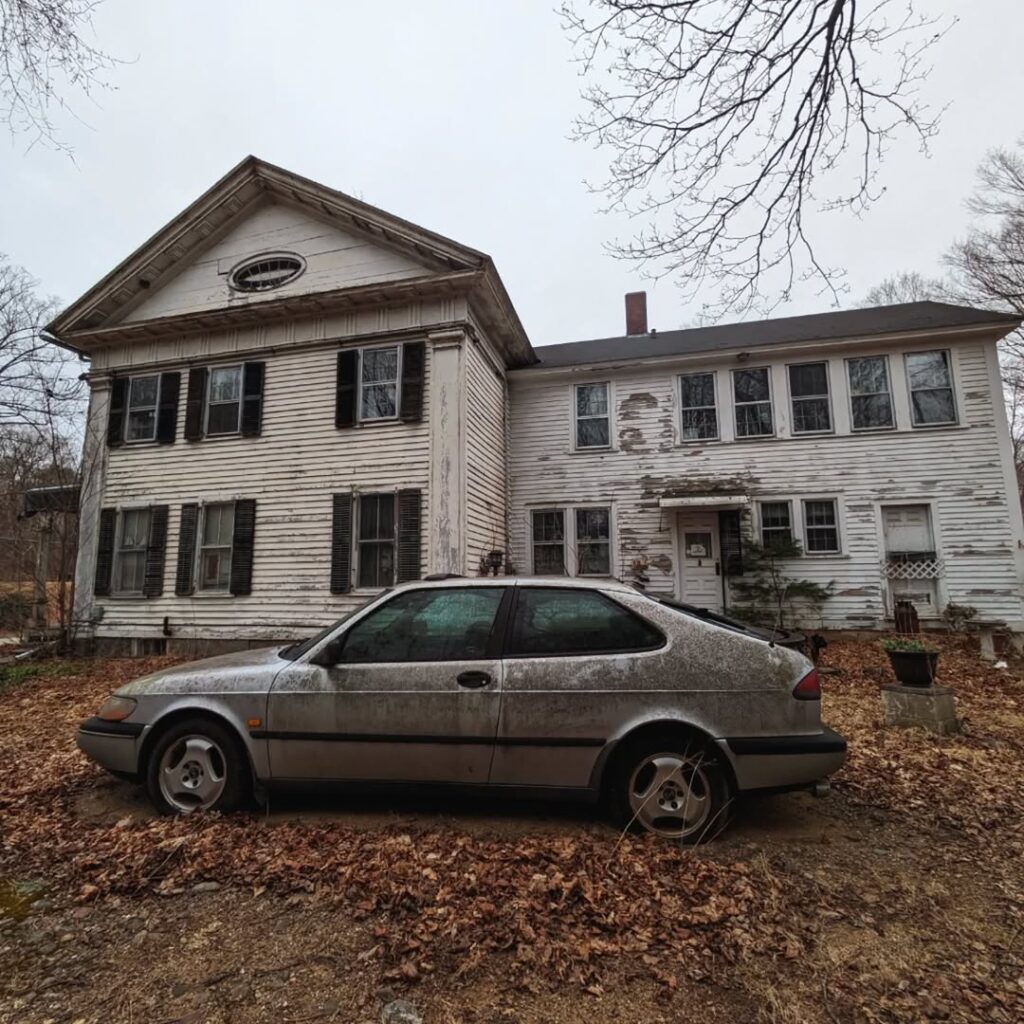
The honest answer is: maybe. And time is running out.
Every winter that passes without a repaired roof, every spring that floods an unprotected cellar, every year that the damp climbs higher up the walls — all of it takes something irreplaceable away.
The contents alone — the furniture, the portraits, the letters, the library — represent a significant cultural and historical archive. In the right hands, with proper preservation, much of it could be saved. Documented. Shared.
Some heritage organisations actively seek out at-risk properties for preservation. Local planning authorities in several countries now have powers to compel owners to maintain listed buildings. And occasionally, a buyer emerges with both the means and the passion to take on a forgotten castle and give it a second life.
It has happened before. It can happen again.
Conclusion: The Forgotten Mansion That Refused to Disappear
There is something quietly extraordinary about a forgotten mansion that kept everything.
In a world that discards things so easily — that demolishes and rebuilds, that strips and clears and moves on — a house that simply held its breath and waited is remarkable.
The teacup is still on the table. The letters are still in the desk. The portraits still watch the corridor. And somewhere, in a solicitor’s archive or a distant family home, there is probably a photograph of these rooms as they once were — full of light, full of people, full of life.
A forgotten château does not just tell us about the past. It asks us something about the present. About what we preserve and what we abandon. About what we owe to the places and stories that came before us.
If you want to explore more stories like this one, you will find a full archive of haunting abandoned places, forgotten estates, and time-capsule houses at abandoned.blog.
The door is always open.
Frequently Asked Questions
Q: Is it legal to visit abandoned mansions? A: Generally, no — not without the owner’s permission. Even seemingly derelict properties are privately owned. Always seek proper access through heritage organisations or the legal owner before entering any abandoned property.
Q: Why do some abandoned estates still have all their belongings inside? A: The most common reasons are legal disputes over inheritance, family tragedy, or simple geographic isolation. When no heir is willing or able to act, everything remains exactly as it was left.
Q: What is the difference between an abandoned château and an abandoned castle? A: “Château” typically refers to a French-style country house or estate, while “castle” usually describes a fortified medieval structure. In popular usage, both terms are often applied loosely to any large, grand abandoned property. Both can fall into the same kind of suspended, time-capsule neglect.
Q: Are there organisations that help preserve forgotten estates? A: Yes. In the UK, bodies like Historic England and the National Trust work to identify and preserve at-risk properties. Similar organisations exist across Europe and North America. Private buyers and philanthropists also play a role in rescuing historic houses from decay.
Q: Can abandoned mansion contents be legally sold or auctioned? A: Only by the legal owner or their authorised representative. Items inside an abandoned property still belong to the owner, even if that property appears derelict. Removing anything without legal authority constitutes theft.
All locations in this article are described for historical and educational purposes only. This site does not encourage, endorse, or facilitate trespassing or illegal access to any property.

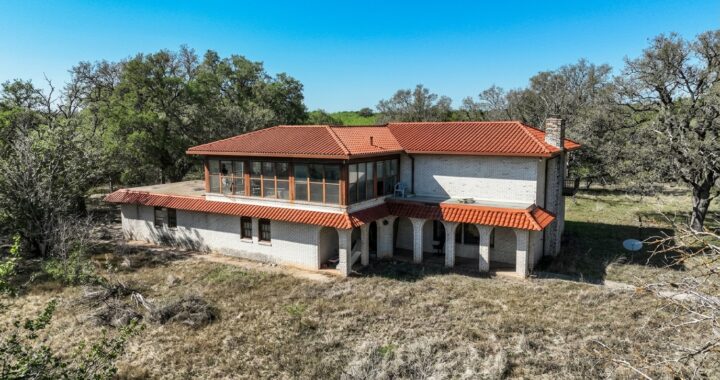
[…] ever been curious about what that stillness actually looks like in person, the team behind This Forgotten Mansion Still Has Everything Inside documented one such property in remarkable detail — and the images are genuinely difficult to […]