Introduction: A Door Nobody Opened Anymore
The road was barely on the map.
One of those narrow side streets that hugs a highway without really going anywhere — no gas station, no diner, just a faded strip of asphalt cutting through scrubby Florida vegetation. I almost missed it entirely.
But then I saw the house.
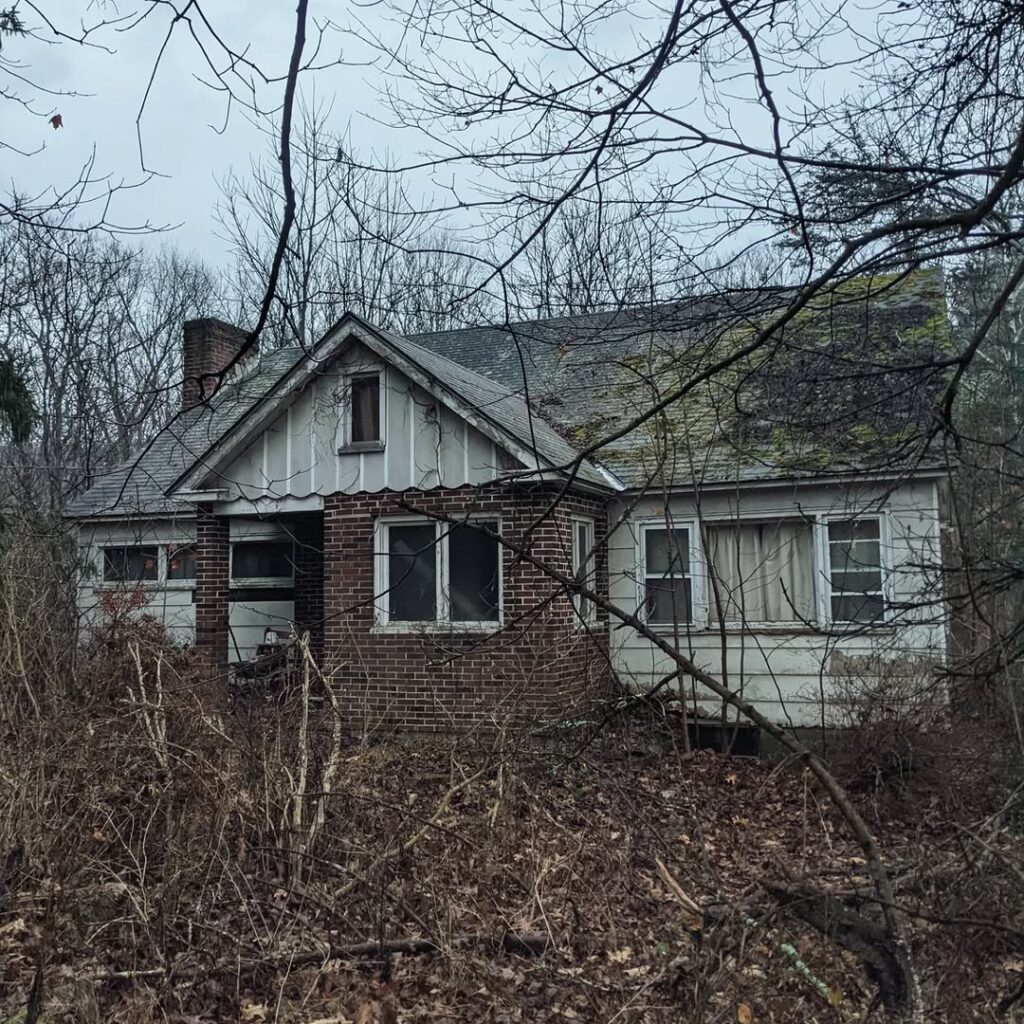
It sat back from the road at an angle, half-swallowed by overgrown shrubs and a sagging carport. No car in the driveway. No mail stacked up. No sign that anyone had been there in years. Just an abandoned house sitting in plain sight, its windows dusty and dark, its silence heavier than the afternoon heat.
I didn’t go inside. What I could see from the road and through the cracked-open door, though, told a complete story. And that story has stuck with me ever since.
This is what I found — and what it means when an entire life gets left behind.
The House That Time Forgot
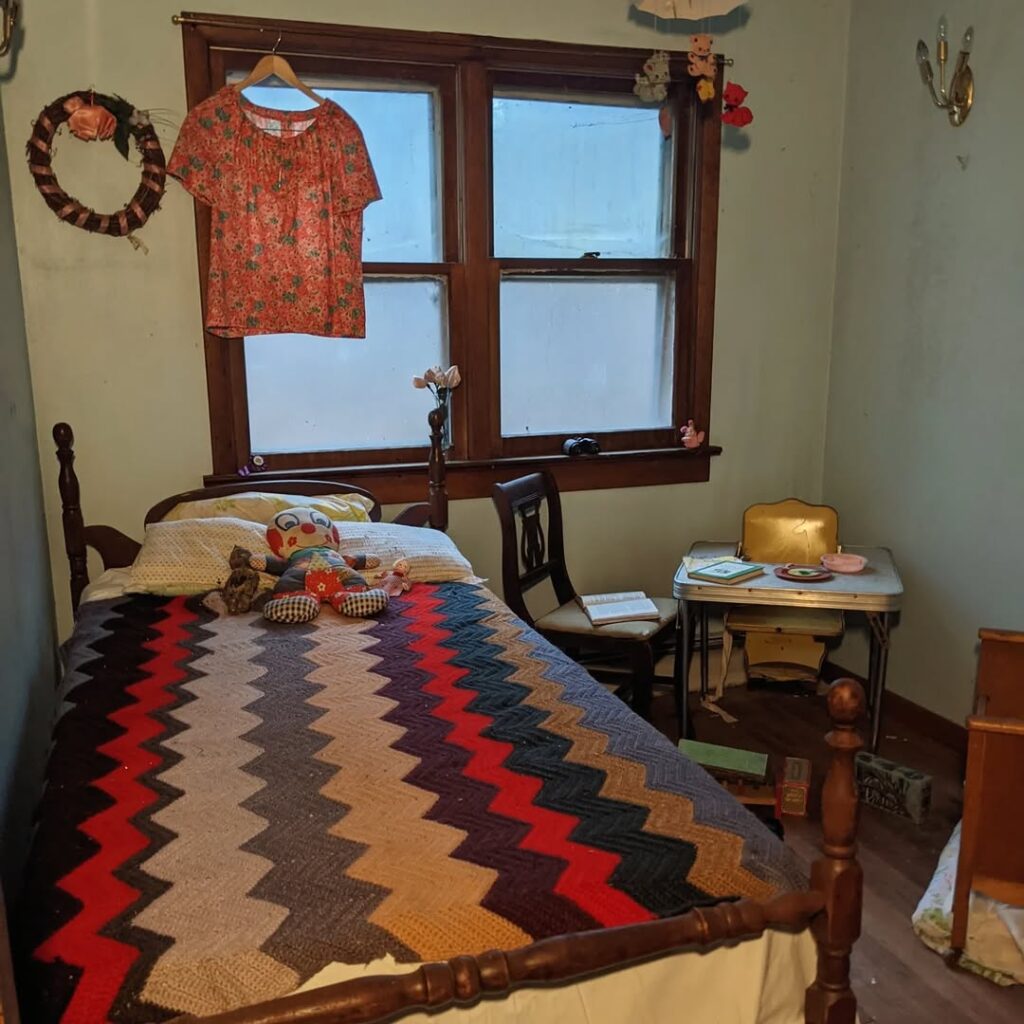
First Impressions From the Outside
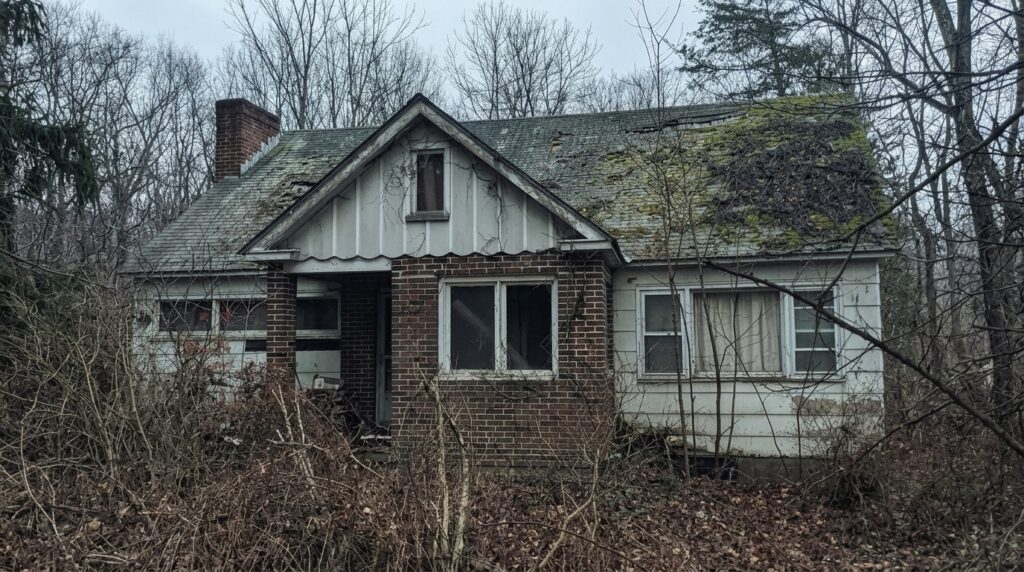
From a distance, it looked like any modest Florida home from the 1970s or ’80s.
A single-story concrete block structure. Low-pitched roof. A small covered porch with a rusted metal chair still sitting beside the door. The kind of house built for a quiet life — not for attention.
Up close, the decay became more obvious.
Paint was flaking off in long curling strips, revealing the original pale yellow underneath a later coat of white. The porch screen had pulled away from its frame at the corner, and a vine — something with small dark leaves — had threaded its way inside. The front door was slightly open. Not broken in. Just… never closed properly.
No graffiti. No broken windows. No evidence that other explorers or teenagers had ever found this place. That detail alone was striking. Most abandoned structures near populated areas get discovered fast. This one seemed to have slipped through every crack.
What Was Inside
Through the doorway, I could see straight into the main living area.
The furniture was still there. All of it.
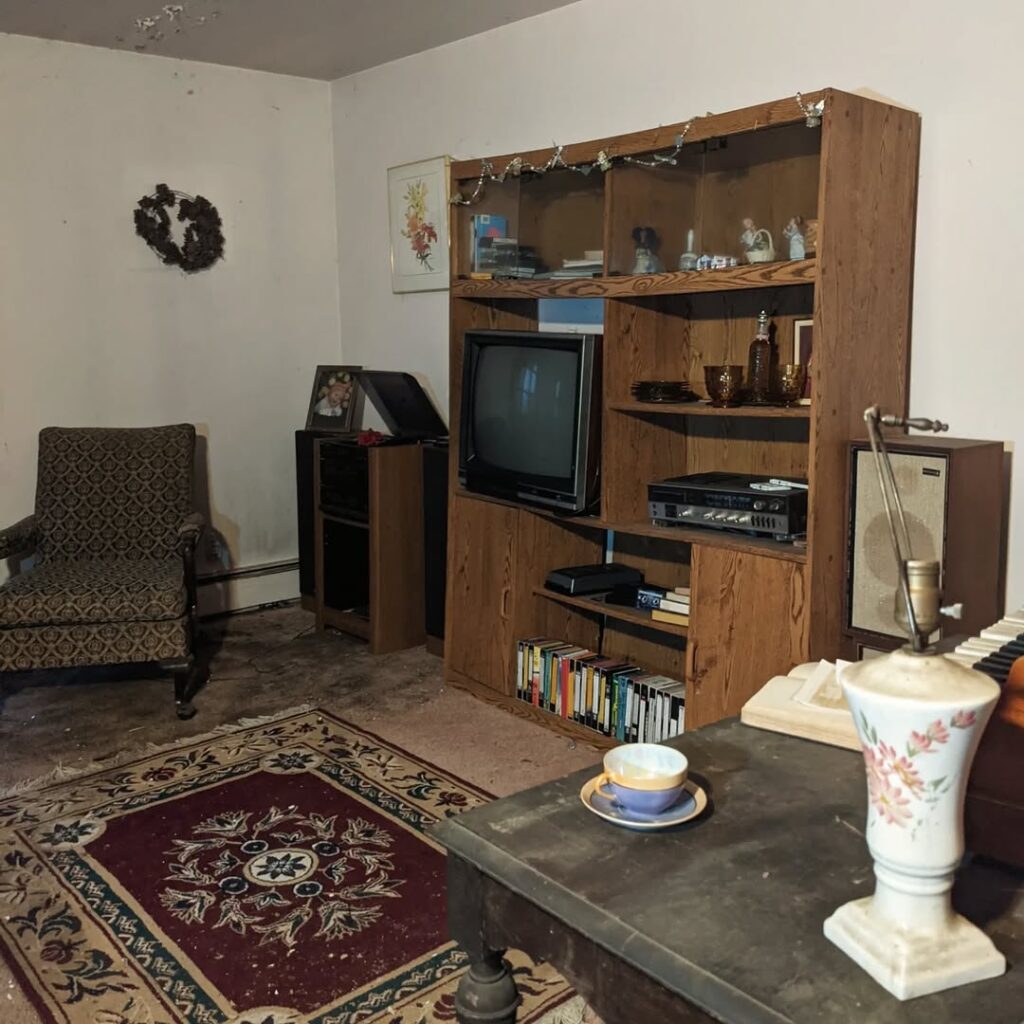
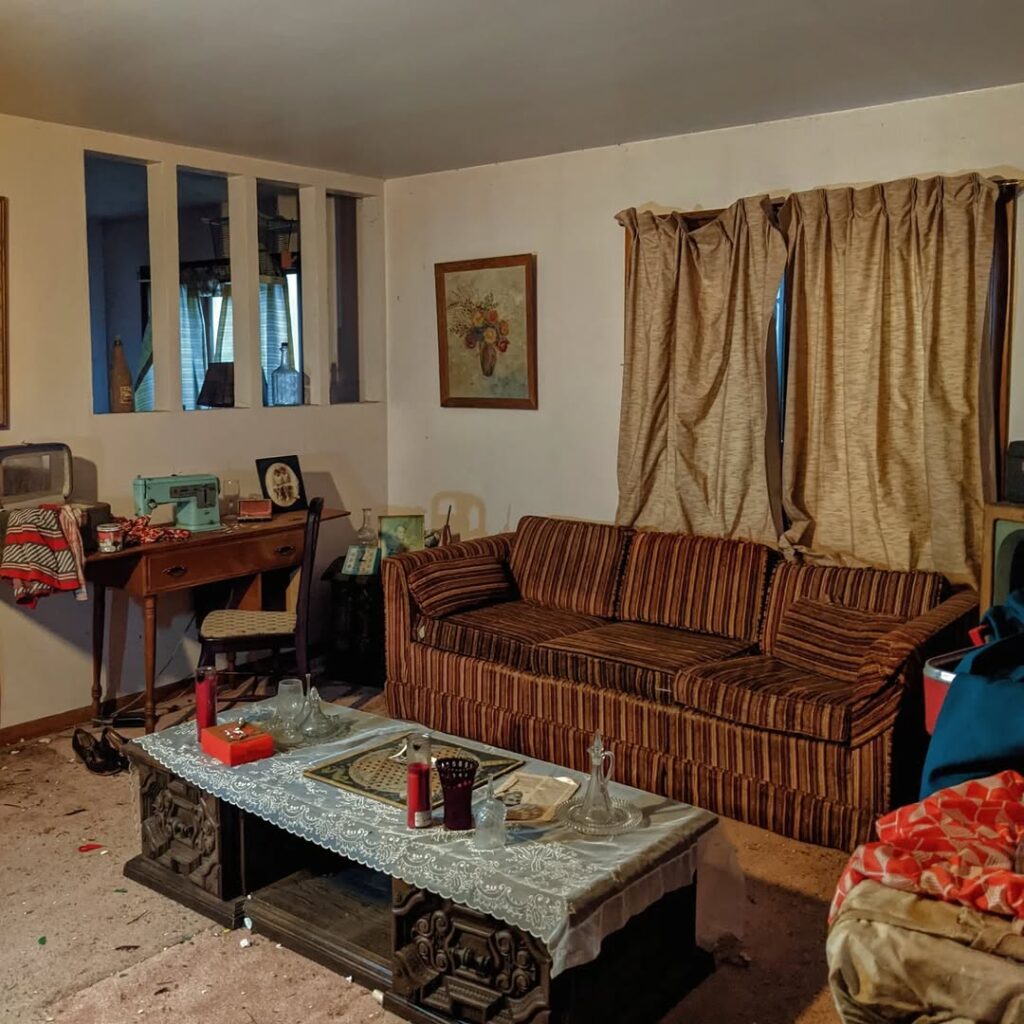
A floral-print sofa pushed against one wall. A small television set — the boxy kind from the early 2000s — sitting on a wooden stand. A glass-topped coffee table with a crocheted doily on it. A crucifix mounted above the door frame.
The walls held framed religious prints. A portrait of the Virgin Mary with a small electric votive candle beneath it, long since dead. Family photos in oval frames — formal, serious poses — the kind you’d see in any traditional Hispanic household from a generation ago.
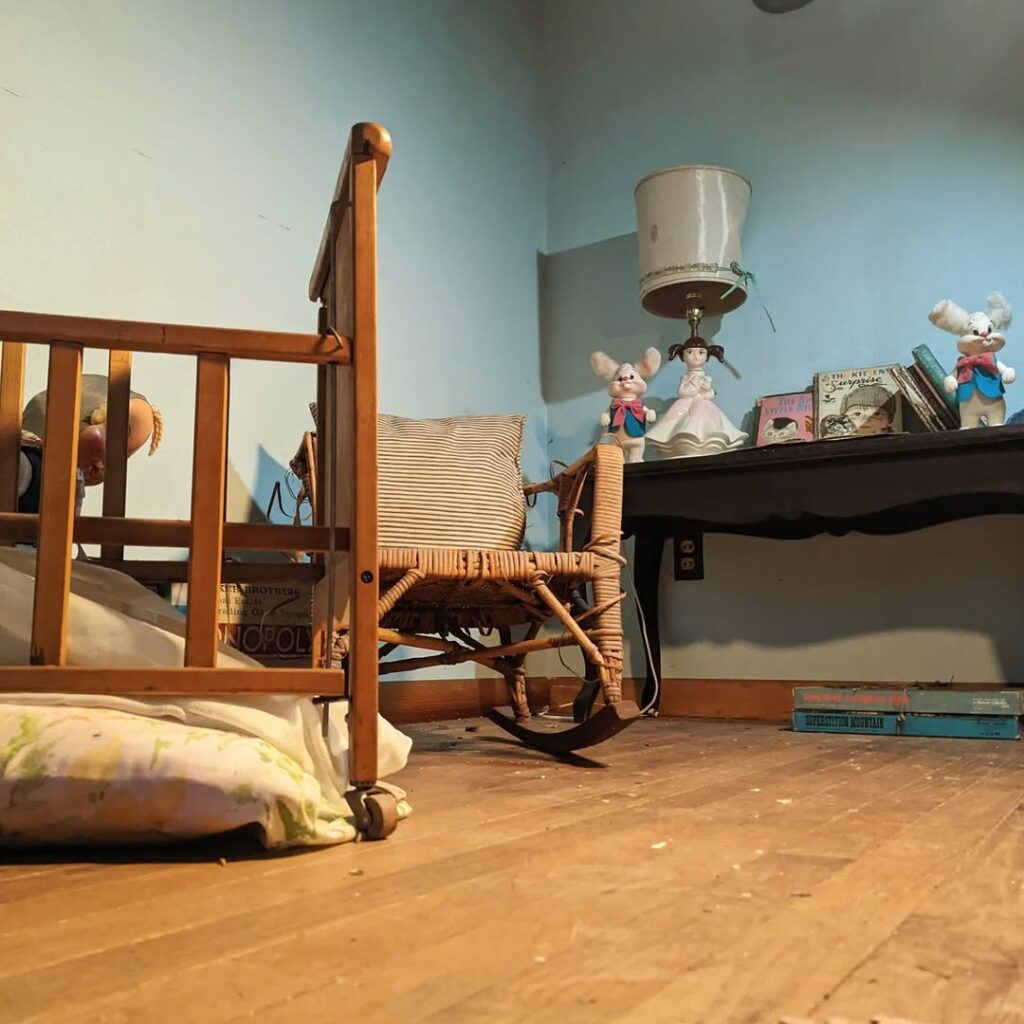
Every shelf still held its objects. Ceramic figurines. A glass rosary hanging from a nail. A small clay pot painted in bright orange and green.
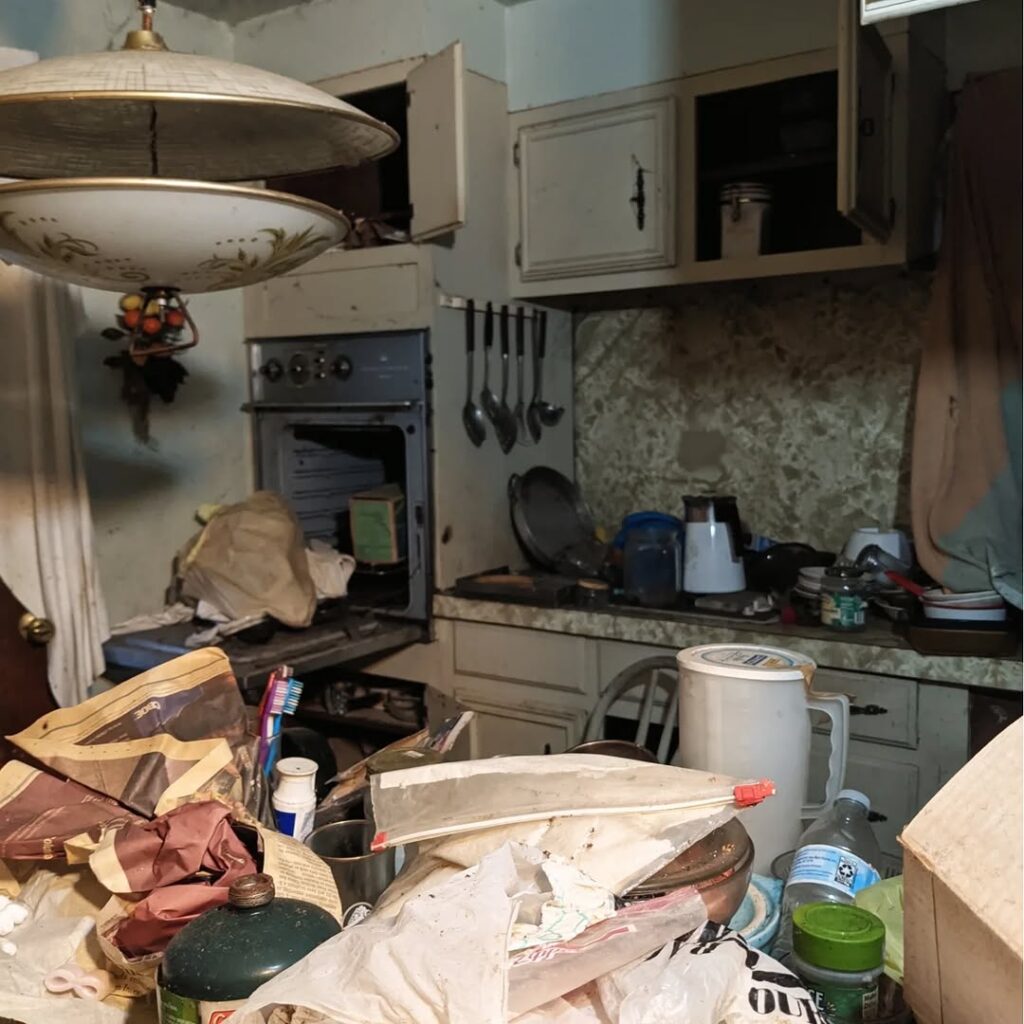
Dishes were still in the kitchen. A pot sat on the stove.
Life, frozen in place.
Whose Home Was This?
Piecing Together a Life From What Remains
Urban explorers often talk about the feeling of walking into someone’s past. This was different — because I hadn’t walked in at all. But even from the threshold, the story wrote itself.
The details pointed consistently to an older Hispanic woman. A devout Catholic. Someone who kept a tidy home and filled it with meaning — religious imagery, handmade textiles, family photographs. The style of the furnishings, the kitchen items, the decorative choices — everything suggested a woman who had lived here for decades and made this house a home in the truest sense.
No car left behind. That was the detail that got me.
Most abandoned homes still have a vehicle rotting in the garage or driveway. When a car is gone but everything inside remains, it usually means someone else removed it — family, perhaps, or a neighbor. Or authorities.
The most likely story? She passed away, possibly in a care facility or a hospital, away from home. Someone may have driven away her car but simply never came back to deal with the rest.
And everything was forgotten.
What Happens to a Home When No One Claims It
This kind of abandonment is more common than most people realize.
When an elderly person dies without a will — or with a complicated family situation — their property can fall into legal limbo for years. Probate courts move slowly. Distant relatives may not agree on what to do. Some heirs don’t even know they’ve inherited anything.
According to research on abandoned and unclaimed property in the United States, billions of dollars in assets sit in legal limbo across the country every year. Real estate is often the most complicated category — especially older homes in rural or semi-rural areas where land value is low and the cost of clearing and selling may barely exceed the expense of doing so.
The result? Houses like this one. Homes where a person’s entire existence sits untouched behind a slightly open door.
The Quiet Grief of Forgotten Places
When Objects Outlast Their Owners
There’s a specific kind of sadness that settles in an abandoned home like this.
It’s not the dramatic decay of a grand estate. It’s not the theatrical ruin of anabandoned château or forgotten castle. It’s something quieter and, in some ways, heavier.
It’s the grief of ordinary things.
That crocheted doily didn’t come from a store. Someone made it — stitch by stitch, probably while watching television in the evening, maybe while praying. Those photographs didn’t hang themselves. Someone chose which images to frame, decided where each one should go, and placed them with care.
The crucifix above the door wasn’t decoration. It was protection, in the way that faith becomes architecture — a belief made physical, placed in the spot where people enter and exit, day after day.
Now the door is slightly open. And no one is coming back.
Why Families Sometimes Don’t Return
It would be easy — and unfair — to assume that this woman’s family simply didn’t care.
The reality is almost always more complicated.
Grief affects people in unpredictable ways. Some families are paralyzed by loss and cannot bring themselves to enter the home of someone they loved. Others are scattered across different cities or countries, and the logistics of dealing with a small property far away become overwhelming. Legal complications — debts on the property, unclear ownership, disputed inheritances — can make it practically impossible to act even when someone wants to.
In tight-knit immigrant communities in particular, the death of a matriarch can fracture a family along fault lines that were always there but never tested. Children who emigrated young. Relatives in other countries who feel no connection to a property they’ve never seen. A silence that grows louder the longer nobody acts.
I don’t know what happened to her family. But I’d guess the absence isn’t indifference. It’s more likely a tangle of loss, distance, and paperwork that nobody ever found a way through.
The Architecture of a Life Lived Simply
What 1970s and 1980s Florida Housing Looked Like
The house itself was a product of its era.
Concrete block construction — known as CBS (Concrete Block Structure) — became the dominant building method in Florida during the post-war housing boom. It was cheap, relatively hurricane-resistant, and fast to build. Developers pushed thousands of these modest, practical homes into newly platted subdivisions across the state throughout the 1960s, 70s, and 80s.
This particular house had the telltale signs: wide eaves, jalousie windows on the side walls, a low flat roofline with minimal pitch. Functional and unpretentious. Built for people who needed shelter, not status.
According to the National Register of Historic Places framework, structures like these rarely qualify for historic preservation — they’re too recent, too common, too ordinary. But ordinary is not the same as unimportant. For the woman who lived here, this was the center of the world.
What the Objects Tell Us About the Decade
The television set dates things helpfully.
Boxy CRT televisions of the kind still sitting on that wooden stand were common household items from the late 1990s through the early 2000s. Flat screens started replacing them in most American homes around 2006 to 2010. The fact that this one was never upgraded suggests the occupant either stopped watching television, could no longer manage the purchase, or — most likely — had already left the home by then.
The ceramic figurines, the crocheted items, the glass-topped table with its doily — these speak to a decorating sensibility that was entirely mainstream in Hispanic American homes of the 1970s through 1990s. Modest means, careful choices, a preference for warmth over minimalism.
This wasn’t a home decorated to impress. It was a home arranged to feel safe.
Exploring Abandoned Places Responsibly
A Note on Ethics and Safety
Finding a place like this raises real ethical questions.
The right approach — and the one that keeps this kind of exploration legal and respectful — is to observe from publicly accessible areas only. Looking through an open door from a public road is not trespassing. Entering a private property without permission is, regardless of how abandoned it appears.
Beyond the legal issue, there’s a human one: this was someone’s home. The objects inside belonged to someone. They may still legally belong to a family somewhere, even if that family hasn’t acted on it.
For those interested in learning more about how to explore abandoned places thoughtfully, the guides at Abandoned Blog offer a solid framework for ethical urban exploration — how to document, how to respect, and how to stay safe.
The goal isn’t to disturb. It’s to witness. There’s an important difference.
What to Look For (Without Going In)
You can learn a remarkable amount from a doorway.
Here’s what careful, respectful observation can reveal:
- Approximate era of abandonment — The style and age of visible objects (TVs, appliances, décor) can narrow down when a home was last occupied
- Who lived there — Religious imagery, family photos, cultural objects, language on visible packaging
- Why it was abandoned — Whether objects are packed or left in place tells you whether the departure was planned or sudden
- How long it’s been empty — Dust accumulation, plant growth through gaps, condition of perishables
- Whether it’s safe to be near — Structural collapse risk is visible from the outside; leaning walls, compromised rooflines, and heavily rotted wood are warning signs
Observation is its own skill. And sometimes, a story tells itself without you ever crossing a threshold.
The Ones That Don’t Make the Headlines
Forgotten Estates vs. Forgotten Lives
A lot of urban exploration content online focuses on the spectacular.
The decayingforgotten estate with its grand staircase. The shuttered institution with its rusted beds still in rows. The factory with its machines left mid-process. These places are visually stunning, and they attract attention for good reason.
But some of the most affecting abandoned places are the smallest ones.
A single-story house on a side road. A life lived quietly and forgotten quickly. No famous history. No architectural drama. Just one woman’s belongings, arranged with care, waiting for someone who was never going to come.
These places don’t get written about much. They don’t photograph as dramatically. There’s no grand mystery to unravel, no famous name to attach to the story.
But they’re everywhere. And they matter.
The Question That Stays With You
I’ve thought about this house many times since I drove past it.
Did she have children? The photographs on the walls suggested a family — people who were real, who had birthdays and arguments and holiday dinners in this house. Where did they go?
Maybe they’re far away and grieving in their own way. Maybe the property is tangled in a legal situation nobody has had the energy to resolve. Maybe they simply moved forward the way people have to, and this house became a chapter that’s hard to reopen.
Or maybe — and this is the hardest version — she simply didn’t have anyone. A life lived fully, but privately. No heirs. No one with both the right and the will to come back.
The door is slightly open. The crocheted doily sits on the table. The crucifix watches over an empty room.
And the highway runs on, just a hundred yards away, full of people who will never know this place existed.
Conclusion: Why Abandoned Houses Like This One Deserve Our Attention
An abandoned house at the edge of a highway might seem like nothing worth stopping for.
But every forgotten home is a completed life. Someone chose those photographs. Someone cooked in that kitchen. Someone placed that cross above the door because they believed it would keep them safe.
When we slow down and actually look — really look — at these places, we’re doing something important. We’re refusing to let ordinary lives disappear entirely without witness. We’re acknowledging that not every story gets a monument or a museum. Some of them get a slightly open door and a stranger pausing on the road.
The question of who she was, and what became of her family, may never be answered. But the fact that she was here — that she lived, that she cared, that she made this small house into something that held meaning — that much is certain.
Some forgotten estates are famous. Some abandoned places make the history books.
And some are just a house by the highway, a crocheted doily, and a silence that says everything.
Frequently Asked Questions
Q: Is it legal to photograph or observe an abandoned house from the road?
Yes. Photographing or observing a property from a public road or sidewalk is generally legal in the United States. Entering private property without permission, even if it appears abandoned, is trespassing and should be avoided.
Q: What happens to abandoned homes with no living heirs?
After a period defined by state law, properties with no claimants typically escheat to the state — meaning they become government property. The timeline varies by state, often ranging from 5 to 20 years. Local counties may eventually auction or demolish such properties.
Q: How do you find out who owns an abandoned property?
Property records are public in most U.S. counties and can be searched through the county property appraiser’s website. These records show current listed ownership, tax payment status, and assessed value.
Q: Why do families sometimes leave homes abandoned instead of selling them?
Common reasons include unresolved legal disputes, properties with negative equity (worth less than any debts attached), emotional difficulty re-entering a loved one’s home, distant family members with no practical means to manage the property, and bureaucratic delays in probate court.
Q: What is urban exploration (urbex)?
Urban exploration, or urbex, is the practice of visiting and documenting abandoned or restricted locations. At its best, it’s a form of historical and architectural preservation — a way of bearing witness to places that would otherwise disappear without record. Responsible practitioners observe safety and legal boundaries carefully.
All observations described in this article were made from public areas. No private property was entered. This content is intended for informational and historical appreciation purposes only.