There are places that stop time.
Not metaphorically. Literally. You walk through a door and the decade changes. The air smells like old wood and something floral — faint, like perfume left behind in an empty room. Dust hangs in slanted light. Curtains still hang from windows. A teacup sits on a side table like its owner just stepped away.
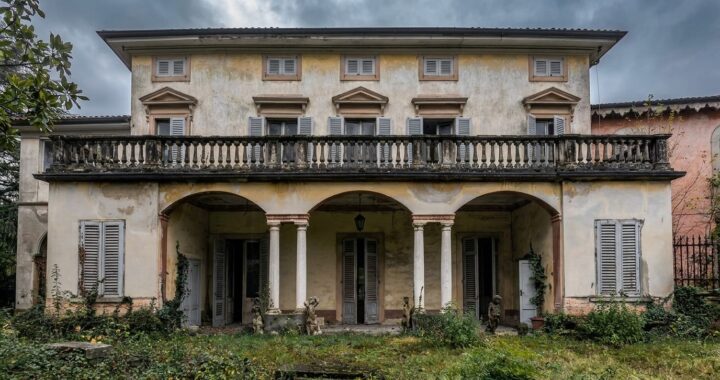
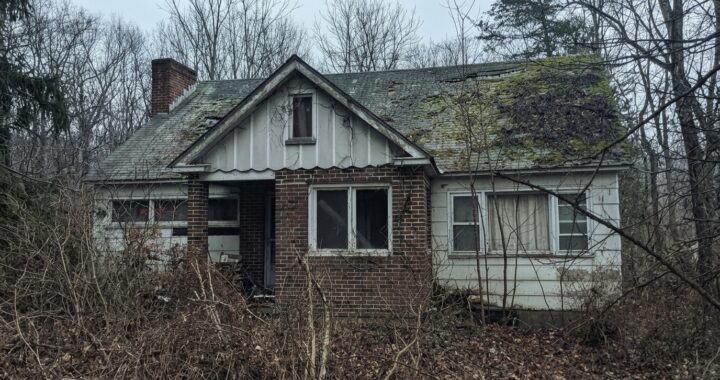
This abandoned mansion frozen in time is one of those places.
Tucked deep in the heart of JFK’s hometown — one of the wealthiest, most historically layered neighborhoods in the entire United States — this 9,000 square foot estate has been standing since 1900. Built by a powerful political family. Valued at $7.5 million. And left completely untouched since 2020, when the last person who truly loved it passed away.
Her name was Peggy. And this is her story.
The House That History Built
A Neighborhood Steeped in Power
The town where this forgotten estate sits isn’t just wealthy. It’s the kind of wealthy that has a library named after a senator and a bronze plaque on nearly every third building. Brookline, Massachusetts — birthplace of John F. Kennedy — has long been home to old families with old money and older ambitions.
It’s easy to walk these tree-lined streets and feel the weight of legacy pressing down on you. Grand Colonial Revival homes peer out from behind iron fences. Oak trees older than most countries shade sidewalks made of original brick.
And somewhere along one of those shaded streets, almost invisible behind overgrown hedges, sits this estate.
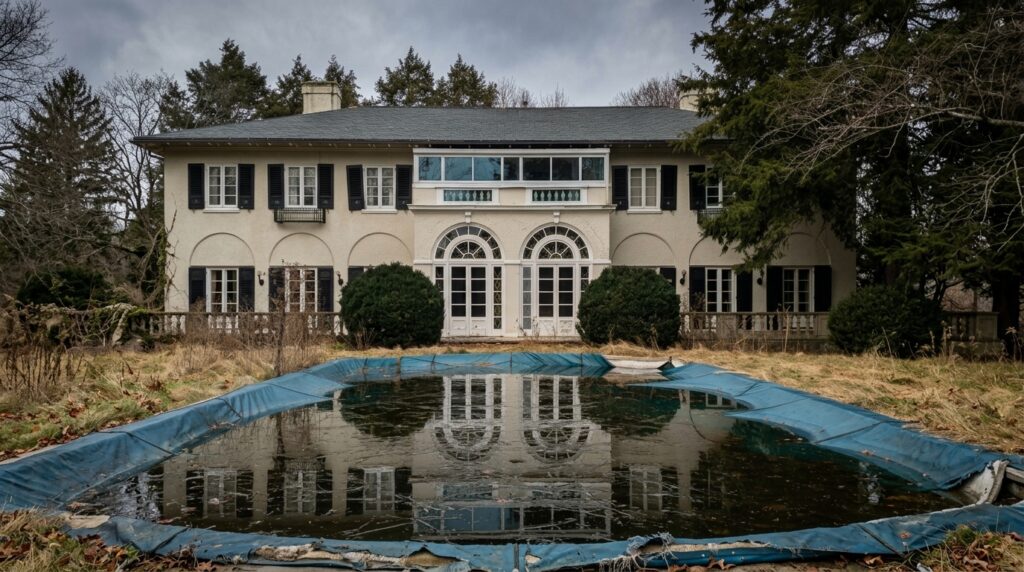
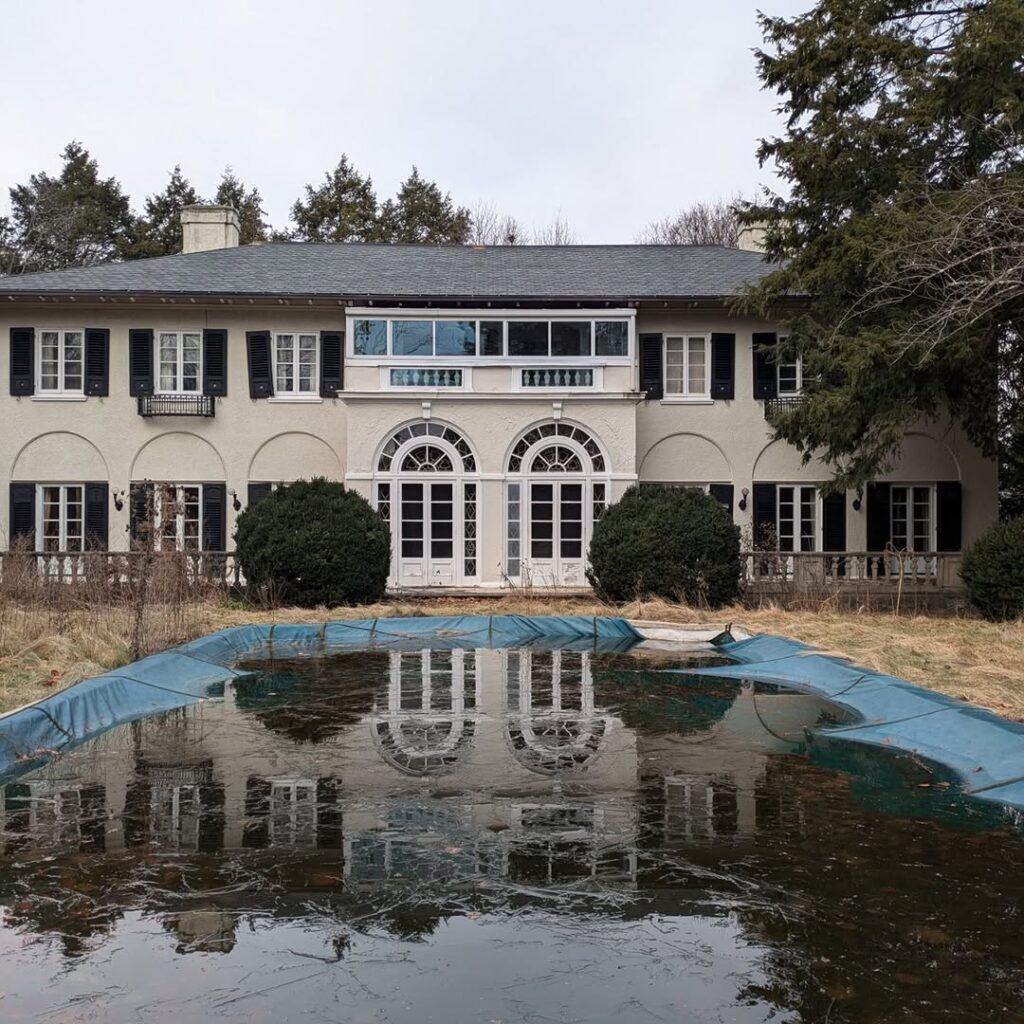
You wouldn’t notice it at first. The facade is quiet — almost deliberately so. But push past the vines climbing the limestone columns and you begin to understand the scale of what you’re looking at. Nine thousand square feet. Four floors. More rooms than most families would use in a lifetime.
The Colonial Revival architectural style, popular at the turn of the twentieth century, is written into every line of this building. Wide porticos. Symmetrical windows. A hipped roof crowned by a widow’s walk that once offered views across the neighborhood canopy.
Someone built this to be seen. To be remembered.
The Political Family Behind the Walls
Influence Poured Into Every Room
The family who commissioned this home in 1900 wasn’t just rich. They were influential — the kind of people whose names appeared in newspapers not for scandals, but for decisions. Political appointments. Charitable endowments. Dinner parties attended by names that would later appear in history books.
Details on the specific family are deliberately kept vague here — in the world of abandoned places, privacy for the living and dignity for the dead matter more than clicks. But the record of their power is visible in the bones of the house itself.
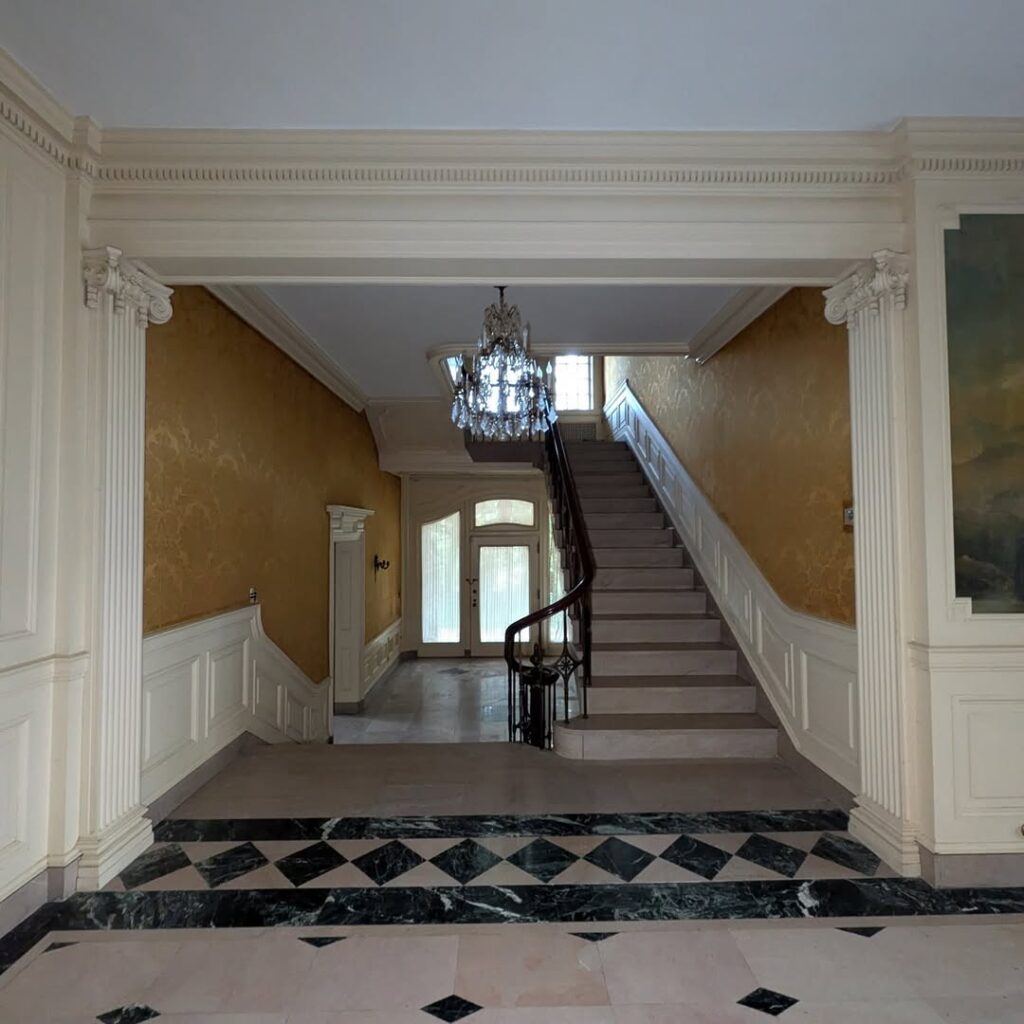
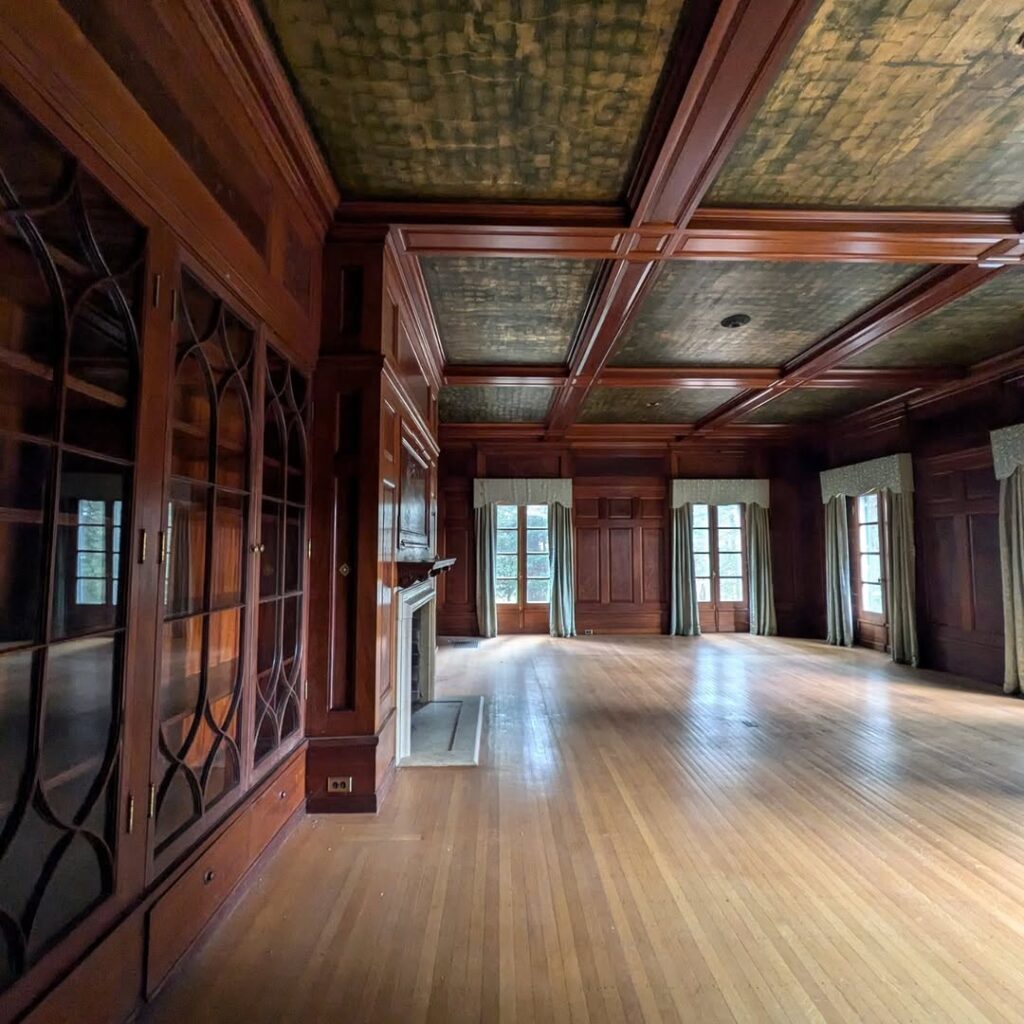
The main entrance hall alone is a statement. Sixteen-foot ceilings. Original plaster medallions overhead, each one hand-cast. A grand staircase sweeping upward in a slow, deliberate curve — the kind designed to make visitors feel small in the best possible way.
The formal dining room seats twenty. The library still holds hundreds of volumes, some dating to the 1880s. A separate gentleman’s study sits off the east wing, its mahogany shelving intact, its leather-topped desk sitting in shadow like someone just left mid-sentence.
Power decorated this house. But love kept it.
Peggy: The Woman Who Chose Purpose Over Power
A Quiet Life in a Loud Legacy
Here’s what makes this story different from most abandoned estate stories.
Most forgotten mansions become forgotten because the family collapsed — bankruptcy, scandal, feuds that stretched across generations. The house gets sold, resold, abandoned, and eventually left to whatever weather and time decide to do with it.
This one is different. This one was chosen.
Peggy — the daughter of the original family’s later generation — inherited the estate and could have sold it for millions. The offers came. The developers called. But Peggy, by all accounts, was not that kind of person.
She was quiet where her ancestors were loud. Modest where they were extravagant. Her life’s work wasn’t politics or accumulation. She volunteered at local schools. She was known in her community as someone who remembered your name, your kids’ names, your dog’s name. Small things. Human things.
She lived in the estate — not as a showpiece, but as a home. Some rooms she used daily. Others she left as they were, a kind of living museum to the family that came before.
When Peggy passed in 2020, she left no instructions about what to do with the property. And so, it has sat. Waiting.
Every room carries her fingerprint alongside her ancestors’. A stack of library books on the nightstand — still marked with a bookmark she’ll never return to. A pair of reading glasses folded on the kitchen table. A cardigan draped over a chair back like she just stepped out for a moment.
This is what a forgotten estate looks like when it was genuinely lived in. It’s not tragic. It’s tender.
What Survives Inside
A Room-by-Room Portrait of Frozen Time
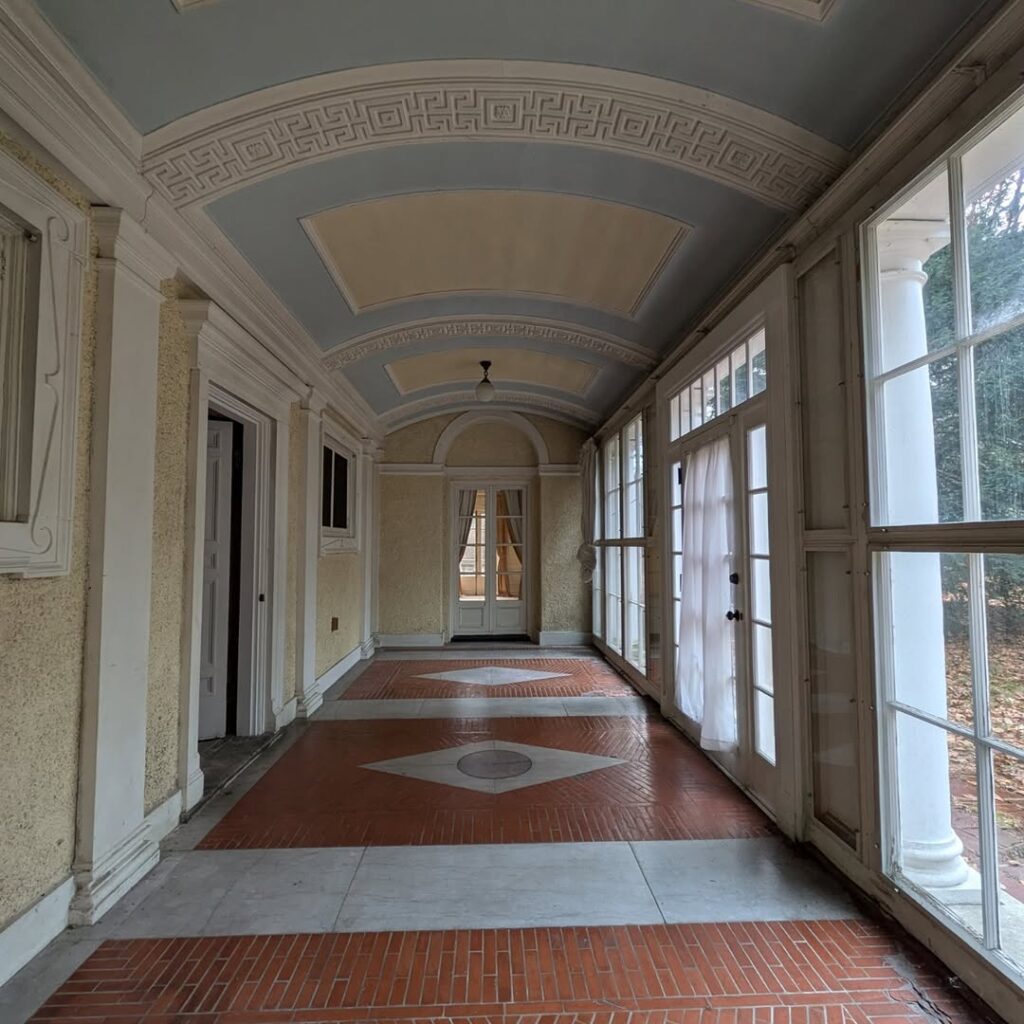
Walking through an abandoned space like this one is nothing like the dramatic, graffiti-tagged ruins you might picture. There are no smashed windows here. No peeling paint sprayed over with tags. This place decayed the way old things decay when left alone — slowly, gently, with a kind of dignity.
Here’s what remains:
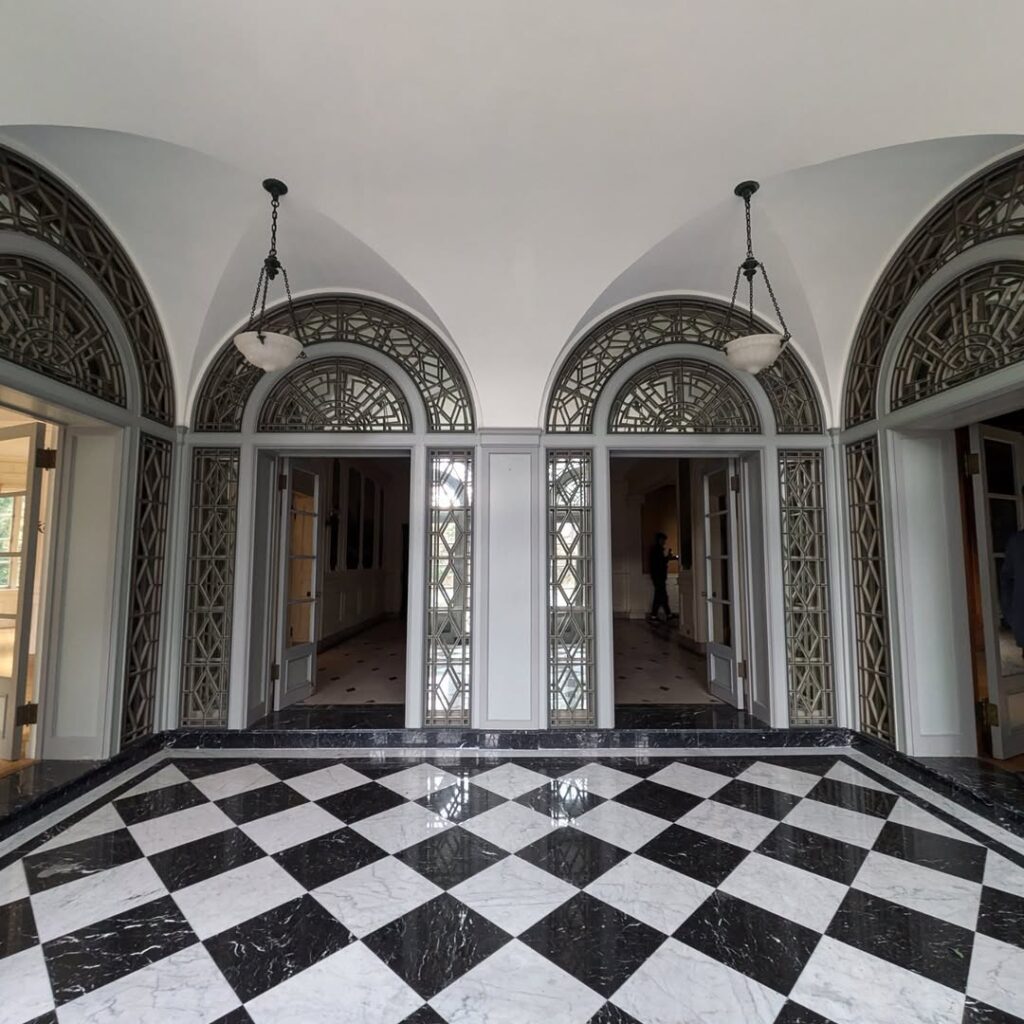
The Grand Entrance Hall The original black-and-white marble floor is still intact. A crack runs from the front door toward the base of the staircase — settling, not damage. The coat rack by the door still holds an umbrella. A hat. A scarf folded in quarters.
The Library Books haven’t been touched in years — you can tell by the thin film of dust on their spines. But they’re all still there. Hundreds of them. First editions mixed with paperback mysteries. A leather-bound Bible open on a reading stand. The smell in here is extraordinary: old paper, wood polish, and something faintly floral that no one can quite explain.
The Kitchen This was Peggy’s domain. A copper pot still hangs from the ceiling rack. Recipe cards in her handwriting are tucked into a small wooden box by the stove. The refrigerator is empty now, of course, but the kitchen still feels used. Warm. Like the ghost of a good meal.
The Formal Sitting Room This room clearly belonged to a different era. Heavy brocade furniture. A marble fireplace with a gilt-framed mirror above it. Photographs on the mantle — stiff, formal, sepia-toned. And then, slightly out of place, a small watercolor painting of a garden, clearly done by an amateur hand. Peggy’s, most likely.
The Widow’s Walk Access is uncertain from the interior now — the attic stair shows significant wear. But from the outside, the widow’s walk remains structurally visible, its iron railing still standing against the roofline. It must have been remarkable up there. Views across Brookline. History in every direction.
The Architecture: A Masterpiece at Risk
What 125 Years Looks Like
The estate was built at a moment when American domestic architecture was at a particular peak. The National Register of Historic Places documents hundreds of properties from this era — homes built with craftsmanship that simply doesn’t exist in modern construction.
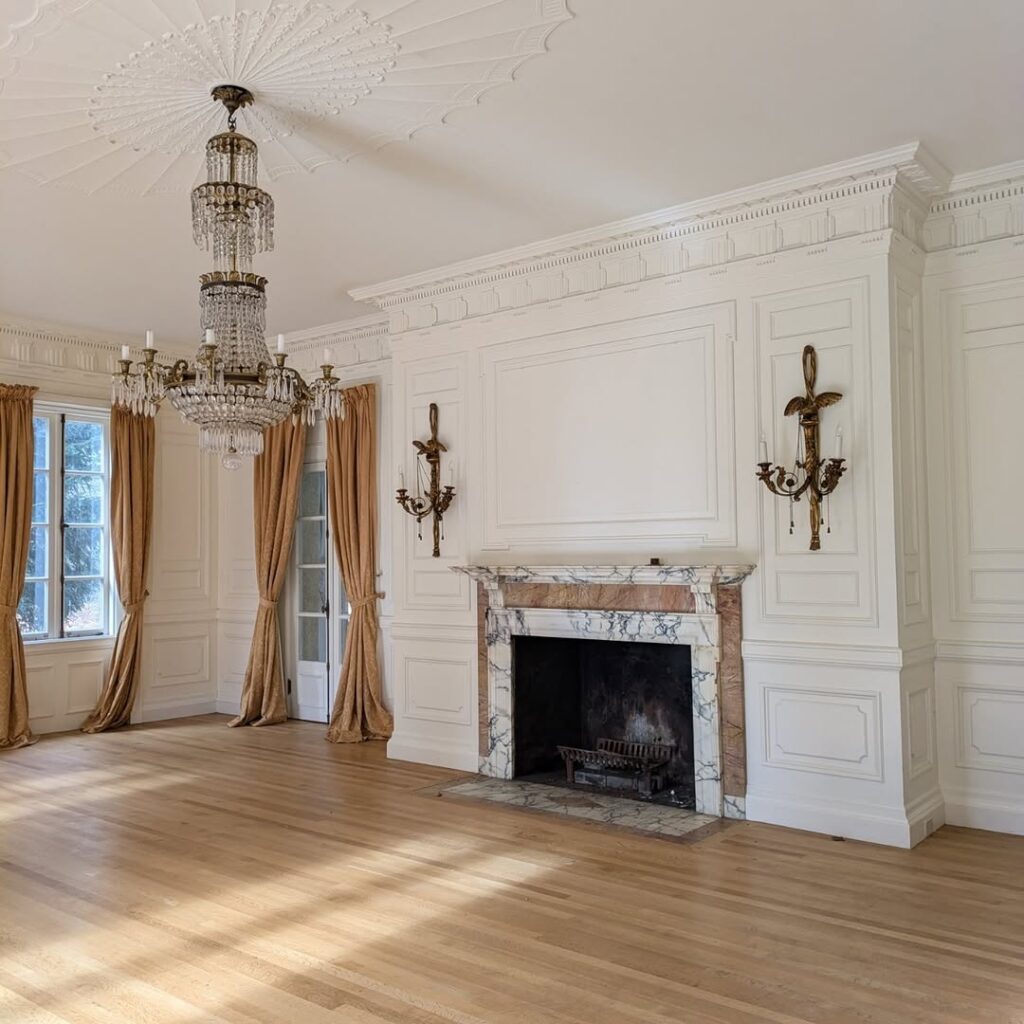
The plaster ceilings are a perfect example. Modern ceilings are drywall. These are layered horsehair plaster applied by hand — a technique that takes weeks and produces a surface that lasts a century. Which it has. Mostly.
In the upper rooms, water damage has begun to claim some of that plasterwork. A ceiling in one of the secondary bedrooms has partially collapsed, leaving a heap of white rubble on the floor below and a view straight up into the attic structure — a cathedral of old timber and darkness.
The hardwood floors throughout remain largely intact. Wide-plank white oak, tongue-and-groove, original finish gone matte with age but still solid underfoot. In the master bedroom, a Persian rug still covers most of the floor, its colors faded to something softer and more beautiful than the original must have been.
The exterior limestone is weathering, as limestone does. Mortar joints need repointing. The ironwork on the portico shows rust. The gutters — long since clogged — have allowed water to trace dark stains down the facade.
But the bones? The bones are good.
If someone wanted to restore this place, it could be done. That’s both the hope and the heartbreak of it.
Why Places Like This Matter
The Cost of Forgetting
There’s a reason urban exploration writing has found such a devoted audience over the last decade. It’s not about trespassing. It’s not about danger or shock value.
It’s about memory.
Every abandoned space is a record. A document written in architecture and objects and the passage of light through dirty windows. When a place like this one is demolished — when the development company finally wins the argument and the excavators arrive — something genuinely irreplaceable is lost.
Not just the building. The story inside it.
Peggy’s reading glasses won’t be in the archive. Her recipe cards won’t be preserved. The watercolor painting over the fireplace won’t make it into a museum. These things will go into a dumpster.
That’s why documentation matters. That’s why these stories need to be told — carefully, responsibly, with respect for the people whose lives shaped these spaces.
You don’t have to trespass to care about preservation. You just have to pay attention.
What Happens Next?
The Estate’s Uncertain Future
As of now, the estate’s future is genuinely unclear. Estate proceedings following Peggy’s 2020 passing have been slow. The property is reportedly being evaluated — both for potential historic designation and for development.
Development, in a neighborhood like Brookline, means money. A lot of it. A 9,000 square foot lot in one of the most sought-after zip codes in Massachusetts is worth more to a developer as empty land than as a preserved historic home.
But preservation advocates are watching. Local historical societies have been alerted. And stories like this one — shared widely, read by people who care — can sometimes shift the momentum.
Not always. But sometimes.
If this estate earns historic designation, restoration becomes possible. The architecture survives. The craftsmanship survives. And something of Peggy’s quiet, purposeful life survives too — not in a recipe card or a reading glass, but in the walls that held her.
Explore more forgotten places on the brink of being lost forever and see how documentation makes a difference.
Conclusion
This abandoned mansion frozen in time is more than a striking photograph or a viral moment. It’s a record of a century of American life — political ambition, quiet dignity, and the bittersweet stubbornness of things that refuse to disappear without a witness.
Peggy didn’t choose power. She chose presence. And now, years after her passing, her presence fills every room of this estate like afternoon light through old glass — soft, oblique, and impossible to ignore.
Whether this mansion survives or falls, someone has noticed. Someone has told its story. And that, for now, is what preservation looks like.
Frequently Asked Questions
Where exactly is the abandoned mansion? The estate is located in Brookline, Massachusetts — the historic hometown of President John F. Kennedy. Out of respect for the property and ongoing estate proceedings, the exact address is not published.
Can I visit the abandoned mansion? No. The property remains privately owned and is not open to the public. We strongly discourage trespassing. Appreciate historic spaces responsibly and legally.
Who was Peggy? Peggy was the last private resident of the estate — a descendant of the original political family who built the home in 1900. She was known in her community for her quiet generosity and lived in the estate until her passing in 2020.
Is the mansion going to be demolished? As of now, the future of the property is undecided. It is being evaluated for potential historic designation, which could protect it from demolition. The outcome is not yet known.
What architectural style is the mansion? The estate is built in the Colonial Revival style, which was highly fashionable among wealthy American families at the turn of the twentieth century. It features symmetrical facades, formal proportions, and high-quality interior detailing including original plasterwork and hardwood floors.
Why do people write about abandoned places? Urban exploration writing serves as documentation and advocacy. By telling the stories of forgotten places, writers help raise awareness about preservation — sometimes making a difference before a historic building is lost forever.
All information in this article is based on historical research and documentation. This site does not encourage or condone trespassing. Always respect private property and local laws.