There’s a strange kind of silence that belongs only to abandoned places.
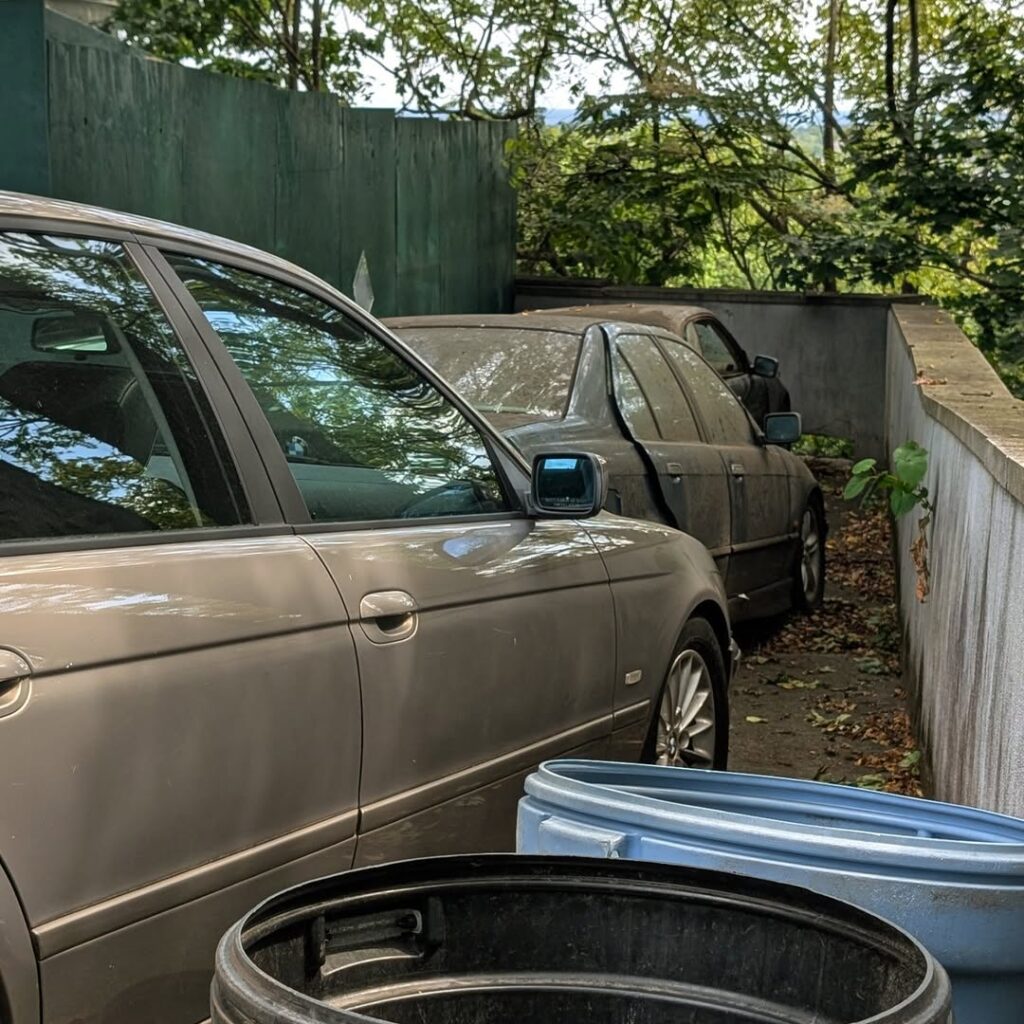
Not the peaceful quiet of an empty park or a early Sunday morning. This is heavier. Thicker. The kind of silence that wraps around you and makes every footstep feel like an intrusion. That’s exactly what greeted us the moment we stepped through the threshold of one of the most jaw-dropping forgotten estates we’ve ever documented — a sprawling American mega mansion, frozen somewhere between grandeur and decay, with four BMWs still parked in the garage and a life left behind in almost perfect detail.
This abandoned mega mansion didn’t just have furniture left behind. It had everything. Clothes in the closets. Food still on the pantry shelves. Family photos on the walls. And those four luxury cars — dusty, silent, waiting for an owner who never came back.
What Is an Abandoned Mega Mansion?
Before we dive into the details of this particular property, it’s worth understanding what separates a mega mansion from a regular abandoned home.
A mega mansion typically refers to a residential property exceeding 10,000 square feet. These are homes built for the ultra-wealthy — with multiple wings, home theaters, indoor pools, grand staircases, and garages large enough to house a fleet of vehicles. According to Wikipedia’s overview of McMansion architecture, the rise of oversized luxury homes in America peaked during the late 1990s through the mid-2000s, fueled by easy credit and a culture that equated size with success.
When the 2008 financial crisis hit, many of these properties were abandoned almost overnight. Owners lost fortunes. Banks foreclosed. And sometimes — especially with the most isolated or legally complicated properties — homes were simply… left.
This is one of those homes.
How We Found It
We won’t share the exact location out of respect for the property and the safety of our readers. What we can tell you is that this forgotten estate sits somewhere in the continental United States, hidden behind overgrown hedgerows on a long private drive.
A tip from a fellow explorer pointed us toward satellite imagery. Then came weeks of research — public records, old real estate listings, local news archives. Slowly, a picture emerged. A picture of a family that once lived here in remarkable style. And then, one day, simply didn’t.
Walking Through the Gates: First Impressions
The iron gates at the entrance were still standing, though rust had crept up their ornate columns like ivy.
Beyond them, the driveway curved through what had once been a manicured landscape. Now it was all wild grass and cracked asphalt, with weeds splitting through the center line. The house came into view gradually — and even in its current state, it was breathtaking.
Four stories. Pale stone facade. Tall arched windows. A porte-cochère at the front entrance, the kind you’d expect at a luxury hotel rather than a private home.
It looked like a forgotten estate from another era, even though it couldn’t have been more than 20 or 25 years old.
Inside the Abandoned Mega Mansion: Room by Room
The Grand Foyer
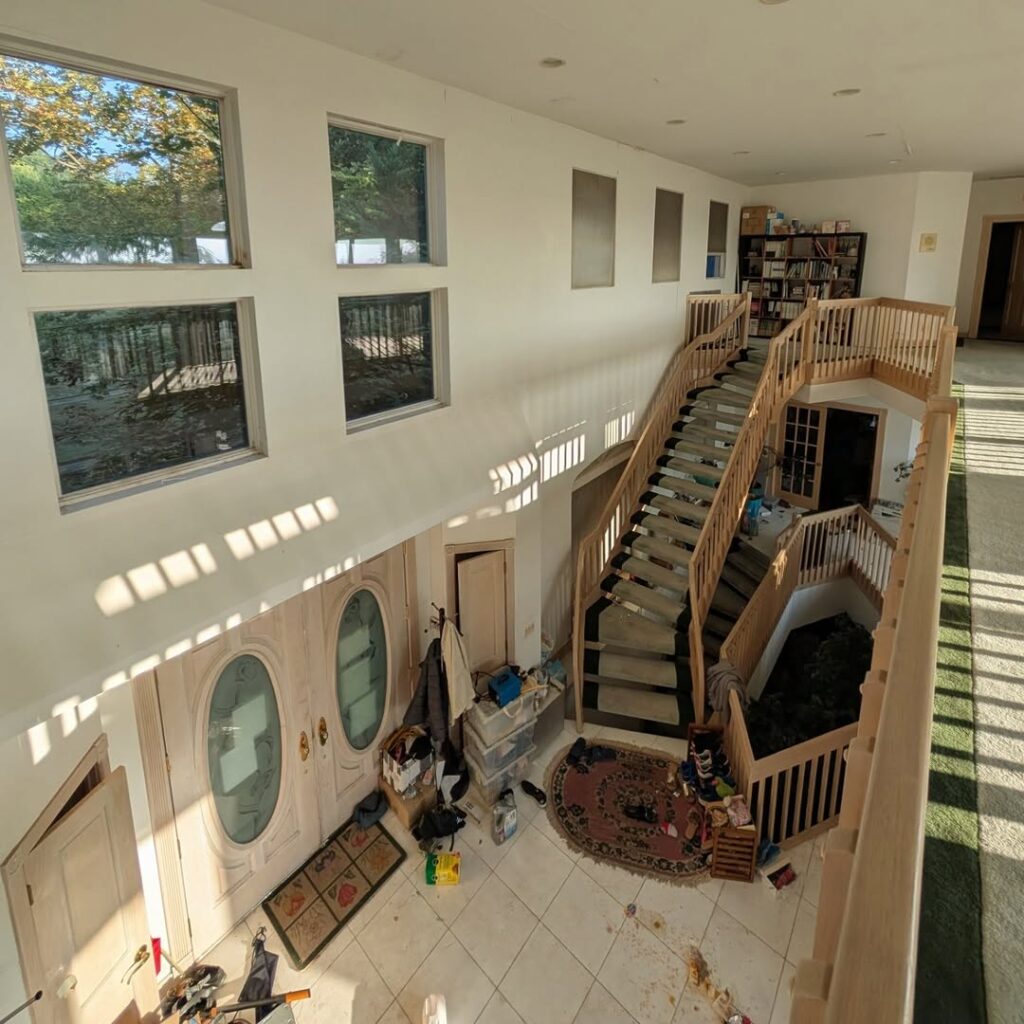
The front doors opened with a groan that echoed into a two-story entrance hall.
Overhead, a chandelier still hung from the ceiling — covered in a decade’s worth of dust and cobwebs, but structurally intact. Beneath our feet, marble tile stretched in every direction. The floor was filthy, but beneath the grime, the quality was undeniable.
A sweeping staircase rose in front of us, dark wood banisters framing each side. The carpet runner on the stairs had faded from what must have been deep red to a tired, dusty rose.
The Living Room: Frozen in Time
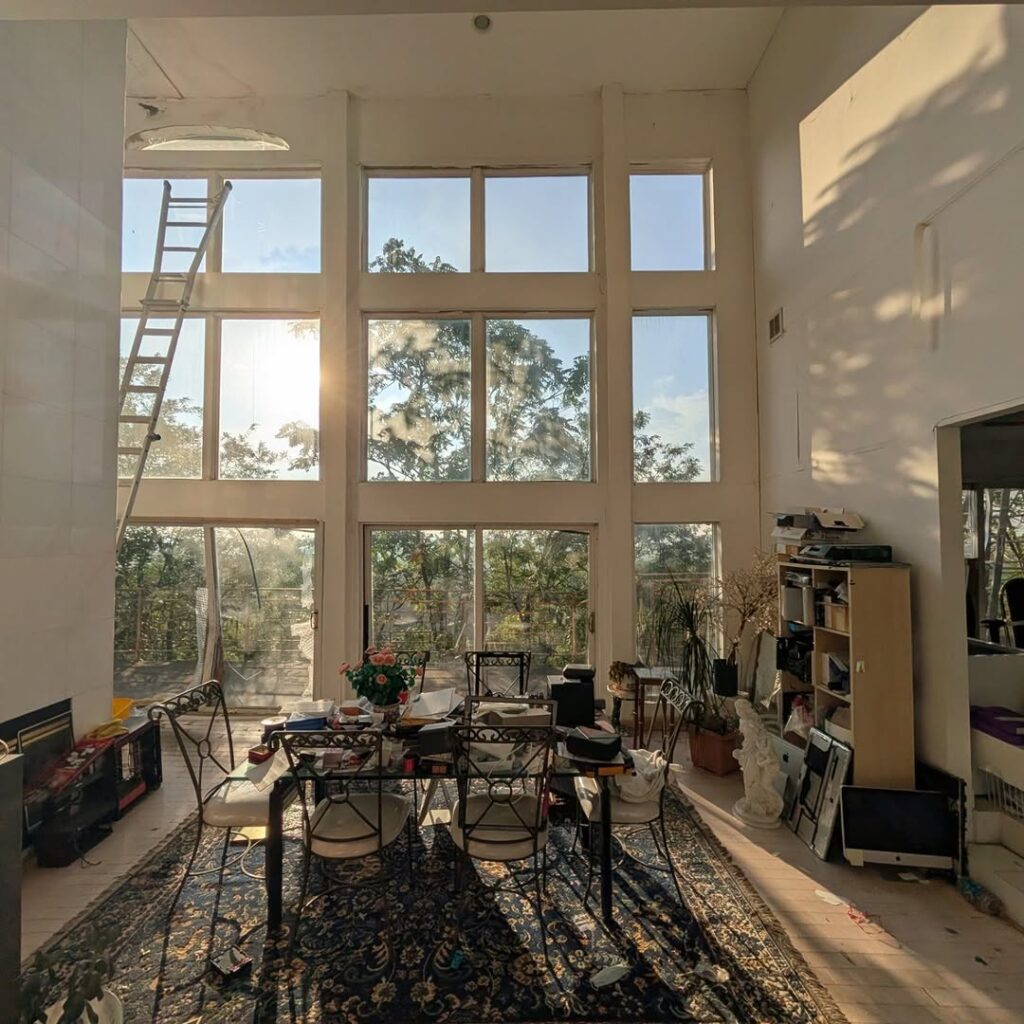
This is where the scale really hit us.
The living room was enormous — easily 40 feet wide, with cathedral ceilings and a fireplace large enough to stand in. Sofas, coffee tables, lamps, artwork. All of it still there. A flat-screen television, now outdated by a decade, sat mounted above the mantel.
Family photographs lined one entire wall. Vacations. Graduations. Christmas mornings. The images of a real life, lived fully, and then abruptly interrupted.
It’s the kind of scene that stops you mid-step.
We’ve documented manyforgotten homes and abandoned estates across America over the years, but rooms like this never stop feeling strange. The intimacy of someone else’s life, preserved under a layer of dust.
The Kitchen: Still Stocked
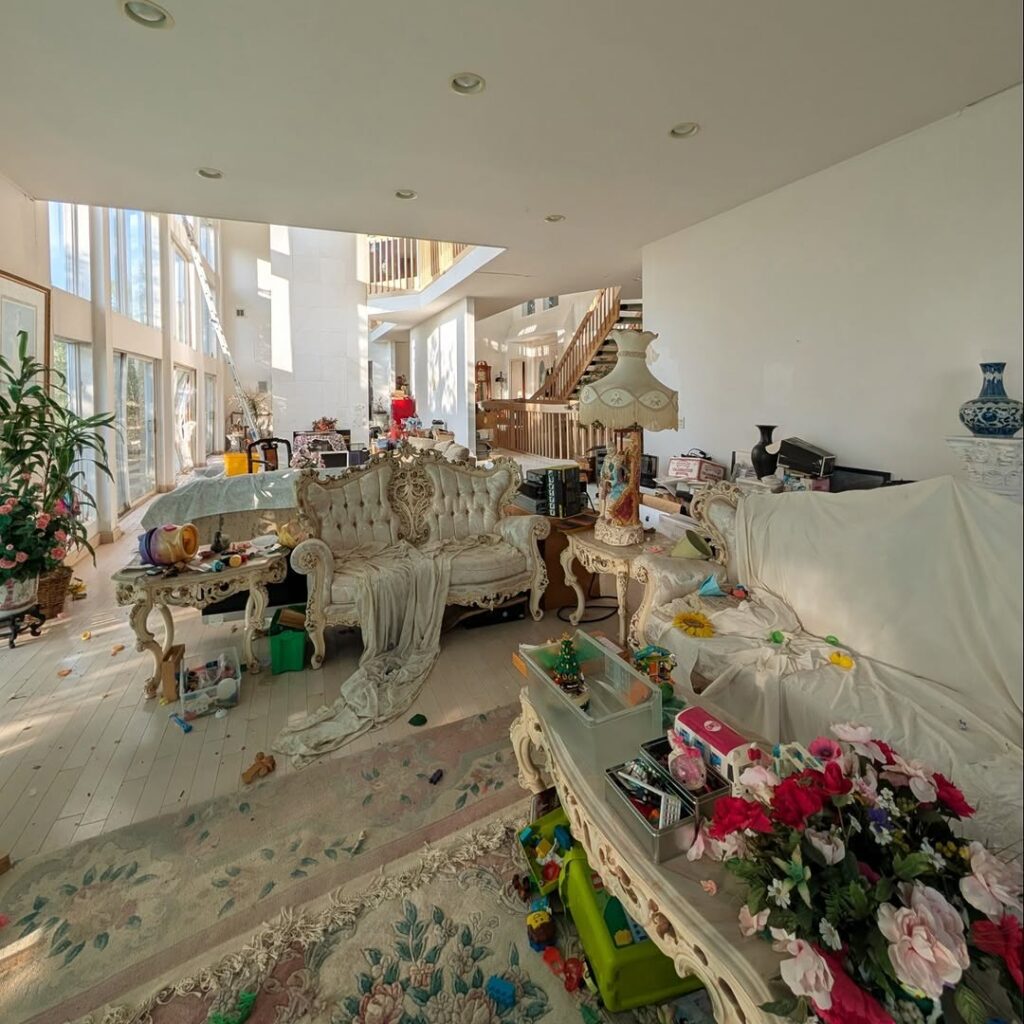
The kitchen was built for someone who entertained often.
Professional-grade appliances. A double oven. A six-burner gas range. Marble countertops that ran the length of two walls. An island the size of a small dining table.
And in the pantry — shelves still loaded with dry goods. Canned foods. Cooking oils. Spices. Some items had long passed any reasonable expiration date. Others were the kind of shelf-stable goods that linger indefinitely.
The refrigerator had long since been emptied — or rather, its contents had simply… decomposed and dried out. But the pantry told the story clearly: whoever lived here did not plan to leave.
The Master Suite
The master bedroom was on the third floor, accessible by both the main staircase and a private elevator (which no longer functioned).
It was the largest bedroom we’d ever documented. A sitting area near the window. His and hers walk-in closets, both still full of clothing. Designer suits still hanging in dry-cleaning bags. Handbags on built-in shelves. Shoes arranged in rows.
The bed was made. Pillows arranged. A bedside table still held a book, open and face-down as if someone had set it aside mid-chapter and simply never returned to pick it up.
It’s these details that linger long after you leave a place like this.
The Home Theater
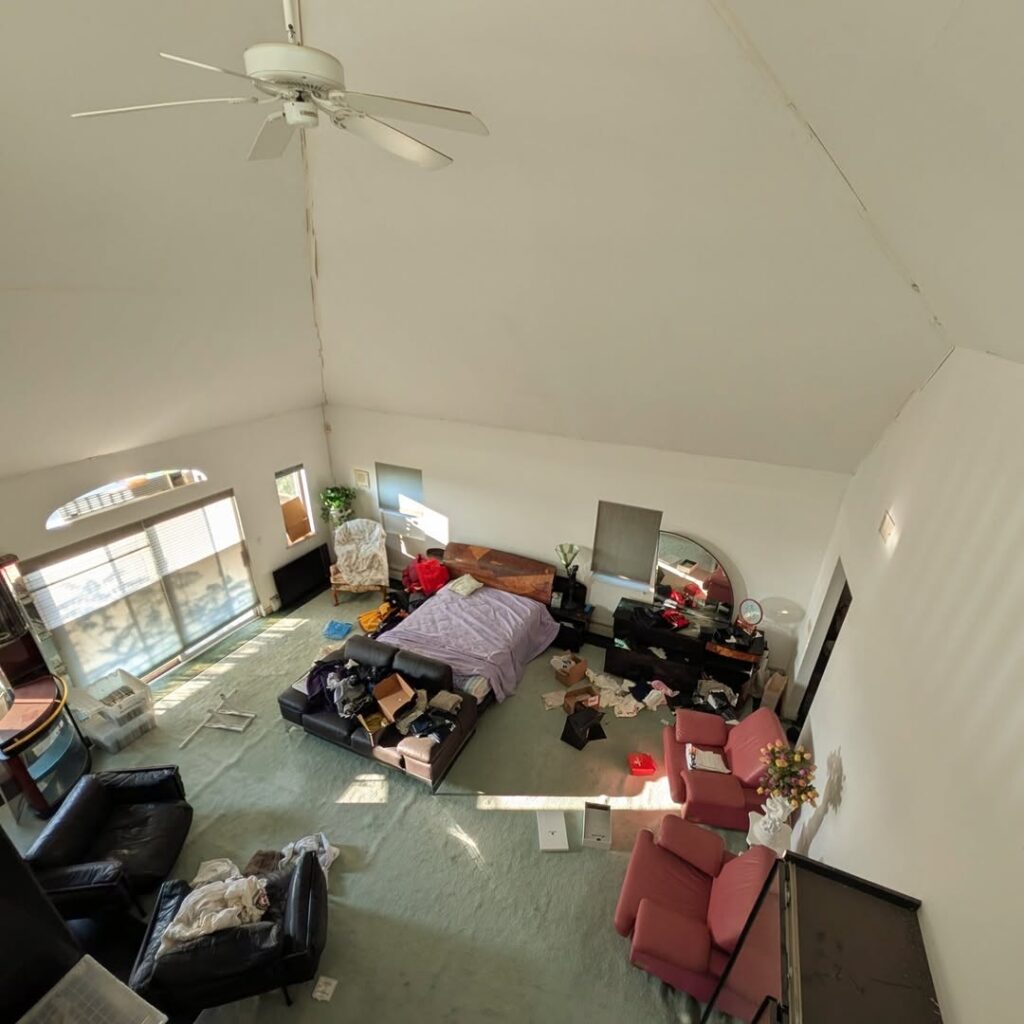
Down a hallway on the second floor, a set of soundproofed double doors opened into a private home theater.
Tiered seating. Twelve reclining leather chairs in three rows. A massive projection screen. Proper acoustic panels on the walls. A popcorn machine in the corner, its red paint peeling but its glass case still intact.
The projector had been high-end for its era — the kind of equipment that cost more than most people’s cars.
The Indoor Pool
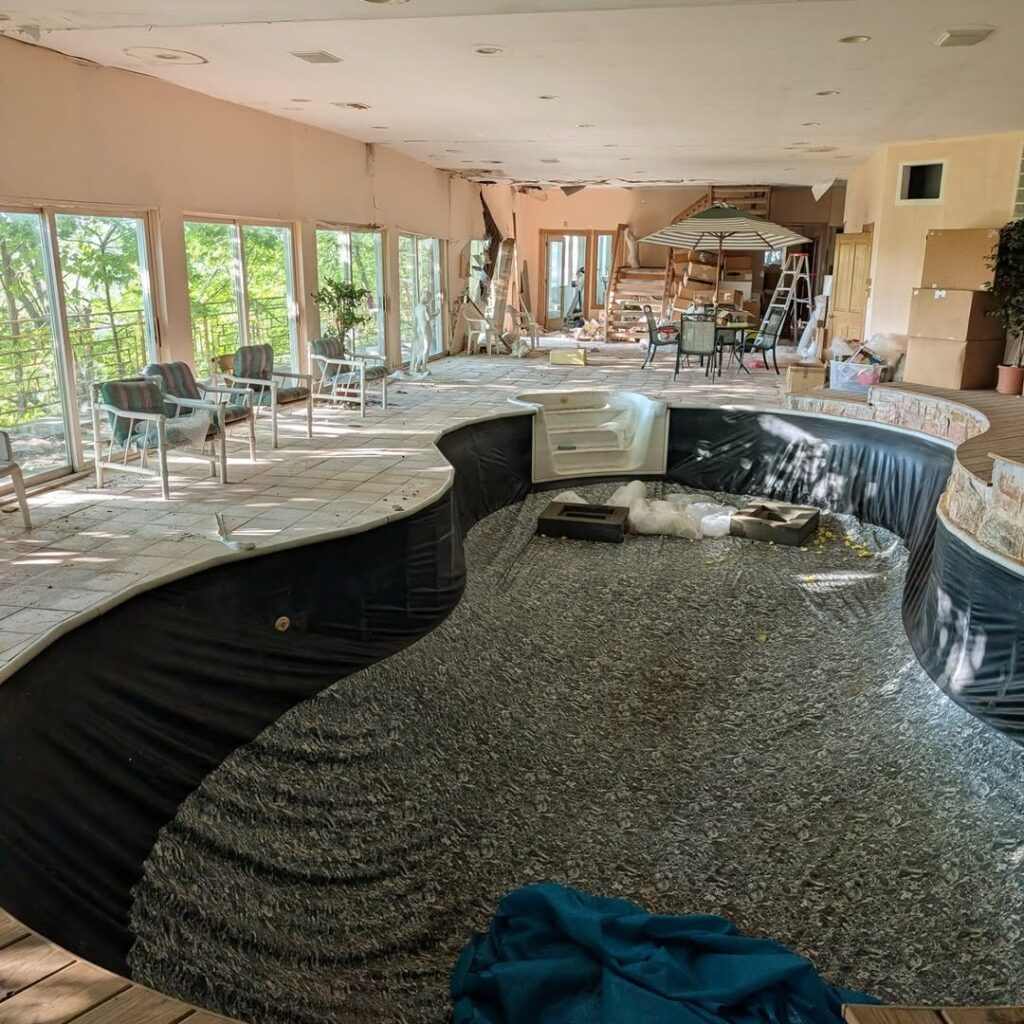
Perhaps the most dramatic room in the house was the pool enclosure on the ground floor, accessible through a set of French doors off the main corridor.
The pool itself was dry. Had been for years, clearly. Leaves had blown in through a broken skylight panel overhead and settled at the bottom in a papery layer. The water features — jets, fountains, decorative tile inlays — were intact but silent.
The room still smelled faintly of chlorine, as if the ghost of every summer pool party lingered in the tile.
The Garage: Four BMWs Left Behind
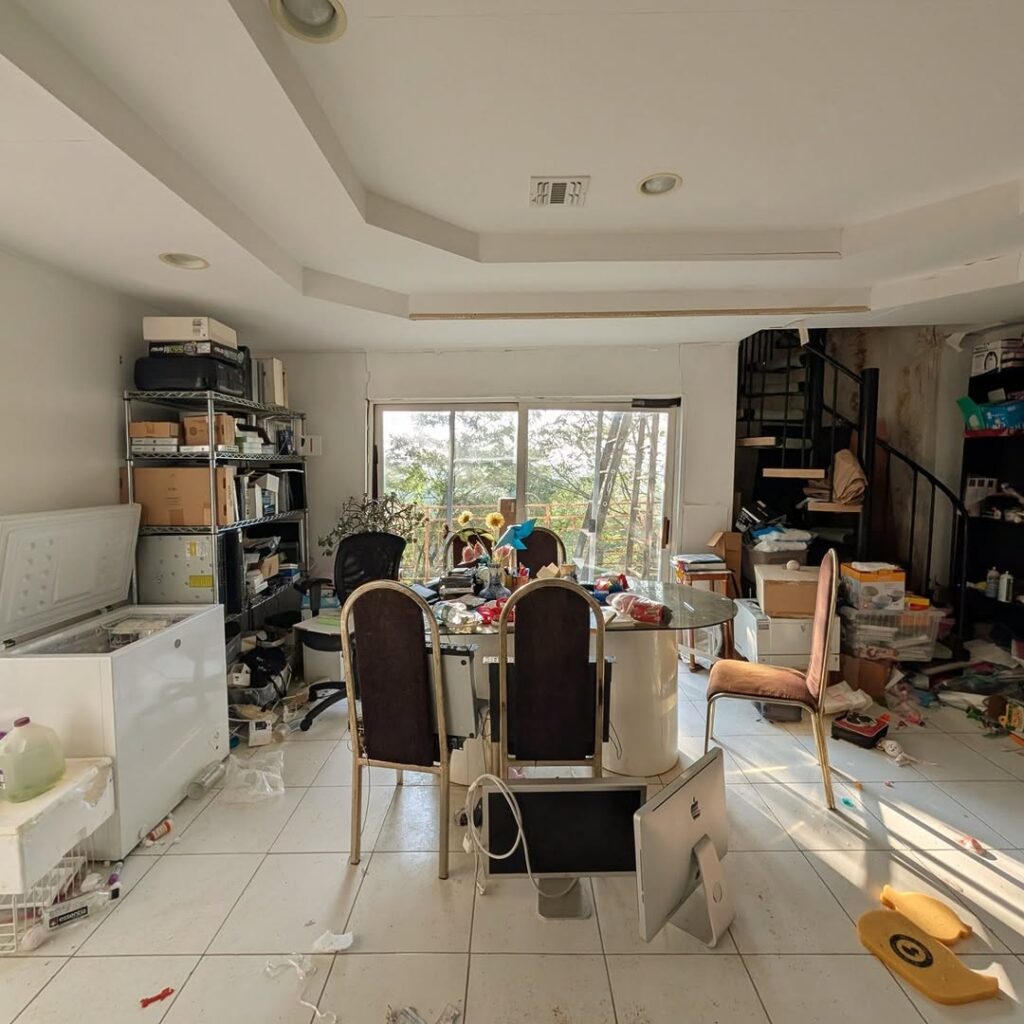
This is what most people come to see.
The detached garage — more of a carriage house, honestly — sat to the right of the main structure, connected by a covered walkway. Its doors were the old-fashioned swing type, large and heavy, and they took both of us to pull open.
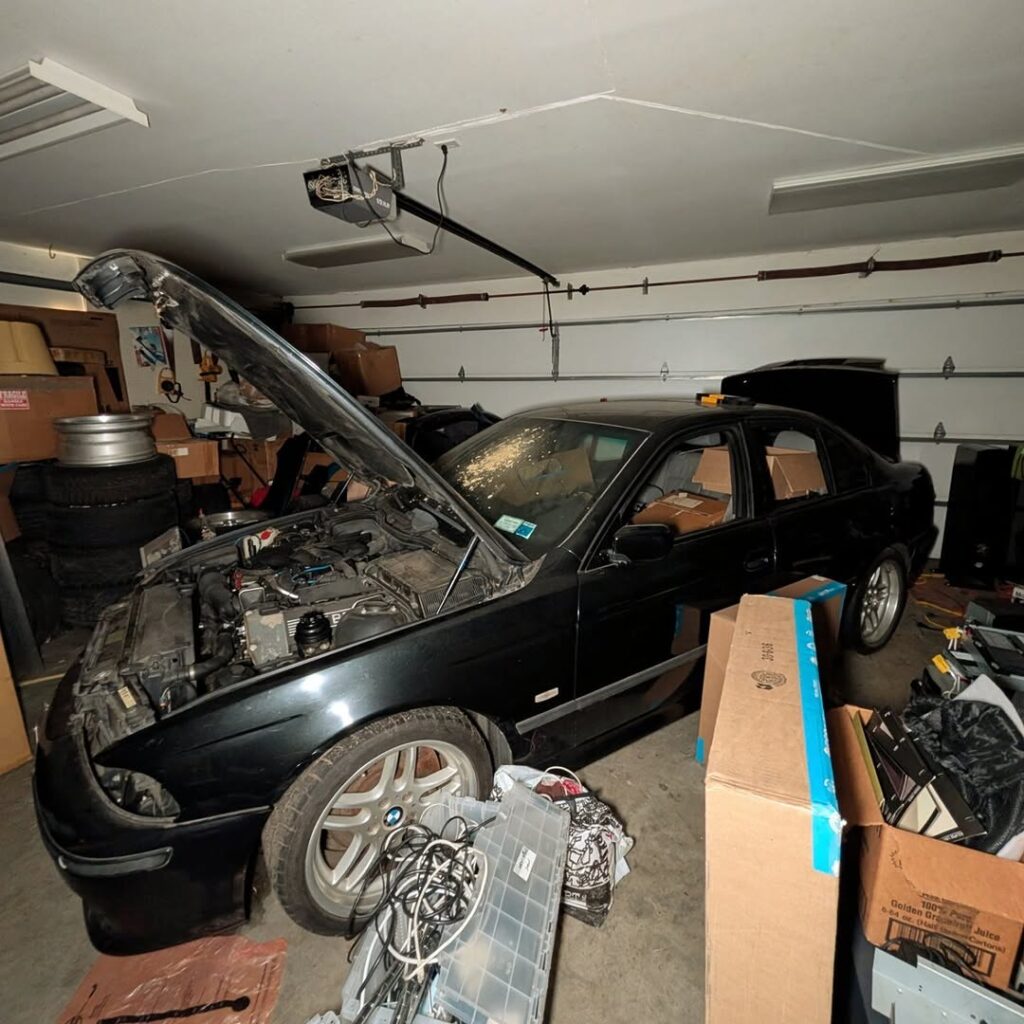
Inside: four BMWs, parked side by side.
The models spanned roughly a decade of production — a mid-2000s 7 Series, two 5 Series sedans from different years, and an older 3 Series coupe near the back wall. All of them dusty. All four tires flat on every vehicle. Windows clouded with grime.
But structurally, they appeared intact.
Luxury car abandonment is more common than you’d think, especially in high-value estate scenarios where legal disputes, debt, or family conflict make asset recovery complicated. Sometimes the cost of retrieving, storing, or selling assets simply doesn’t outweigh the legal complexity.
For a more detailed look at vehicles discovered inside forgotten properties, browse our coverage of abandoned vehicles and garages found across the United States.
The Mystery: What Happened Here?
This is the question that haunts every abandoned mega mansion.
Based on public records and archived local news, the property appears to have been tied up in prolonged legal proceedings following a business failure. The owner — a developer and entrepreneur — appears to have encountered severe financial difficulties in the years following the 2008 economic crisis, a period during which thousands of high-value properties across the US were lost to foreclosure or litigation.
The Federal Reserve’s historical data on the 2008 financial collapse shows just how dramatically personal wealth and real estate portfolios were wiped out during this period — often faster than owners could respond.
In cases like this, legal complications can freeze a property for years. Decades, sometimes.
And so the house sits. The cars stay. The book remains open on the bedside table.
The Architecture: A Snapshot of an Era
Late 1990s Luxury Design
The architectural style of this property reflects the design sensibilities of American luxury residential construction in the late 1990s and early 2000s.
Heavy use of stone and brick. Formal symmetry on the facade. Interior ceiling heights that prioritize visual drama over energy efficiency. The kind of architecture that says wealth loudly, deliberately, and without apology.
Details worth noting:
- Porte-cochère entrance — a covered drive-through at the front, more common in commercial architecture
- Double-height ceilings in the foyer and main living areas
- Dedicated service corridors behind the main kitchen
- Separate staff quarters — a small apartment above the garage, separate from the main house
- Climate-controlled wine cellar in the basement, still intact
The Bones Are Good
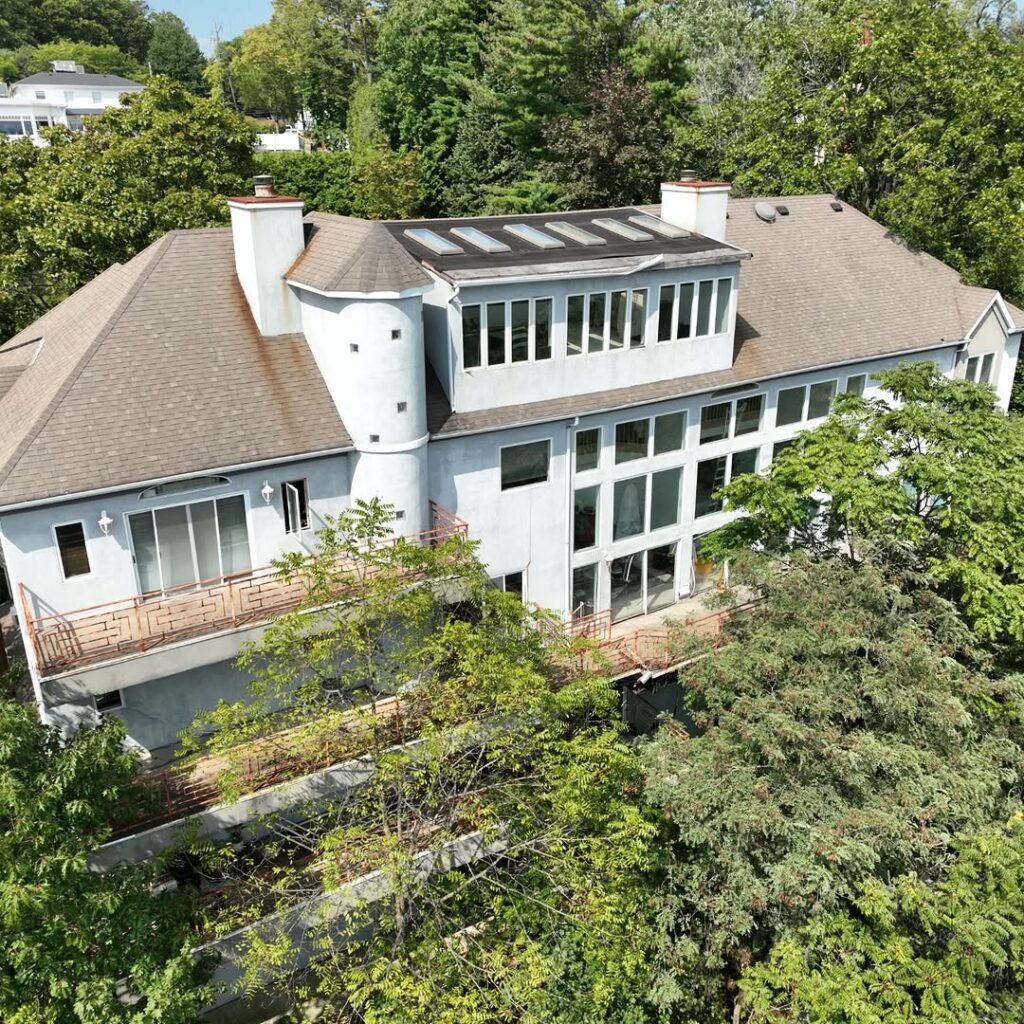
One thing that struck us throughout the exploration: despite years of neglect, the structure itself appeared to be in reasonable condition.
No major roof collapse. No visible foundation cracking. The windows that remained intact were still sealed. A building like this, properly restored, could be remarkable.
But restoration would cost millions. And with the legal status of the property still unclear, no buyer has materialized.
Preservation vs. Decay: A Larger Conversation
Properties like this sit at an uncomfortable intersection.
They’re private property. They represent someone’s loss — financial, personal, or both. They’re also, increasingly, cultural artifacts. Snapshots of a very specific American moment: the height of the luxury housing boom, and its spectacular unraveling.
We document these places not to glorify trespassing — we never encourage entering private property — but to create a record. Because without documentation, these places simply disappear. Demolished, burned, collapsed. And the stories they hold go with them.
Urban exploration, at its best, is a form of preservation. It’s a way of saying: this existed. Someone lived here. It mattered.
For more on the ethics and history of urban exploration as a practice, you might explore our broader archive of documented abandoned places across the United States — each one a different chapter of the same ongoing story.
What Happens to Abandoned Mega Mansions?
Not every story ends in demolition. Some of these properties do eventually find new life.
Here’s what typically happens to an abandoned estate:
- Bank foreclosure and auction — the most common outcome. The property sells, often below market value, to an investor or developer.
- Government seizure — in cases tied to criminal proceedings, properties may be seized and eventually sold or repurposed.
- Private purchase and restoration — rare but dramatic. A buyer takes on the project as a passion restoration.
- Continued legal limbo — unfortunately common. Some properties remain frozen in litigation for 10–20 years.
- Demolition — when restoration costs exceed land value, teardown is often the economic choice.
For this particular property, the outcome remains uncertain. The gates are closed. The BMWs are still there. And somewhere in a courthouse filing cabinet, the paperwork continues its slow crawl forward.
Final Thoughts: The Weight of a Forgotten Life
Walking out of that abandoned mega mansion as the afternoon light shifted, I kept thinking about the book on the bedside table.
Someone was reading that book. Someone made that bed, arranged those pillows, hung those family photos. Someone spent years building something extraordinary — a home that was meant to last, meant to be filled with noise and life and birthday parties and Sunday mornings.
And then one day, for reasons that were probably overwhelming and painful and entirely out of their control, they left.
The abandoned mega mansion doesn’t just hold furniture and cars. It holds the evidence of a life interrupted. And that, more than anything else, is why these places matter.
FAQ: Abandoned Mega Mansions in the USA
Q: Are abandoned mega mansions common in the United States? A: More than most people realize. The 2008 financial crisis left thousands of high-value properties in foreclosure or legal limbo. Many remain untouched years or even decades later.
Q: Is it legal to explore abandoned mansions? A: In most cases, no. Abandoned properties are still privately owned, and entering without permission constitutes trespassing. We always recommend researching ownership and obtaining permission before entering any property.
Q: Why are cars sometimes left behind in abandoned homes? A: Legal complications, debt seizure proceedings, or the sheer complexity of removing assets from a disputed estate can make vehicle retrieval impractical. In some cases, the cars have been seized as part of legal action but never collected.
Q: Can abandoned mega mansions be restored? A: Yes, though it’s expensive. Restoration costs on a property this size can easily run into the millions. It requires clear title, substantial investment, and usually a buyer with a very specific vision.
Q: How do urban explorers find these properties? A: Through satellite imagery, public records, local news archives, community tips, and years of learned pattern recognition. Most responsible explorers spend as much time researching as they do exploring.
All exploration documented here was conducted for journalistic and preservation purposes. We do not encourage trespassing or unauthorized entry onto private property. If you’re aware of a historically significant abandoned property that deserves documentation, visit abandoned blog to share your tip.