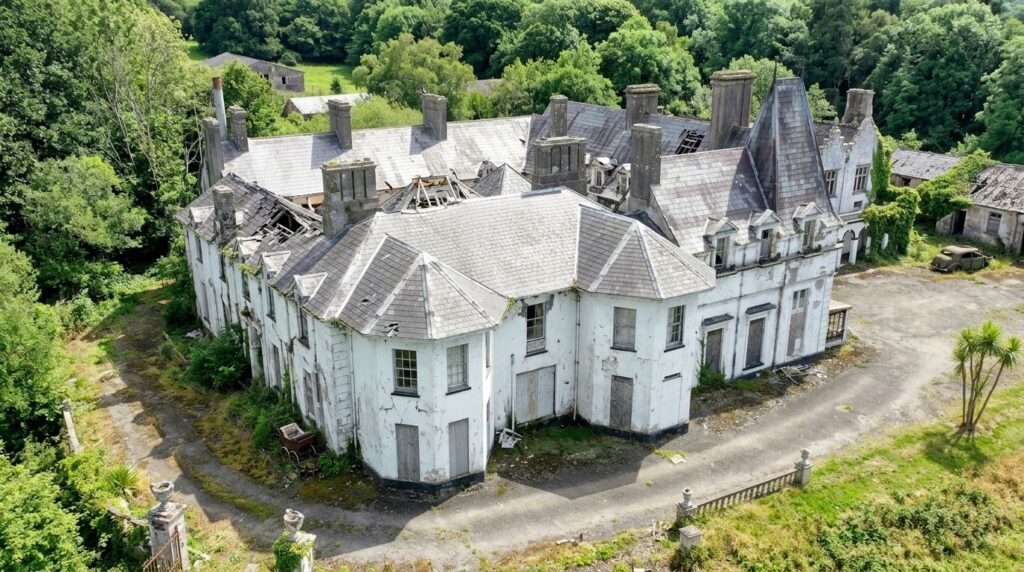
There is a forgotten estate hidden somewhere in the Irish countryside that most people will never find — and some who find it wish they hadn’t.
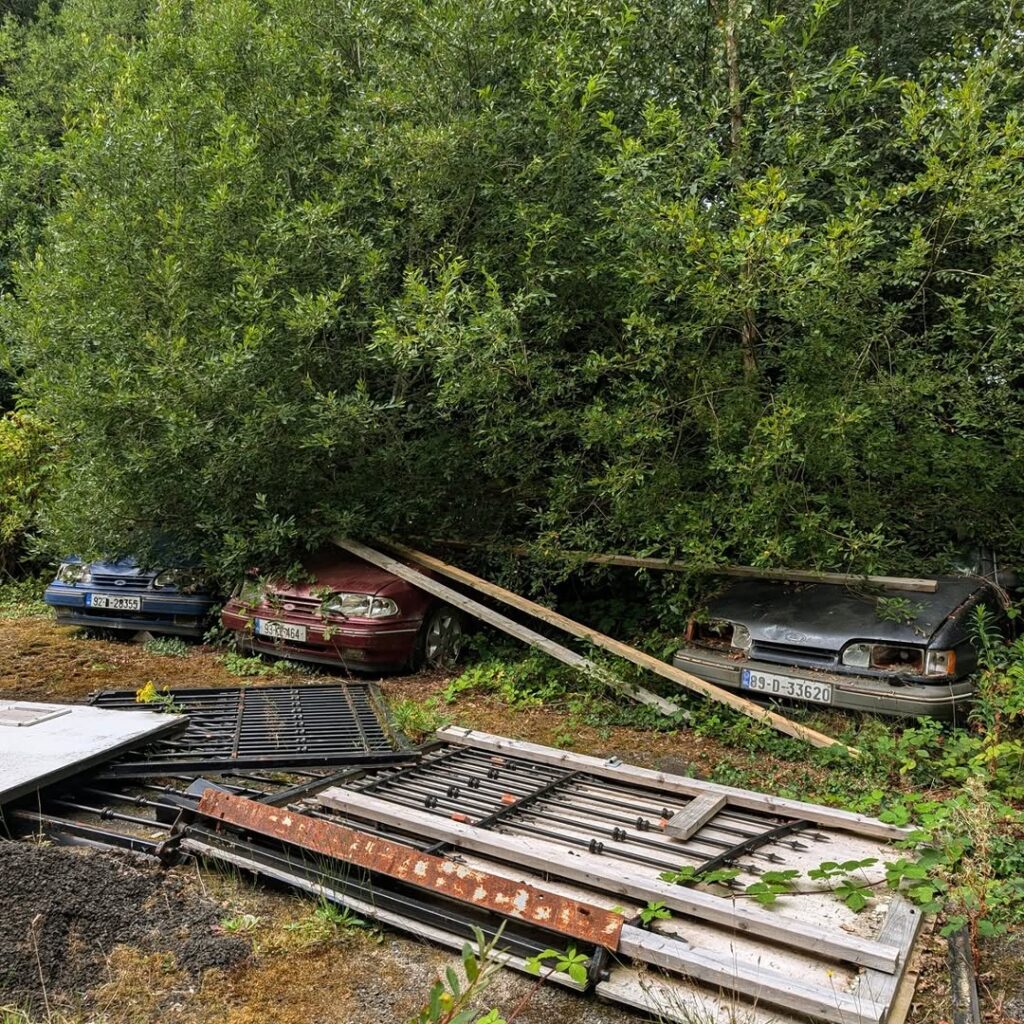
Luxury cars rot quietly in the driveway. A framed Titanic ticket sits upstairs in a darkened bedroom. Marble floors crack beneath centuries of silence. And somewhere on the grounds, the owner’s son still walks with a gun, watching for uninvited guests.
This is not a ghost story. It is real — and it is one of the most remarkable abandoned places in Ireland you’ll ever read about.
The Forgotten Estate That Time Left Behind
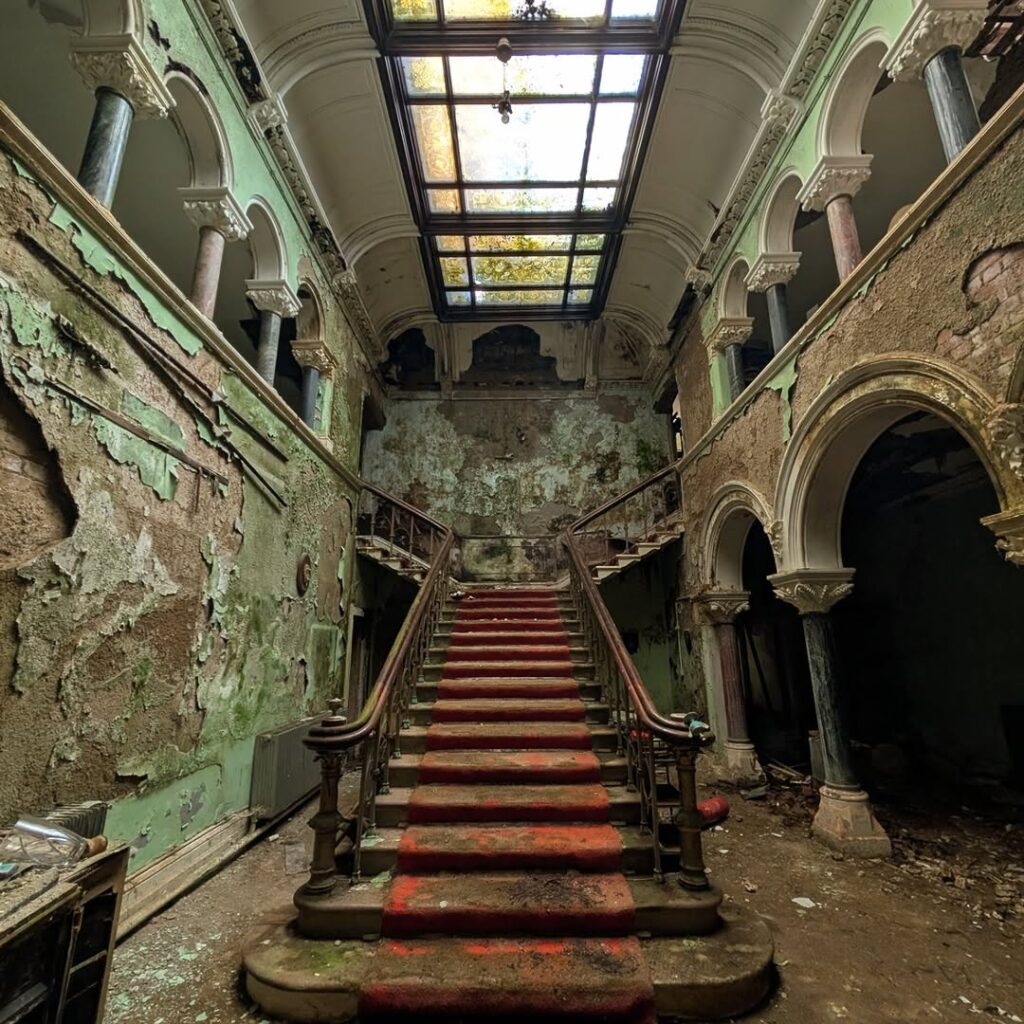
The mansion stands as a crumbling monument to power, wealth, and the cruel passage of time. It was not always this way.
Centuries ago, this estate was one of the grandest in the world. It was built in the 17th century by a family of extraordinary wealth — the kind of family whose name appeared in legal documents, land records, and the whispered conversations of rival nobles.
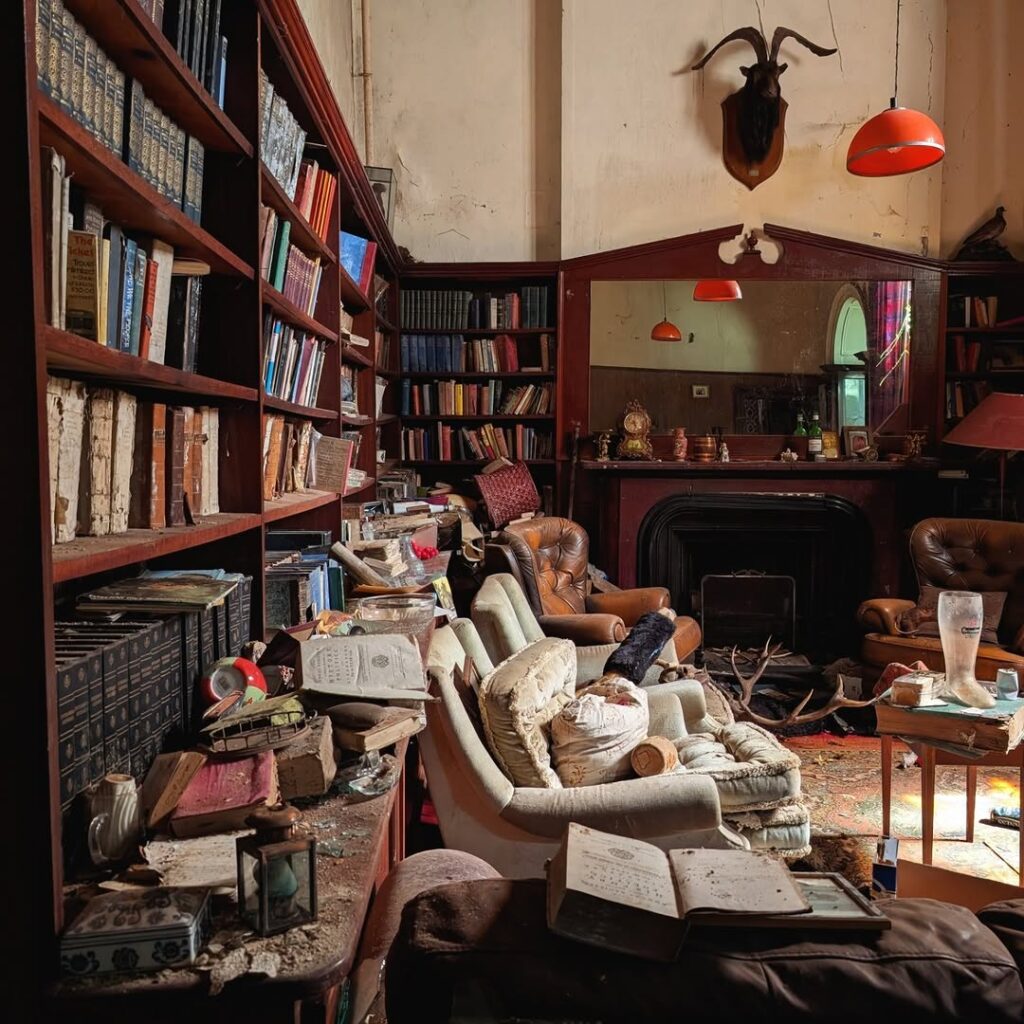
The architecture was breathtaking. Marble floors stretched through every hallway. A private chapel sat on the grounds. The library held rare books that scholars would have paid fortunes to read. There were more than fifteen bedrooms, each furnished with the kind of craftsmanship that simply does not exist anymore.
Then everything burned.
A History Written in Fire and Ash
The Irish Rebellion and the First Destruction
During the Irish Rebellion of the 17th century, estates like this one became targets. They represented English power on Irish land. They were symbols — and symbols get burned.
The mansion was destroyed.
But the family was not finished.
They rebuilt. In fact, they built bigger. The second version of the estate was even more magnificent than the first — wider hallways, taller ceilings, more land, more rooms, more everything. It was as if they wanted to prove something. Maybe they did.
For generations after that, the estate thrived. Families lived there. Children grew up inside those stone walls. Servants kept the fires burning and the grounds trimmed. It was, by all accounts, a proper great house in the old Irish tradition.
From School to Private Home — and Back to Ruin
Like many grand Irish estates, this one eventually outlived its original purpose. The costs of maintaining a building this size grew impossible to ignore. At some point — the records are vague on exactly when — the mansion became a school.
Schools brought a certain kind of life to old buildings. Voices in the hallways. Chalk dust in the air. Feet running where velvet slippers once whispered.
But schools close too.
Eventually the building returned to private ownership. A family moved in, perhaps hoping to restore it to something close to its former glory. For a while, they managed. Then, in 2018, they walked out — and did not come back.
They left nearly everything behind.
What They Left Inside
This is where the story becomes something else entirely.
Most abandoned buildings hold a few scattered objects — a broken chair, some rusted tools, maybe a forgotten photograph. This estate is different. The family did not pack up and move. They simply stopped.
Here is what explorers have reportedly found inside:
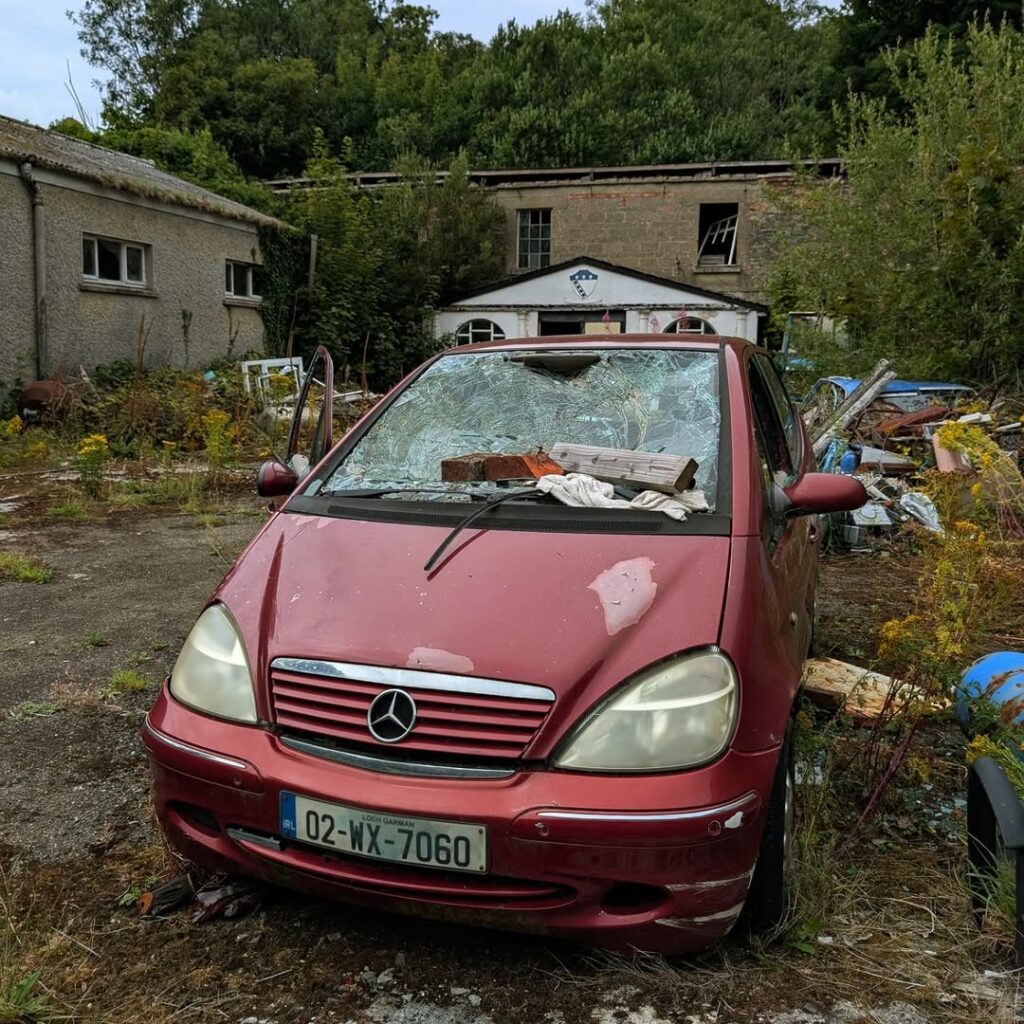
- Luxury cars parked outside, slowly being consumed by rust and vegetation
- A framed Titanic ticket allegedly discovered in an upstairs bedroom — an artifact that, if authentic, would be worth extraordinary sums at auction
- Rare books still lining the shelves of the library, their leather spines soft with moisture and age
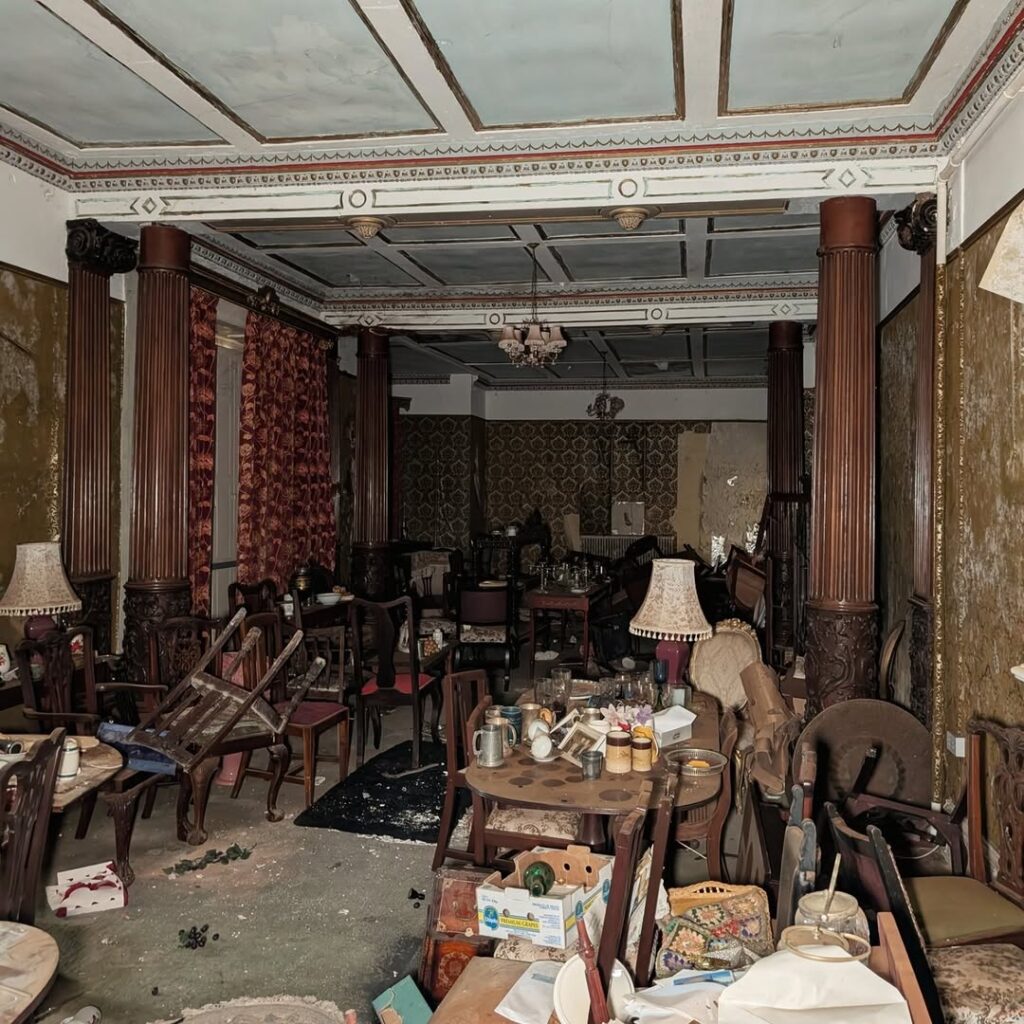
- Personal belongings left mid-life, as if the occupants stepped out for an errand and simply never returned
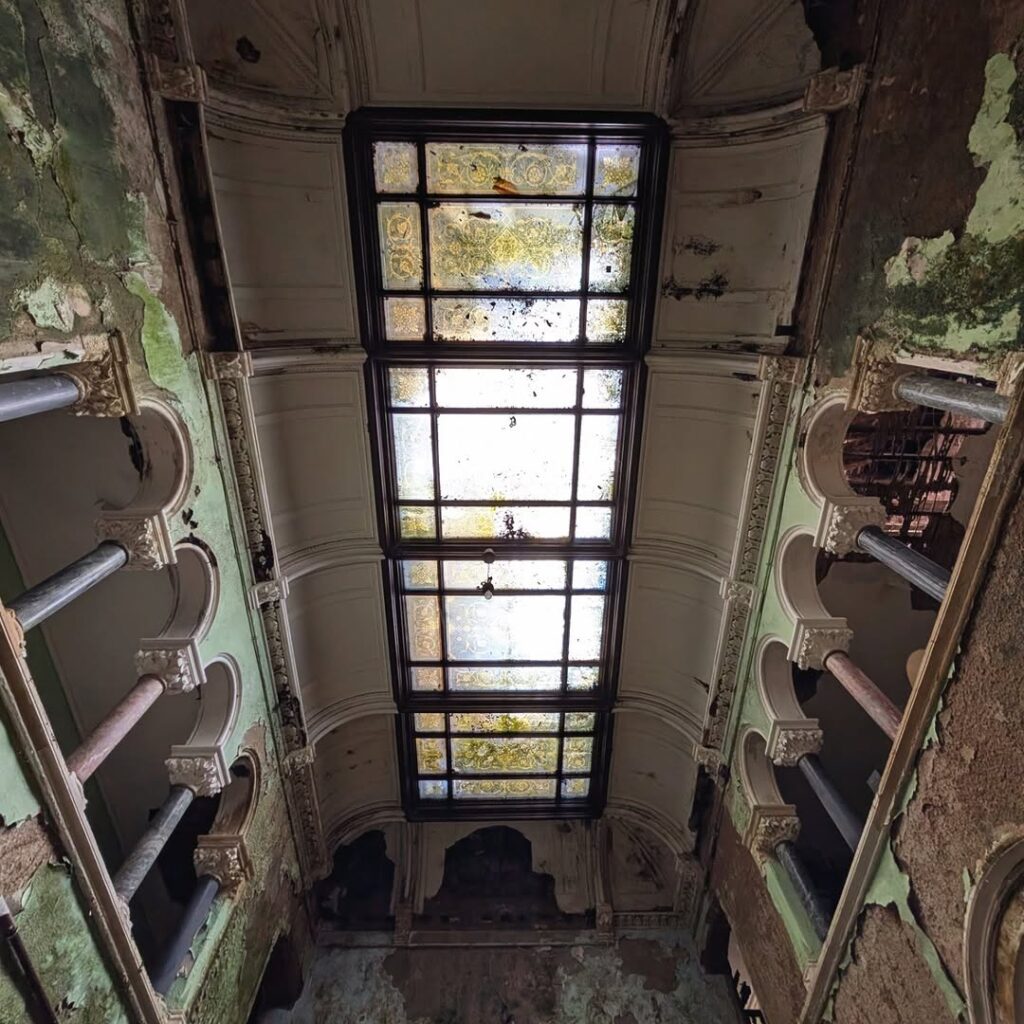
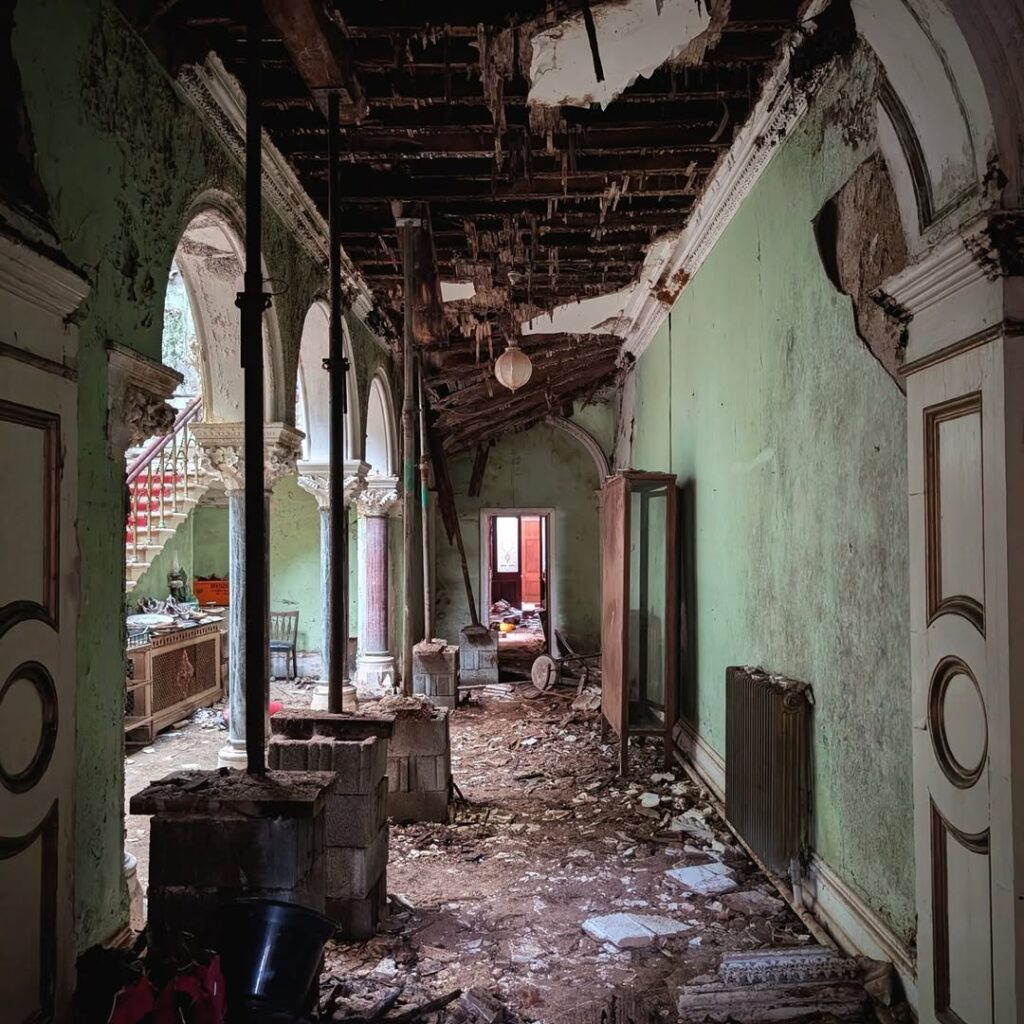
- Original architectural features — marble, carved wood, plasterwork — still intact beneath layers of decay
The Titanic ticket deserves particular attention. The RMS Titanic sank in April 1912, and original passenger tickets and memorabilia from that voyage have sold for significant sums at auction, with some items fetching hundreds of thousands of pounds. If the framed ticket in that upstairs bedroom is genuine, it represents a piece of history sitting quietly in the dark, getting damp.
Nobody has confirmed it. Nobody has retrieved it. It just sits there.
The Danger of Getting Too Close
Here is where this story departs from a simple history lesson.
Getting inside this estate is not just difficult — it is genuinely risky. And not because of crumbling floors or unstable ceilings, though those are real dangers in any derelict building of this age.
The risk is the owner’s son.
He still patrols the property. Regularly. And he is reportedly armed.
This is not a rumour passed between bored teenagers. Multiple urban explorers who have visited the area confirm it. He takes trespassing seriously, and he has every legal right to do so. This is private land. It always has been.
Why This Property Remains Off-Limits
The family may have walked away in 2018, but that does not mean the estate is abandoned in any legal sense. Private property laws in Ireland are clear — entering without permission is trespassing, regardless of whether the building appears empty or forgotten.
There are also practical dangers that have nothing to do with the caretaker:
- Structural instability — buildings left unmaintained for years develop serious weaknesses in floors, ceilings, and staircases
- Hazardous materials — older buildings often contain asbestos, lead paint, or rotting timber that releases harmful particles
- No phone signal — rural Irish estates often sit in valleys or behind hills where mobile coverage disappears entirely
- Getting lost — large grounds without maintained paths become disorienting quickly, especially in poor weather
Responsible exploration means knowing when a location is truly off-limits. This one is.
The Architecture: What Made This Estate Special
Even from a safe distance, the design of this estate tells a story.
17th-Century Grand House Design
Grand Irish estates of the 17th and 18th centuries followed specific architectural conventions. They were designed to impress — to signal wealth, taste, and permanence. The layouts typically included:
- A central main house with symmetrical wings
- Formal reception rooms on the ground floor
- Family quarters on the upper floors
- Servant quarters tucked discreetly at the rear or in outbuildings
- Formal gardens with structured planting, often in geometric patterns
- A private chapel, sometimes attached to the main building, sometimes separate
This estate had all of it.
The Library and the Books
The library deserves its own moment of reflection.
Private libraries in houses like this were not decorative. They were functional — filled with legal documents, estate records, religious texts, classical literature, and increasingly, scientific works. A family that maintained a library across centuries was a family that understood the value of knowledge as power.
Some of those books may be genuinely rare. First editions. Hand-illustrated manuscripts. Volumes that historians would find invaluable.
They are sitting in a damp room, slowly becoming unreadable.
What Urban Exploration Teaches Us
Stories like this one are why urban exploration as a practice matters — not as an excuse to trespass, but as a form of historical witness.
When official channels fail to preserve buildings like this one, it is often explorers who document what remains. Their photographs and accounts create a visual archive. They record rooms before ceilings fall. They photograph objects before they rot beyond recognition.
That archive has real value.
Museums, historians, architects, and local heritage groups have all benefited from the documentation that serious explorers provide. It is a complicated relationship — the buildings are off-limits, the documentation is done without permission — but the alternative is no record at all.
The Mystery of the Titanic Ticket
Let’s return to that framed ticket upstairs, because it raises a question that history cannot easily answer.
How did a Titanic ticket end up in an Irish country mansion?
The answer might be simpler than it seems. Ireland had deep connections to the Titanic. The ship was built at Harland and Wolff in Belfast, and it made its final port call at Queenstown — now Cobh — in County Cork, where it picked up its last passengers before heading west.
Many of those passengers were Irish. Many of the crew were too.
It is entirely plausible that someone connected to this estate — a family member, a servant, a neighbour — had a ticket. Perhaps they did not travel. Perhaps they sold their berth at the last moment. Perhaps it was purchased as a souvenir or keepsake in the years after the disaster, when Titanic memorabilia first began to circulate.
Whatever the story behind it, the ticket sits in a frame on a wall in an empty room in a crumbling mansion in the middle of the Irish countryside.
It is the kind of detail that belongs in a novel. Except it is real.
The Last Family: What Happened in 2018
Nobody knows exactly why the family left when they did.
That is the truth of it. There is no public record of a financial collapse, no news story about a dispute, no official explanation. They were there, and then they were not.
This pattern — sudden, unexplained abandonment — appears across the world in documented forgotten estates and historic properties. Sometimes the reasons become clear years later. A legal battle over ownership. Mounting debts hidden from public view. A family fracture that left no one willing or able to maintain the property.
Sometimes the reasons never emerge at all.
In this case, the 2018 departure left behind a property that feels frozen in time. The cars outside suggest urgency — you don’t leave luxury vehicles to rust unless something unexpected happened. The personal belongings inside suggest the same.
But the son still patrols. Which means someone, somewhere, still cares enough to protect it.
Could This Estate Be Saved?
This is the question that every story like this eventually raises.
The answer, frustratingly, is: probably not without significant will and money.
Restoring a 17th-century estate that has been neglected for years — and in some respects for decades — requires specialist craftsmen, carefully sourced period-appropriate materials, and investment that typically runs into the millions. Historic preservation organizations can sometimes help, but they require cooperation from the owner.
Without that cooperation, the building will continue to decay.
The marble will crack. The library will rot. The Titanic ticket will fade. The cars will dissolve into the grass.
And eventually, what was once one of the grandest estates in the world will become, simply, a ruin.
Conclusion: A Forgotten Estate That Deserves to Be Remembered
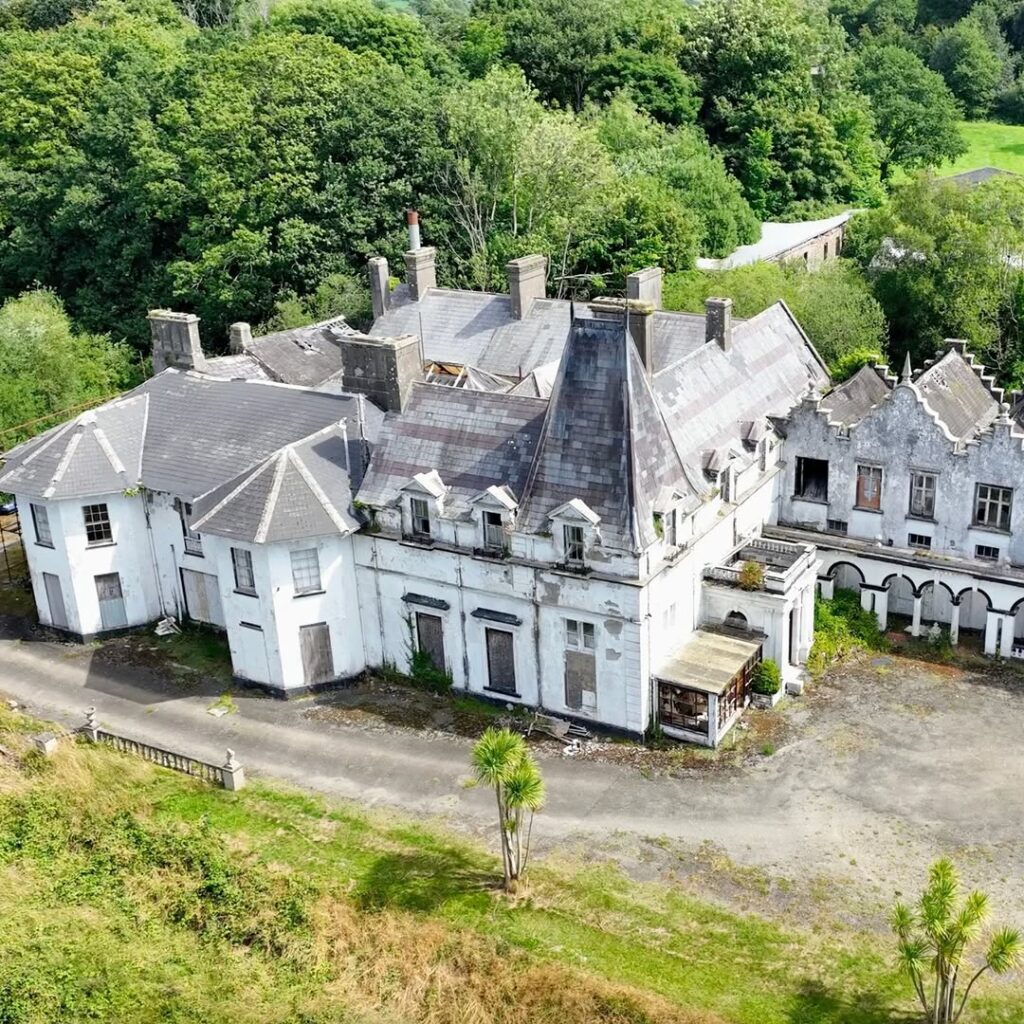
This forgotten estate is more than a crumbling building. It is a layered, living document of Irish history — of rebellion and reconstruction, of wealth and loss, of families who built empires and families who walked away from them.
It holds a Titanic ticket. A library of rare books. Marble floors from a century when marble meant something. And somewhere outside, a son with a gun, walking the grounds his family has held for generations.
You cannot go inside. You should not try.
But you can know the story. And knowing the story — keeping it alive, documenting it, sharing it — is its own form of preservation.
Because when the walls finally fall and the roof gives in, the story is all that will remain.
Frequently Asked Questions
Where is this abandoned Irish mansion located?
The exact location is not disclosed publicly, out of respect for the private property and the safety of readers. The owner’s son actively patrols the grounds and is reportedly armed.
Can I visit this forgotten estate legally?
No. This is private property. Entering without the owner’s permission constitutes trespassing under Irish law. The risks include legal consequences, structural hazards inside the building, and confrontation with the property caretaker.
Is the Titanic ticket real?
It has been reported by multiple urban explorers who have visited the site. However, its authenticity has never been officially verified. Original Titanic memorabilia is rare and highly valuable.
Why was the estate abandoned in 2018?
The reasons for the family’s departure have not been made public. Personal, financial, and legal factors have all been speculated, but no confirmed explanation exists.
Has anyone tried to restore the mansion?
There is no public record of an active restoration effort. Historic properties of this type typically require cooperation from the owner and significant investment to preserve.
What happened to the luxury cars left outside?
They remain on the property, exposed to the elements. Abandonment in outdoor conditions causes rapid deterioration — rust, seized engines, collapsed tyres — making them increasingly unrecoverable with each passing year.
All information in this article is based on documented explorer accounts and historical records. This site does not encourage, condone, or facilitate trespassing on private property. Always respect property laws and safety guidelines.