The first thing you notice is the silence.
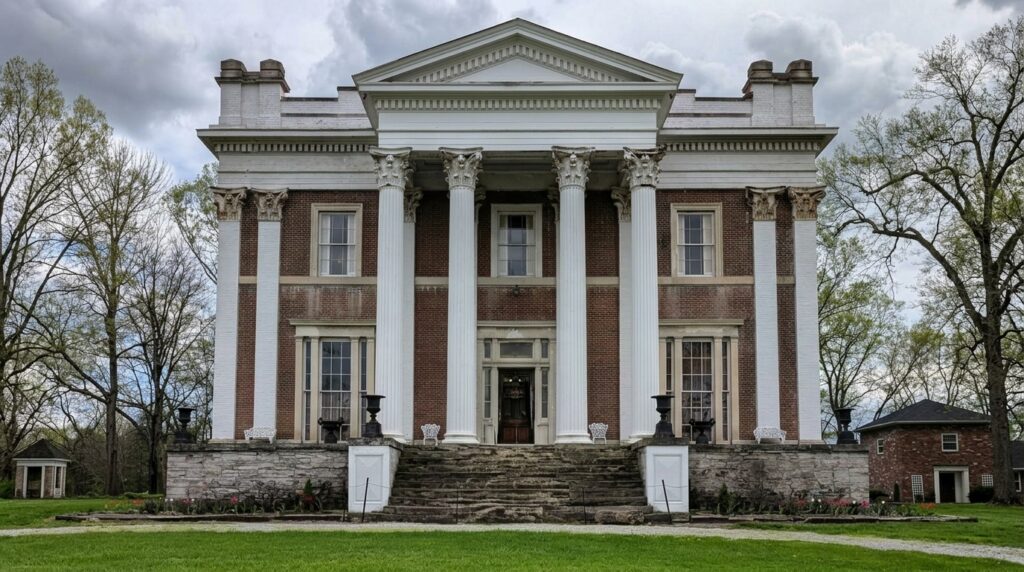
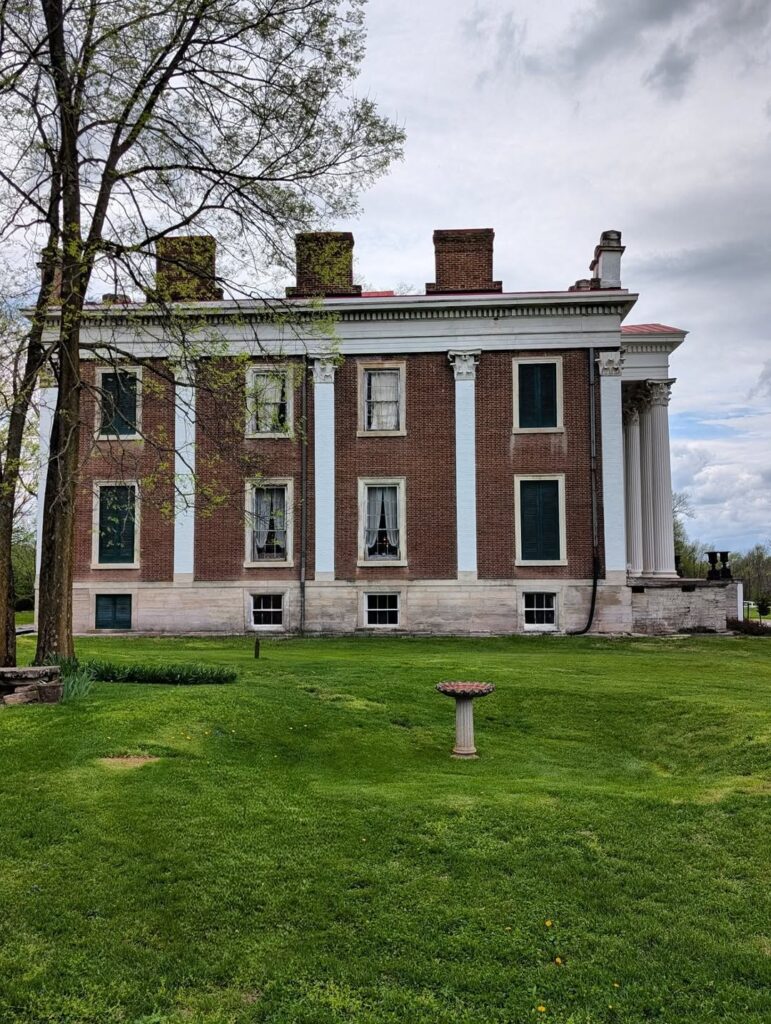
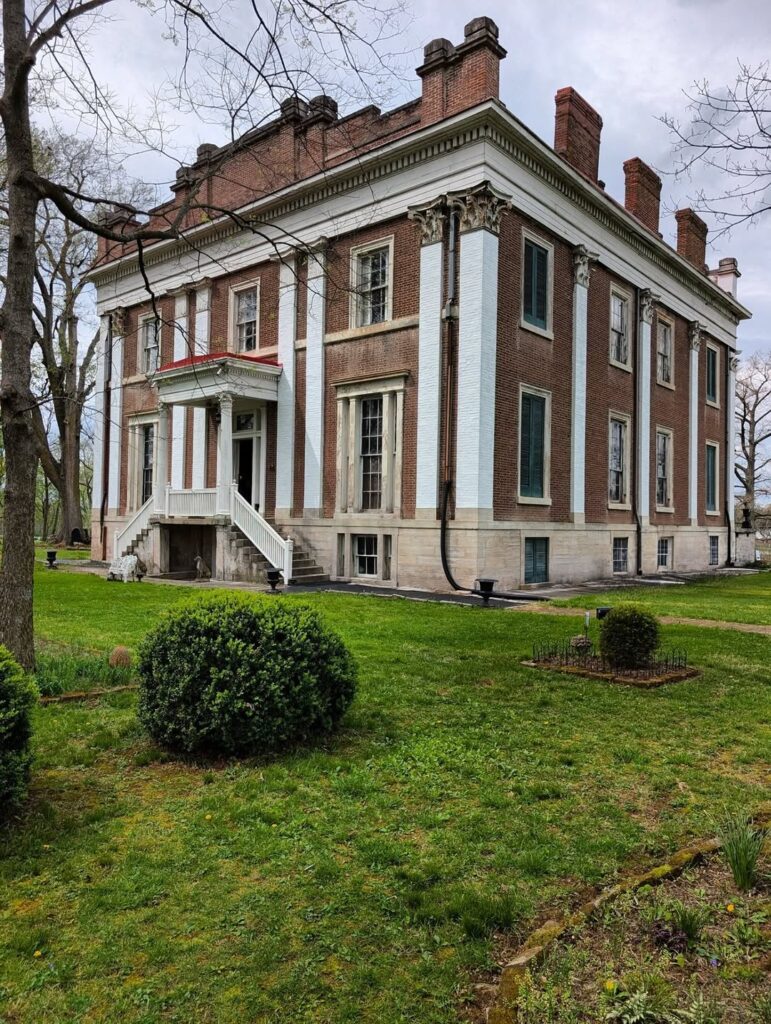
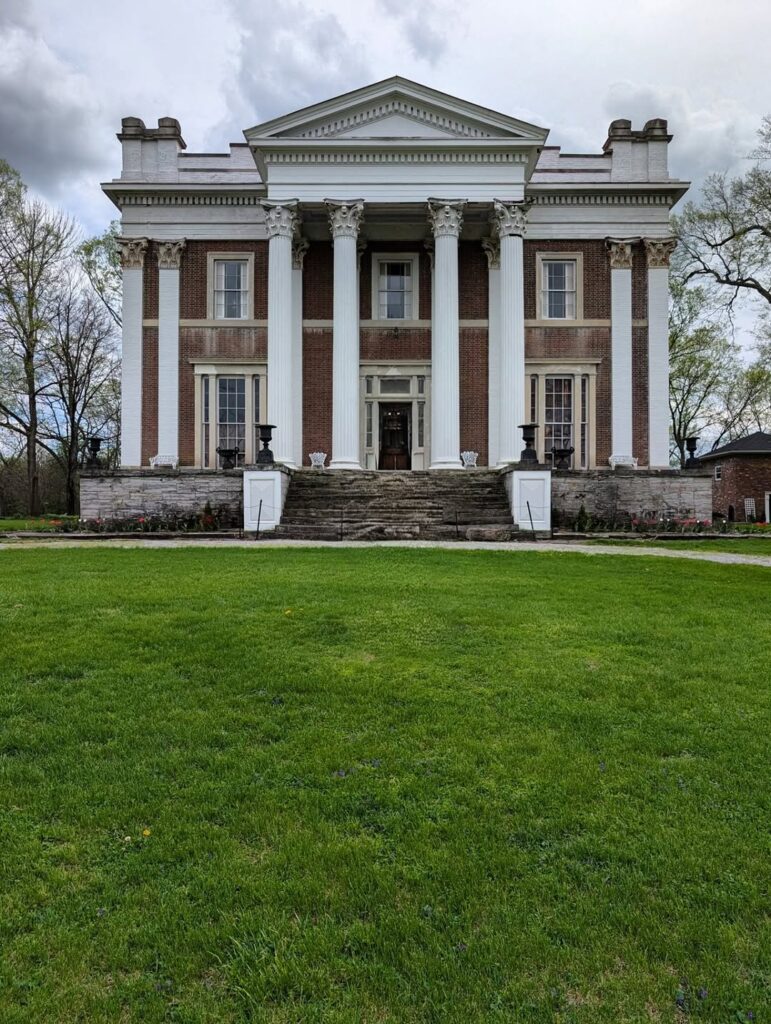
Then the columns. Twenty-seven feet of fluted Corinthian stone rising from a coquina foundation, half-swallowed by Kentucky summer heat. Paint peeling in long, slow ribbons. A porch wide enough to host a ballroom dancing party — and at one time, it did.
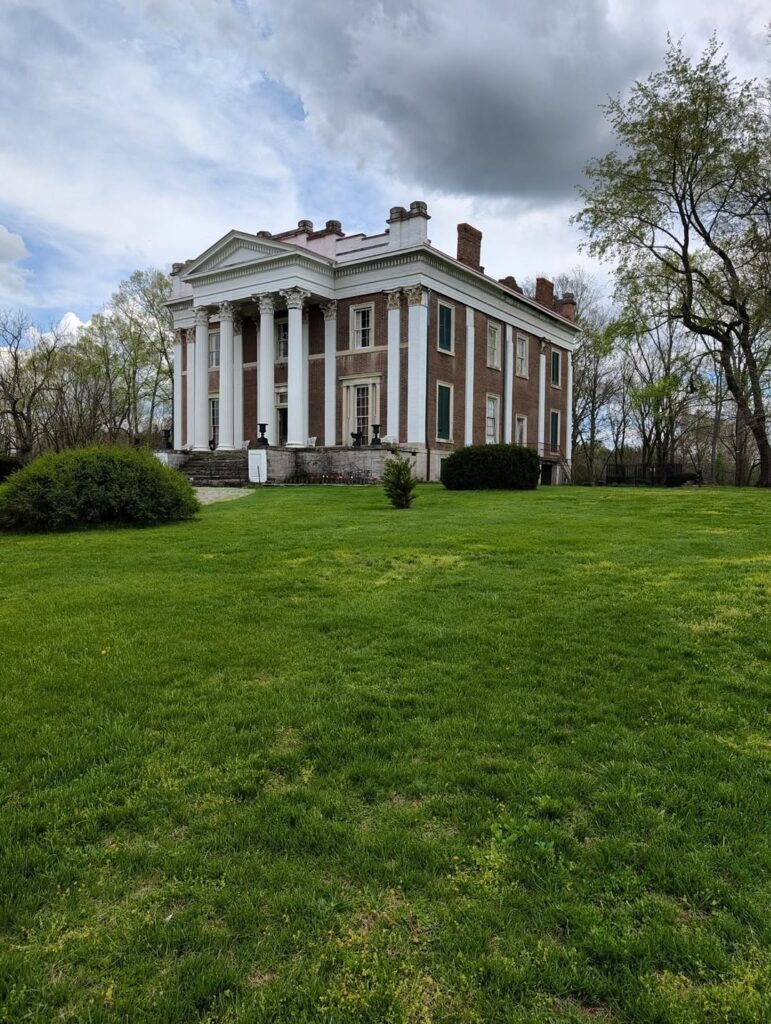
Ward Hall is one of America’s most dramatic forgotten estates. Built around 1857 as a summer retreat for wealthy cotton planter Junius Richard Ward, this 12,000-square-foot Greek Revival mansion near Georgetown, Kentucky, has spent more years in quiet decay than it ever did in lavish splendor. It is, by almost every measure, an abandoned château hiding in plain sight — majestic, melancholy, and impossible to forget.
If you love the strange pull of forgotten American estates and their untold histories, Ward Hall is a story you need to know.
The Man Behind the Mansion
Who Was Junius Richard Ward?
Junius Richard Ward was not a modest man. Born in 1802 into one of Scott County’s most powerful families, he came from a line that had shaped Kentucky politics since before statehood. His grandfather, Colonel Robert Johnson, had attended the state’s very first Constitutional Convention.
But Ward didn’t stay in Kentucky to make his fortune. He followed the cotton south — deep into Mississippi’s Delta — and came back rich.
Ward gained his fortune through cotton farming in Mississippi, which was his primary residence. The Ward family used Ward Hall to escape the grueling Mississippi summers, usually staying in Scott County from May to September.
So Ward Hall was never meant to be a year-round home. It was a seasonal escape. A flex. A statement that said: I have made it, and I want everyone in Scott County to know it.
A Fortune Built in Gold
The mansion was completed circa 1857 at a cost of $50,000 in gold — a staggering sum at the time — and represents one of the most intact houses in the country from that era.
To put that in context: $50,000 in 1857 gold is the rough equivalent of well over $1.5 million today. And Ward didn’t just build a house. He built a monument.
He hired English-born architect Major Thomas Lewinski — a man already working on the reconstruction of Henry Clay’s legendary Ashland mansion in Lexington — and told him to spare nothing.
The Architecture: A Forgotten Château in the Bluegrass
Greek Revival at Its Most Extreme
Walk up to Ward Hall on a summer morning and you feel something shift in you. The proportions are wrong in the best possible way. Everything is too tall, too wide, too grand for a “summer home.”
Ward Hall was the summer home of Kentucky-born Mississippi planter and horseman Junius Richard Ward and his Kentucky-born wife, Matilda Viley. While no documentation survives, it is generally believed that Ward contracted English-born architect Thomas Lewinski to design the house, which cost $50,000.
The columns alone deserve a paragraph. Forty feet tall. Fluted. Corinthian. They line the front façade like a row of Roman senators, casting long morning shadows across a porch that has seen more history than most courthouses.
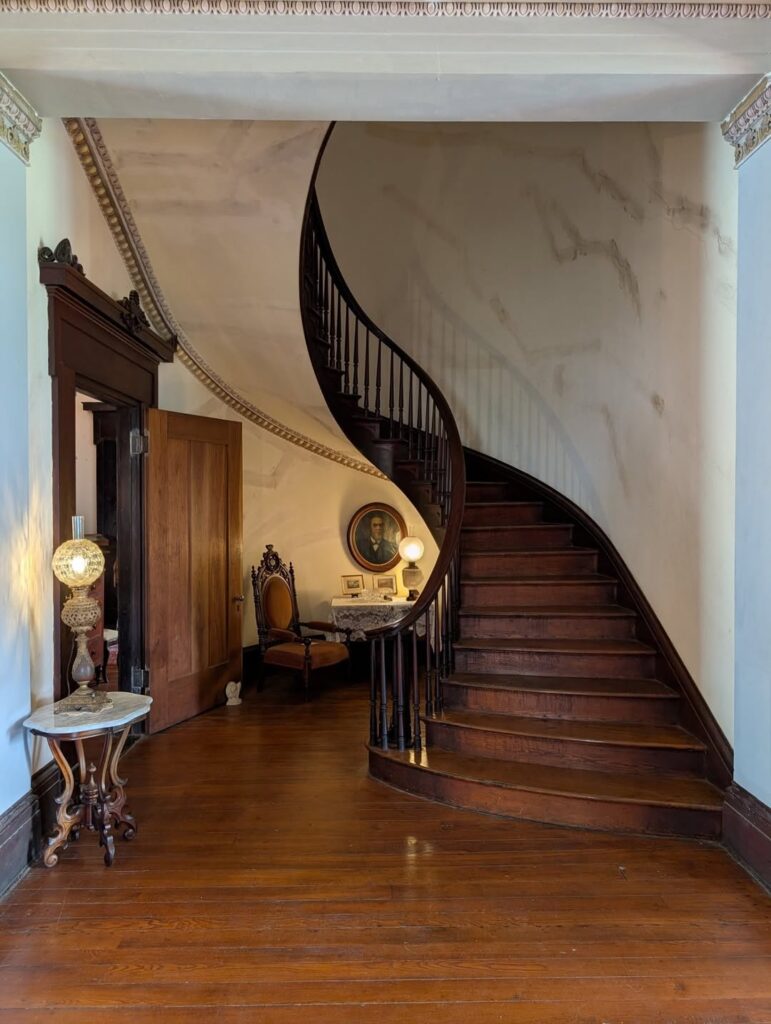
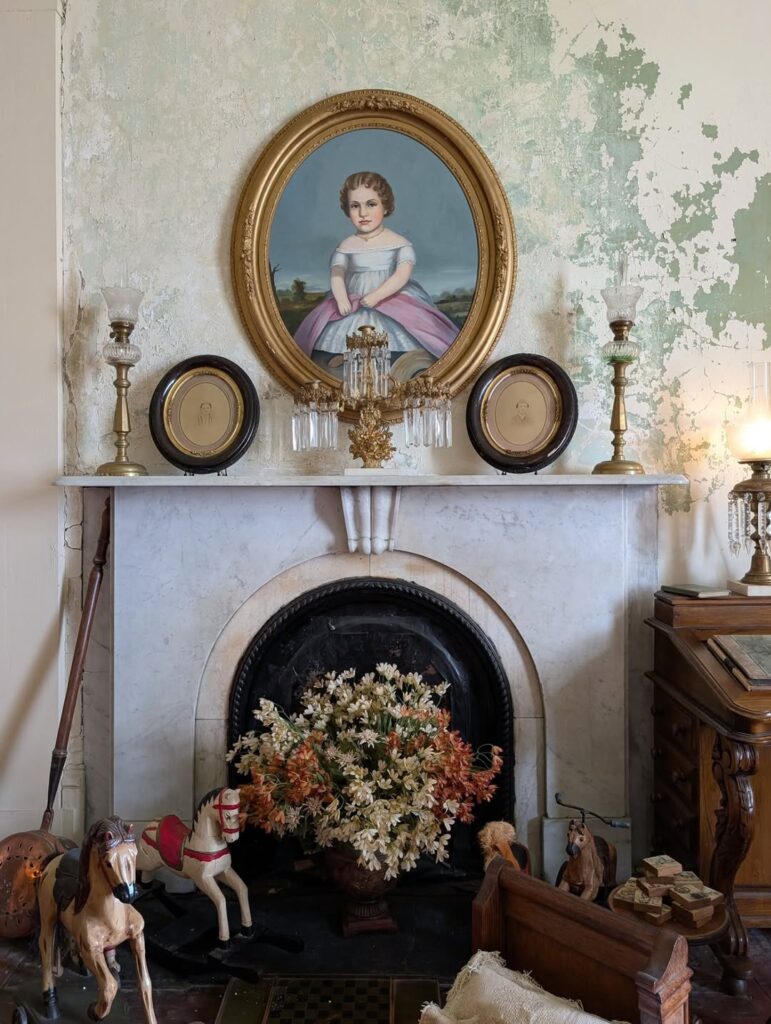
The 12,000-square-foot structure features 18 rooms including servants’ quarters, a grand reception hall, a ballroom, a double elliptical staircase, and 13 fireplaces with Italian marble mantels.
Thirteen fireplaces. In a summer house.
The Staircase That Defies Explanation
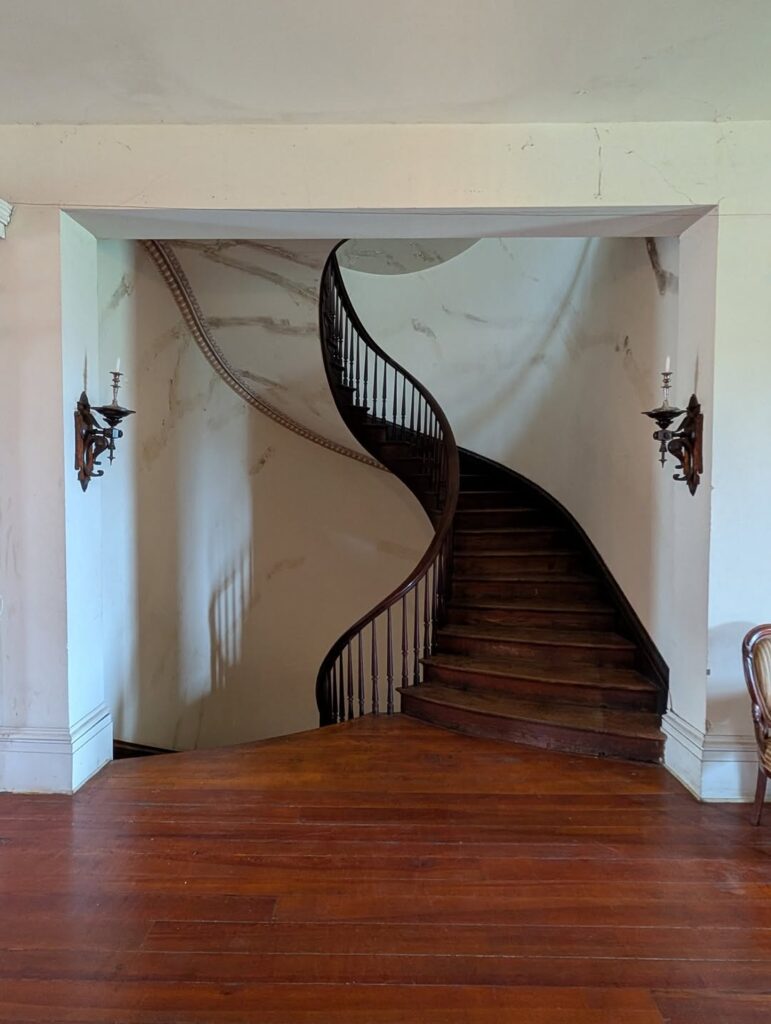
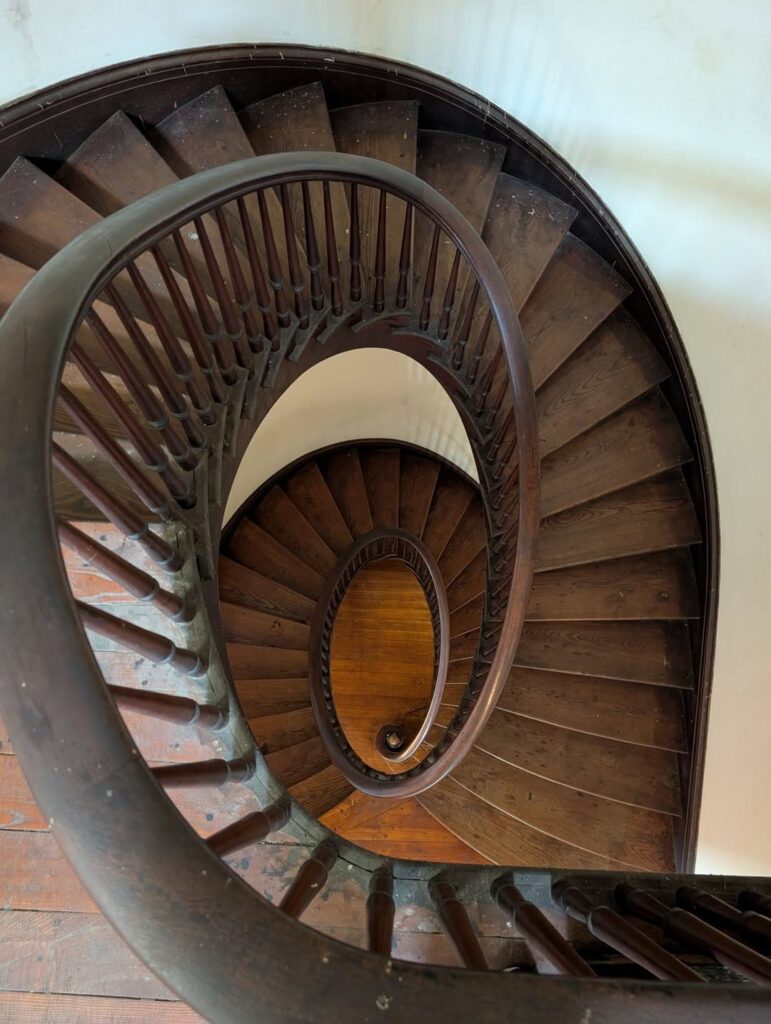
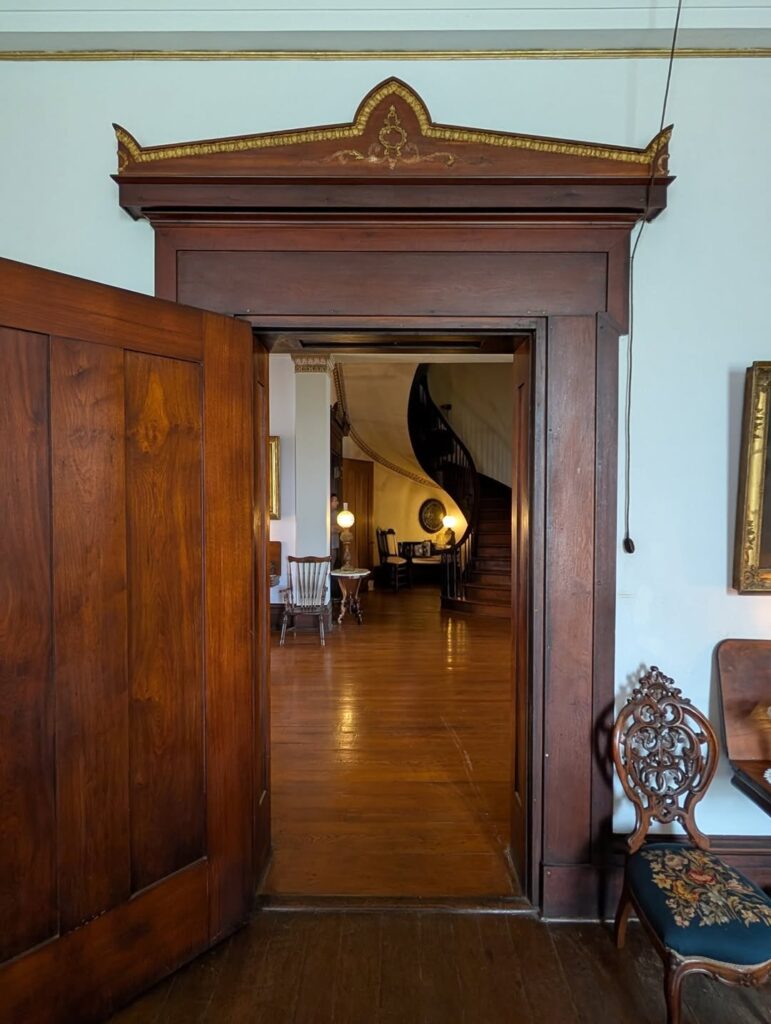
If you ever get inside Ward Hall — on a legitimate preservation tour, of course — the staircase will stop you cold.
The mansion features a spiral staircase that spans three stories, original woodwork, and preserved slave quarters in the basement.
The stairs curve upward in a double ellipse, catching light from the upper windows and scattering it across plaster walls that still carry faint traces of their original finish. No nails hold the structure together — it floats on joinery and sheer architectural audacity. Craftsmen came from as far as Louisiana to build it.
Taylor Buffington, an itinerant Pennsylvanian builder who had previously worked in Louisville, was the contractor; James Bailey, a young mulatto craftsman who was perhaps a freeman, also came from Louisiana to work on the house, possibly as apprentice to Buffington.
Those are real human hands behind this beauty. Not just wealthy patrons and famous architects — but traveling builders, free men of color, local craftsmen who left their mark in walnut and plaster and stone.
Details That Take Your Breath Away
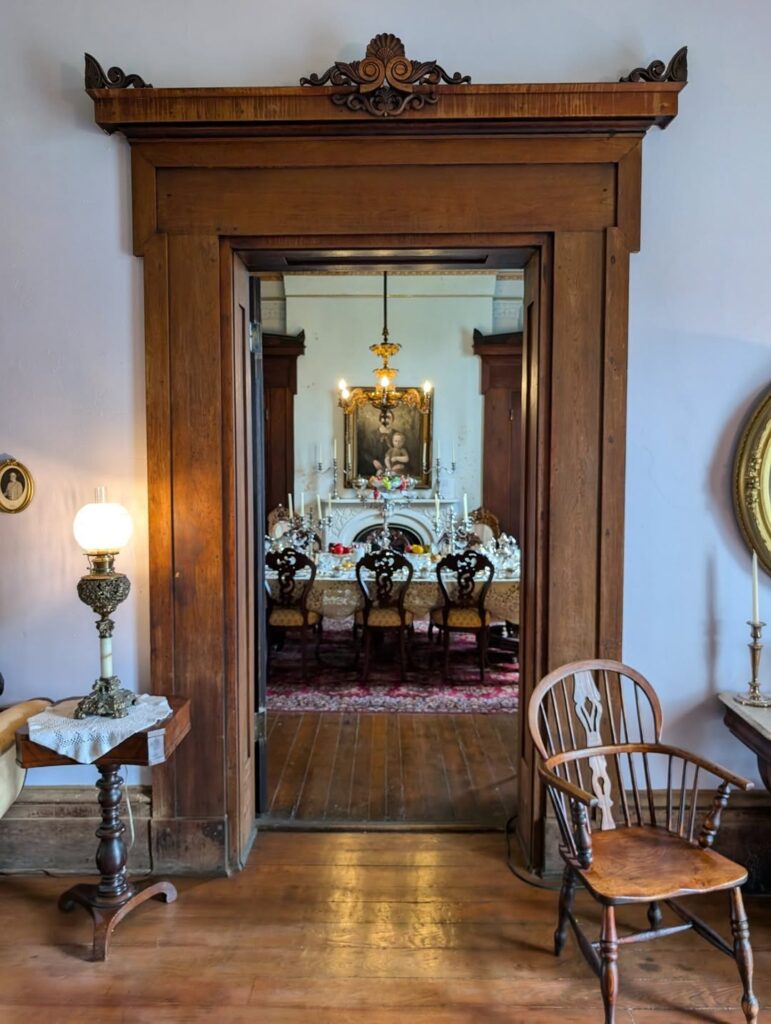
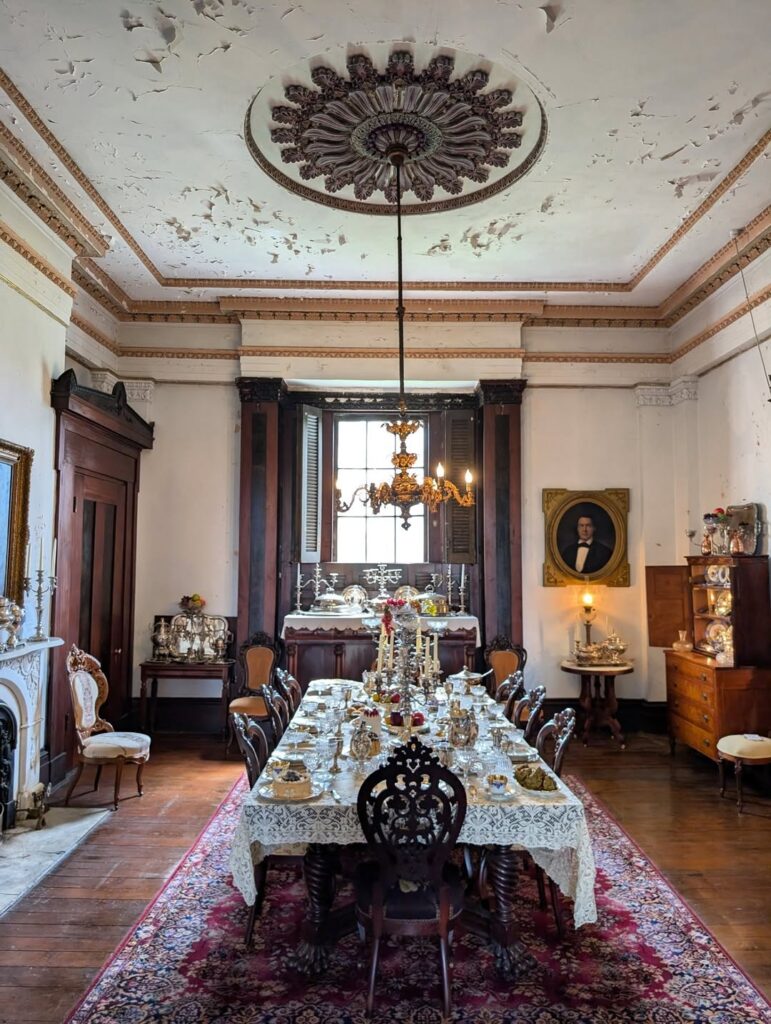
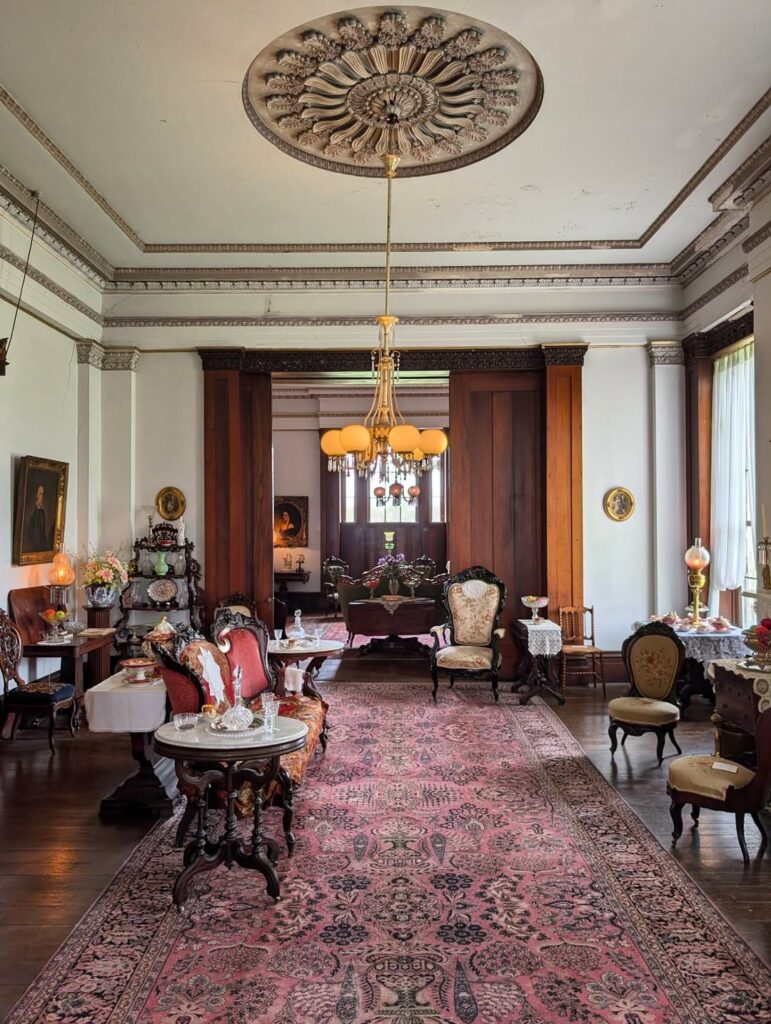
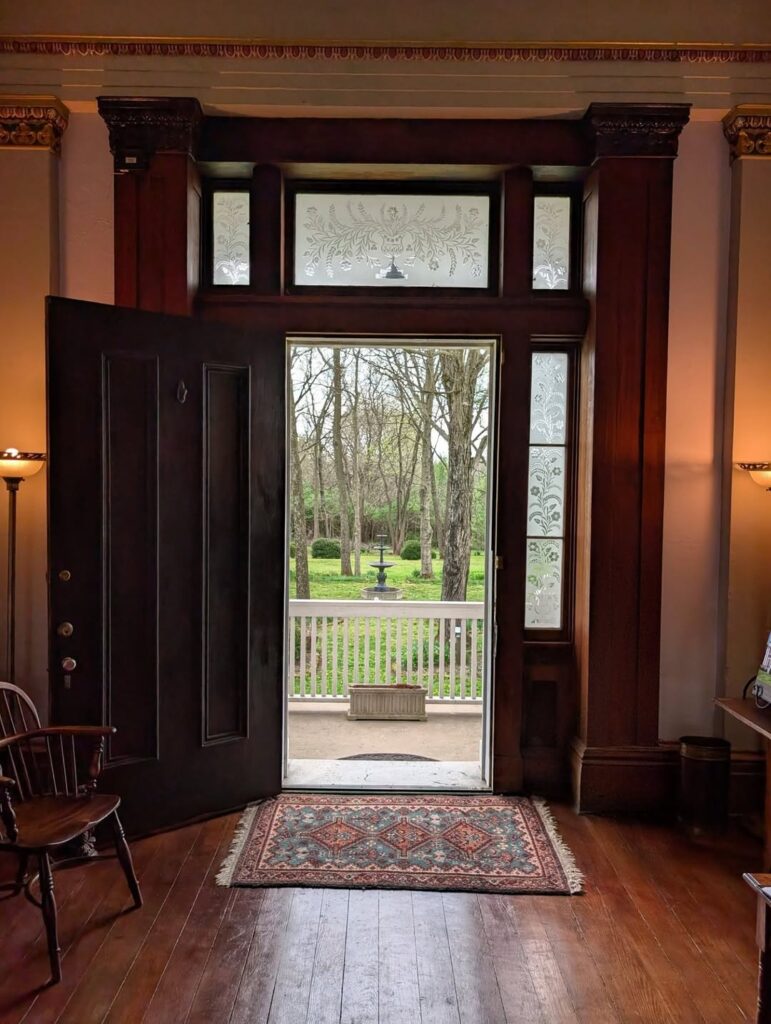
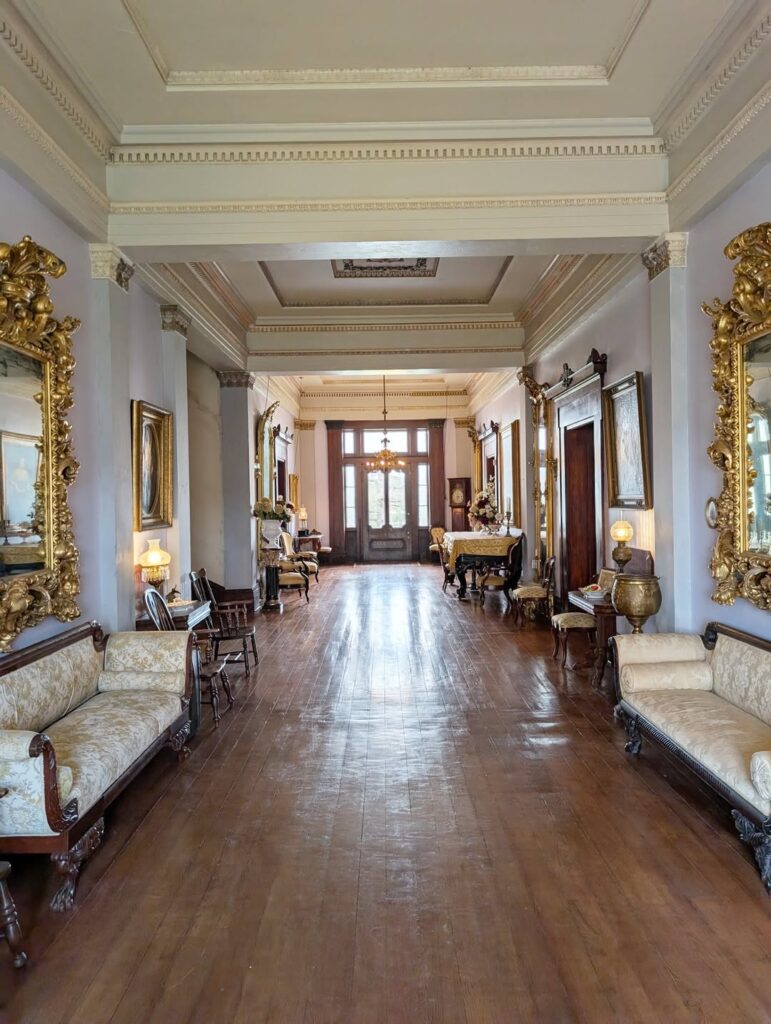
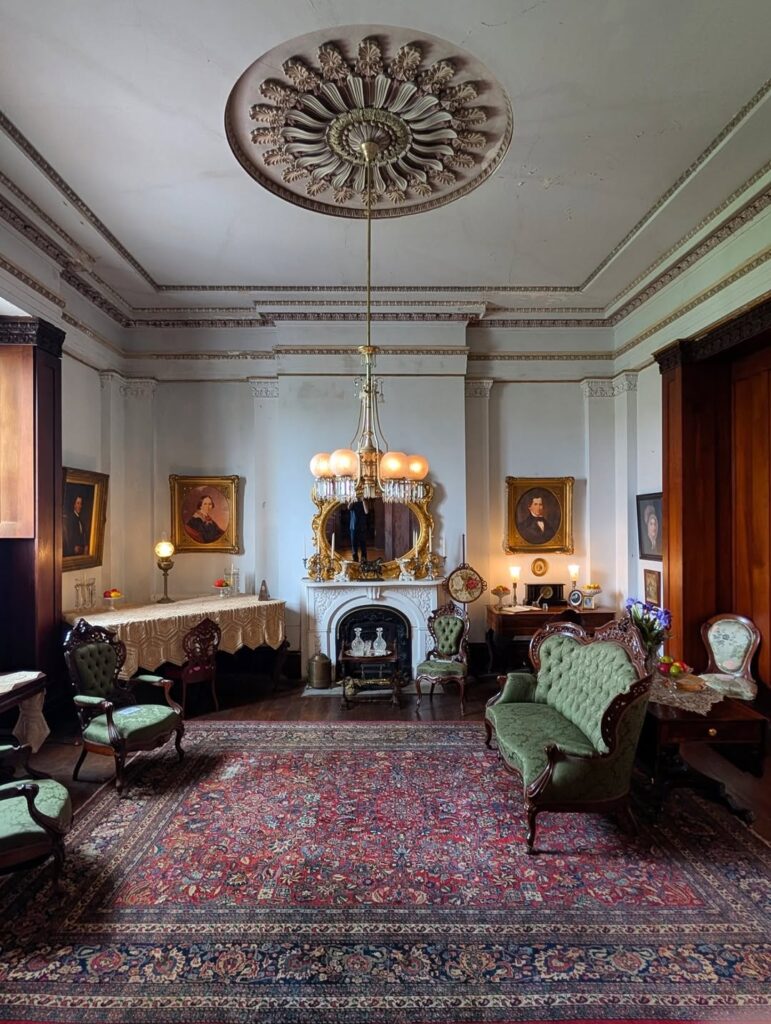
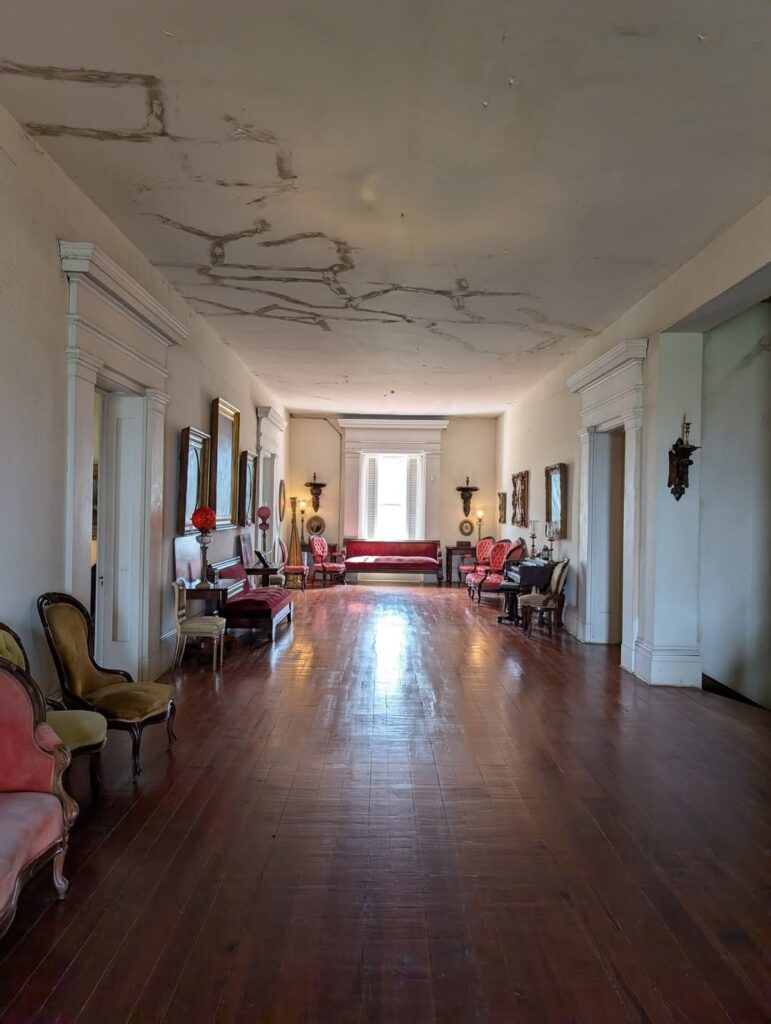
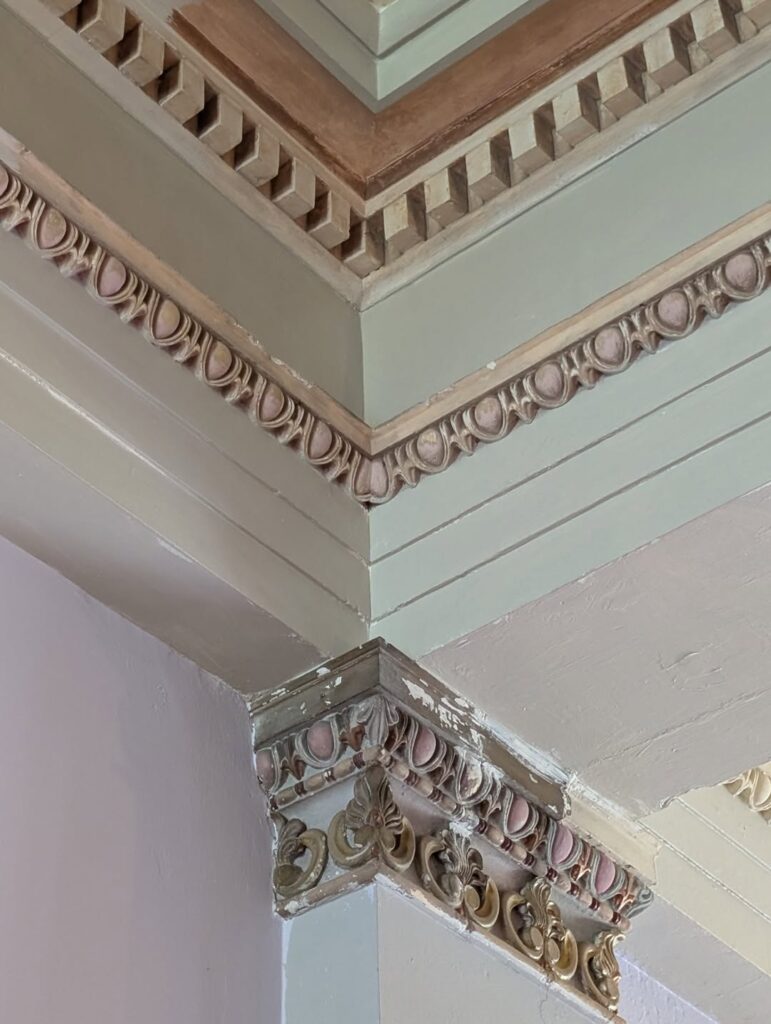
Step inside and look up. The ceiling medallions are extraordinary — not painted, never painted, still showing raw plaster detail after 160 years.
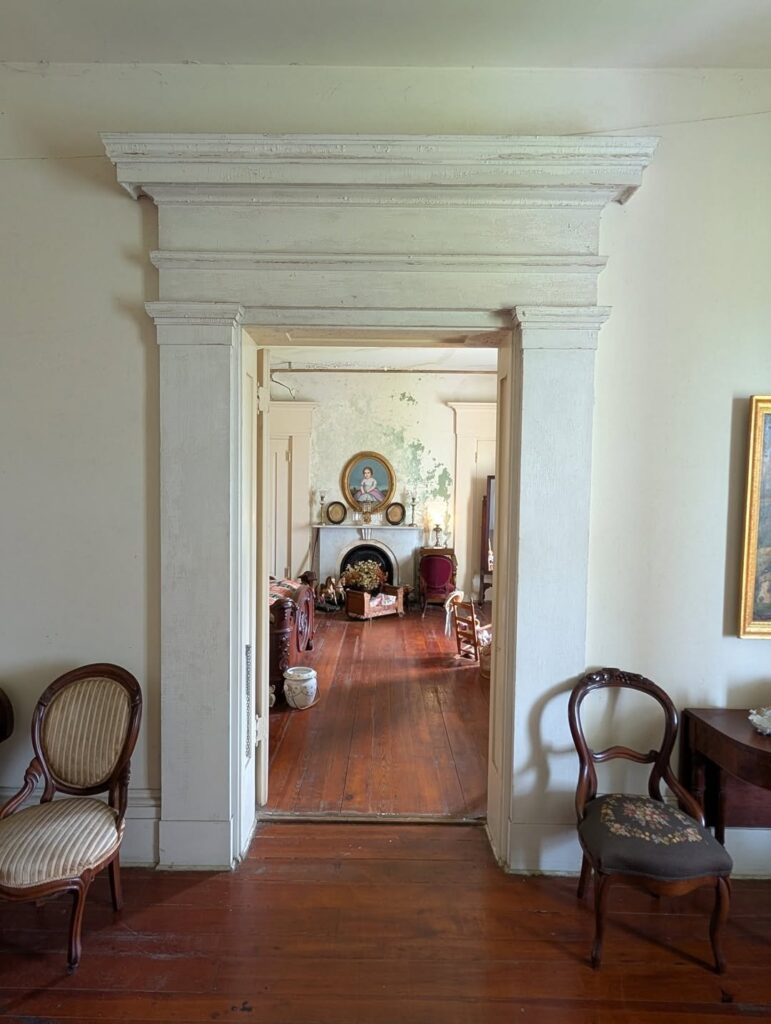
Thomas Lewinski copied Minard Lafever’s patterns for his magnificent ceiling medallions and entablatures in the fourteen-and-a-half-foot high ground floor rooms, none of which has ever been painted.
Lafever was one of the great American architectural pattern-book writers of the 19th century. His designs influenced buildings from New York to New Orleans, and here they are — intact, gathering dust in a Kentucky summer house.
The parlors could connect. To the left of the hall are two parlors and a dining room, all of which can be transformed into one enormous room by opening the huge walnut pocket doors. The imported white marble mantles have varying decorations; those in the dining room feature a grape and foliage frieze.
Every detail was chosen. Nothing was accidental. This was a home designed to impress, to entertain, to dazzle.
The Fall: War, Bankruptcy, and Slow Forgetting
When the War Changed Everything
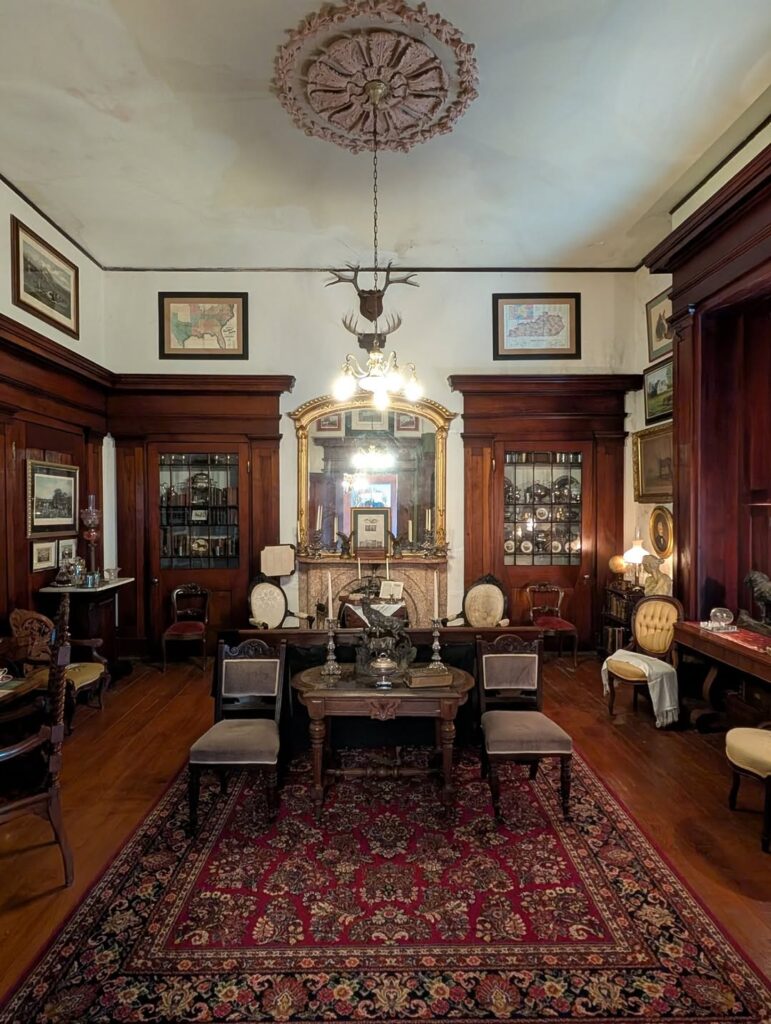
Ward Hall stood at its peak for less than a decade before the world that built it collapsed.
The Civil War gutted the Southern planter economy. Cotton fortunes evaporated. Junius Ward — one of the wealthiest men in the antebellum South — was no exception.
Ward lost his fortune following the Civil War. The mansion was first sold at a bankruptcy auction for Junius Ward on September 7, 1867.
Imagine that. A home built for $50,000 in gold, sold at auction to settle debts. The parties were over. The walnut pocket doors swung shut for the last time on Ward family laughter.
Decades of Drifting
After Ward, the house passed through a series of owners — each one inheriting more decay and fewer resources to fight it.
Among past owners was Colonel Milton Hamilton, who offered the house to the legislature for use as the state capitol.
The Kentucky state capitol. This forgotten estate was once considered grand enough to house an entire state government. The offer was declined, and Ward Hall drifted on.
For much of the 20th century, the mansion sat largely empty, quietly deteriorating. Paint flaked. Plaster crumbled. The copper roof — once housing a massive tank for a primitive indoor water system — eventually disappeared. Vines crept up the coquina foundation. The silence settled in.
It became, in the truest sense, a forgotten estate.
The Ghosts (Real and Imagined)
Sallie Ward: The Southern Belle Who Never Left
No story of Ward Hall is complete without Sallie Ward. She was Junius’s niece, and she was, by all accounts, a force of nature.
A frequent guest was his niece — noted southern belle Sallie Ward.
Sallie was the Kim Kardashian of antebellum Kentucky: famous for her looks, her four marriages, her jewels, and her absolute refusal to follow anyone else’s rules. She threw parties that scandalized polite society. She wore French gowns when Kentucky women wore homespun. She laughed too loud and stayed too late.
People say she still walks Ward Hall’s elliptical staircase at midnight, trailing the ghost of her fourth husband and the faint scent of magnolias.
No one has confirmed this. But no one has entirely denied it either.
What the Dust Remembers
There is something about old houses — really old houses, the kind with 160 years of stories soaked into the floorboards — that makes you feel watched.
Walk the back corridors of Ward Hall and you feel the weight of it. The preserved slave quarters in the basement. The servants’ rooms tucked into the upper floors. The kitchen that fed hundreds of guests while the people who cooked the food had no seat at the table.
This mansion wasn’t just a rich man’s playground. It was a whole world — one with joy and grief and injustice and beauty all tangled together in the same fourteen-foot rooms.
That’s what makes historic abandoned properties worth preserving — they carry the full, complicated truth of American history inside their walls.
Preservation: Saving Ward Hall From Itself
The Foundation Steps In
By the early 2000s, Ward Hall was in serious trouble. Decades of deferred maintenance, ownership changes, and Kentucky weather had taken a heavy toll. The mansion that architectural historian Clay Lancaster once called “the largest Greek Revival house in Kentucky” was slowly losing the battle against time.
Today, Ward Hall serves as the headquarters of The Ward Hall Preservation Foundation, Inc. The foundation successfully raised one million dollars to purchase the 40-acre estate.
One million dollars. Raised by people who believed a building this important deserved to survive.
Ward Hall is recognized as a Kentucky Landmark and the entire complex is listed as a historic district on the National Register of Historic Places, making it a significant site for visitors interested in history and architecture.
That designation matters. It protects the building. It also tells you something about what the experts think of this place.
What Remains — and What’s Been Lost
Stand on the front lawn today and you see a mansion in the middle of its own resurrection. Some rooms are restored, glowing with the warmth of original woodwork and carefully matched plaster. Others are still raw — water stains on the ceiling, boards across windows, scaffolding where there used to be chandeliers.
Many visitors found the mansion to be evocative even in its unrestored state. The tour guides are consistently praised for their knowledge, enthusiasm, and ability to bring the history of the house and the Ward family to life.
There’s a chandelier story that kills every tour group. Junius Ward lost one of the original etched glass globe chandeliers with Sheffield plates in a card game, but it survives at Georgetown College.
A chandelier. Lost in a card game. That’s Ward Hall in one sentence.
What You Need to Know Before You Visit
Ward Hall is not an abandoned property in the trespassing sense. It is an actively preserved historic site open for guided public tours. This is the right and only way to experience it — and honestly, the guided tour is better than anything you’d see sneaking around on your own.
Here’s what to expect:
- Location: Georgetown, Kentucky — approximately one mile east of town on US-460
- Tours: Available by appointment through the Ward Hall Preservation Foundation
- What you’ll see: The grand parlors, the elliptical staircase, the original woodwork, basement quarters, and ongoing restoration areas
- Cost: Admission is modest and goes directly toward preservation
If you’re planning a trip, it pairs beautifully with a drive through the Kentucky Bluegrass — horse farms, limestone fences, and a dozen other reminders that this land has been shaped by wealth and history since long before the Civil War.
For more inspiration on Georgia and Southern estate exploration done right, browse our full archive of historic American properties.
Why Ward Hall Still Matters
Buildings like Ward Hall make people uncomfortable. They should.
This is a house that was built on cotton money. On enslaved labor. On the kind of wealth that required other people’s suffering to exist. And it is, simultaneously, a staggering feat of American craftsmanship — a building that pushed the limits of what 19th-century builders knew how to do.
Both things are true. And both things are worth remembering.
The Greek Revival architectural style, which reached its American peak in the decades before the Civil War, left dozens of buildings like Ward Hall scattered across the South and Midwest. Most of them are gone. Burned, demolished, absorbed by kudzu and time. Ward Hall survived.
It survived the bankruptcy auction. It survived the drifting ownership years. It survived the copper thieves and the Kentucky winters and the slow erosion of neglect.
And now it’s being put back together, room by room, plaster medallion by plaster medallion, by people who believe the full complexity of this story deserves to stand.
That is worth something. Maybe everything.
Conclusion
Ward Hall is not just an abandoned château — it is a mirror held up to American history. Every fluted column, every walnut pocket door, every unmarked room in the basement tells a story that is still unfolding.
This forgotten estate near Georgetown, Kentucky, began as a monument to one man’s wealth and ended as a monument to something much harder to define: the persistence of beautiful, difficult things.
Whether you’re drawn by the architecture, the ghost stories, the history, or simply the sight of those forty-foot columns rising out of the Bluegrass morning, Ward Hall rewards every second of your attention.
It is, as one historian put it nearly a century ago, “the most fabulous house in Central Kentucky.”
That title still fits.
Frequently Asked Questions
Is Ward Hall actually abandoned? Ward Hall is not abandoned in the legal sense. It is actively managed by the Ward Hall Preservation Foundation and is open for public tours. It does show visible signs of decay in unrestored areas, which gives it an evocative, time-worn atmosphere.
Who built Ward Hall? Ward Hall was built circa 1857 for Junius Richard Ward, a Kentucky-born Mississippi cotton planter. It was designed by English architect Major Thomas Lewinski and constructed by builder Taylor Buffington, with contributions from James Bailey, a free man of color.
What architectural style is Ward Hall? Ward Hall is a Greek Revival antebellum mansion — considered the finest and largest example of the style in Kentucky.
Can you visit Ward Hall? Yes. The Ward Hall Preservation Foundation offers guided tours by appointment. It is located approximately one mile east of Georgetown, Kentucky.
Why did Ward Hall fall into disrepair? Junius Ward lost his fortune following the Civil War and was forced to sell the estate at bankruptcy auction in 1867. The mansion passed through multiple owners over the following century with little consistent investment in maintenance.
Is Ward Hall haunted? Officially, no. Unofficially, the spirit of Sallie Ward — Junius’s niece and one of antebellum Kentucky’s most colorful personalities — is said to still roam the halls. Make of that what you will.
What is the Ward Hall Preservation Foundation? It is a nonprofit organization that purchased the 40-acre Ward Hall estate in 2004 for $1 million and continues to fund restoration and educational programming for the site.
Enjoyed this piece? Explore more forgotten places and their stories at abandoned.blog.