Introduction: The Island That Time Almost Forgot
There are places in this world that feel like they exist just outside of time.
Isola del Garda is one of them.
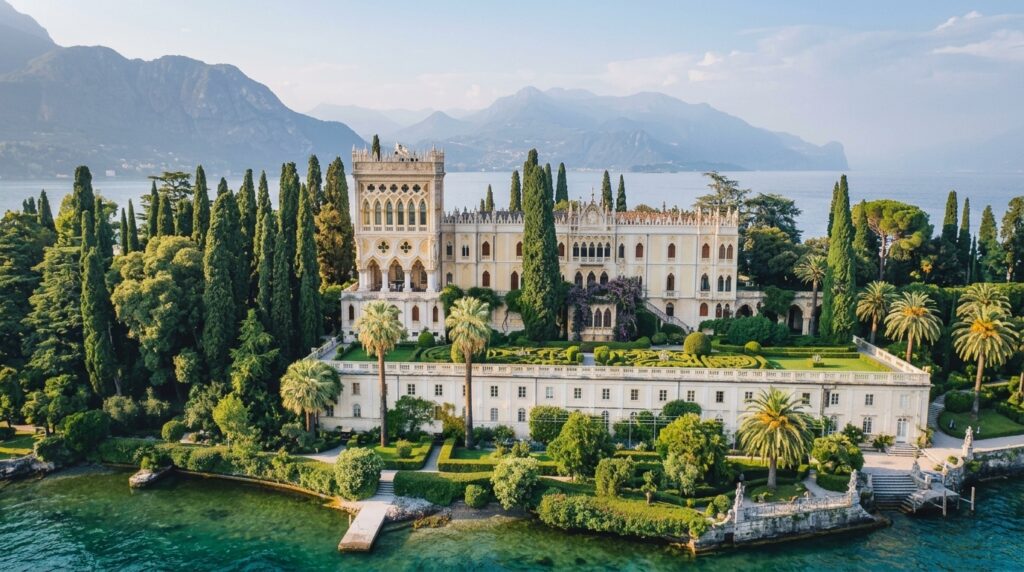
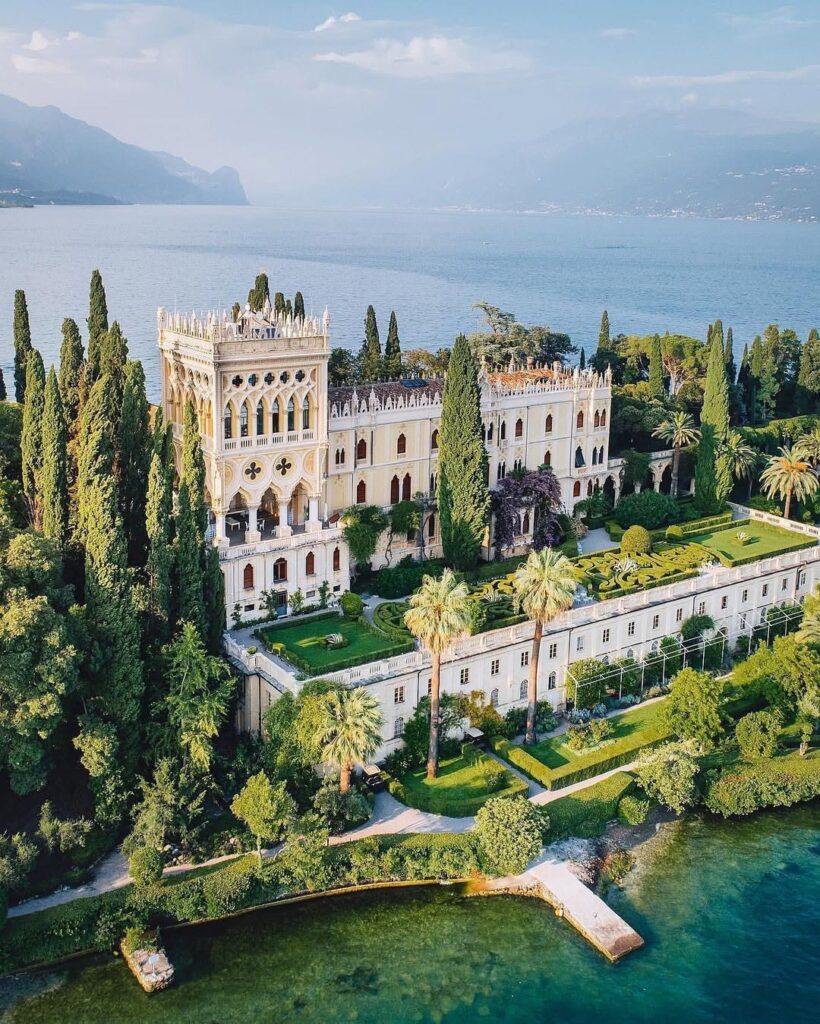
Tucked into the shimmering western shore of Lake Garda in northern Italy, this small island rises from the water like something out of a fever dream. Cypress trees line its terraced shores. A neo-Gothic villa crowned with turrets gazes out across the lake. Manicured gardens cascade down to the water’s edge in waves of color and fragrance.
And yet, for much of its long history, this remarkable forgotten estate was sealed off from the world — a private jewel known only to its noble owners and a handful of guests.
That has changed. But the magic hasn’t.
Whether you’re a lover of Italian heritage, a fan of dramatic landscapes, or someone drawn to the melancholy beauty of abandoned châteaux and storied old houses, Isola del Garda will stop you cold. This is a place worth knowing deeply — not just passing on a boat tour.
Let’s go in.
What Is Isola del Garda?
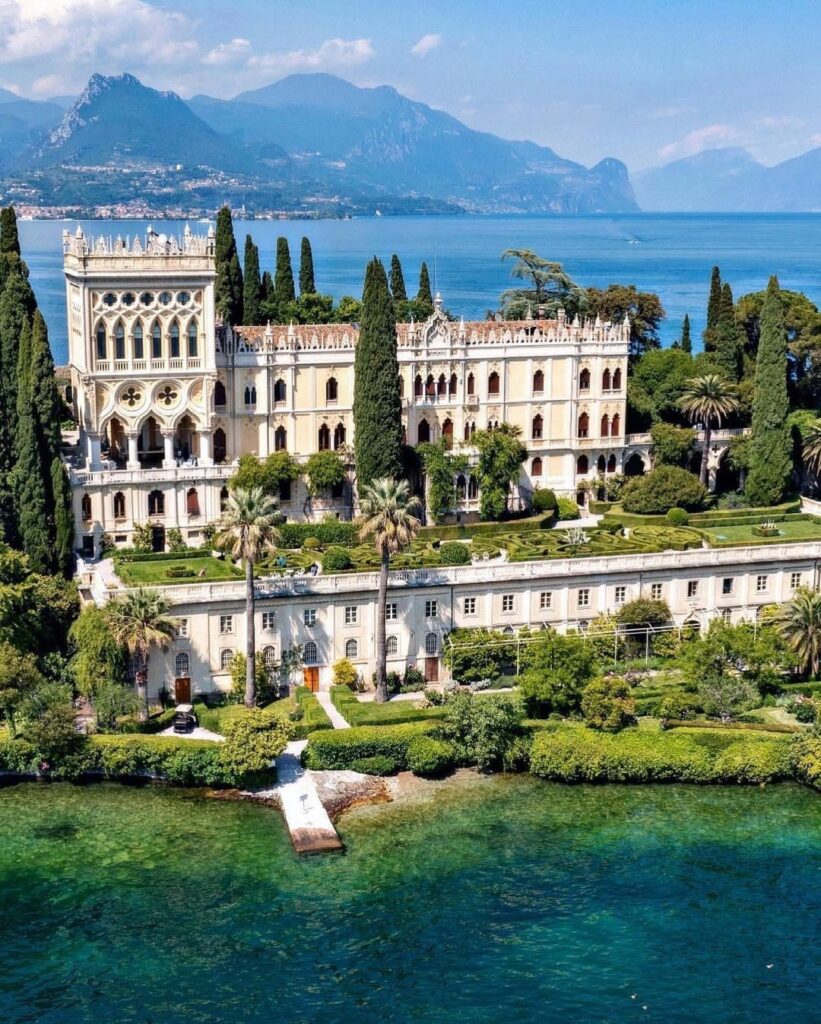
Isola del Garda is the largest island on Lake Garda, which itself is the largest lake in Italy. The island sits close to the western shore, near the town of San Felice del Benaco in the province of Brescia, Lombardy.
It’s not large. You could walk its perimeter in under an hour.
But what it lacks in size, it more than makes up for in history, grandeur, and atmosphere.
The island’s recorded history stretches back over a thousand years. And almost every chapter of that history carries weight.
A Brief Timeline of the Island’s History
- 5th–6th century AD — Early Christian monks establish a community on the island. Saint Francis of Assisi is believed to have visited.
- Medieval period — A Franciscan convent is founded, giving the island a deeply spiritual character.
- Late 19th century — The Borghese family (later Cavazza) acquires the island and constructs the present villa in Venetian Neo-Gothic style.
- 20th century — The island remains private. Access is restricted for generations.
- Present day — The Cavazza family still owns the island and opens it to guided tours during the warmer months.
That unbroken chain of ownership — from ancient monks to Renaissance nobles to a modern Italian family — gives Isola del Garda a layered quality you can almost feel in the air.
Villa Borghese Cavazza: A Renaissance Dream on the Water
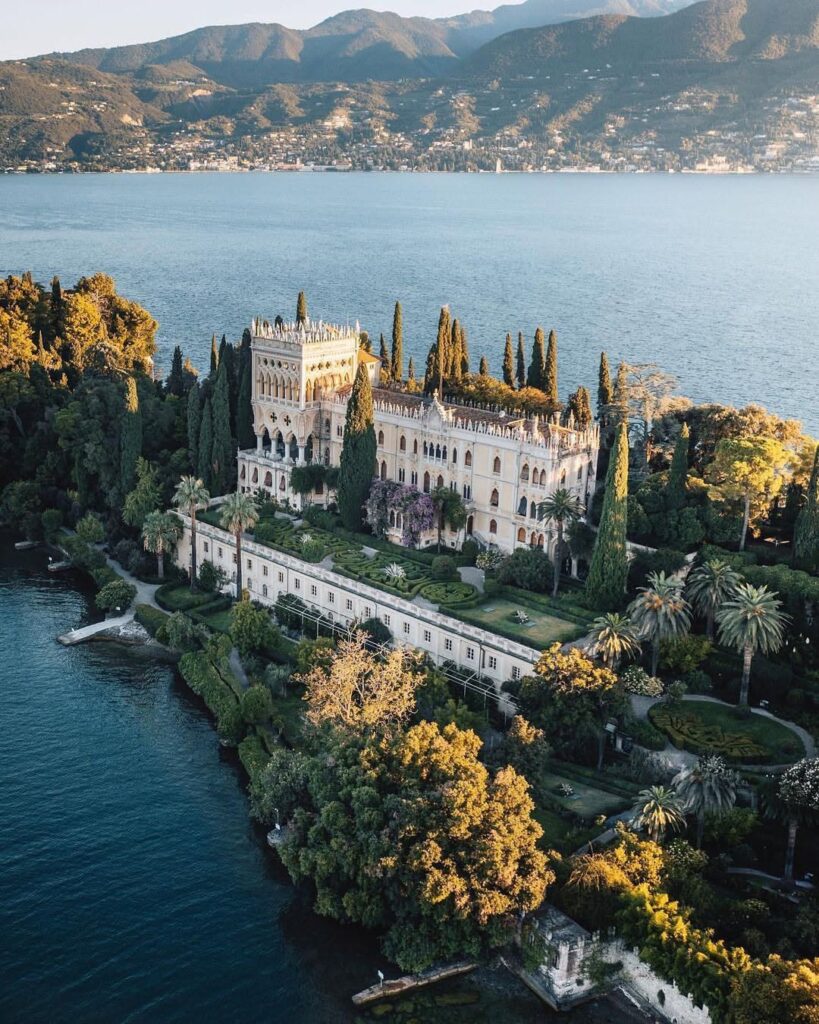
At the heart of the island stands Villa Borghese Cavazza, and it is extraordinary.
Built in the late 1800s to replace an earlier monastic structure, the villa takes its architectural cues from the great Venetian Gothic palaces of the lagoon city. Pointed arches, ornate stone carvings, slender turrets, and loggia terraces face the lake with a kind of theatrical confidence.
Walking toward it for the first time, it’s hard not to feel slightly overwhelmed.
This isn’t a ruin. It’s not a forgotten castle falling into weeds. It’s meticulously maintained, family-lived-in, and achingly beautiful. But there’s still something about it — a quality of solitude, of remove — that echoes the atmosphere of those great abandoned estates you find along the Loire Valley or deep in the Veneto.
What’s Inside the Villa?
Guided tours take visitors through the villa’s principal rooms, each filled with period furniture, family portraits, and decorative arts that span centuries.
Highlights include:
- The grand reception rooms, hung with tapestries and oil paintings
- The library, stacked with leather-bound volumes and smelling faintly of old paper and beeswax
- The private chapel, still consecrated and used by the family
- Antique ceramics and objets d’art collected across generations of Borghese and Cavazza ownership
The interior has a lived-in quality that many museum-palaces lack. It feels less like a stage set and more like a home — one that happens to be five hundred years old and furnished accordingly.
For anyone who loves exploring forgotten manor houses or crumbling old estates, this kind of authentic preservation is genuinely moving. You can read more about what makes these atmospheric historic properties so compelling in this deep dive on forgotten estate architecture and its enduring appeal.
The Gardens: Where Nature and History Intertwine
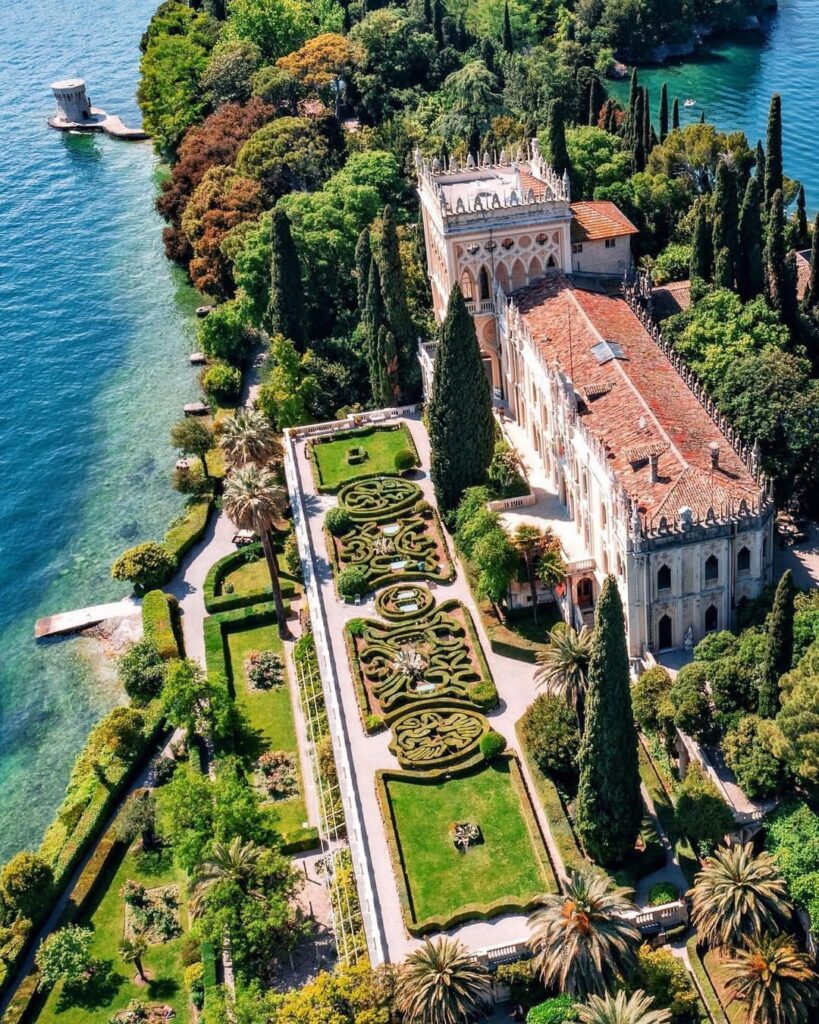
If the villa is the island’s crown, the gardens are its soul.
Spread across terraced levels that descend toward the lake, the gardens of Isola del Garda are a masterpiece of Italian and English garden design. They were laid out in the late 19th and early 20th centuries, and they’ve been tended with extraordinary care ever since.
What to Expect in the Gardens
The air here is heavy with citrus blossom and jasmine in summer. Stone paths wind between ancient hedges clipped into geometric shapes. Water features murmur in shaded corners. Gravel crunches underfoot.
Key features include:
- Formal Italian parterres near the villa, with box hedging and rose beds
- An English-style woodland garden with rare specimen trees
- Lemon and citrus groves, a tradition along Lake Garda dating back centuries
- Panoramic terraces with views across the water to the mountains beyond
- A small belvedere perched at the island’s tip, perfect for quiet contemplation
The garden design reflects the same romantic sensibility you find in historic Italian estates documented on UNESCO’s World Heritage lists, where the boundary between cultivated beauty and wild nature is deliberately blurred.
Standing on one of those terraces, with the Alps rising beyond the lake and the villa behind you, it’s easy to understand why generations of aristocratic families fell in love with this place.
The Spiritual History of the Island
Before the villa. Before the noble families. Before any of it.
There were monks here.
The Franciscan connection to Isola del Garda runs deep. For centuries, the island was home to a monastic community, and the tradition holds that Saint Francis of Assisi himself once found shelter here during his travels through northern Italy.
Echoes of the Convent
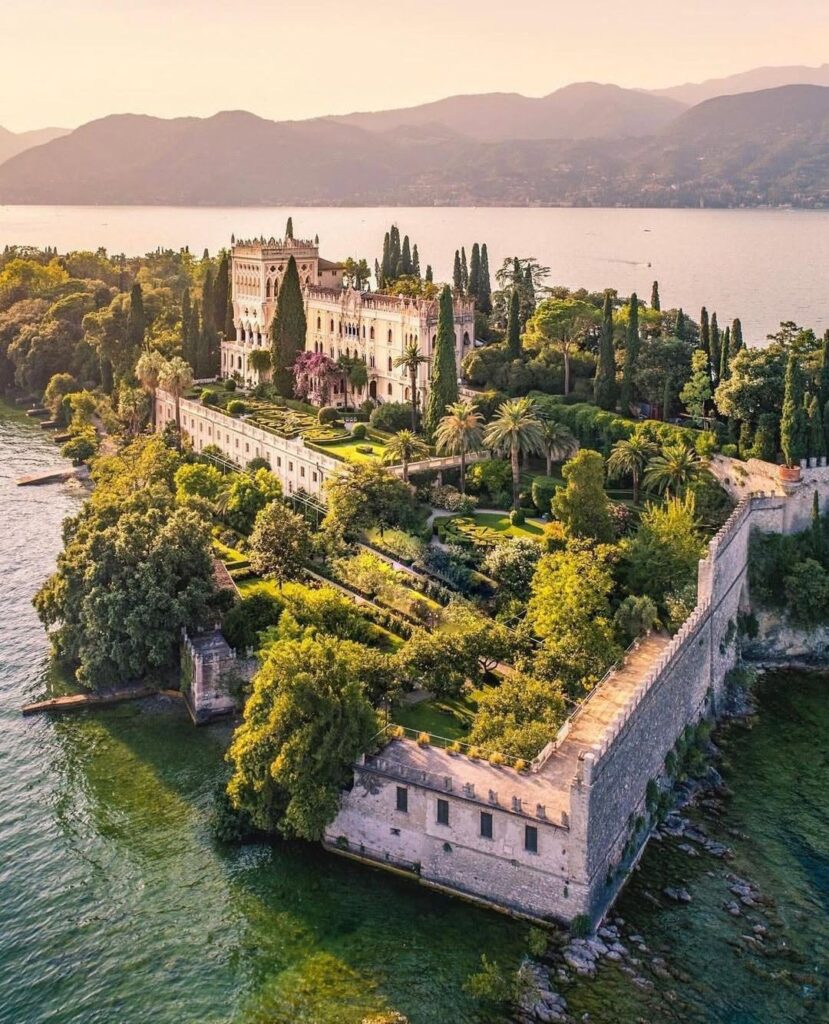
When the Borghese family acquired the island in the 1800s, the old convent was demolished to make way for the new villa. But traces of the monastic past remain.
The private chapel preserves elements of that earlier spiritual life. The overall atmosphere of the island — quiet, slightly removed from the world, steeped in a kind of contemplative stillness — seems to carry the imprint of all those centuries of prayer and silence.
It’s worth noting that many of Europe’s most dramatic forgotten estates and abandoned châteaux share this quality. They sit on ground that was considered sacred long before any grand house was built. The layers of history become the building’s deepest architecture.
If you’re drawn to places where history and atmosphere combine in this way, the abandoned monastery and estate guides at Abandoned Blog offer a rich collection of similar destinations across the continent.
Getting to Isola del Garda: Practical Guide
The island is only accessible by boat, which adds to its feeling of otherworldly remove.
Guided tours run from various departure points around the lake, including:
- Salò
- Gardone Riviera
- Desenzano del Garda
- Bardolino
- Riva del Garda
Tours typically last around three hours and include the boat crossing, a guided walk through the gardens, and a tour of the villa’s principal rooms. Groups are kept to a manageable size, which preserves the intimate atmosphere of the visit.
Practical Information at a Glance
| Detail | Information |
| Season | April to October |
| Tour Duration | Approx. 3 hours |
| Languages | Italian, English, German, French |
| Booking | Advance reservation recommended |
| Access | Boat tour only — no independent access |
The island is privately owned. Visitors should only access it through official guided tours organized by the Cavazza family. Independent exploration is not possible and not permitted.
What Makes Isola del Garda Unique?
Plenty of Italian lakes have islands. Plenty have villas.
Few have both in quite this combination.
What sets Isola del Garda apart is the confluence of factors that rarely align anywhere else:
- Unbroken private ownership — the island has never been sold to a developer or converted into a hotel
- Living history — the Cavazza family still lives part of the year on the island
- Exceptional gardens — maintained to a standard that rivals any public garden in Italy
- Architectural integrity — the villa has not been stripped of its contents or converted
- Spiritual depth — a thousand years of human occupation have left an intangible quality to the place
It’s the kind of estate that serious explorers of historical architecture dream about. Not abandoned. Not ruined. But deeply, unmistakably old — and carrying that age with grace.
The Lake Garda Setting: More Than a Backdrop
It would be a mistake to visit Isola del Garda without considering its relationship to the lake itself.
Lake Garda is the largest lake in Italy, stretching 52 kilometers from north to south and flanked by the Alps to the north and the Brescia plain to the south. According toWikipedia’s entry on Lake Garda, the lake has been inhabited since prehistoric times and has served as a resort destination for Romans, medieval pilgrims, and modern tourists alike.
The island benefits from the lake’s mild microclimate, which allows plants to thrive here that would struggle elsewhere in northern Italy. The lemon trees, the ancient olives, the palms — all of them owe their existence to the lake’s moderating influence.
And the lake gives the island its drama, too.
On still mornings, the water is flat and silver. The island floats on it like a dream. On stormy afternoons, the wind comes down from the mountains and the lake turns grey-green and choppy. The villa looks even more theatrical in that light — brooding, romantic, impossibly picturesque.
Tips for Visiting Isola del Garda
Getting the most from this place requires a little preparation.
Before You Go
- Book early. Tours sell out weeks in advance during peak season (July–August).
- Wear comfortable shoes. The garden paths are paved but uneven in places.
- Bring a light layer. Even on hot days, the boat crossing can be cool.
- Check the weather. Tours can be cancelled in bad weather. Have a backup plan.
During the Visit
- Listen to the guide. The family history woven into every room is fascinating and not available in any guidebook.
- Give yourself time in the gardens. It’s tempting to rush. Don’t.
- Look out from the terraces. The views of the lake and surrounding mountains are among the finest in the region.
- Notice the small details. A carved stone here. A faded fresco there. A chair that may have been sat in by a pope.
After the Visit
The nearby towns of Salò and Gardone Riviera are both worth exploring. Gardone in particular has its own remarkable abandoned estate story — the Vittoriale degli Italiani, the extraordinary compound built by poet and nationalist Gabriele d’Annunzio, which feels as much like an eccentric forgotten château as a historical monument.
Why Forgotten Estates Matter
There’s a reason places like Isola del Garda draw visitors from across the world.
It’s not just the beauty — though the beauty is real and extraordinary.
It’s the weight of time. The sense of lives lived, passions played out, dynasties built and changed. The feeling of standing in a room where something important happened, even if you can’t name exactly what.
Forgotten estates, abandoned castles, and historic villas like this one carry a particular kind of emotional charge. They ask us to slow down. To pay attention. To remember that the world was full of richness and complexity long before we arrived.
That’s not nostalgia. It’s perspective.
And it’s why these places — preserved, semi-preserved, or beautifully ruined — deserve our attention, our respect, and our continued interest.
Conclusion: Don’t Let Isola del Garda Stay Forgotten
The Isola del Garda forgotten estate has waited quietly on its lake for a very long time.
It waited through wars and republics, through the rise and fall of Italian aristocracy, through decades when only the family and their guests knew what lay at the end of that boat journey. It waited while other grand villas crumbled or were converted or were sold off piece by piece.
It’s still here. Intact. Extraordinary. And open — at least for a few months each year — to anyone who makes the effort to find it.
That’s rare. That should not be taken for granted.
If you find yourself anywhere near Lake Garda between April and October, book the tour. Take the boat. Walk those gardens. Stand on those terraces.
Let the weight of the place settle over you.
You won’t forget it.
Frequently Asked Questions (FAQ)
Q: Can I visit Isola del Garda independently? No. The island is privately owned by the Cavazza family and is only accessible via official guided boat tours. Independent visits are not permitted.
Q: When is the best time to visit Isola del Garda? May, June, and September offer the best combination of pleasant weather, blooming gardens, and smaller crowds. July and August are peak season — beautiful but busy.
Q: How long does a tour of Isola del Garda take? Tours typically run for approximately three hours, including the boat crossing, garden tour, and villa interior visit.
Q: Is Isola del Garda suitable for children? Yes. The gardens are child-friendly and the story of the island — monks, noble families, ancient history — tends to capture young imaginations.
Q: Is Villa Borghese Cavazza related to the Borghese Gallery in Rome? The name connection reflects the aristocratic Borghese family’s historic ownership of the island, though the present-day villa and grounds are now managed by the Cavazza family.
Q: Are photography and filming allowed during the tour? Photography for personal use is generally permitted in the gardens. Guidelines for interior photography may vary — check with the tour organizers in advance.
Q: How do I book a tour of Isola del Garda? Tickets can be booked directly through the island’s official website. Advance booking is strongly recommended, especially during peak season.
Enjoyed this guide? Explore more forgotten estates, abandoned châteaux, and hidden historic properties across Europe atAbandoned Blog.