Introduction: A Place That Almost Never Existed
There is something quietly devastating about a place that was almost never built.
Stand beneath the Wall Pavilion today and you feel it. That strange weight of a structure that survived debate, redesign, and the slow erosion of centuries. The stone is cold even in summer. The silence is the kind that swallows footsteps.
This abandoned castle feature — the Wall Pavilion — sits at the heart of one of Europe’s most extraordinary forgotten estates. It was shaped by a king’s changing mind, a staircase that had to be cut short, and a series of bold architectural visions that kept evolving until something truly remarkable emerged.
It is not just a pavilion. It is the physical record of indecision turned into genius.
What Is the Wall Pavilion?
A Structure Born From Compromise
The Wall Pavilion gets its name from the mighty fortress walls on which it stands. That much is obvious the moment you see it. What is less obvious — and far more interesting — is how it came to exist at all.
This was never the plan.
Augustus the Strong, the Elector of Saxony and one of the most flamboyant rulers of the early 18th century, had something entirely different in mind for this spot. He wanted a cascade. A playful, theatrical waterfall feature built into the old wall. Something that would dazzle visitors and reflect his power and taste.
But plans change. Especially royal ones.
The Long Road to an Idea
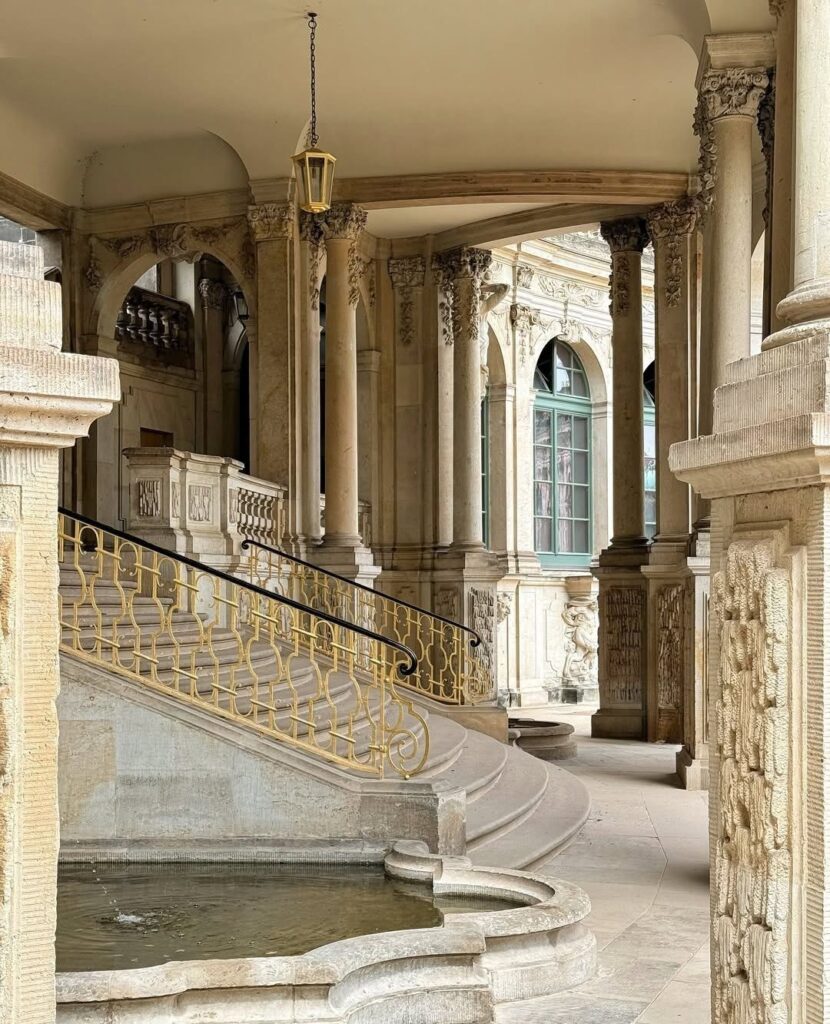
First came a complex staircase. It was built to connect the different levels of the ancient fortress walls — practical, necessary, but hardly spectacular. Then someone looked at those levels and saw potential. Why not terraces? A hanging garden, layered along the wall’s natural contours.
That idea, too, evolved.
When the decision came to build arch galleries along the adjacent wall — intended originally as an orangerie — the staircase suddenly became a problem. It occupied the wrong space. Parts of it had to be cut away, shortened, rerouted.
And in that gap left behind, an idea was born.
A pavilion.
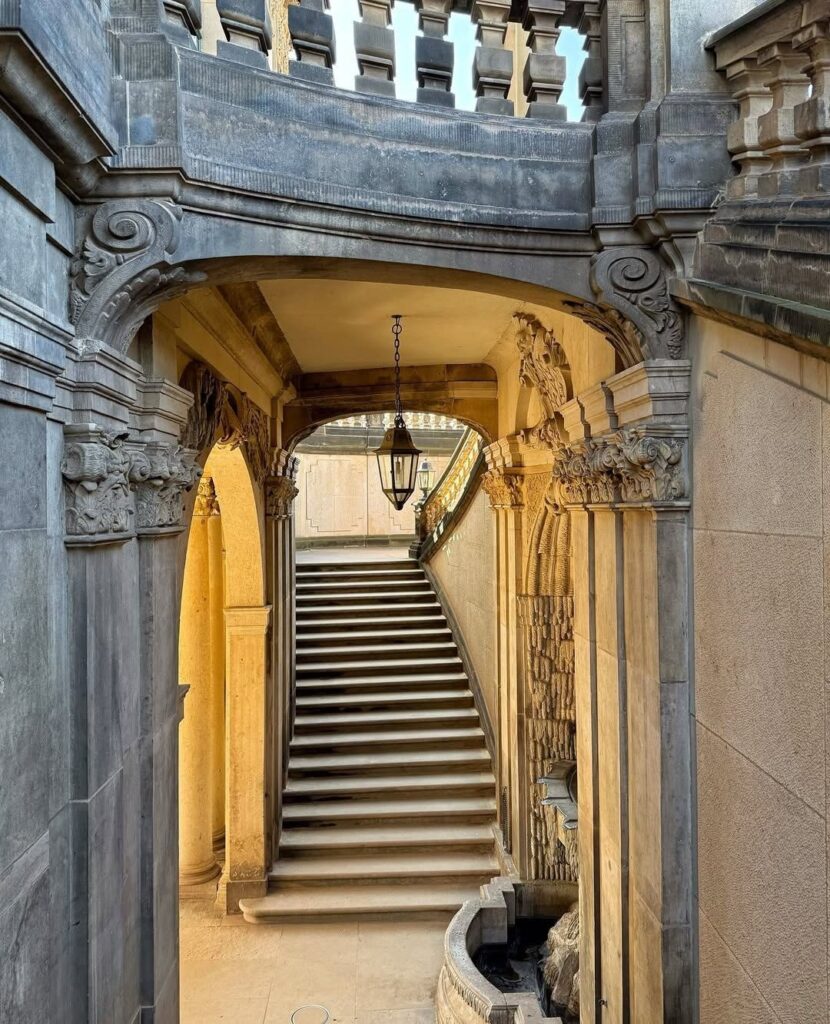
Below the pavilion today, fragments of that original staircase still carry visitors upward along the wall. You walk where the original plan was abandoned. You climb the bones of someone else’s unrealized vision.
The Architecture: Where Stone Starts to Dance
From Rigid Lines to Organic Sculpture
The earliest designs for the Wall Pavilion were relatively straightforward. Clean lines. Composed geometry. The kind of formal symmetry that defined early 18th-century European court architecture.
But they kept evolving.
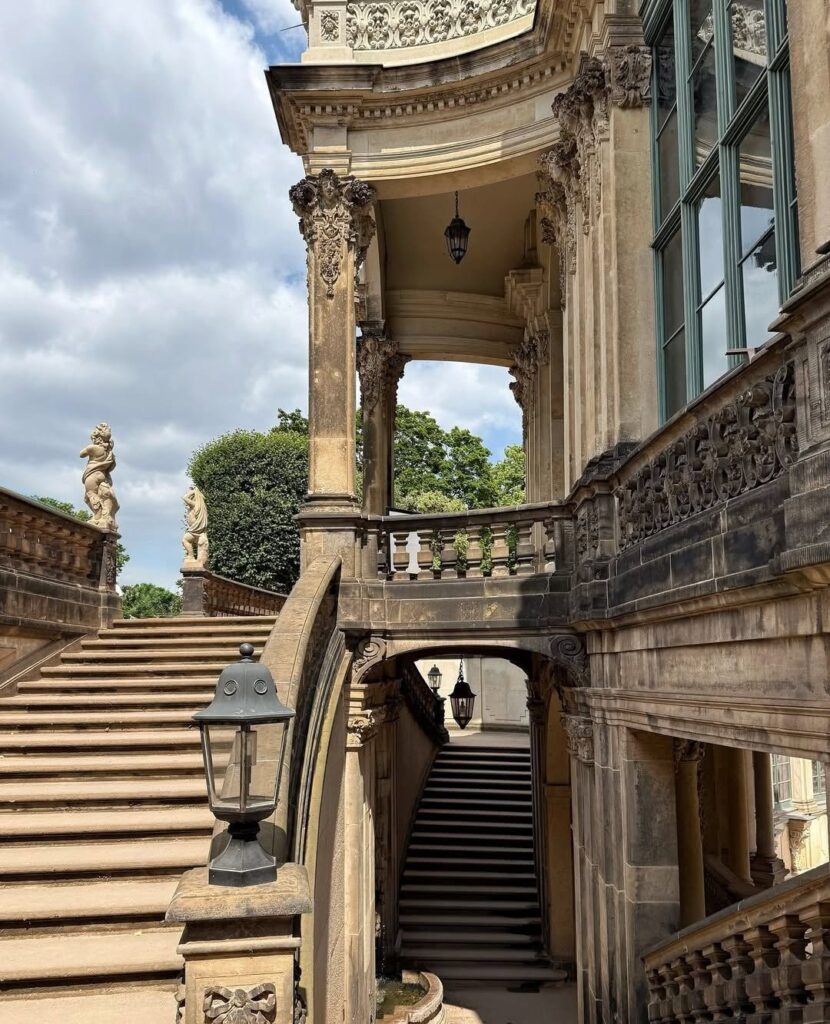
With each revision, the building became more fluid. More daring. Architectural boundaries softened. The lines between structure and decoration began to blur. By the time the final design emerged, the pavilion had transformed into something almost impossible to categorize.
It is architecture that has forgotten it is architecture.
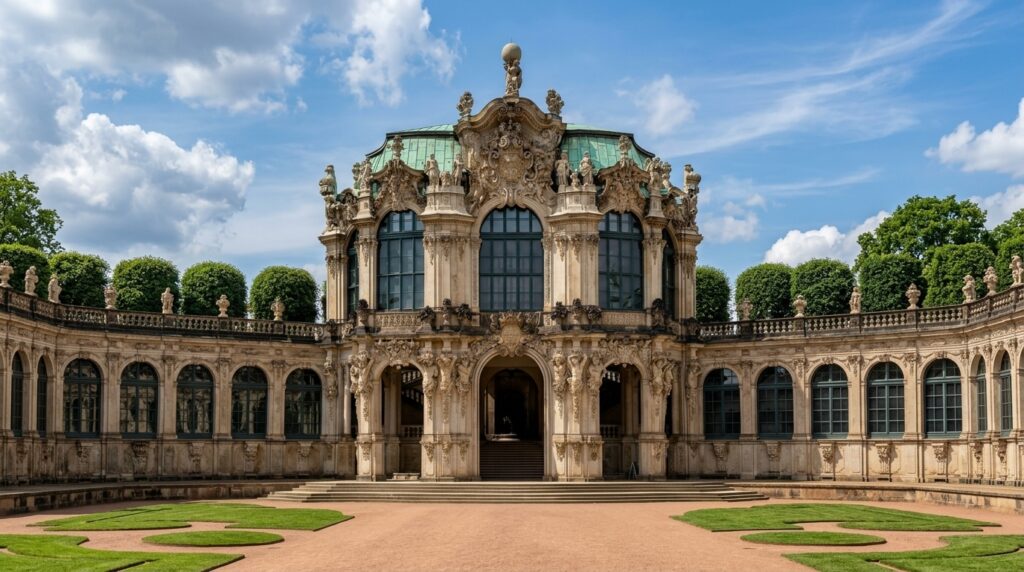
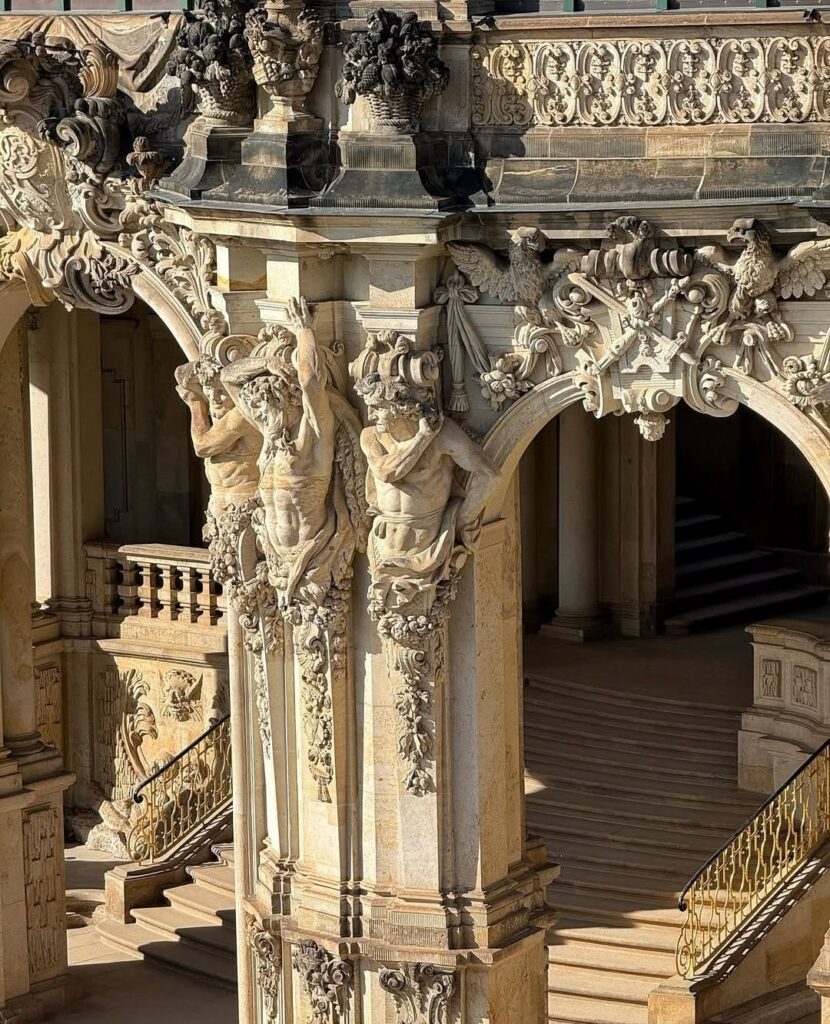
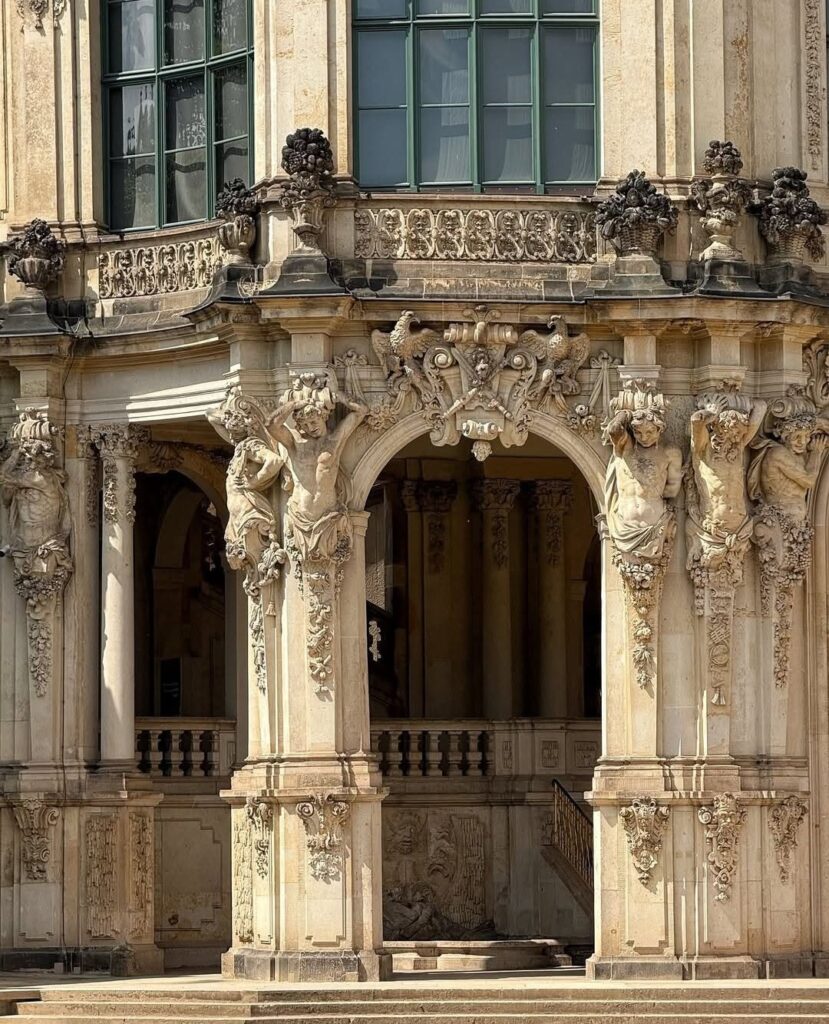
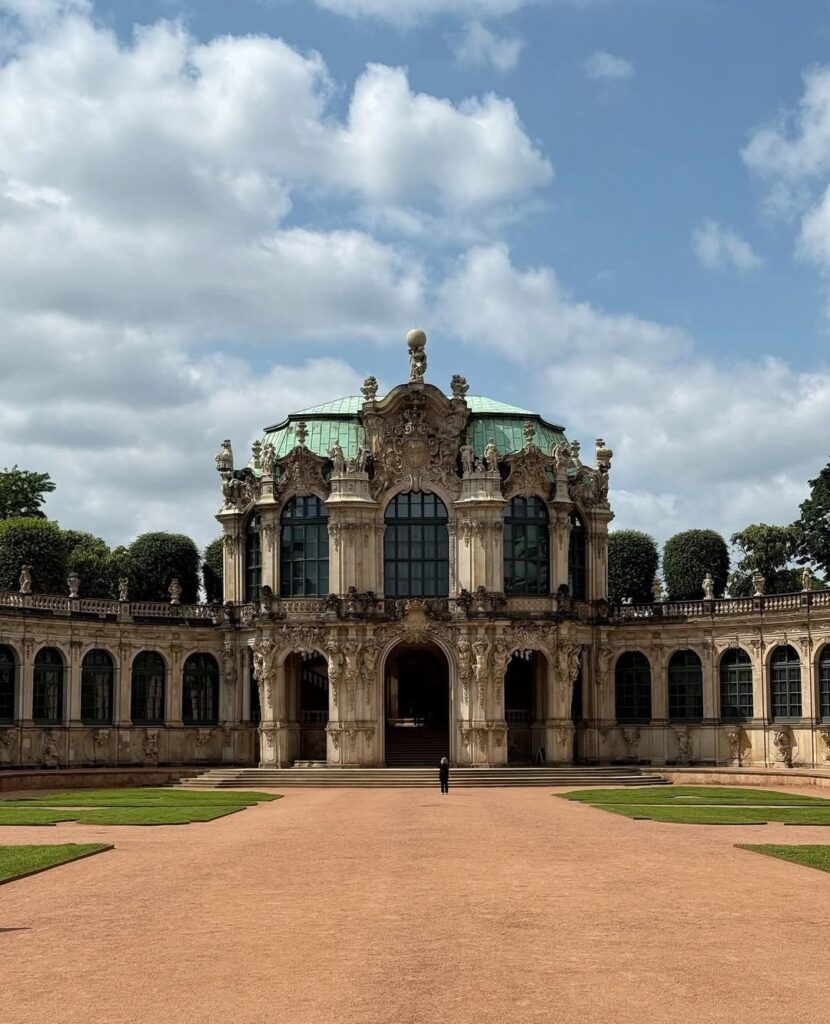
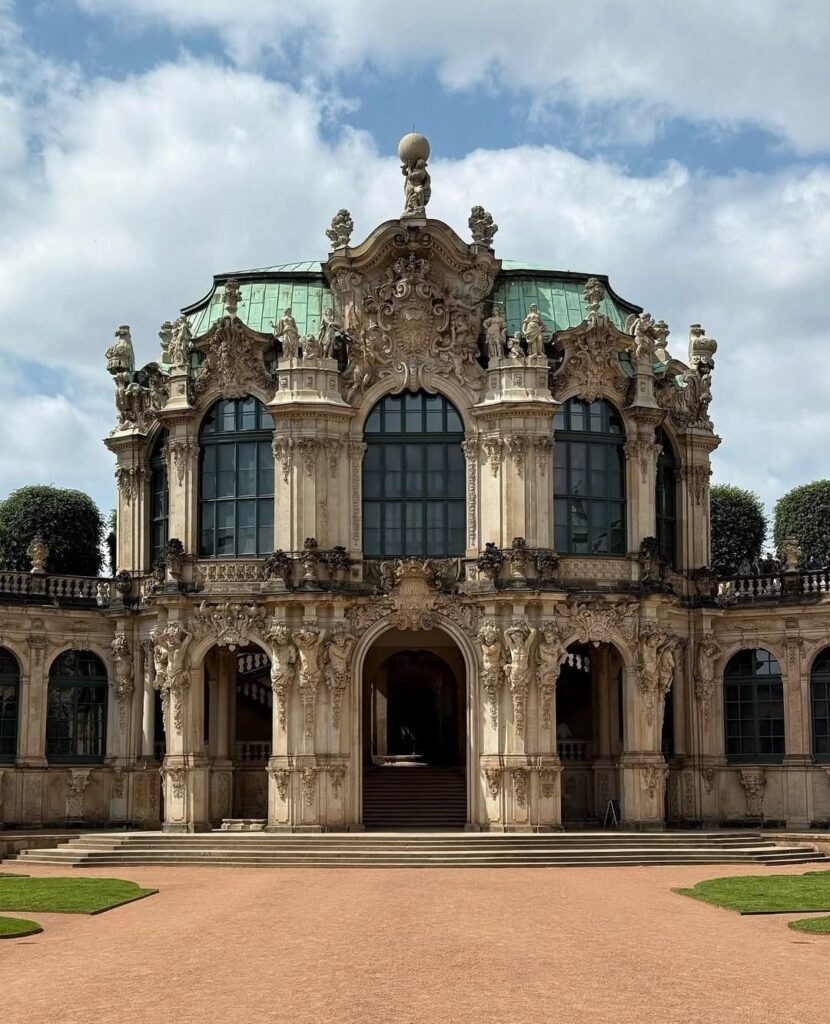
Every element — pilasters, cornices, window frames, rooflines — seems to dissolve into sculptural ornament. The building does not end and the decoration begin. They are the same thing. Stone appears to move. Surfaces swell and curve. Figures emerge from the facade as if the wall itself is alive.
This is the Baroque at its most confident and most extreme.
The Sensation of Standing Before It
To stand in front of the Wall Pavilion is to feel slightly disoriented. Your eye does not know where to rest.
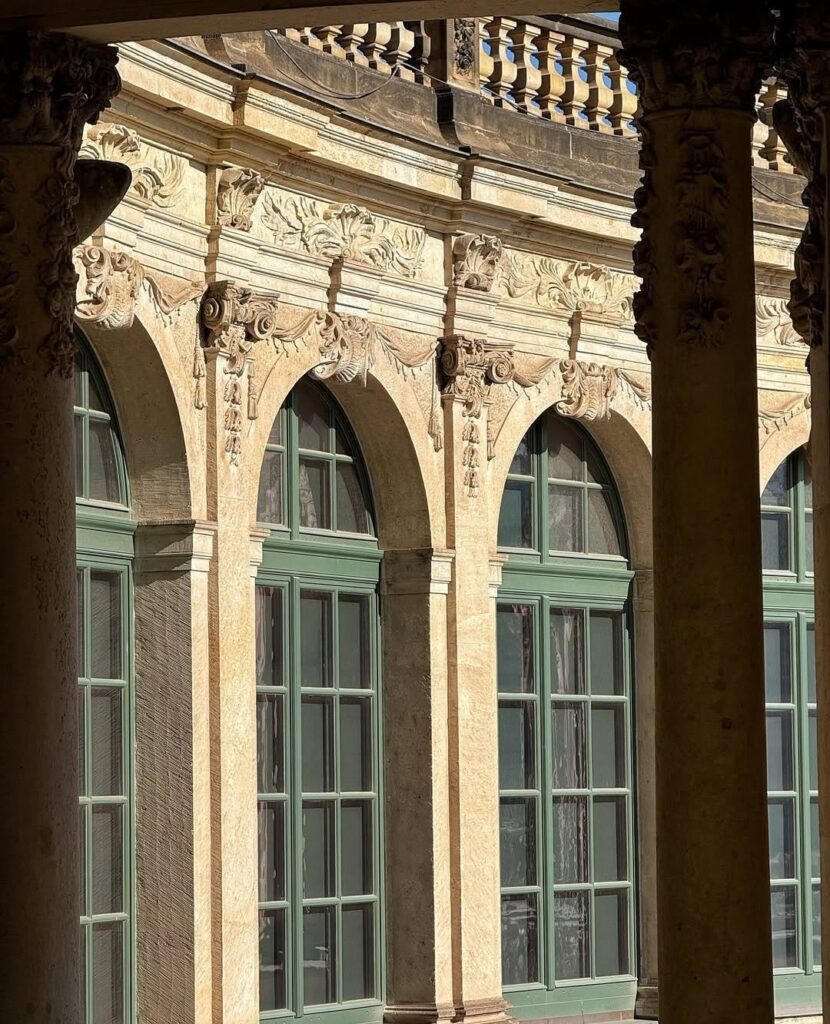
The facade pulls you in multiple directions at once. Upward, toward the crowning sculpture. Sideways, toward the rhythm of the arch galleries. Inward, into the shallow depths of recessed surfaces that catch shadow at every hour differently.
The dust that settles in the carved recesses. The way lichen creeps slowly across the lower stonework. The particular silence of a place that once echoed with court pageantry and now stands mostly alone.
This is what makes forgotten estates so compelling. Time becomes visible here. You can see it in the stone.
The History Behind the Walls
Augustus the Strong and the Age of Excess
To understand the Wall Pavilion, you need to understand the man behind it. Augustus the Strong ruled Saxony from 1694 until his death in 1733. He was, by any measure, extraordinary — in ambition, in appetite, and in his obsession with architectural spectacle.
He collected porcelain on an almost pathological scale. He built some of the most lavish court complexes in Europe. He changed his mind constantly, revised his plans endlessly, and spent extraordinary sums on projects that sometimes went unfinished or were replaced before completion.
The Wall Pavilion is, in a way, the perfect monument to his reign. It is the product of an idea that kept changing until it became something no one had originally imagined.
The Fortress Wall as Canvas
The walls themselves predate Augustus by centuries. Fortress walls in this region were built for defense, not beauty. Thick. Practical. Grim.
Augustus looked at that grimness and saw opportunity.
The idea of building upon, into, and through the old walls was not just aesthetically bold — it was a political statement. The old military infrastructure, the old world of fortifications and sieges, was being transformed. Power now expressed itself through beauty, through garden design, through architecture that made visitors gasp rather than walls that made enemies hesitate.
The Wall Pavilion stands where a soldier might once have watched the horizon for danger. Now it watches over gardens.
If you enjoy uncovering stories like this — places where history is written in stone and silence — explore more forgotten estates and abandoned history on abandoned.blog.
What Survives Today
The Staircase Beneath
One of the most quietly moving details of the Wall Pavilion is what lies beneath it.
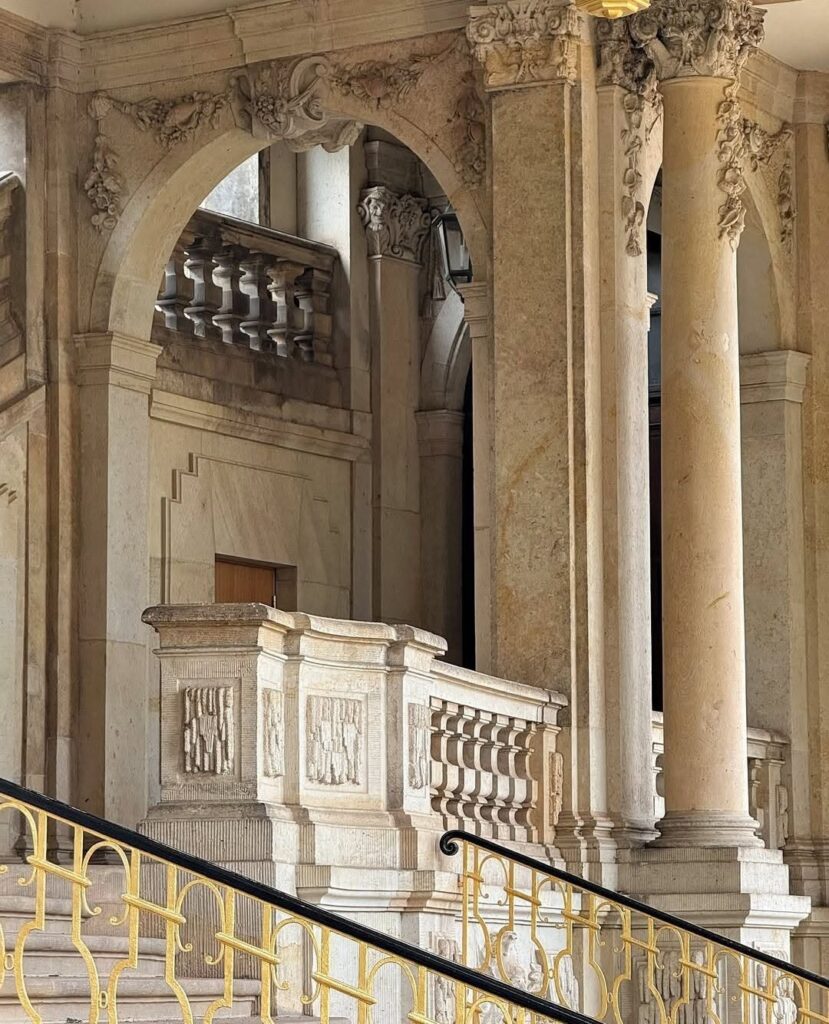
Fragments of the original staircase — the one that predated the pavilion, the one that had to be partially demolished to make way for the arch galleries — still exist. Still carry visitors upward.
You walk on the remnants of an abandoned plan. You ascend through the archaeology of a decision.
It is the kind of detail that most visitors never notice. But once you know it, you cannot unfeel it.
The Arch Galleries
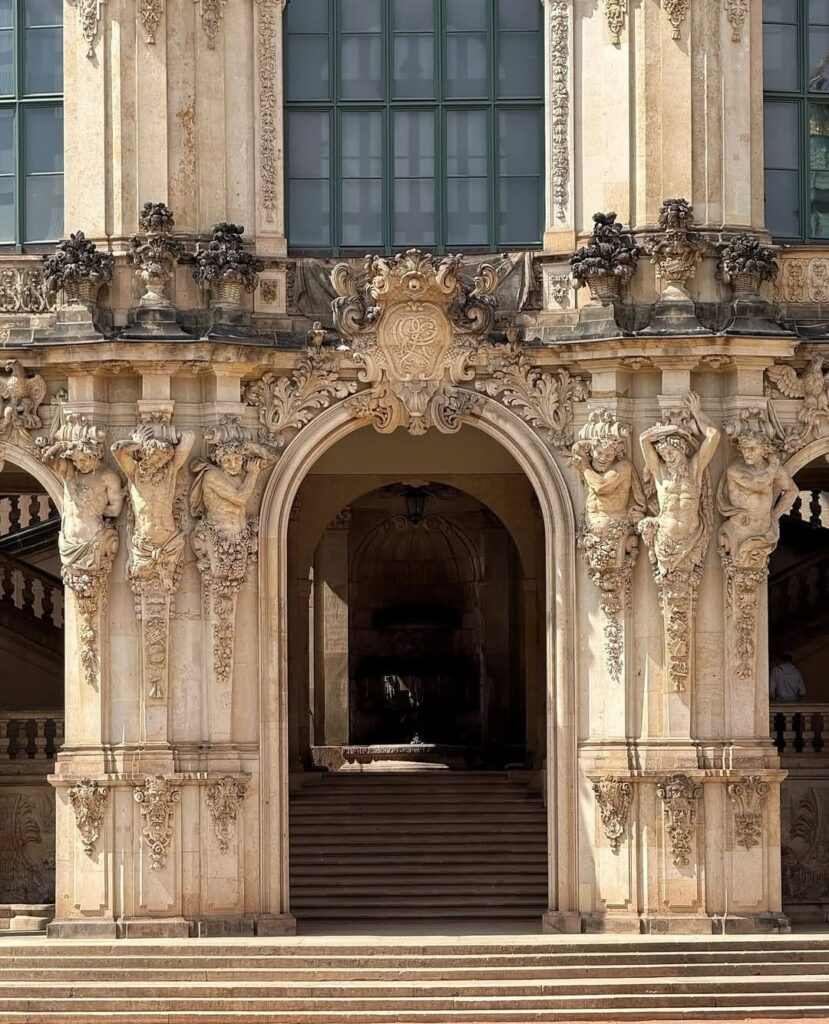
The arch galleries that flank the pavilion were designed to serve as an orangerie — a place to overwinter citrus trees and other tender plants that Augustus collected with the same intensity he applied to porcelain and architecture.
The galleries are long and rhythmic. Arched openings repeat in a cadence that draws the eye along the wall and back toward the pavilion. They give the central structure a setting, a frame.
Today, standing in those galleries feels like standing inside a pause. The architecture holds its breath.
Why Abandoned Castles Tell the Truest Stories
There is a reason sites like the Wall Pavilion attract historians, architects, photographers, and curious travelers in equal measure.
The abandoned château and the forgotten estate do not hide their history. They wear it. Decay is a kind of transparency.
In a restored building, everything is neat. The difficult parts are smoothed over. The evidence of revision and compromise and failure is painted away.
But in a place that has been left to time — where the original staircase still shows through beneath the later pavilion, where you can read the sequence of decisions in the stonework itself — history becomes something you can touch.
This is why urban exploration and forgotten architecture continue to fascinate — not because ruin is beautiful, but because ruin is honest.
Key Facts About the Wall Pavilion
Here is a quick reference for the most important details:
- Original planned feature: A playful cascade designed by order of Augustus the Strong
- Intermediate phase: A complex staircase connecting wall levels, later redesigned as a terraced garden
- Reason for redesign: Arch galleries (intended as orangerie) required partial demolition of the staircase
- Design evolution: Multiple schemes, moving from rectilinear forms to a fully Baroque sculptural fusion
- Surviving original element: Sections of the pre-pavilion staircase still accessible beneath the structure
- Architectural character: Late Baroque — architecture and sculpture treated as one continuous medium
- Historical patron: Augustus the Strong, Elector of Saxony (reigned 1694–1733)
Visiting Responsibly: What You Should Know
A Note on Access
Places like the Wall Pavilion sit in a complex middle ground. Some sections of historic fortress complexes are open to the public, properly maintained, and welcomed for visitors. Others are undergoing restoration. Some are simply fragile.
The responsible approach — and the one that keeps these sites accessible for future generations — is always to:
- Research access rules before you visit
- Stay on marked paths and designated areas
- Never remove, damage, or disturb historical fabric
- Photograph with care and share thoughtfully
- Support the heritage organizations working to preserve these sites
A forgotten estate is not a playground. It is a document. Treat it accordingly.
What to Look For
If you do visit the Wall Pavilion or a similar Baroque estate feature, here is what to pay attention to:
- The join between old and new — where the fortress wall ends and the 18th-century work begins
- The staircase remnants — fragments of the earlier design preserved beneath the pavilion
- The sculptural dissolution of architectural elements — cornices and columns that lose their rigidity and flow into ornament
- The relationship between the pavilion and the arch galleries — how the central structure anchors the longer horizontal rhythm
- The quality of silence — what it sounds like when a place built for spectacle is empty
The Deeper Meaning of an Almost-Place
Something keeps drawing people back to sites like this.
Maybe it is the particular melancholy of potential. The Wall Pavilion was almost a cascade. Then almost a staircase. Then almost a terraced garden. At every stage it was on the verge of becoming something else.
What it became instead is harder to name than any of those things. It is not quite architecture. Not quite sculpture. It is a place where a powerful man’s changing desires solidified into stone and then outlasted him by three centuries.
There is a version of this story that ends with Augustus approving the final design, the pavilion being completed, courtiers admiring it in candlelight during evening promenades, music drifting up from the gardens below.
And then there is the version where time passes.
Where the candlelight fades. Where the courtiers are long gone. Where you stand on what remains of an old staircase and look up at a building that contains, somehow, all the other buildings it could have been.
For those who find beauty in that kind of layered history, the Wall Pavilion is not just one of the highlights of a kennel complex. It is one of the most honest buildings in Europe.
If stories of architectural survival and slow decay speak to you, read more abandoned castle and forgotten estate explorations at abandoned.blog.
FAQ
Q: What is the Wall Pavilion?
A: The Wall Pavilion is a late Baroque architectural feature built on the foundations of an old fortress wall. It evolved through multiple design phases — from a planned cascade to a staircase to a terraced garden to its final form as a sculptural pavilion — and is notable for the way its architecture and decoration merge into a single organic composition.
Q: Who commissioned the Wall Pavilion?
A: The project was initiated under Augustus the Strong, Elector of Saxony, during the early 18th century. He initially planned a cascade for the site, but the design evolved considerably before reaching its final form.
Q: What happened to the original staircase?
A: The original staircase built to connect the different wall levels was partially demolished to accommodate adjacent arch galleries intended as an orangerie. Remnants of this staircase still survive beneath the pavilion and are accessible to visitors today.
Q: Is the Wall Pavilion an abandoned castle?
A: The Wall Pavilion is part of a larger historic complex with fortress wall origins. While not an abandoned château in the traditional sense, it carries all the layered history, architectural complexity, and atmosphere that makes forgotten estates so compelling to explore.
Q: Why is Baroque architecture so dramatic?
A: The Baroque style — dominant across Europe from the early 17th to mid-18th century — deliberately fused architecture, sculpture, and painting into unified theatrical experiences. The Wall Pavilion represents this tendency at an extreme: every structural element is simultaneously a sculptural one, creating a building that appears to be in motion.
Q: Can I visit the Wall Pavilion?
A: Access depends on the current status of the site and any ongoing restoration work. Always check with local heritage authorities before visiting, respect all access rules, and never enter areas that are cordoned off or marked as restricted.
Explore more stories of forgotten architecture, abandoned châteaux, and the places history left behind at abandoned.blog.