Introduction: A Door That Opens Into Another World
Some places stop you cold.
You step off a busy Paris boulevard, push open a heavy iron gate, and suddenly — the noise disappears. The 21st century retreats. You’re standing in the courtyard of a mansion that hasn’t really changed since the 1870s, and you can almost hear the rustle of silk on marble.
The Musée Jacquemart-André is that kind of place.
It’s not the Louvre. It’s not the Musée d’Orsay. It doesn’t have the crowds, the queues, or the breathless hype. And that’s exactly why it deserves your full attention.
This forgotten estate — a glittering private mansion on the Boulevard Haussmann — was once one of the most extravagant homes in all of Paris. Today it stands as a museum, preserved almost exactly as its original owners left it. Every room tells a story. Every corridor holds a secret. And at the top of the most spectacular staircase in the city, a ceiling fresco will make you stop and simply stare.
Whether you’re a history lover, an architecture enthusiast, or someone who just stumbled across a photograph of this place and needed to know more — this guide is for you.
What Is the Musée Jacquemart-André?
A Private Mansion Turned Public Treasure
The Musée Jacquemart-André sits at 158 Boulevard Haussmann in the 8th arrondissement of Paris. It’s a short walk from the Champs-Élysées, tucked between grand banks and Haussmann-era apartment buildings — easy to miss if you don’t know it’s there.
The building was constructed between 1869 and 1875. It was designed as a private residence for Édouard André, a wealthy banker and art collector from one of France’s most prominent Protestant families. He wanted something extraordinary. He got it.
The architecture is pure Second Empire grandeur: ornate stonework, towering facades, wrought-iron balconies, and interiors that feel more like a palace than a home. Even standing outside, you sense that something remarkable is behind those walls.
The People Behind the Mansion
Édouard André didn’t build this house alone. He shared it — and his passion for collecting — with his wife, Nélie Jacquemart, a celebrated portrait painter who became one of the most respected women artists of her generation.
They married in 1881, relatively late in life for both. What followed was a partnership built on art, travel, and an almost obsessive desire to surround themselves with beauty. Together, they traveled across Italy, gathering masterpieces. They hunted antiques in London. They commissioned frescoes, bought sculptures, and filled their home with objects that most museums could only dream of acquiring.
Nélie outlived Édouard by more than two decades. When she died in 1912, she left the entire estate — house, collection, and all — to the Institut de France, with one condition: it must be kept exactly as it was, open to the public, forever.
That single act of generosity created one of the most intimate and authentic historic house museums in the world.
For context on the Institut de France and its role in preserving French cultural heritage, the Institut de France remains the official custodian of this remarkable property to this day.
The Architecture: A Building That Breathes History
Grand Facades and Forgotten Grandeur
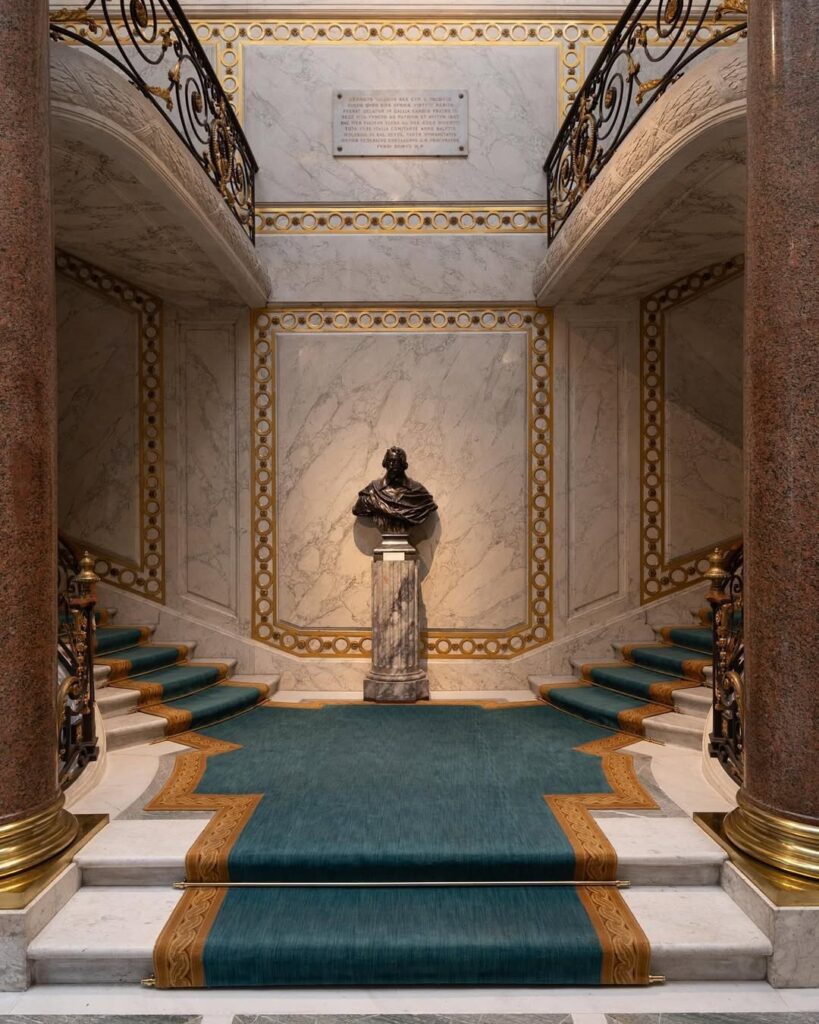
From the street, the building commands attention. The stone facade rises four stories, punctuated by arched windows, carved cornices, and the kind of architectural confidence that only serious money — and serious taste — can produce.
Step through the main entrance and the temperature drops slightly. The air inside feels older, somehow heavier. You’re in a vestibule lined with marble, and ahead of you lies a suite of rooms that feel simultaneously like a private home and a grand European museum.
The proportions are extraordinary. Ceilings soar. Doorframes are trimmed in gold. Parquet floors gleam underfoot. And everywhere, on every surface, there is something to look at — a bronze figure here, a Dutch oil painting there, a tapestry that seems to absorb the light rather than reflect it.
It feels, in the best possible way, like a place slightly out of time.
The Double Helix Staircase: The Heart of the House
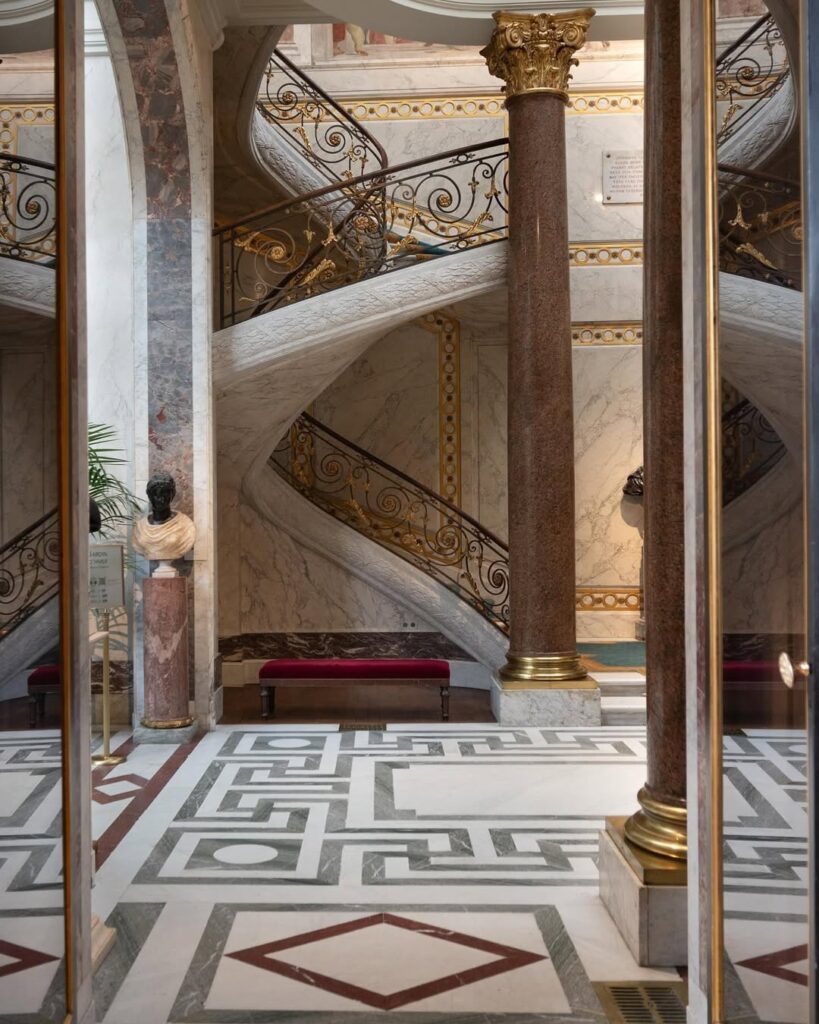
If there is one feature that defines the Musée Jacquemart-André — one image that stops people mid-scroll when they encounter it online — it’s the staircase.
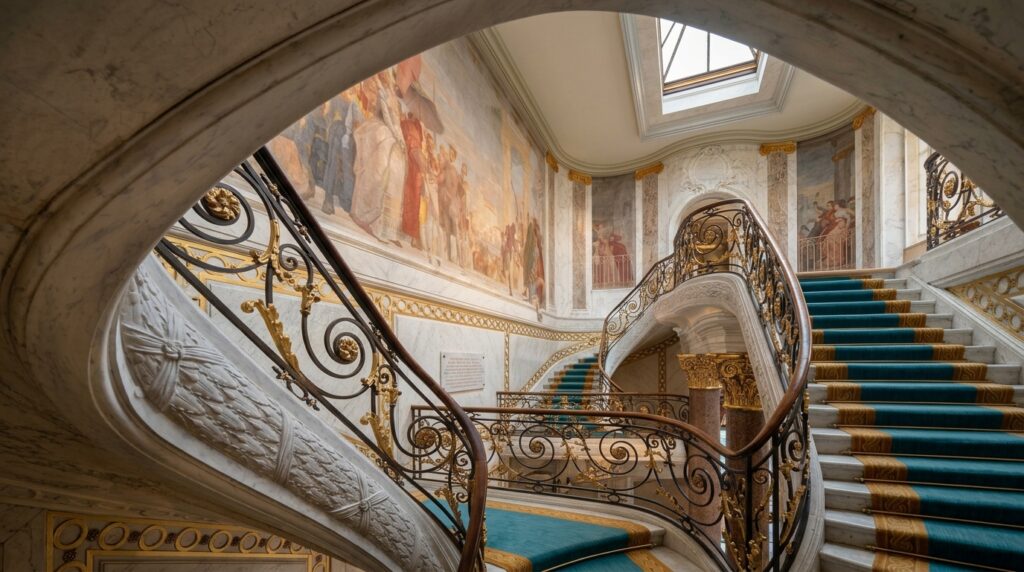
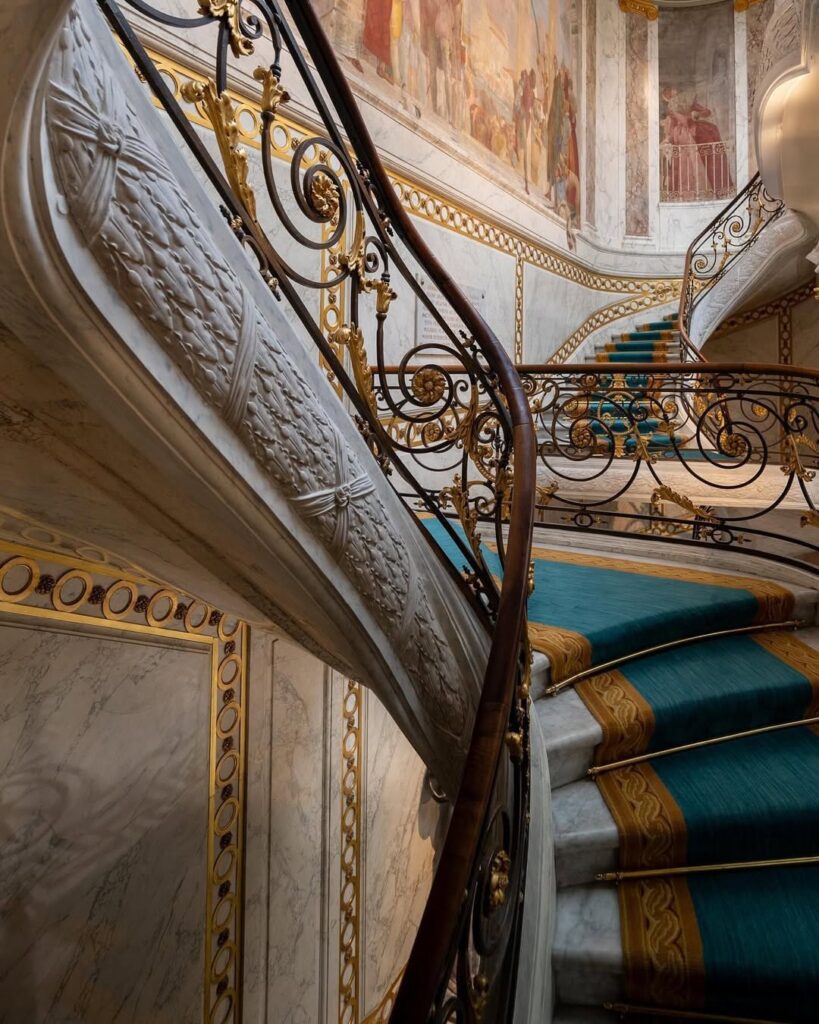
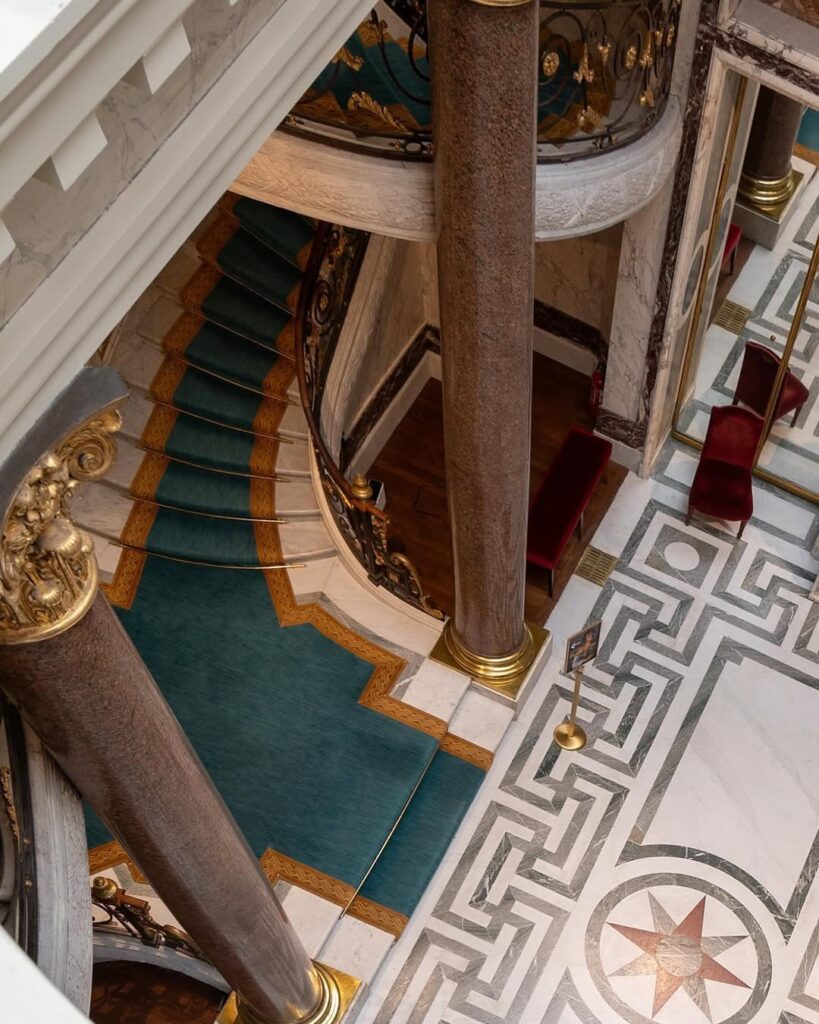
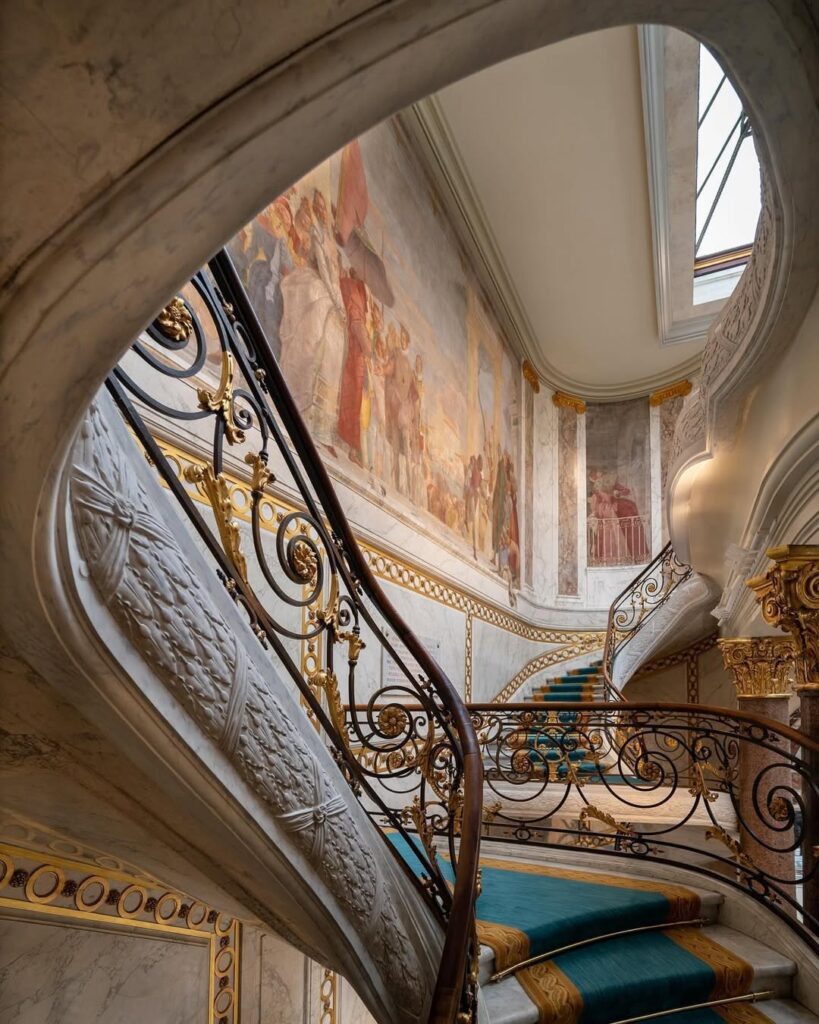
The double helix staircase is a masterpiece of 19th-century architectural engineering and design. Two curving flights of stairs spiral upward from the grand hall, twisting around each other in a breathtaking double helix form. The ironwork balustrades are impossibly delicate. The marble steps sweep upward with the kind of graceful curve that makes you want to climb them slowly, just to make the experience last longer.
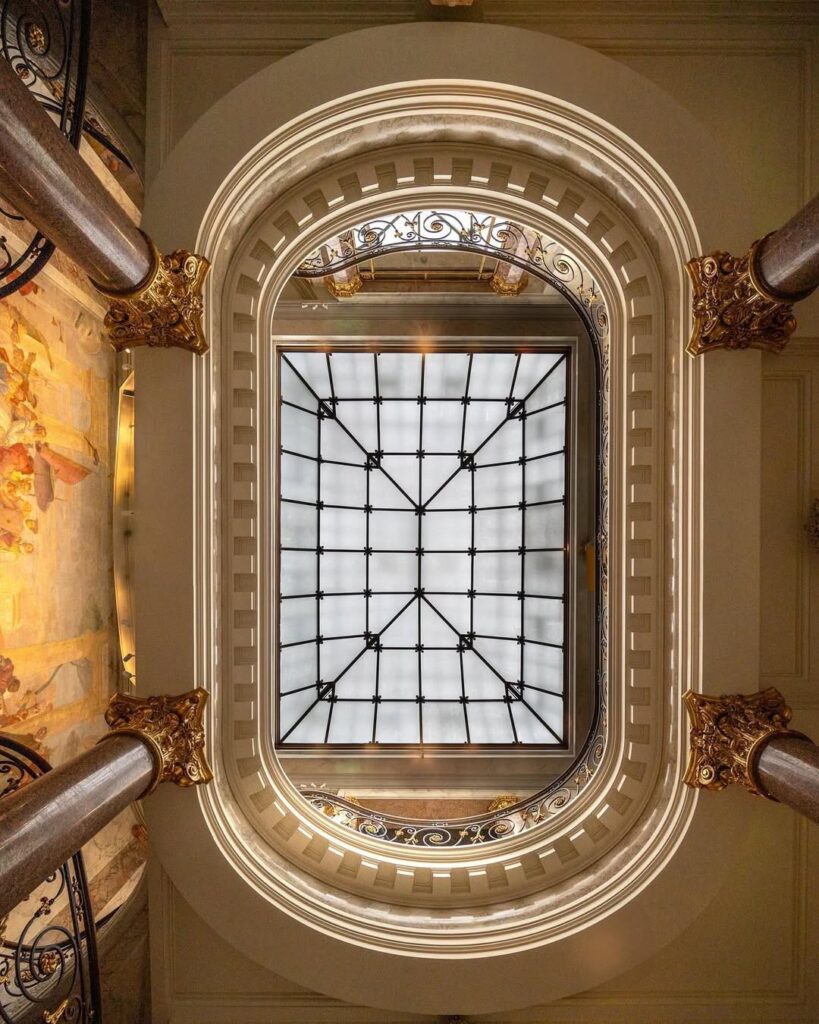
Stand at the bottom and look up. The staircase rises into a painted vault of light and colour, drawing the eye upward, pulling you toward the upper floors with a kind of architectural gravity.
Many visitors say the staircase alone is worth the price of admission. They’re not wrong.
The Tiepolo Frescoes: A Ceiling That Changes Everything
What Giambattista Tiepolo Left Behind
At the top of that extraordinary staircase, you encounter something that genuinely catches you off guard.
The ceiling is covered in a fresco by Giambattista Tiepolo — the great Venetian master of the 18th century, famous for his luminous sky scenes, his soaring architectural perspectives, and his ability to make figures seem to float in mid-air.
This particular fresco was not painted here. Édouard André acquired it during one of his Italian buying trips, removing it from the Villa Contarini near Venice and transporting it to Paris, where it was meticulously reinstalled at the summit of his grand staircase.
The result is one of the most dramatic ceiling paintings in Paris — possibly in all of France.
Figures drift across an open sky. Clouds billow and part. The colours — warm ochre, deep crimson, sky blue — glow with the kind of luminosity that only Tiepolo could achieve. And the scale of it, seen from below at the top of that sweeping staircase, is genuinely overwhelming.
You can read about Tiepolo’s wider body of work and his influence on European decorative painting through his entry on Wikipedia, but no amount of reading quite prepares you for seeing this fresco in person.
Why This Fresco Is Truly One of a Kind
There are Tiepolo works in the great museums of the world — the Prado in Madrid, the Metropolitan in New York, the Accademia in Venice. But this fresco is unique.
It was designed for a specific architectural context, then relocated to an entirely different one — and it works. The fresco breathes life into the staircase. The staircase gives the fresco its dramatic stage. They complement each other so perfectly that you’d swear they were made for each other.
That’s the genius of what Édouard André achieved here. He didn’t just collect art. He curated an experience.
The Rooms: A Walk Through 19th-Century Aristocratic Life
The Reception Rooms
The state rooms on the ground floor were designed for entertaining on a grand scale. Think diplomatic receptions, soirées, and the kind of dinner parties where conversation mattered and appearances were everything.
The Grand Salon is furnished with gilded furniture upholstered in deep crimson. Chandeliers hang from painted ceilings. Flemish tapestries cover entire walls. Dutch and Flemish masters hang in gilded frames — Rembrandt, Hals, Van Dyck. The effect is rich, layered, and deeply impressive.
The Music Room is more intimate — only slightly. A harpsichord stands in one corner. Portraits look down from the walls. You can almost hear the soft notes of a Chopin nocturne drifting through the evening air.
The Winter Garden and Garden Rooms
One of the most surprising spaces in the house is the Winter Garden — a glass-roofed indoor courtyard where André once hosted afternoon teas. Today it serves as the museum café, where visitors eat beneath a painted vault surrounded by tropical plants and antique sculpture.
It’s an extraordinary place to sit, rest, and absorb everything you’ve just seen.
The Italian Museum
The upper floors house what Nélie and Édouard called their “Italian Museum” — a series of rooms dedicated to the Renaissance masterworks they collected during their years of travel.
Here you’ll find works by Botticelli, Donatello, Mantegna, and Uccello. These rooms feel different from the rest of the house — quieter, more scholarly, cooler in atmosphere. The light is carefully controlled. The silence feels intentional.
For anyone interested in Renaissance art, these rooms are a revelation. Many of the works here would be headline exhibits in any major institution. In this house, they feel somehow more present, more accessible. More real.
What Makes This Place Feel Like an Abandoned Estate
The Intimacy of a Preserved Home
Here’s what separates the Musée Jacquemart-André from most museums: it still feels lived-in.
The furniture is not behind ropes. The dining table is set for a meal that never quite happened. Nélie’s painting studio on the upper floor still holds her easel, her pigments, the slightly dusty smell of linseed oil and old canvas. Personal photographs line the mantelpieces. Letters sit in frames.
This isn’t a forgotten estate or an abandoned château in the traditional sense — it’s neither crumbling nor inaccessible. But it carries that same quality of suspended time that draws urban explorers and history lovers to decaying forgotten places across Europe. The sense that the people who lived here might walk back through the door at any moment.
That feeling is powerful. And it’s rare.
The Quiet That Gets to You
Visit on a weekday morning, early. The crowds haven’t arrived yet. The rooms are cool and still. Your footsteps echo on the parquet floors.
There’s a particular quality of light in old Parisian mansions — filtered through tall windows, softened by heavy curtains, bouncing off gilded surfaces. It makes everything look slightly painterly, slightly unreal.
Stand in one of the upper rooms and look out over the Boulevard Haussmann. The city moves and hums below. Up here, in this preserved world of silk and marble and Tiepolo blue, it feels very far away.
Planning Your Visit: Practical Information
Getting There
The museum is located at 158 Boulevard Haussmann, 75008 Paris. The nearest metro stations are Miromesnil (lines 9 and 13) and Saint-Philippe-du-Roule (line 9). It’s an easy walk from the Champs-Élysées or Saint-Lazare.
What to Expect
- Opening hours: Daily, 10:00 AM to 6:00 PM (last admission 5:30 PM)
- Late openings: Monday evenings until 8:30 PM during temporary exhibitions
- Admission: Adults approximately €15–17 (check current pricing before visiting)
- Audio guide: Included — and genuinely excellent. Use it.
- Café: The Winter Garden café is one of the best in Paris. Budget time for it.
Tips for the Best Experience
- Arrive early. The first hour after opening is the quietest.
- Take the audio guide. Every room has stories the wall labels don’t tell you.
- Spend time on the staircase. Stand at the bottom. Stand at the top. Look both ways.
- Don’t rush the Italian Museum. Those rooms reward slow looking.
- Eat in the Winter Garden. Even just a coffee. It’s worth it.
- Visit during a temporary exhibition. The museum adds excellent themed shows throughout the year.
Why This Museum Matters Beyond Paris
Art, Architecture, and the Idea of Home
The Musée Jacquemart-André isn’t just a museum. It’s an argument — a beautifully preserved, impeccably maintained argument — for what private collecting at its finest can achieve.
Édouard and Nélie didn’t collect to impress. They collected because they genuinely loved the things they gathered. You feel that love in every room. In the way a Flemish still life is hung at exactly the right height. In the way the Tiepolo fresco crowns the staircase like a benediction.
This is what distinguishes the great house museums from the grand public institutions: the human scale. The sense that real people, with real passions and real lives, once filled these rooms with warmth and conversation and the quiet pleasure of beautiful things.
For anyone fascinated by the stories hidden inside Europe’s most atmospheric historic properties, this museum offers something rare and irreplaceable: history with a heartbeat.
FAQ: Musée Jacquemart-André Paris
Q: Is the Musée Jacquemart-André worth visiting?
Absolutely. It’s consistently rated one of the most beautiful and underrated museums in Paris. The combination of architecture, art, and atmosphere is genuinely exceptional.
Q: How long should I spend there?
Plan for at least two to two and a half hours. If you’re a slow looker (the best kind), three hours isn’t unreasonable.
Q: Is it suitable for children?
Yes, though younger children may find the rooms challenging. Older children with an interest in art or history will find plenty to engage them.
Q: Is photography allowed?
Photography for personal use (no flash) is generally permitted. Check the museum’s current policy on arrival.
Q: What is the best time of year to visit?
Any time of year works. Spring and early autumn tend to offer the most pleasant conditions. Avoid peak summer weekends if you prefer quieter rooms.
Q: Can I see the Tiepolo fresco without climbing the stairs?
You can glimpse it from the base of the staircase, but the full impact only hits when you reach the top. Climb the stairs.
Q: Is there a café inside the museum?
Yes — and it’s outstanding. The Winter Garden café is one of the loveliest spots in Paris for lunch or afternoon tea.
Conclusion: The Mansion That Paris Almost Forgot
Paris is full of museums. It is not full of places like this.
The Musée Jacquemart-André — that magnificent forgotten estate on the Boulevard Haussmann — is something different. It is a house that became a museum without ever quite losing the feeling of being a home. A collection assembled with love, preserved with care, and offered to the public with remarkable generosity.
Stand at the top of the double helix staircase. Look up at the Tiepolo fresco. Let the colours and the light and the sheer audacity of it wash over you.
This is what collecting looks like when it transcends accumulation. This is what architecture looks like when it serves not just shelter but beauty. And this is what Paris looks like when it remembers to preserve the things that matter most.
Don’t walk past the iron gate. Push it open. Step inside.
Some doors are worth opening.
If you enjoy exploring extraordinary historic spaces across Europe, you’ll find more stories from forgotten estates, atmospheric mansions, and remarkable hidden places at abandoned.blog.