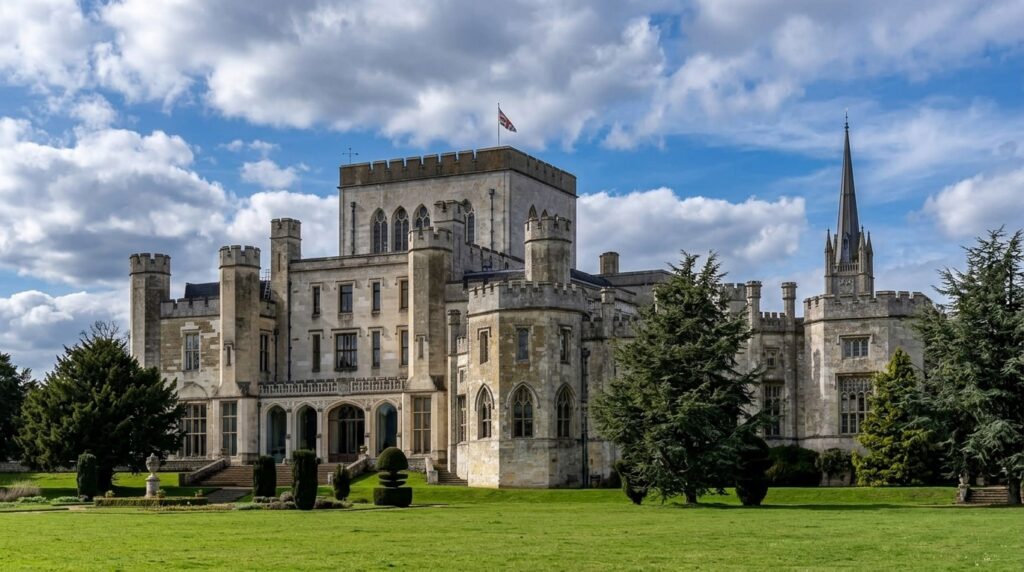
Ashridge House history doesn’t read like a quiet country footnote. It reads like a Tudor thriller with a Gothic Revival twist ending.
Tucked into the Chiltern Hills near Berkhamsted, Hertfordshire, this estate has worn the faces of a monastery, a royal household, a family seat, a wartime hospital, and now a business school. Few buildings in England can claim that many lives in one set of walls.
Walk the gravel paths today and you’ll find manicured gardens, a working café, and conference guests checking their phones between meetings. But scratch the surface, and centuries of ambition, faith, and royal danger rise back up.
This is the story of how a small monastic college became one of England’s most architecturally celebrated houses, and why a future queen once feared for her life within its walls.
A Monastery Born from a Royal Relic
The story begins in 1283, when Edmund, Earl of Cornwall and nephew of Henry III, founded a religious house on the site to honor a relic believed to be a portion of Christ’s blood.
He brought in a small, unusual order of monks called the Bonhommes, or “good men,” distinguished by their pale grey robes. England had only one other house of this order, far away in Wiltshire, which made Ashridge something genuinely rare.
The college that grew here wasn’t a sleepy backwater. It earned a reputation as a center of scholarship and theological debate, drawing the patronage of figures like Edward the Black Prince.
Life Inside the Medieval College
- Seven priest-brothers formed the original community, supported by a modest annual stipend
- The monks endured real hardship, including property losses during the Peasants’ Revolt of 1381
- By the early 1400s, the college faced financial strain serious enough to require outside help to rebuild its choir
For over two and a half centuries, this was a place of prayer, study, and quiet endurance. Then came Henry VIII.
When a King Claimed the Monastery
The Dissolution of the Monasteries in the late 1530s reshaped England’s religious landscape, and Ashridge didn’t escape it. The crown dissolved the College of Bonhommes, and Henry VIII retained the property for himself after the Dissolution of the Monasteries in 1536.
The king didn’t just claim the land. He lived there. Ashridge became one of his residences, a place where, according to historical accounts, he housed several of his own children at different points, including the future Mary I and Elizabeth I.
When Henry died, his will passed the estate directly to his younger daughter, Princess Elizabeth, who would spend part of her youth here.
The Arrest That Changed English History
This is the moment that gives Ashridge its sharpest edge of drama.
In 1554, with Mary I now on the throne and deeply suspicious of her Protestant half-sister, soldiers arrived at Ashridge to take Elizabeth into custody. She was accused of involvement in a rebellion against the crown, a charge serious enough to threaten her life.
Elizabeth was arrested at Ashridge by her half-sister Mary in 1554 and taken to the Tower of London.
Picture it for a moment. A young, frightened princess, escorted out of her own home under armed guard, uncertain whether she would ever return. She survived the ordeal and, within a few short years, became one of England’s most powerful monarchs.
It’s a sobering thought: the gardens visitors stroll through today once witnessed a future queen taken away under suspicion of treason.
From Royal Hands to the Egerton Family
After Elizabeth’s death in 1603, ownership of Ashridge shifted again. The estate passed to Thomas Egerton, chancellor to Elizabeth I, who bought the estate in 1604.
The Egertons held Ashridge for the next two centuries, evolving over generations into the Earls and later Dukes of Bridgewater. This family didn’t just maintain the estate. They transformed it.
One of the most consequential figures was the 3rd Duke of Bridgewater, remembered in British history as the “Canal Duke” for pioneering Britain’s early canal network. His industrial ambitions funded improvements far beyond Ashridge itself, and his memory is preserved on the estate today through the Bridgewater Monument.
A Landscape Shaped by Famous Hands
Long before the current mansion existed, the grounds themselves were being reimagined by some of England’s greatest landscape designers.
- Around 1760, Capability Brown reshaped the parkland, creating what’s now known as the Golden Valley
- Decades later, Humphry Repton, one of Brown’s most celebrated successors, refined the gardens further
- The result is a landscape considered one of the finest surviving examples of Repton’s work anywhere in England
If you’ve ever wandered through a beautifully composed English park and wondered who designs something so deliberately natural-looking, this is where two of the masters left their fingerprints.
Building the Gothic Mansion You See Today
By the early 1800s, the old monastic buildings were tired, outdated, and ready for reinvention. The 7th Earl of Bridgewater wanted something grander, and he turned to one of the era’s most daring architects to deliver it.
James Wyatt, already known for his theatrical Gothic Revival work, was commissioned to design an entirely new house in the Tudor Gothic style. The first stone for the new house was laid by the 7th Earl’s wife, Charlotte Catherine Anne, Countess of Bridgewater, on October 25, 1808, a date chosen to mark the anniversary of King George III’s accession.
Wyatt didn’t live to see his vision completed. He died in 1813, partway through construction. The project was completed the following year by his nephew, Jeffry Wyatt, later known as Sir Jeffry Wyatville.
What Makes Ashridge House Architecturally Remarkable
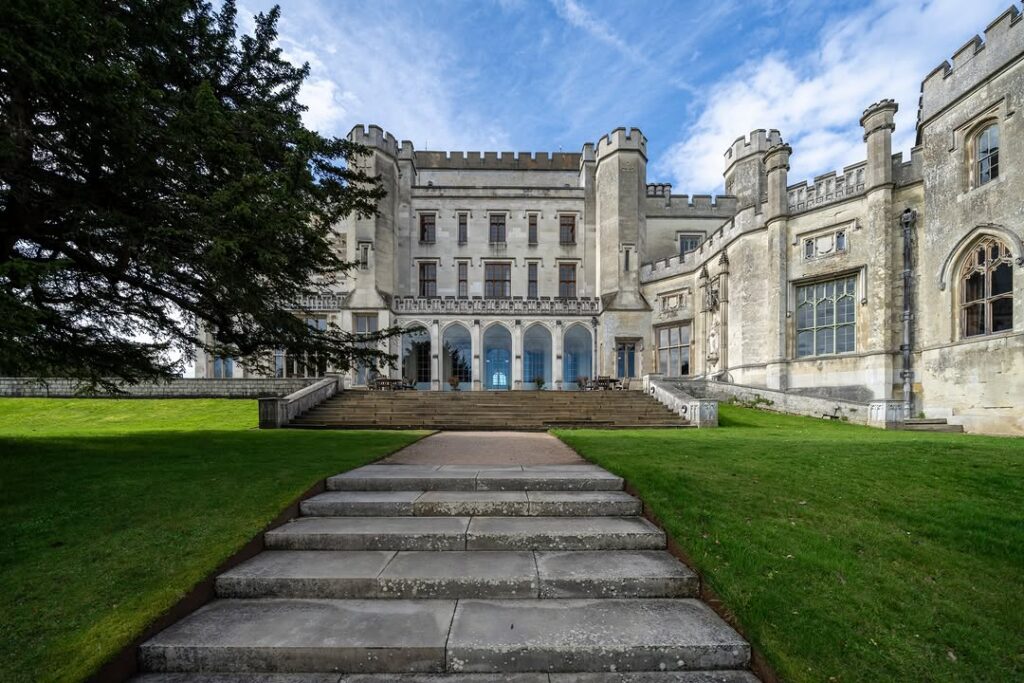
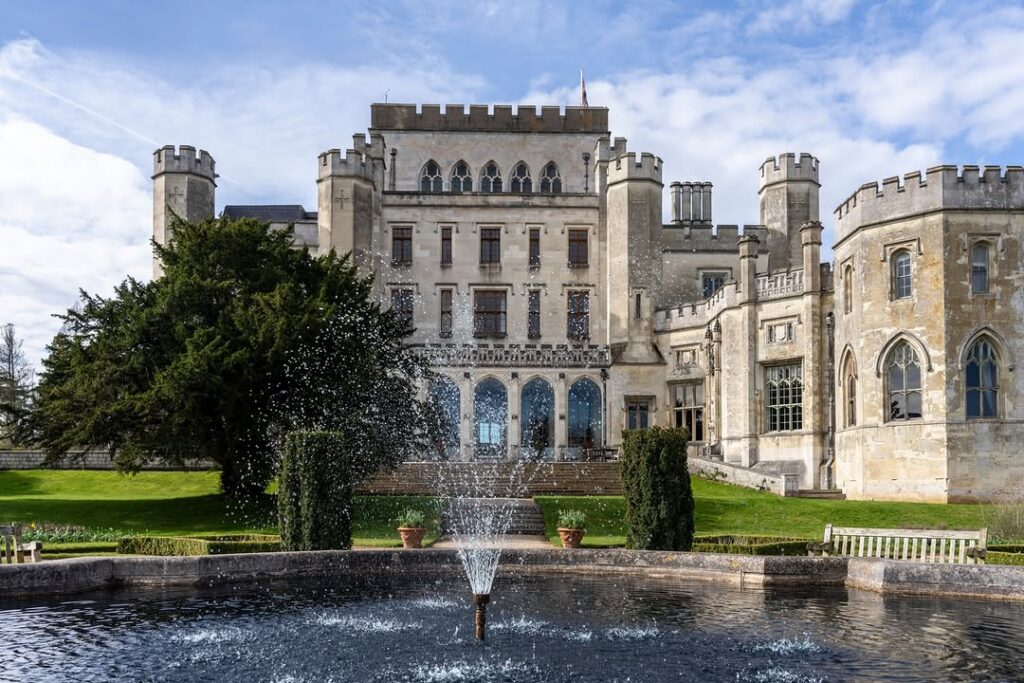
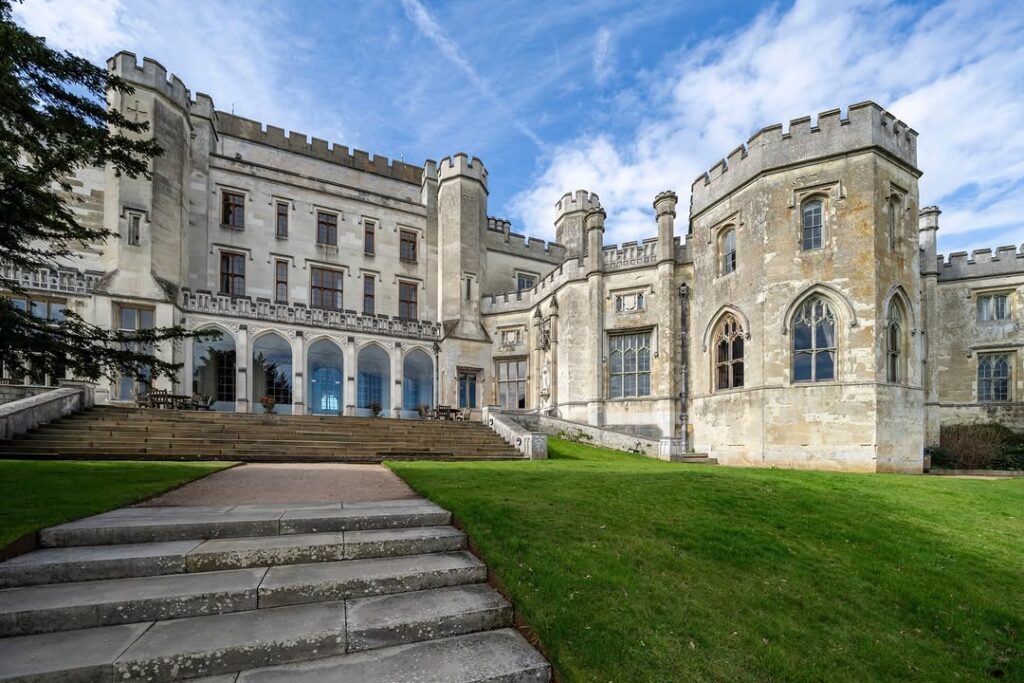
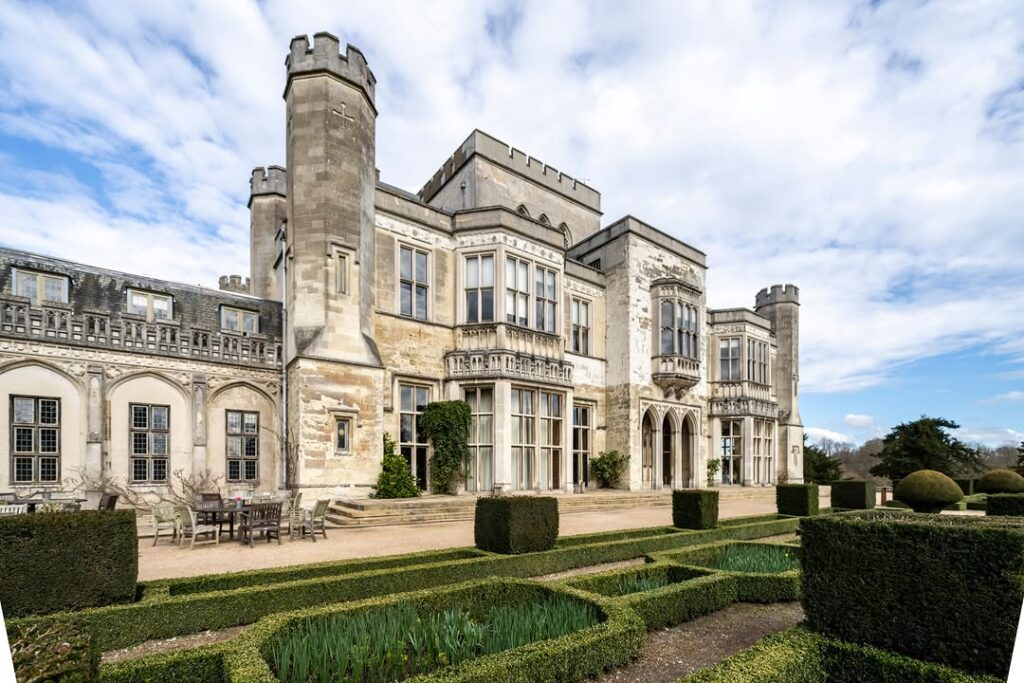
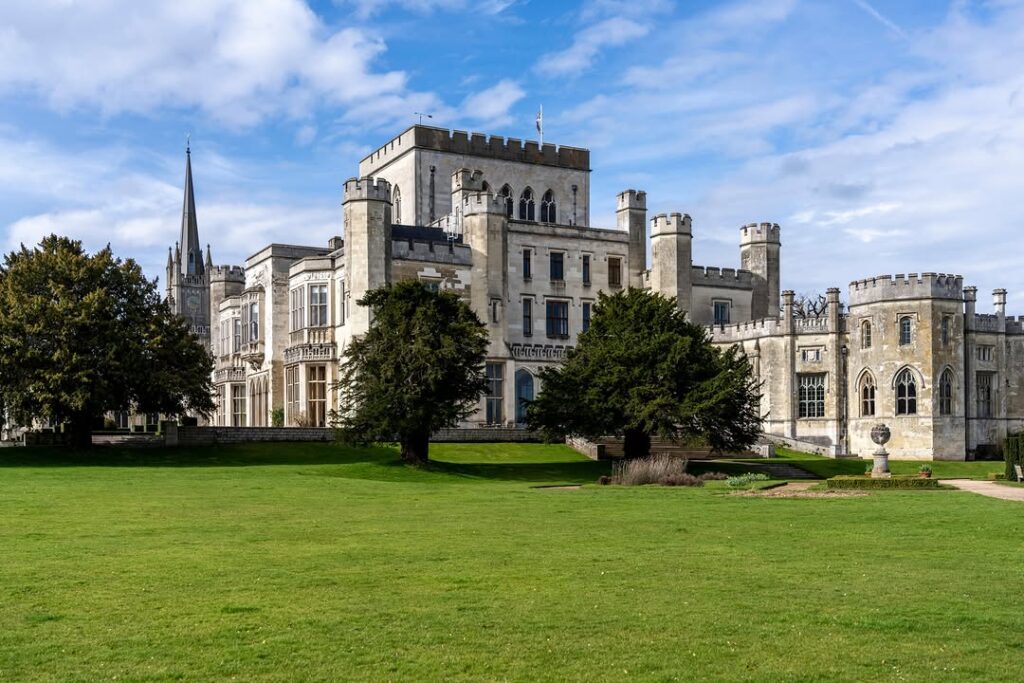
- Built from ashlar stone faced with Totternhoe stone, finished with a castellated parapet
- Features pointed arch and ogee-shaped windows typical of early Gothic Revival design
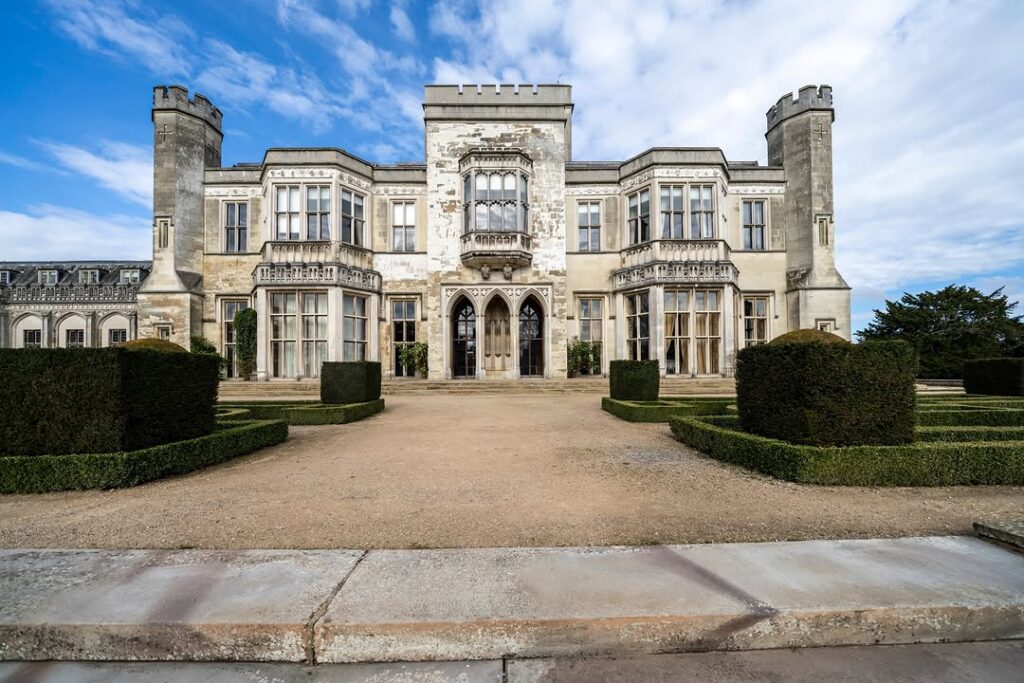
- Wyatt completed the north-facing entrance and the central block before his death
- Wyatville later added private apartment wings and an orangery topped with a turret
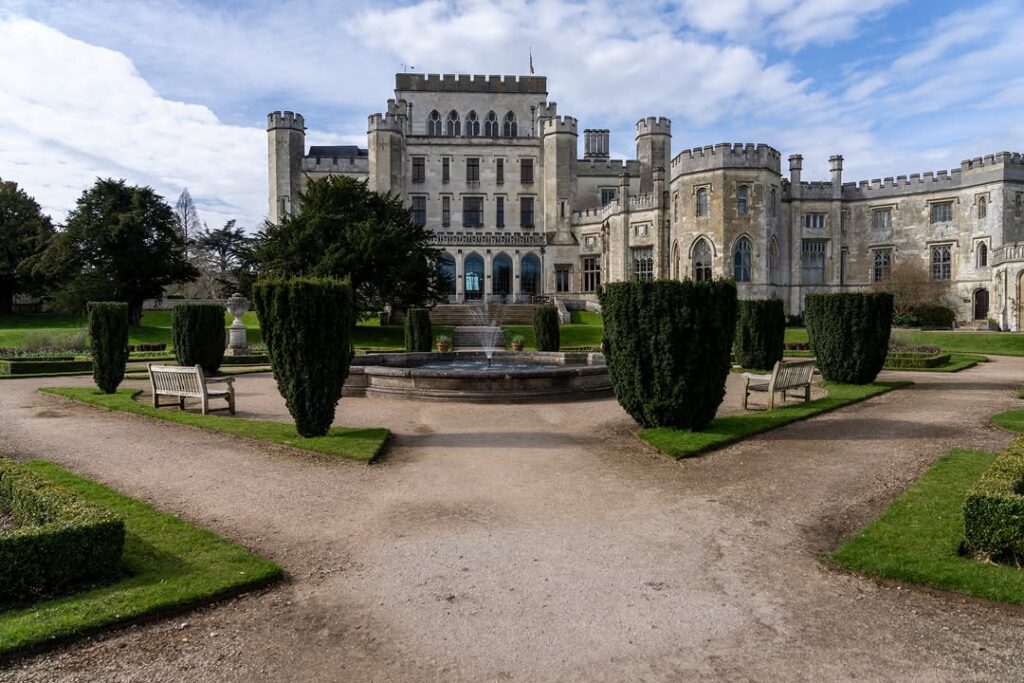
- Historic England has called it a spectacularly romantic composition in the Tudor Gothic style, with an asymmetrical plan presenting striking elevations on every front
Inside, the staircase hall remains one of the building’s most breathtaking spaces, soaring upward toward a fan-vaulted lantern, while the chapel is layered with intricate Gothic stone and woodwork. Architectural historians have long considered Ashridge among the finest examples of Wyatt’s romantic interpretation of Gothic style.
A House With Many Later Lives
Ashridge House history didn’t stop with the Victorians. The 20th century brought entirely new chapters.
During both World Wars, the house was pressed into service for the war effort. In the Second World War, it became a convalescent home connected to St Albans Hospital, its grand rooms repurposed for recovering patients rather than aristocratic entertaining.
In the decades that followed, the estate took on a different identity entirely. It briefly operated as a finishing school for young women before, in 1959, becoming a business school, a role it has held in various forms ever since.
Ashridge House Today
This is the part where most articles about historic English houses pivot to talk of decay and abandonment. Ashridge doesn’t fit that pattern, and that’s worth being honest about.
The house and its 190 acres of gardens are managed by the National Trust, with the surviving woodland forming part of a 5,000-acre estate. The mansion itself now serves as the flagship campus for Hult Ashridge Executive Education, hosting business leaders and conferences inside the very rooms where kings and queens once walked.
Far from being a forgotten property, it remains carefully maintained, actively used, and architecturally protected:
- The main house is Grade I listed, the highest tier of protection for historically significant buildings in England
- The Repton-designed gardens are separately Grade II* listed and open to the public most days of the week
- Weddings, conferences, and private events fill much of the calendar today
- A café in the courtyard, the Bakehouse, welcomes day visitors, dog walkers, and cyclists exploring the wider estate
It’s a rare outcome for a building this old. Rather than being left to crumble, Ashridge found a sustainable second life that keeps both the structure and its gardens intact for future generations.
Local Stories and the Weight of History
Every estate this old accumulates stories beyond the official record, and Ashridge is no exception. Visitors and historians alike have long been drawn to its layered past.
Some of the most enduring threads of fascination include:
- The mystery of how much of the original 13th-century priory still survives beneath the current building, with only the undercroft and an old well confirmed to predate the Wyatt mansion
- Elizabeth I’s documented connection to the site, which still draws Tudor history enthusiasts to walk the same grounds she once paced as a young, anxious princess
- The site’s quiet role in two World Wars, a chapter often overshadowed by its more glamorous Tudor and Georgian history
None of this requires exaggeration. The documented history alone carries enough weight and atmosphere to hold a visitor’s imagination, which is exactly why so many heritage writers keep returning to it.
Why Ashridge House Still Matters
Properties like Ashridge offer something increasingly rare: a continuous, traceable line from medieval religious life through Tudor political danger to Georgian architectural ambition, all the way to modern commercial use.
It stands alongside England’s other great surviving estates, the kind of place historians and architecture lovers compare to other Gothic Revival landmarks and forgotten estate stories scattered across the English countryside. Many such properties weren’t so fortunate. Plenty of England’s grand houses fell into genuine ruin, becoming the abandoned manor and decaying mansion stories so often told about the country’s lost heritage. Ashridge’s survival, by contrast, is the exception that makes its history worth telling carefully and accurately.
If you’re drawn to English heritage stories more broadly, it’s worth comparing Ashridge to estates that didn’t survive so well, like our deep dive into England’s most haunting forgotten estates, or our guide exploring historic ruins across the Chiltern countryside. For readers specifically interested in the Tudor period, our piece on the real locations tied to Elizabeth I’s early life adds useful context to her time here. And if Gothic Revival architecture is what caught your interest, our feature on Britain’s finest Gothic Revival country houses places Ashridge in a wider architectural story.
Conclusion
Ashridge House history is rare in that it’s both extraordinary and well documented, stretching from a 13th-century relic-house through royal danger, aristocratic reinvention, and into a thoughtfully preserved present.
Few estates can claim a future queen was once arrested within their walls, or that two of England’s greatest landscape architects shaped their grounds. Fewer still managed to avoid the slow decay that swallowed so many comparable houses.
Standing in front of Ashridge today, you’re not looking at a ruin. You’re looking at survival, built on seven centuries of careful, sometimes desperate, reinvention. That’s arguably the more remarkable story.
Frequently Asked Questions
Is Ashridge House abandoned? No. Ashridge House is actively used today as the flagship campus for Hult Ashridge Executive Education and operates as a venue for weddings and conferences. Its gardens are open to the public on a regular schedule.
Why was Princess Elizabeth arrested at Ashridge House? In 1554, Elizabeth was arrested at Ashridge on suspicion of involvement in a rebellion against her half-sister, Queen Mary I. She was taken to the Tower of London but survived to become queen in 1558.
Who designed the current Ashridge House? The current Gothic Revival mansion was designed by architect James Wyatt, beginning construction in 1808. After Wyatt’s death in 1813, his nephew, Sir Jeffry Wyatville, completed the project.
Can the public visit Ashridge House? Yes. The gardens, café, and grounds are open to visitors most days, though the main house interior is generally reserved for events, with occasional public tours during select periods.
What was Ashridge House before it became a mansion? Before the current house was built, the site was home to a monastery known as the College of Bonhommes, founded in 1283. The monastic buildings were demolished in the early 1800s to make way for the present house.
Is Ashridge House open to school groups or researchers? The estate’s educational role continues today through Hult Ashridge Executive Education, though access for general historical research or school visits is typically arranged through the National Trust, which manages the wider estate.